
Construction Safety Standards Explained: Key OSHA, ISO, and Site Compliance Checks
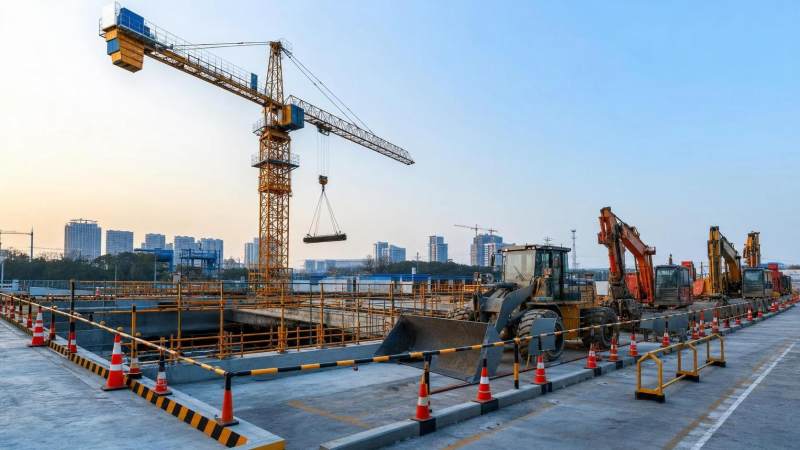
Construction safety standards shape how complex projects move from planning to execution without turning routine hazards into major losses. On sites involving cranes, tunneling systems, road machinery, or mining support equipment, the real issue is not only legal compliance. It is whether rules, management systems, and field checks work together well enough to prevent injury, downtime, rework, and reputational damage.
That is why construction safety standards remain under close review across global infrastructure. In heavy industry, where TF-Strategy tracks the intersection of equipment capability, operating conditions, and project delivery, safety is inseparable from productivity. A site that cannot control lifting zones, machine interfaces, confined spaces, or contractor behavior rarely maintains schedule certainty for long.
What construction safety standards really cover
At a practical level, construction safety standards are the rules, systems, and verification methods used to keep work activities within acceptable risk limits. They apply to people, equipment, processes, documentation, and changing site conditions.
Some standards are mandatory because they are written into law. Others are voluntary frameworks that strengthen management discipline, audit readiness, and contractor alignment. On most serious projects, both types are used together.
The most important point is simple. Safety standards are not just written procedures in a binder. They become meaningful only when they influence daily decisions on access control, lifting plans, excavation support, lockout practices, equipment maintenance, and incident reporting.
Why OSHA and ISO are often discussed together
OSHA and ISO serve different purposes, yet they often appear in the same conversation because project teams need both regulatory compliance and management consistency.
OSHA as the legal baseline
OSHA standards set enforceable requirements for workplace safety in the United States. They address common construction risks such as falls, scaffolds, trenching, electrical exposure, personal protective equipment, hazard communication, and crane operations.
For a site team, OSHA matters because noncompliance can lead to citations, project disruption, insurance pressure, and a closer review after any incident. More importantly, OSHA requirements often define the minimum acceptable control for known hazards.
ISO as the management framework
ISO standards, especially ISO 45001, focus on how an organization builds a health and safety management system. The standard emphasizes hazard identification, worker participation, operational control, corrective action, and continual improvement.
Unlike OSHA, ISO 45001 is not a site rulebook for every hazard. It is a framework for making sure responsibilities, reviews, and controls are structured rather than reactive.
In international projects, that distinction is useful. A contractor may meet local legal requirements while also using ISO-based processes to unify reporting and risk management across multiple countries or business units.
A clear view of the main standards and checks
The following comparison shows how construction safety standards typically operate in day-to-day project control.
When these three layers support each other, construction safety standards become operational rather than symbolic. When one layer is weak, failure usually shows up first in the field.
Where compliance pressure is strongest today
Current attention is not limited to traditional jobsite hazards. Large infrastructure and heavy equipment projects now face tighter scrutiny in areas where safety, technology, and contractor complexity overlap.
- High-capacity lifting operations involving crawler cranes and oversized components.
- Confined or underground work linked to TBM launch shafts, ventilation, and emergency access.
- Mobile equipment interaction in road building, quarry, and open-pit support zones.
- Remote monitoring, automation, and 5G-assisted machine control that change accountability lines.
- Mixed workforces where subcontractor standards differ across regions and specialties.
In these settings, construction safety standards are not only about avoiding fines. They help determine whether a project can maintain control while integrating advanced machinery, multiple contractors, and demanding delivery schedules.
The site checks that matter most
Daily and weekly checks are where policy meets reality. A polished safety manual does not reduce risk if field conditions change faster than the team notices.
High-value verification points
- Access and exclusion zones are marked, respected, and updated as work fronts shift.
- Critical lifts match the approved plan, including load path, ground condition, and weather limits.
- Excavations, trenches, and shaft entries reflect current support and inspection status.
- Energy isolation points are identifiable, controlled, and verified before maintenance work.
- Machine guarding, alarms, lighting, and emergency stops function as intended.
- Permits, toolbox talks, and competency records match the task actually being performed.
These checks may look basic, but they are often where serious incidents start. A missing barricade, an outdated lift path, or an unverified isolation can defeat even well-designed construction safety standards.
Heavy equipment projects need a different depth of control
Large infrastructure work introduces risk conditions that standard office-driven compliance systems often underestimate. Equipment scale, terrain, visibility limits, and maintenance windows create a more dynamic exposure profile.
This is especially true for sectors followed closely by TF-Strategy. TBM operations involve confined environments, mechanical complexity, and emergency planning challenges. Open-pit support zones depend on traffic separation, slope awareness, and machine reliability. Crane-heavy projects require disciplined control over rigging, sequencing, and lift engineering.
In such environments, construction safety standards should be read alongside equipment parameters and work methodology. A checklist that ignores swing radius, haul road gradient, cutterhead interventions, or heavy weather exposure is incomplete even if it looks compliant on paper.
How to interpret compliance without creating paperwork fatigue
A common problem is over-documenting low-risk activities while under-controlling critical tasks. Good safety management separates what must be formally governed from what can be handled through routine supervision.
One useful approach is to rank controls by consequence rather than by document volume. If failure could lead to collapse, struck-by exposure, fire, entrapment, or fatal energy release, the control should be precise, visible, and independently verified.
That mindset helps construction safety standards stay practical. It also supports better coordination between quality records and safety records, since deviations in method, tolerances, or maintenance often signal risk before an incident occurs.
Useful indicators for ongoing review
Compliance should be measured through signals that reveal control quality, not just activity volume. Counting inspections alone is not enough.
These indicators make construction safety standards easier to evaluate in real time. They also support clearer escalation when site leadership must decide whether to pause, redesign, or resequence work.
Turning standards into better project decisions
The best use of construction safety standards is not defensive. It is strategic. Strong compliance data improves bid planning, equipment selection, subcontractor screening, and method statements before field risk becomes expensive.
For organizations working across tunneling, mining, lifting, and transport infrastructure, the next step is usually not another generic checklist. It is a sharper link between legal rules, ISO-based controls, and equipment-specific operating intelligence.
That is where focused industry analysis becomes useful. Reviewing site risks against actual machine parameters, operating environments, and contractor interfaces creates a stronger basis for action than compliance language alone. When those elements are aligned early, safer execution and steadier delivery tend to follow.
Related News
 Sep 16, 2026Infrastructure Equipment Market Reference: Demand, Pricing, and Supplier BenchmarksInfrastructure equipment market reference for buyers: assess demand signals, total cost, pricing risks, and supplier benchmarks for tunnels, mining, cranes, and road projects.
 Sep 15, 2026How to Evaluate Infrastructure Equipment Suppliers for Complex Project RequirementsInfrastructure equipment solutions supplier evaluation guide for complex projects: assess technical fit, lifecycle cost, reliability, local support, and contract risk.
 Sep 14, 2026What Drives Surface Mining Equipment Cost Across a Mine’s Operating Life?Surface mining equipment cost depends on fleet matching, fuel, wear, maintenance, availability, and rebuild timing. Explore lifecycle strategies that protect output and margins.
 Sep 13, 2026Crawler Crane Application Analysis for Wind Farms, Bridges, and Confined SitesCrawler crane application analysis for wind farms, bridges, and confined sites—optimize lift paths, ground conditions, access, and schedules for safer project delivery.

Ms. Elena Rodriguez
Weekly Insights
Stay ahead with our curated technology reports delivered every Monday.