
How Project Tender Intelligence Helps Contractors Identify High-Value Bids Earlier
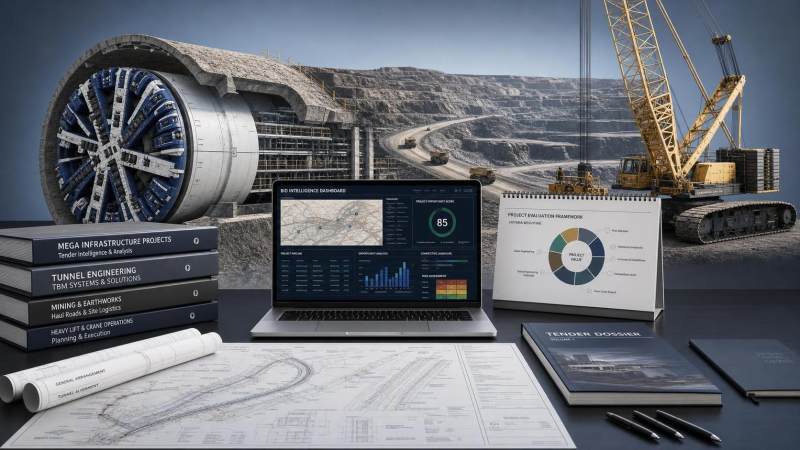
How Project Tender Intelligence Helps Contractors Identify High-Value Bids Earlier
The bid that matters rarely appears for the first time when the formal tender notice is published. By then, the budget framework is usually taking shape, the technical route has already narrowed, local partners may be speaking with shortlisted suppliers, and internal competitors are assigning estimating resources. For bid managers and commercial evaluation teams, project tender intelligence is useful because it shifts attention upstream. It turns scattered signs such as planning approvals, geological surveys, procurement notices, equipment mobilization patterns, and owner-side design discussions into an earlier reading of where value is likely to emerge.
That matters even more in heavy infrastructure. A tunnel package, a mine expansion, or a wind-lift installation is not only a line item on a procurement calendar. Each one carries a machinery profile, a logistics burden, a financing rhythm, and a risk structure that determines whether the opportunity is commercially attractive or just visually large. Teams that read tenders late often confuse volume with value. Teams that read them early can ask better questions: Is this a project where specialized TBM capability creates a barrier to entry? Will crawler crane availability become the actual bottleneck? Is the project likely to split into packages that favor local civil contractors over international heavy-equipment specialists?
Why Early Visibility Changes the Bid Decision
In practice, early visibility is less about seeing more tenders and more about seeing the right ones before they harden. In underground works, for example, the commercial value of a bid can change dramatically once the excavation method is clearer. A tunnel that initially looks open to multiple methods may become highly selective if later geotechnical findings point toward mixed-face conditions, long drives, settlement-sensitive urban alignment, or strict spoil handling constraints. At that point, contractors without relevant tunneling references or cutterhead support chains are not competing on equal terms, no matter how large the budget headline looks.
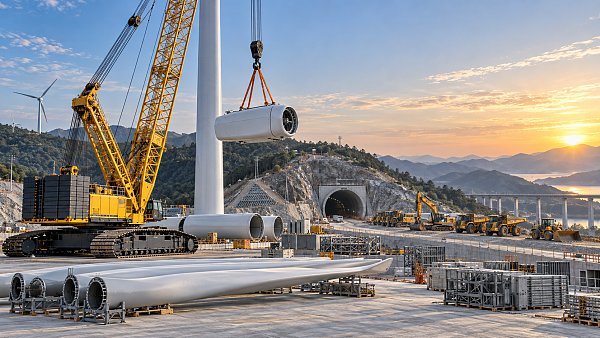
The same pattern shows up in mining and heavy lifting. An open-pit expansion may appear attractive because fleet demand is large, but if haul road conditions, altitude, fuel logistics, and maintenance access are unfavorable, the winning position may depend less on nominal equipment size and more on lifecycle support capacity. A major lifting package for wind or petrochemical work may look straightforward from the outside, yet transport restrictions, crane assembly footprint, weather windows, and auxiliary lifting needs often decide whether the package is truly profitable. Tender intelligence helps contractors detect those conditions before committing bid resources.
This is where TF-Strategy’s operating logic fits the market. In sectors tied to TBM systems, open-pit mining, ultra-large lifting machinery, road machinery, and heavy haulage, the earliest useful signal is rarely a single announcement. It is the stitching together of project intent, technical constraints, and machinery demand. A permit filing says one thing. A request for geological drilling says more. A change in imported cutter tools, heavy transport planning, or temporary power requirements can say even more.
When a Tender Looks Large but Is Not High-Value
One of the more expensive mistakes in bidding is to chase projects that are big in capex terms but structurally weak for the contractor’s position. Project tender intelligence is valuable here because it filters for fit, not noise.
Consider large urban tunneling. A contractor may see a sizeable metro extension and assume the project suits any major underground player. The details usually say otherwise. Urban settlement sensitivity, utility congestion, shaft access limitations, and segment logistics can favor contractors with a very specific operating model. If early intelligence indicates constrained launch sites, strict spoil removal timing, or demanding environmental interfaces, then a contractor strong in machine procurement but weak in urban logistics integration may spend heavily on pursuit with little chance of landing a defensible margin.
In open-pit mining, the trap is often different. A greenfield or expansion program may generate visible demand for excavators and dump trucks, but high-value participation depends on the mine plan, not just the fleet count. Strip ratio, bench configuration, tire supply stability, workshop layout, and fuel or electrification strategy all influence whether equipment-heavy bidders can offer a credible total operating solution. If intelligence suggests the owner is moving toward remote operation, trolley-assist, or a staged fleet renewal rather than a single procurement wave, the best commercial move may be to target a narrower package or enter through service support rather than commit to a broad capital bid.
Signals That Matter Before the Official Tender
The useful signals differ by sector, but the pattern is consistent: good intelligence identifies the conditions that shape bidability before the commercial package is formally assembled.
Notice that none of these signals works well in isolation. A tunnel alignment update without geology is only a partial clue. A mine transport corridor announcement without workshop planning says little about long-term equipment demand. The value comes from correlation. That is why intelligence platforms focused on heavy industry need engineering context, not just news aggregation.
Where Contractors Usually Underestimate Risk
A recurring issue in bid qualification is treating technical complexity and commercial complexity as separate tracks. They are usually the same problem seen from different angles. If a project requires specialized cutterhead material support, high-availability hydraulic systems, or extreme-temperature haulage performance, the cost structure is already being shaped before procurement terms are drafted. Tender intelligence becomes a risk tool because it reveals whether margin pressure will come from execution difficulty, from supply dependency, or from both.
This is particularly relevant when owners are under schedule pressure. Fast-tracked infrastructure programs often produce tenders that appear attractive because they are large and urgent. But urgency can hide design immaturity, fragmented package boundaries, or unresolved site interfaces. A contractor entering too late may only see the urgency. A contractor tracking the project earlier may recognize that the real challenge is not production capacity but interface control: spoil disposal permits still moving, temporary access roads incomplete, heavy transport routes not cleared, or utility relocation still in dispute. None of those issues automatically kills a bid, but each one should change pricing logic and partnering strategy.
Another common blind spot is localization. In cross-border projects, the headline tender can suggest open competition while the execution model quietly favors bidders with local assembly support, trained maintenance labor, or established compliance pathways. Early intelligence on local content expectations, customs friction for oversized components, and service base proximity can help a contractor decide whether to lead, partner, or step back. That judgment is often more valuable than being first to download the tender file.
What High-Value Really Means in Heavy Industry
High-value does not simply mean high contract value. In machinery-intensive sectors, a bid becomes strategically valuable when at least one of four conditions is visible early.
One, the project has a technical barrier that narrows the field. Deep tunnel drives, constrained urban launch sites, difficult ground interfaces, or extreme haulage environments can all reduce the number of credible bidders. Two, the equipment and support model align with the contractor’s proven operating strengths. Three, the package boundary allows the contractor to control the variables that usually damage margin, such as logistics, maintenance access, and sequencing. Four, the project opens adjacent follow-on work, whether in maintenance, fleet renewal, spare parts, segment supply, or additional civil packages.
Without intelligence, many teams rank opportunities by size and visibility. With intelligence, they can rank them by probability-adjusted value. That changes behavior inside the organization. Estimators focus earlier. Technical teams review methodology sooner. Procurement can test supply assumptions before they become bid commitments. Senior management gets a more disciplined pursuit decision instead of a late-stage go/no-go debate built on incomplete facts.
A Better Way to Read the Market
For contractors operating around TBM works, mining fleets, large lifting systems, road machinery, and heavy haulage, the market rarely announces its best opportunities in a clean sequence. The useful picture emerges from fragments: engineering intent, equipment footprints, material changes, logistics preparation, and owner-side urgency. Project tender intelligence earns its place when it helps teams connect those fragments early enough to act on them.
That does not mean every early signal should trigger a pursuit. It means the contractor can ask sharper qualifying questions before competitors fully commit: Is the project technically selective? Are site conditions likely to reward our delivery model? Where will the real cost pressure sit? Which package structure gives us control, and which one turns us into a price taker? In heavy infrastructure, those questions decide whether a bid is merely available or genuinely worth winning.
Related News
 Sep 16, 2026Infrastructure Equipment Market Reference: Demand, Pricing, and Supplier BenchmarksInfrastructure equipment market reference for buyers: assess demand signals, total cost, pricing risks, and supplier benchmarks for tunnels, mining, cranes, and road projects.
 Sep 15, 2026How to Evaluate Infrastructure Equipment Suppliers for Complex Project RequirementsInfrastructure equipment solutions supplier evaluation guide for complex projects: assess technical fit, lifecycle cost, reliability, local support, and contract risk.
 Sep 14, 2026What Drives Surface Mining Equipment Cost Across a Mine’s Operating Life?Surface mining equipment cost depends on fleet matching, fuel, wear, maintenance, availability, and rebuild timing. Explore lifecycle strategies that protect output and margins.
 Sep 13, 2026Crawler Crane Application Analysis for Wind Farms, Bridges, and Confined SitesCrawler crane application analysis for wind farms, bridges, and confined sites—optimize lift paths, ground conditions, access, and schedules for safer project delivery.


Ms. Elena Rodriguez
Weekly Insights
Stay ahead with our curated technology reports delivered every Monday.