
How to Evaluate a Mining Transport Manufacturer for Fleet Reliability and Lifecycle Cost
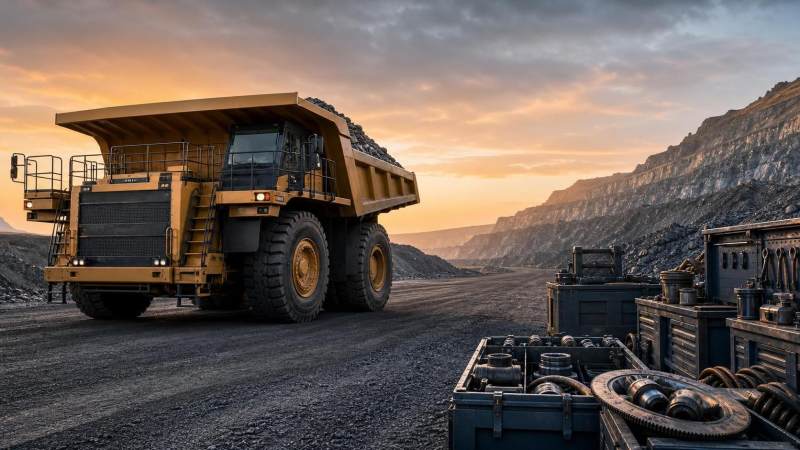
What should procurement teams look at first when comparing a mining transport manufacturer?
Start with the question that matters after the purchase order is signed: will this fleet stay available in your actual mine conditions without turning maintenance into a constant fire drill? A mining transport manufacturer may look competitive on quoted unit price, but that tells you very little about lifecycle cost.
For procurement teams, the quickest way to separate serious suppliers from weak ones is to evaluate four things together: structural durability, service support, operating efficiency, and parts availability. If one of those is weak, the apparent savings usually disappear through downtime, slow repairs, excess tire wear, fuel burn, or short component life.
A good first pass is simple: ask each manufacturer to explain how its trucks are configured for your haul profile, site altitude, temperature range, road condition, payload practice, and maintenance setup. If the answers stay generic, you are not really being evaluated as an operating case. That is a warning sign.
Is purchase price ever the right basis for shortlisting?
Only as a filter, not as a decision rule. In mining transport, a lower capital price can still produce a more expensive fleet if it brings weaker uptime, shorter overhaul intervals, slower parts delivery, or higher fuel and tire consumption.
The better approach is to build a shortlist using total cost drivers. At minimum, compare:
- Expected availability and mean repair time
- Fuel or energy consumption by haul cycle
- Tire life under your road conditions
- Scheduled maintenance intervals
- Lead time for critical spares
- Local service response capability
- Component rebuild strategy and cost
- Residual value or second-life market acceptance
If a manufacturer cannot help structure a lifecycle cost comparison, procurement is being asked to make a high-value decision with low-value information.
How do you judge whether the truck design is truly fit for your mine?
Look beyond rated payload. Fleet reliability depends on how the machine is matched to the site, not how impressive the brochure looks. A truck that performs well on moderate grades and stable haul roads may behave very differently in deep pits, high altitude, muddy ramps, or extreme cold.
Ask the mining transport manufacturer to review site variables that directly affect truck life:
- Average and maximum haul grade
- Rolling resistance and road maintenance quality
- Cycle distance and idle time
- Payload discipline and loading variability
- Ambient temperature range
- Dust, moisture, and corrosion exposure
- Altitude effects on powertrain performance and cooling
Then check whether the proposed configuration actually responds to those conditions. That includes braking system suitability, cooling capacity, suspension setup, body design, filtration approach, and access for routine maintenance. If the proposal is basically the same regardless of site profile, it is probably optimized for selling, not operating.
Which documents reveal the most about lifecycle cost risk?
Procurement should ask for more than a technical datasheet. The useful documents are the ones that show how the supplier expects the fleet to be maintained, supported, and repaired over time.
One practical test: read the warranty exclusions carefully. If misuse, road condition, overloading, contamination, temperature, or maintenance interval deviations are written very broadly, your real protection may be much thinner than the headline warranty period suggests.
How much weight should be given to parts and service support?
A lot. In many mining operations, support quality matters almost as much as machine quality. Even a solid platform becomes expensive if the mine waits too long for components, field technicians, or troubleshooting decisions.
Ask very direct questions. Where are the fast-moving parts stocked? Which components are stocked locally versus imported on demand? What is the escalation path when a truck is down for a control issue or drivetrain fault? Can the supplier support night shifts, remote sites, and planned shutdown windows?
This is also where many buyers make an avoidable mistake: they count nearby sales coverage as service coverage. Those are not the same thing. A strong mining transport manufacturer should be able to identify field support resources, technical training scope, diagnostic tools, and spare parts planning methods in operational terms.
What operating data should you request before making a final decision?
You want data that connects truck performance to cost, not just speed or payload in isolation. Ask for the manufacturer’s assumptions on fuel use, maintenance intervals, tire management, and component life under conditions close to yours. Then check whether those assumptions are tied to a defined duty cycle.
Useful decision inputs include expected truck availability, planned maintenance hours, typical consumables replacement intervals, and the conditions under which those estimates hold. The key is not to treat such numbers as universal truth. Treat them as a model, then compare the models supplier by supplier on the same duty basis.
If the manufacturer cannot explain the operating assumptions behind its estimates, the cost model is too weak to guide procurement.
Can digital monitoring and diagnostics change the cost equation?
Yes, but only if the system helps the mine act earlier and more accurately. Remote monitoring, fault diagnostics, payload tracking, and maintenance alerts can reduce unplanned downtime, yet the benefit depends on how usable the information is for site maintenance teams.
When evaluating a mining transport manufacturer, ask who owns the data, how alerts are prioritized, whether historical fault data can be exported, and how the system supports root-cause analysis. A dashboard that looks modern but does not improve repair planning is mostly presentation.
It is also worth checking whether the digital tools require subscription fees, additional hardware, or dedicated site connectivity. Those costs belong in the lifecycle model.
What are the biggest red flags during supplier evaluation?
A few patterns tend to show up when the risk is higher than the proposal suggests.
- Quoted lifecycle savings without a clear duty-cycle basis
- Strong focus on payload and top speed, weak detail on serviceability
- Vague answers on spare parts stocking and critical component lead times
- Warranty language that shifts broad responsibility back to the operator
- No practical explanation of technician training or commissioning support
- Claims of fit-for-purpose performance without discussing site conditions
None of these points alone automatically disqualifies a supplier. But when several appear together, procurement should slow the process down and request a more detailed technical and commercial review.
Should procurement score manufacturers with a weighted matrix?
Yes. A weighted matrix helps stop the conversation from collapsing into price negotiation too early. It also forces internal alignment between procurement, maintenance, operations, and finance.
The categories should reflect how the mine actually loses money. For example, an operation with long logistics lead times may weight parts support more heavily than a site near a major service hub. A steep, high-altitude mine may give more weight to braking, cooling, and powertrain suitability than a flatter haul environment.
Keep the matrix grounded in evidence. If a supplier gets a high score for service, that score should tie back to named facilities, defined response paths, and documented stocking plans, not sales confidence.
How do you compare two manufacturers when both seem technically acceptable?
This is where procurement needs to move from machine comparison to operating model comparison. Ask which supplier will make your maintenance organization more predictable over the next five to seven years.
A technically acceptable truck can still be the weaker commercial choice if it demands more specialized parts, more frequent interventions, or more dependence on factory-level support. The better manufacturer is often the one that reduces uncertainty: clearer spare parts planning, cleaner service documentation, easier maintenance access, stronger training, and fewer cost surprises once the fleet is in service.
That is usually the more useful final question than “Which one is cheaper?” Ask instead, “Which supplier leaves us with fewer expensive unknowns?”
What is a practical final check before award?
Before award, run one disciplined review covering three files side by side: the technical proposal, the commercial offer, and the service-and-parts commitment. Look for mismatches. A truck sold as mine-ready should not depend on support terms that are still loose, undefined, or heavily conditional.
Procurement teams often get the best result when they lock in the operating assumptions used for evaluation and attach them to the deal discussion. That way, the comparison stays tied to real haul conditions, expected maintenance practice, and parts support obligations, rather than drifting into a simple equipment price contest.
If you remember one rule, make it this: choose the mining transport manufacturer that can explain, document, and support fleet performance over time, not just deliver the truck. In heavy haulage, reliability is rarely bought through specifications alone. It is bought through the full support model behind them.
Related News
 Sep 15, 2026How to Evaluate Infrastructure Equipment Suppliers for Complex Project RequirementsInfrastructure equipment solutions supplier evaluation guide for complex projects: assess technical fit, lifecycle cost, reliability, local support, and contract risk.
 Sep 14, 2026What Drives Surface Mining Equipment Cost Across a Mine’s Operating Life?Surface mining equipment cost depends on fleet matching, fuel, wear, maintenance, availability, and rebuild timing. Explore lifecycle strategies that protect output and margins.
 Sep 13, 2026Crawler Crane Application Analysis for Wind Farms, Bridges, and Confined SitesCrawler crane application analysis for wind farms, bridges, and confined sites—optimize lift paths, ground conditions, access, and schedules for safer project delivery.
 Sep 12, 2026Open-Pit Mining in North America: Key Project Risks and Planning PrioritiesOpen-pit mining North America: uncover key risks and planning priorities for geology, permitting, water, fleet strategy, and resilient project delivery.
Ms. Elena Rodriguez
Weekly Insights
Stay ahead with our curated technology reports delivered every Monday.