
Construction equipment efficiency often drops for these reasons
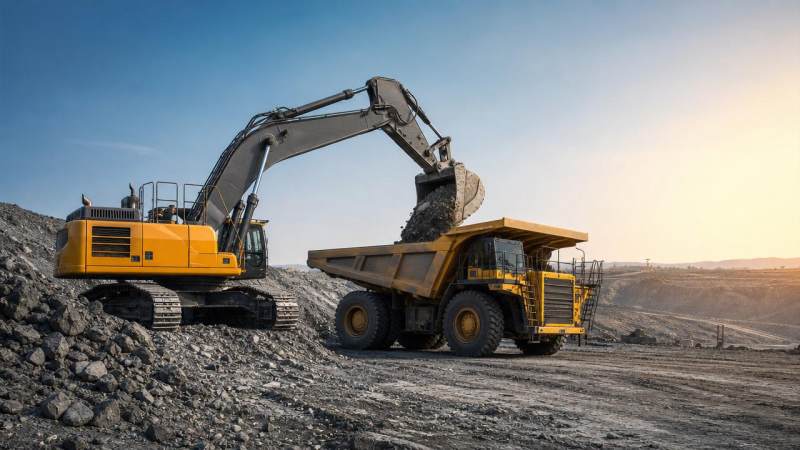
Construction equipment efficiency often declines long before obvious failures appear, quietly raising fuel use, downtime, and project risk. For project managers and engineering leaders, understanding what causes construction equipment efficiency loss is essential to keeping schedules, controlling total cost, and improving site performance. This article highlights the most common reasons behind efficiency drops and what they mean for smarter equipment decisions.
Why does construction equipment efficiency fall before major breakdowns?
In heavy construction, mining, tunneling, lifting, and road-building operations, efficiency loss rarely starts with a dramatic failure. It usually begins with small deviations in cycle time, fuel burn, hydraulic response, undercarriage wear, operator behavior, or maintenance discipline.
For project managers, the danger is not only machine stoppage. The bigger issue is hidden performance drift. A crawler crane that takes longer to position, an excavator that burns more diesel per bank cubic meter, or a dump truck that loses haul speed on grade can erode daily output without triggering immediate alarm.
This is why construction equipment efficiency should be treated as a management variable, not just a maintenance metric. On complex sites, equipment productivity links directly to crew utilization, subcontractor sequencing, material flow, and contractual delivery risk.
- A minor hydraulic leak can reduce breakout force, extend digging cycles, and increase fuel use.
- Improper attachment matching can overload pumps, shorten component life, and reduce net output.
- Poor haul-road conditions can cut truck tire life and sharply reduce payload movement per shift.
- Untrained operators may idle excessively, over-swing, or underuse available machine control functions.
For organizations running TBM support fleets, ultra-large excavators, crawler cranes, road machinery, or mining dump trucks, the efficiency question is also strategic. TF-Strategy tracks how physical machine parameters, site methods, and project objectives interact, helping engineering leaders identify whether losses come from equipment health, application mismatch, or weak planning assumptions.
The most common reasons behind construction equipment efficiency loss
The table below summarizes the most frequent causes of construction equipment efficiency decline across infrastructure, mining, tunnel, and heavy-lifting projects. It is especially useful for managers comparing machine performance across fleets and work packages.
The practical takeaway is simple: construction equipment efficiency rarely drops for a single reason. Most losses come from a stack of small management failures that compound over time. The earlier those signals are measured, the easier it becomes to protect output and TCO.
1. Maintenance is done, but not done at the right depth
Many fleets appear compliant because service intervals are being logged. Yet efficiency still falls when maintenance is calendar-based instead of condition-led. Filters may be changed, but contamination trends, oil analysis, track tension, tire condition, pin wear, hydraulic pressure drift, and cooling performance are not being monitored closely enough.
This issue is common in high-load applications such as open-pit excavation, long-haul dump operations, and crawler crane lifting campaigns. Machines may remain operational, but they no longer perform at designed output. That difference directly affects cost per ton, cost per meter, or cost per lift.
2. The machine is capable, but the application match is poor
An excavator matched to the wrong bucket geometry, a dump truck assigned to unsuitable gradients, or a road machine deployed in a stop-start paving environment will lose efficiency even if mechanically healthy. This is not a brand problem. It is an application engineering problem.
For tunnel and mining support fleets, attachment selection, haul profile, material density, swing angle, and bench height all influence real production. TF-Strategy’s intelligence approach is valuable here because it connects machine specifications with method statements and project realities instead of reviewing equipment in isolation.
3. Site logistics quietly limit machine productivity
Construction equipment efficiency depends on the full operating system around the machine. Queueing at loading points, inadequate spotting support, poor haul-road drainage, restricted crane set-up zones, and uncoordinated material deliveries can all reduce useful working time.
Project managers often focus on machine purchase price or rental rate, but site logistics usually decide whether the asset delivers planned output. When one constraint delays several machines, the total loss across a shift can exceed the cost of a major repair event.
How to identify efficiency loss by equipment type and jobsite scenario
Different assets lose construction equipment efficiency in different ways. A tunneling support fleet does not fail like a mining truck fleet, and a heavy-lift crane does not show the same warning pattern as a road paver. Managers should monitor scenario-based indicators rather than relying on generic utilization reports.
TBM support and underground works
- Watch auxiliary equipment cycle coordination, not just individual machine uptime.
- Check whether muck handling, segment transport, and confined-space access are slowing support equipment.
- Review hydraulic heat load and dust-related filtration stress more frequently than on open sites.
Open-pit mining and ultra-large excavators
- Measure pass count per truck, swing angle stability, and bucket fill factor.
- Track haul-road rolling resistance because it strongly affects dump truck efficiency.
- Review payload discipline to avoid chronic underloading or overload-related wear.
Crawler cranes and heavy lifting
- Assess actual lift planning quality, pick-and-carry limits, and ground-bearing preparation.
- Monitor assembly and relocation time, not just hook time.
- Identify weather-related idle windows that distort nominal utilization figures.
Road machinery and paving operations
- Check material supply continuity because interruptions sharply reduce paving quality and output.
- Compare paving speed stability with compaction sequencing.
- Review automation settings, screed calibration, and operator transition management.
These distinctions matter because an efficiency recovery plan should be equipment-specific. A universal checklist is helpful, but it is not enough for billion-dollar infrastructure environments where output sensitivity is high.
What should project managers measure first?
When construction equipment efficiency becomes a concern, managers need a short list of leading indicators. The goal is not to collect more data. The goal is to collect the right data that connects machine behavior to schedule and cost exposure.
The following evaluation table can support weekly fleet reviews, rental decisions, or owner-contractor performance discussions.
These metrics work because they expose both technical and operational causes. If availability is stable but fuel per unit output rises, the problem may be machine condition or site resistance. If fuel is normal but cycle time variance widens, the issue may be dispatching, operator behavior, or material handling flow.
Procurement mistakes that reduce construction equipment efficiency later
Many efficiency problems are locked in during procurement. A machine can meet budget approval and still underperform on site because the evaluation process focused too heavily on purchase price, engine rating, or nominal capacity.
Common selection errors
- Choosing based on peak capacity instead of expected duty cycle and site constraints.
- Ignoring attachment compatibility, consumable wear rates, and maintenance access.
- Assuming one fleet configuration can suit tunneling, mining, lifting, and roadwork equally well.
- Failing to compare transport, assembly, and relocation demands for large machines.
- Underestimating environmental conditions such as altitude, temperature, abrasiveness, and moisture.
For engineering leaders, the right question is not “Which machine is bigger?” but “Which machine sustains output in our actual operating window?” That is particularly important when comparing TBM support equipment, open-pit excavators, crane configurations, or heavy haulage systems where method fit determines long-term efficiency.
A better procurement checklist
- Define the production target in measurable units such as tons, cubic meters, tunnel meters, or lifts per shift.
- Model the real site profile, including slope, haul distance, swing radius, or confined access.
- Review service support lead times, parts criticality, and field maintenance capability.
- Ask for performance evidence tied to similar working conditions, not only catalog values.
- Evaluate digital monitoring options that support utilization, predictive maintenance, and operator coaching.
How TF-Strategy helps reduce hidden efficiency losses
TF-Strategy is positioned differently from a basic equipment news source. Its value lies in linking machinery parameters, construction methods, and strategic infrastructure demand. For project managers, this means decisions can be grounded in application context rather than isolated product claims.
Across TBM systems, ultra-large excavators, crawler cranes, large road machinery, and mining dump trucks, TF-Strategy follows the operational logic behind performance: material conditions, hydraulic behavior, remote-control trends, cutter-head material evolution, heavy haulage economics, and green transition pressures.
That perspective is useful when construction equipment efficiency is falling but the cause is unclear. A project may need to compare technology routes, reassess TCO, identify supply-chain risk, or understand how new electrification and digitalization trends affect fleet planning. Intelligence at that level supports better decisions than reactive maintenance alone.
- Need to compare machine categories for a new infrastructure package? TF-Strategy supports method-based evaluation.
- Need to reduce TCO on a high-value project? TF-Strategy highlights structural cost drivers behind equipment choices.
- Need to understand technology shifts such as 5G remote operation or electric mining trucks? TF-Strategy translates trends into decision relevance.
FAQ: practical questions about construction equipment efficiency
How can I tell whether low construction equipment efficiency is caused by the machine or the jobsite?
Start by separating mechanical availability from productive availability. If the machine is technically available but output remains low, review idle time, queueing, haul conditions, lift planning, or material flow. If fuel burn rises and response slows at the same time, inspect machine condition more closely.
Which indicator usually shows efficiency loss first?
Fuel consumed per unit of output is often one of the earliest warning signs. It can rise before major faults appear. Cycle time instability is another strong early indicator because it captures both machine behavior and operating method problems.
Is bigger equipment always more efficient on large projects?
No. Oversized equipment may face transport limits, poor utilization, greater fuel burn, harder maintenance access, or higher idle ratios. Efficiency depends on fit between machine, material, geometry, support logistics, and production target, not size alone.
What should be reviewed before replacing an underperforming machine?
Review attachment match, operator practice, route condition, maintenance quality, payload discipline, and actual duty cycle first. Many fleets replace assets when the root issue is site design or method control. Replacement should come after a structured performance diagnosis.
Why choose us for equipment intelligence and decision support?
For project managers and engineering leaders, the main challenge is not access to more headlines. It is access to decision-grade intelligence that explains why construction equipment efficiency changes across different heavy-industry scenarios. TF-Strategy is built for that gap.
We focus on the machinery categories that shape large-scale infrastructure outcomes: TBM systems, ultra-large excavators, crawler cranes, road machinery, and mining dump trucks. Our analysis connects equipment parameters, construction methodology, and strategic market direction so you can judge performance with stronger context.
You can contact TF-Strategy for support related to parameter confirmation, equipment selection logic, project-specific application matching, delivery-cycle considerations, TCO comparison, technology trend evaluation, and infrastructure-oriented intelligence for heavy equipment planning.
If you are reviewing a fleet plan, comparing solution routes, or investigating hidden efficiency loss on a high-value project, reach out with your operating scenario, target output, and equipment category. A more precise decision starts with clearer technical and strategic context.
Related News
 Oct 06, 2026Selecting Petrochemical Overhead Cranes for Hazardous Areas and Heavy Process LoadsPetrochemical overhead cranes for hazardous areas: learn how to match capacity, duty, controls, corrosion protection, and maintenance access for safer, reliable lifts.
 Oct 05, 2026Tunneling Equipment Specification Planning: Key Criteria for Ground and Project RisksEquipment specification planning tunneling: learn how to match TBM systems to ground risks, geometry, safety, logistics, and lifecycle cost for more reliable project delivery.
 Oct 04, 2026Nuclear Lifting Equipment Cost: Budgeting for Compliance, Testing, and Lifecycle RiskNuclear lifting equipment cost explained: budget for compliance, proof-load testing, installation, documentation, and lifecycle risk to make confident procurement decisions.
 Oct 03, 2026How to Assess TBM Manufacturers for Hard-Rock Tunneling Projects?Choose the right tunnel boring machine manufacturer for hard-rock projects. Explore key criteria for design, lifecycle cost, factory quality, and service support.
Ms. Elena Rodriguez
Weekly Insights
Stay ahead with our curated technology reports delivered every Monday.