
Why construction machinery standards matter in procurement
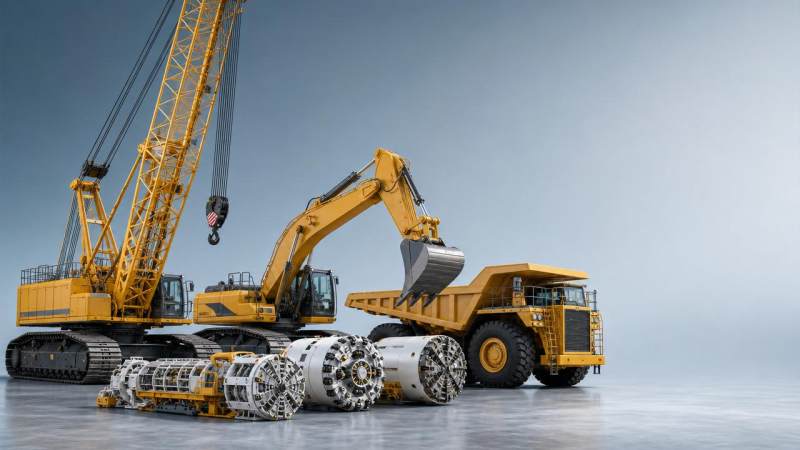
In procurement, overlooking construction machinery standards can lead to costly mismatches in safety, performance, compliance, and lifecycle value. For buyers responsible for heavy equipment decisions, understanding these standards is essential to comparing suppliers accurately, reducing operational risk, and protecting long-term project outcomes. This article explains why construction machinery standards matter and how they support smarter, more strategic purchasing.
For procurement teams in heavy industry, standards are not a paperwork issue. They are a decision framework that connects machine design, site conditions, operator safety, maintenance planning, spare parts availability, and resale value. Whether the purchase involves a TBM subsystem, a crawler crane, a mining dump truck, a large excavator, or road machinery, standards help buyers compare like for like instead of relying on marketing claims.
In global projects, a machine may work for 8,000 to 20,000 operating hours across 5 to 15 years. A procurement mistake made during tender evaluation can therefore affect fuel use, downtime, payload efficiency, lifting safety, or structural fatigue for a very long time. For organizations managing large infrastructure and mining projects, construction machinery standards are one of the most practical tools for controlling total cost of ownership.
What construction machinery standards actually cover
The phrase construction machinery standards often sounds broad, but in procurement it usually refers to a structured set of requirements covering 4 core areas: safety, performance, testing, and documentation. These standards may be international, regional, national, or project-specific, and they often overlap in tenders for cross-border infrastructure work.
From physical design to field performance
A standard may define guarding requirements, braking performance, stability limits, load charts, hydraulic pressure tolerances, emissions levels, noise thresholds, electrical protection, or inspection intervals. In heavy applications such as open-pit mining or long tunnel drives, even a tolerance band of ±3% in rated output or a maintenance interval difference of 250 hours can materially affect project planning.
For procurement personnel, this means standards are not abstract rules. They influence whether a supplier’s equipment can safely lift 600 tons, operate on a 12% haul road grade, maintain cutterhead support systems under variable geology, or sustain paving accuracy within a narrow surface tolerance window.
Common standard categories buyers should review
- Machine safety requirements for operation, guarding, emergency stop, and access systems
- Performance and test methods for rated capacity, cycle time, traction, stability, and endurance
- Environmental and operating condition requirements such as temperature, altitude, dust, and noise
- Documentation requirements including manuals, maintenance schedules, inspection records, and parts lists
- Interface standards affecting telematics, remote diagnostics, sensors, and control integration
The table below shows how standards typically translate into procurement checkpoints for different equipment categories relevant to TF-Strategy’s heavy industry focus.
The key point is that standards create a common language between engineering, operations, HSE, and procurement. Without that language, supplier comparisons become inconsistent and commercial evaluation often misses technical risk hidden in the fine print.
Why standards matter so much in procurement decisions
For buyers, the value of construction machinery standards becomes most visible in 3 situations: supplier comparison, contract negotiation, and lifecycle cost forecasting. In each case, standards reduce ambiguity and turn a complex technical purchase into a manageable evaluation process.
1. They make supplier offers comparable
Two suppliers may both claim a machine is “high efficiency” or “heavy duty,” but those descriptions are meaningless unless measured against the same test conditions. A haul truck rated under one operating condition may deliver a very different effective payload at 3,500 meters altitude, while a crane’s published lifting capacity can change sharply with boom length, radius, and wind speed.
Standards force suppliers to define the basis of performance. That helps procurement teams compare 5 critical dimensions more accurately: rated output, safety margin, maintenance cycle, environmental suitability, and supporting documentation.
2. They reduce legal and operational exposure
A non-compliant machine can trigger site rework, delayed approvals, insurance disputes, or import clearance problems. In regulated projects such as rail tunnels, metro expansions, offshore wind logistics, petrochemical modules, and large mines, the cost of a 2-week procurement shortcut can become a 6-month execution issue.
Construction machinery standards also support traceability. If a component fails after 1,200 hours instead of the expected 3,000 to 4,000 hours, buyers need objective records to determine whether the issue came from manufacturing quality, operating misuse, maintenance practice, or an unclear technical specification.
3. They improve total cost of ownership analysis
Purchase price is only one part of equipment economics. For many heavy machines, operating and maintenance costs over 5 years can equal 1.5 to 2.5 times the initial capital cost. Standards help buyers estimate this longer-term picture because they define service intervals, component life assumptions, inspection requirements, and parts interchangeability.
Typical procurement benefits of standard-based evaluation
- Fewer specification gaps in tenders and RFQs
- More accurate commercial comparisons across 3 to 6 shortlisted suppliers
- Lower risk of change orders after delivery
- Better forecasting of spare parts, tooling, and technician training needs
- Stronger basis for warranty and performance guarantee discussions
This is especially important in sectors tracked by TF-Strategy, where machine uptime and deployment precision directly affect billion-dollar project schedules. A standards-driven procurement process is often the difference between planned productivity and expensive improvisation.
Key procurement risks when standards are ignored
Ignoring construction machinery standards does not always cause immediate failure. More often, it creates hidden inefficiencies that surface later in commissioning, operation, inspection, or overhaul. These issues are costly because by then the contract is signed, the machine is delivered, and corrective options are limited.
Safety and certification mismatch
If emergency systems, guarding, lighting, or access arrangements do not meet site expectations, the machine may fail pre-start inspection. Even a delay of 7 to 10 days can interrupt lifting windows, tunnel support cycles, or mine production targets. On major sites, that delay often multiplies across labor, transport, and subcontractor scheduling.
Performance claims that do not match duty cycle
A machine may perform acceptably in catalog conditions but underperform in actual use. Common examples include road equipment that cannot maintain paving consistency at the required laydown speed, excavators with slower cycle time under high-density material, or dump trucks losing efficiency under extreme temperatures from -20°C to 45°C.
Weak after-sales support and parts planning
Standards also affect parts coding, maintenance documents, and service procedures. If a procurement team buys equipment without standardized documentation, spare parts lead times may extend from a normal 2 to 4 weeks to 8 weeks or longer. For machines working in remote mines or long tunnel sections, that is a serious uptime risk.
The following table highlights common procurement gaps and their likely downstream impact.
For procurement professionals, the lesson is simple: standards reduce uncertainty before purchase, while missing standards increase cost after purchase. The earlier this is addressed in the sourcing cycle, the more leverage the buyer keeps.
How buyers can use standards to build a stronger sourcing process
A practical procurement workflow should turn construction machinery standards into tender requirements, technical evaluation rules, and contract deliverables. This does not require buyers to become design engineers, but it does require a disciplined process with clear checkpoints.
Step 1: Define the actual operating profile
Start with the machine’s real application. Is the equipment running 2 shifts or 3 shifts? Will it work at sea level or above 2,500 meters? What is the target payload, lifting radius, cutting hardness, or paving throughput? A machine specified for 10 hours per day can look very different from one designed for 20 hours per day in harsh conditions.
Step 2: Translate application needs into compliance criteria
Once the duty profile is clear, buyers should align it with technical and safety requirements. That includes operating temperature range, structural duty expectations, service access, emissions obligations, digital monitoring needs, and project-specific approval rules. This step often narrows supplier options, but it improves procurement quality.
Step 3: Score offers beyond purchase price
A balanced evaluation model may assign 30% to technical compliance, 25% to lifecycle cost, 20% to after-sales capability, 15% to delivery schedule, and 10% to commercial terms. The exact weighting varies, but the main idea remains: standards should influence the score, not sit as an appendix nobody uses.
A practical checklist for procurement teams
- Verify the standard basis behind each rated capacity or productivity claim
- Ask for testing conditions, not only headline numbers
- Check whether manuals, parts books, and maintenance intervals are contract deliverables
- Confirm inspection, commissioning, and training scope before shipment
- Review spare parts lead times for the top 20 critical wear and failure items
- Ensure telematics and diagnostic interfaces match site fleet management systems
For organizations sourcing specialized heavy equipment, intelligence support is increasingly important. A portal such as TF-Strategy adds value by linking technical parameters, project methodologies, and global equipment trends. That helps procurement teams understand not only whether a machine meets today’s standard, but also whether it aligns with future shifts such as remote operation, electrification, and tighter safety expectations.
Standards as a strategic advantage in heavy equipment procurement
In sectors like tunneling, mining, heavy lifting, and large-scale road construction, equipment decisions are strategic because they shape project execution for years. Construction machinery standards create discipline in that decision. They help buyers filter risk, improve supplier discussions, and build contracts that are easier to enforce from factory acceptance to field service.
They also support better collaboration between procurement and technical teams. When engineers, operators, and buyers evaluate equipment against the same reference points, decisions become faster and more defensible. That is especially valuable in international tenders where 3 to 5 bidders may present very different design philosophies for the same application.
What this means for modern procurement teams
Today’s buyers are not only negotiating price. They are managing risk across safety, uptime, documentation, carbon transition, digital compatibility, and lifecycle economics. In that environment, construction machinery standards are not a technical side note. They are a procurement asset that improves decision quality from RFQ drafting to final acceptance.
If your organization is comparing TBM systems, crawler cranes, ultra-large excavators, mining dump trucks, or road machinery, a more standards-based sourcing approach can prevent expensive mismatches and strengthen long-term project performance. To explore deeper equipment intelligence, application guidance, and procurement insight for heavy industry, contact TF-Strategy, request a tailored evaluation framework, or learn more about strategic solutions built for complex engineering purchases.
Related News
 Oct 06, 2026Selecting Petrochemical Overhead Cranes for Hazardous Areas and Heavy Process LoadsPetrochemical overhead cranes for hazardous areas: learn how to match capacity, duty, controls, corrosion protection, and maintenance access for safer, reliable lifts.
 Oct 05, 2026Tunneling Equipment Specification Planning: Key Criteria for Ground and Project RisksEquipment specification planning tunneling: learn how to match TBM systems to ground risks, geometry, safety, logistics, and lifecycle cost for more reliable project delivery.
 Oct 04, 2026Nuclear Lifting Equipment Cost: Budgeting for Compliance, Testing, and Lifecycle RiskNuclear lifting equipment cost explained: budget for compliance, proof-load testing, installation, documentation, and lifecycle risk to make confident procurement decisions.
 Oct 03, 2026How to Assess TBM Manufacturers for Hard-Rock Tunneling Projects?Choose the right tunnel boring machine manufacturer for hard-rock projects. Explore key criteria for design, lifecycle cost, factory quality, and service support.
Ms. Elena Rodriguez
Weekly Insights
Stay ahead with our curated technology reports delivered every Monday.