
What affects mining equipment performance in daily use?
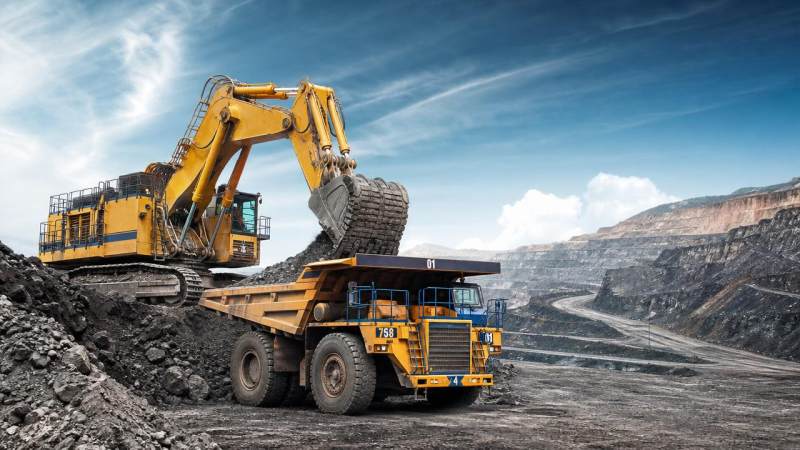
Mining equipment performance in daily use depends on far more than engine power alone. For operators and site users, factors such as load conditions, maintenance routines, ground environment, fuel quality, and operating habits can directly influence efficiency, wear, safety, and downtime. Understanding these everyday variables is the first step toward keeping machines productive, reliable, and cost-effective in demanding mining operations.
Why mining equipment performance changes even when the machine is the same
Many operators assume that once a machine leaves the factory, its output is fixed. In reality, mining equipment performance is highly variable in the field. Two identical units can show very different fuel burn, cycle times, tire wear, hydraulic response, and component life within the same month.
The reason is simple. Daily use exposes heavy equipment to changing terrain, shifting materials, variable operator inputs, maintenance discipline, and site logistics. In open-pit mining, these factors compound quickly because machines run under high load for long hours with limited tolerance for delay.
For users and operators, the goal is not only to keep the machine running. The real goal is to maintain stable mining equipment performance across shifts, seasons, and production targets while controlling total cost of ownership and avoiding avoidable downtime.
- Mechanical condition affects baseline capability, including engine efficiency, hydraulic pressure stability, braking response, and structural integrity.
- Operating conditions change real-world output, especially haul road resistance, bench layout, slope angle, material density, and weather exposure.
- Human factors influence results every hour, from throttle control and idle time to loading accuracy, cornering behavior, and pre-shift inspection quality.
The operator’s view: performance is productivity plus control
From the cab, performance is not an abstract specification. It means whether the excavator digs consistently, whether the dump truck climbs without strain, whether the machine reacts smoothly under load, and whether the shift finishes without a fault code or overheating event.
This field-level view is exactly where TF-Strategy adds value. By connecting machine parameters, application conditions, and engineering demands, the platform helps mining teams understand why performance gaps appear and how to respond with practical operational decisions.
Which daily-use factors have the biggest impact on mining equipment performance?
The strongest influences on mining equipment performance usually come from a small set of recurring field conditions. Operators who monitor these variables closely can often improve output without changing the machine itself.
The table below helps users identify common performance drivers, how they appear in daily work, and what they typically affect first.
What matters is not just identifying one factor in isolation. On real sites, these issues interact. A loaded truck on a deteriorated ramp with inconsistent maintenance will show a much sharper decline in mining equipment performance than any single variable suggests.
Load management is often underestimated
Load condition directly affects engine load factor, brake heat, structural stress, and travel speed. Underloading wastes cycle potential, but overloading creates larger problems. It can raise stress on tires, frames, swing systems, and final drives while also increasing fuel burn per productive ton.
For excavators and wheel loaders, bucket fill consistency also matters. Poor fragmentation, sticky material, and uneven bucket loading make machine motion less stable and reduce predictable cycle performance.
Ground and weather conditions change machine behavior fast
Open-pit sites rarely offer stable conditions for long. Rain can soften haul roads, dust can block cooling packages, and low temperatures can affect fluid viscosity and cold-start response. High altitude can reduce engine breathing and cooling effectiveness, especially on long uphill hauls.
These conditions do not just reduce output. They also distort operator judgment because the same control input can produce different machine reactions across shifts and seasons.
How operating habits shape mining equipment performance over time
A machine may survive poor habits for a while, but long-term mining equipment performance depends heavily on how it is used every day. This is especially true for fleets under production pressure, where small mistakes repeat thousands of times.
Habits that protect efficiency and component life
- Warm the machine according to site temperature and manufacturer guidance so hydraulic flow, lubrication, and control response stabilize before full load.
- Avoid harsh acceleration, abrupt braking, and unnecessary high idle because they waste fuel and increase thermal stress on driveline systems.
- Keep bucket or body loading balanced to reduce side loads, spillage, and unstable travel behavior.
- Report abnormal vibration, noise, smoke, or delayed controls early rather than waiting for a fault to become visible to maintenance staff.
Operators often focus on what the machine can do at peak output. A better question is whether the machine can repeat that output safely across the whole shift. Smooth, consistent operation usually delivers stronger daily performance than aggressive short bursts followed by overheating or wear-related stoppages.
Habits that quietly reduce performance
Frequent over-revving, turning sharply under load, ignoring tire pressure or track tension, and skipping basic walk-around checks may look minor at first. Over time, they change fuel efficiency, steering precision, structural fatigue, and maintenance frequency.
In many mines, the biggest performance loss does not come from catastrophic failure. It comes from accumulated inefficiency: extra seconds per cycle, more idle time, repeatable overloading, and delayed response to minor defects.
Maintenance quality versus downtime: what should users watch first?
Maintenance is one of the clearest controllable drivers of mining equipment performance. Good maintenance is not only about replacing parts on schedule. It is about preserving predictable machine behavior under production stress.
For operators, the challenge is practical. What should be checked first during a shift, and what warning signs deserve immediate escalation? The answer depends on the machine type, but several systems deserve routine attention in almost every mining environment.
The table below provides a user-focused checklist linking major systems to field symptoms and likely performance consequences.
This checklist shows why mining equipment performance is closely linked to condition monitoring. Operators do not need to diagnose every technical root cause, but they do need to recognize early deviations before they become repair events.
A practical daily inspection sequence
- Inspect visible leaks, loose fittings, structural cracks, tire condition, or track abnormalities before start-up.
- Verify fluid levels, filter condition indicators, and cooling package cleanliness in dusty or hot conditions.
- During operation, monitor response lag, warning lights, exhaust behavior, braking feel, and vibration changes.
- At shift end, log abnormalities clearly so maintenance teams can connect symptoms with operating conditions.
Which site conditions most often reduce productivity in open-pit mining?
In open-pit work, mining equipment performance is strongly shaped by the mine itself. Bench height, haul distance, gradient, material fragmentation, drainage quality, and traffic organization can either support the machine or work against it all day.
High-impact site variables
- Haul road rolling resistance raises fuel use and lowers average speed, especially for loaded dump trucks on long inclines.
- Poor blasting or fragmentation increases excavator digging effort, bucket fill inconsistency, and crusher feed variation.
- Dust-heavy conditions reduce cooling efficiency and can accelerate intake and filtration issues if housekeeping is weak.
- Water accumulation and soft ground reduce traction, increase slippage, and may force route changes or lower travel speed.
These are not only site engineering concerns. They directly affect operators because changing road quality and pit layout alter control behavior, braking distances, and safe payload handling. Better site planning often creates faster gains than chasing isolated machine upgrades.
TF-Strategy tracks this interaction between machine physics and infrastructure strategy. That matters for contractors and mining users who must link daily equipment behavior to project-scale productivity, TCO, and delivery risk.
How to compare performance risks before choosing or assigning equipment
When users compare machines, they often focus on rated power, payload, or bucket size. Those specifications matter, but they are not enough. A better decision process considers how each machine will perform in the actual site environment and operator context.
The table below can support procurement reviews, fleet assignment, or internal equipment planning when mining equipment performance is a critical decision factor.
A machine that looks stronger on paper may perform worse if it is poorly matched to road resistance, altitude, maintenance resources, or operator skill level. Good selection protects output before the first shift even starts.
What users should clarify before procurement or reassignment
- Expected material type, density, and fragmentation pattern.
- Typical haul distance, gradient, and daily weather stress.
- Available maintenance support, spare parts lead time, and lubrication discipline.
- Operator training level and whether digital monitoring tools are in use.
Common misconceptions about mining equipment performance
“More engine power always means better field performance”
Not necessarily. If the road is poor, the payload is unstable, or the hydraulic system is not well maintained, extra engine power may not translate into productive output. Field performance depends on system balance, not just headline power.
“If the machine is still moving, performance is acceptable”
This is risky. A machine can remain operational while losing efficiency through heat, contamination, misalignment, poor traction, or operator-induced stress. By the time production drops sharply, wear may already be advanced.
“Maintenance teams alone are responsible for performance”
Maintenance restores and preserves condition, but operators shape daily demand on the machine. Mining equipment performance is a shared outcome involving operation, maintenance, dispatching, road management, and site planning.
FAQ: practical questions users ask about mining equipment performance
How can operators improve mining equipment performance without major upgrades?
Focus on controllable basics first: correct loading, reduced idle time, smoother travel behavior, consistent pre-shift inspection, and early reporting of abnormal signs. On many sites, these steps improve cycle stability and lower wear without capital changes.
Which warning signs usually appear before serious performance loss?
Watch for rising operating temperature, sluggish hydraulics, new vibration, repeated warning alarms, uneven tire or track wear, smoke changes, and longer acceleration or travel times on familiar routes. These are often early indicators of deeper issues.
Does fuel quality really make a noticeable difference in daily use?
Yes. In demanding mining duty, poor fuel quality can affect combustion stability, filter life, injector cleanliness, and cold-weather starting behavior. The result may be lower power delivery, higher maintenance frequency, and less predictable mining equipment performance.
What should be prioritized when budgets are tight?
Start with road condition improvement, preventive maintenance discipline, operator training, and better payload control. These measures often deliver faster returns than isolated replacement spending because they improve fleet-wide performance, not just one component.
Why informed decision support matters in heavy equipment operations
Daily mining performance is not shaped by one number. It is the result of machine design, maintenance practice, environmental stress, haul logic, and operator behavior acting together. Users who understand this interaction make better decisions about operation, troubleshooting, and fleet planning.
TF-Strategy is built for that decision environment. Its intelligence model connects heavy machinery parameters, construction methods, geological realities, and infrastructure strategy across TBM systems, ultra-large excavators, crawler cranes, road machinery, and mining dump trucks. For mining teams, this means clearer insight into performance risks, technology shifts, and TCO-driven choices.
Why choose us for performance-focused heavy equipment insight?
If you need practical support around mining equipment performance, TF-Strategy can help you move beyond generic specifications. We support users, contractors, and project teams with decision-oriented intelligence tied to real operating conditions and heavy-industry application logic.
- Parameter confirmation for machines working under altitude, temperature, dust, or long-haul stress.
- Equipment selection guidance based on application scenario, duty cycle, and site constraints.
- Discussion support for delivery timing, maintenance practicality, and lifecycle cost considerations.
- Consultation on digital monitoring trends, remote-control excavation developments, and evolving mine fleet technologies.
- Targeted communication on certification expectations, project matching, and customized heavy equipment intelligence needs.
If your team is comparing options, troubleshooting field efficiency, or preparing for a new project phase, contact TF-Strategy to discuss operating parameters, equipment matching, delivery planning, and performance-sensitive solutions aligned with real mining conditions.
Related News
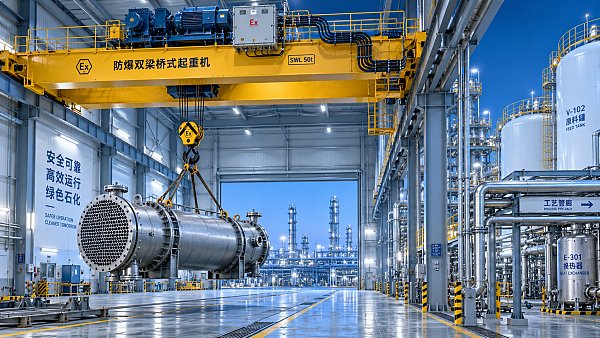
 Oct 06, 2026Selecting Petrochemical Overhead Cranes for Hazardous Areas and Heavy Process LoadsPetrochemical overhead cranes for hazardous areas: learn how to match capacity, duty, controls, corrosion protection, and maintenance access for safer, reliable lifts.
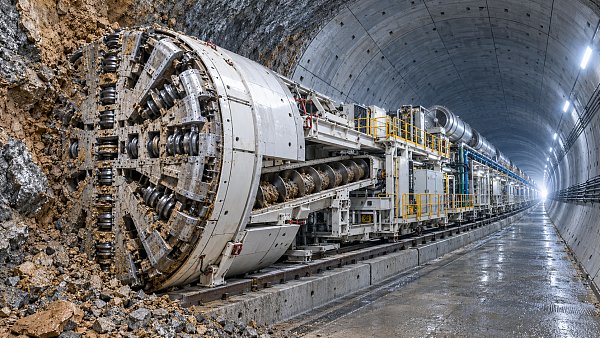
 Oct 05, 2026Tunneling Equipment Specification Planning: Key Criteria for Ground and Project RisksEquipment specification planning tunneling: learn how to match TBM systems to ground risks, geometry, safety, logistics, and lifecycle cost for more reliable project delivery.
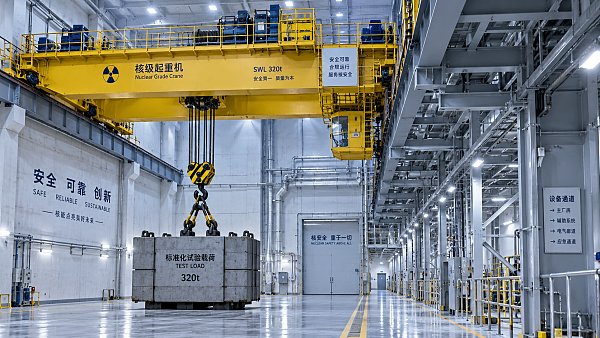
 Oct 04, 2026Nuclear Lifting Equipment Cost: Budgeting for Compliance, Testing, and Lifecycle RiskNuclear lifting equipment cost explained: budget for compliance, proof-load testing, installation, documentation, and lifecycle risk to make confident procurement decisions.
 Oct 03, 2026How to Assess TBM Manufacturers for Hard-Rock Tunneling Projects?Choose the right tunnel boring machine manufacturer for hard-rock projects. Explore key criteria for design, lifecycle cost, factory quality, and service support.
Ms. Elena Rodriguez
Weekly Insights
Stay ahead with our curated technology reports delivered every Monday.