
Equipment Planning for Large-Scale Infrastructure Projects: What to Prioritize First
Equipment Planning for Large-Scale Infrastructure Projects: What to Prioritize First
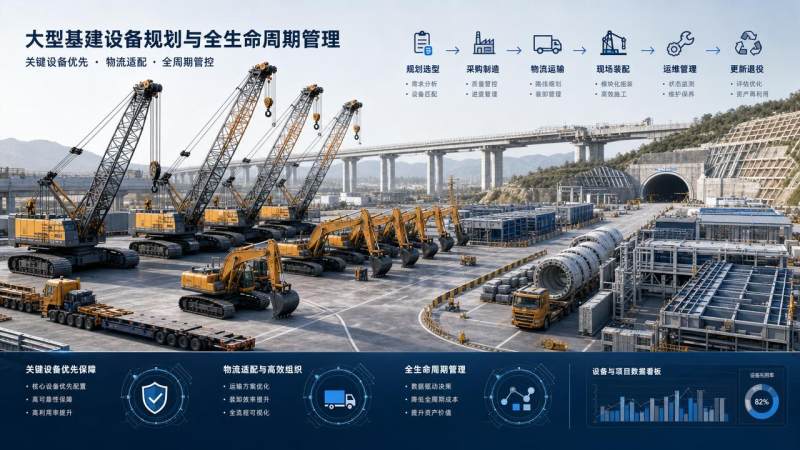
In large-scale infrastructure projects, equipment planning is never just a procurement task.
It is an early strategic decision that shapes budget, schedule, safety, and delivery quality.
When priorities are unclear, even strong teams lose time through idle assets, transport delays, and unsuitable machine selection.
That is why equipment planning for large-scale infrastructure projects should begin with operational fit, not vendor preference.
The best plans connect ground conditions, construction methods, site access, energy supply, maintenance capacity, and lifecycle economics from day one.
Start with Ground Conditions and Construction Reality
The first priority in large-scale infrastructure projects is understanding what the equipment must face in real conditions.
This sounds obvious, but many planning mistakes happen before the first machine arrives on site.
A tunnel package, mining expansion, or bridge corridor can look feasible on paper while hiding major equipment constraints.
Rock hardness, groundwater pressure, haul distance, slope angle, lift radius, and weather exposure all change equipment priorities.
In practice, this means machine selection should follow the construction method, not the other way around.
Questions to answer before comparing brands
- What material conditions will control output and wear?
- Which construction sequence creates the biggest bottleneck?
- How much usable space exists for assembly, turning, and maintenance?
- What transport limits affect machine size and modularization?
- Which safety risks require built-in engineering controls?
For example, a TBM decision should reflect geology, segment logistics, slurry management, and cutterhead intervention risk.
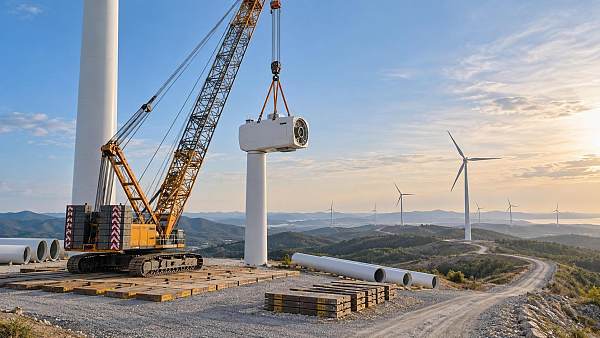
A crawler crane decision should reflect lift path, wind exposure, assembly time, and support ground bearing capacity.
When this foundation is solid, equipment planning becomes faster, cleaner, and easier to defend commercially.
Prioritize the Critical Path Equipment First
Not every machine deserves the same planning effort.
In large-scale infrastructure projects, the smartest move is to identify equipment that controls the project’s critical path.
These are the assets that directly determine production speed, sequence stability, and recovery options after disruption.
If these machines are late, undersized, or poorly matched, downstream teams cannot compensate.
For tunneling, the critical path may center on the TBM, backup system, segment supply, and spoil handling chain.
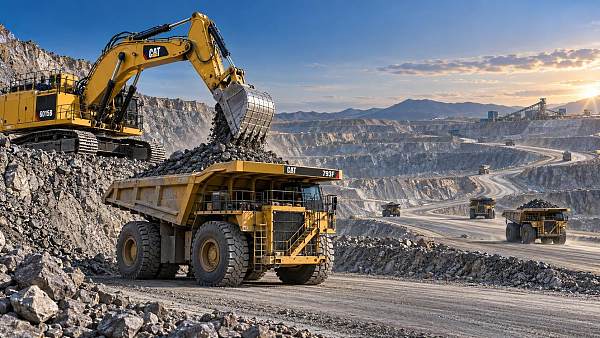
For open-pit work, it may be the excavator and dump truck match factor.
For energy or petrochemical construction, heavy lift cranes often set the pace.
Everything else should support these lead assets.
A practical way to rank priorities
- List machines that directly affect production output.
- Mark which ones have long manufacturing lead times.
- Flag units needing special permits, foundations, or assembly crews.
- Identify assets with limited replacement options in the market.
- Finalize decisions for those assets before secondary fleet items.
This approach reduces rework and helps procurement focus on what truly drives delivery.
Match Equipment Capacity with Logistics and Site Constraints
A common mistake in large-scale infrastructure projects is choosing equipment by rated capacity alone.
On complex sites, nominal power means little if logistics cannot support continuous operation.
Oversized machines may create transport headaches, assembly delays, and inefficient utilization.
Undersized machines create schedule drag and higher unit costs.
The better question is this: can the whole support system sustain the selected machine at planned productivity?
That includes access roads, fuel or power supply, spare parts, operators, maintenance windows, and removal routes.
This is where many equipment plans either become realistic or fall apart.
Key planning checks
- Transport route limits for height, axle load, and bridge clearance
- Site assembly space and crane support requirements
- Reliable supply of power, fuel, lubricants, and cooling systems
- Shift pattern support for operators and maintenance teams
- Recovery planning for breakdowns in remote or congested locations
In real projects, equipment planning works best when machine performance and site logistics are reviewed as one system.
Look Beyond Purchase Price to Lifecycle Efficiency
The lowest purchase price rarely delivers the best result in large-scale infrastructure projects.
What matters is total lifecycle efficiency across deployment, productivity, maintenance, energy use, uptime, and resale or redeployment value.
This matters even more on billion-dollar programs where delays cost far more than procurement discounts.
A machine that performs steadily often beats a cheaper unit with unstable output.
Recent market shifts make this clearer.
Remote diagnostics, electrification, and automated assistance are changing how heavy assets deliver value.
For TF-Strategy, these signals matter because equipment intelligence now shapes both engineering execution and cost control.
The strongest equipment planning framework includes technical fit and long-term operating logic together.
Build Flexibility into the Equipment Plan
Even the best-planned large-scale infrastructure projects face change.
Ground conditions shift, permits slow down, weather windows close, and suppliers miss milestones.
That is why equipment planning should include controlled flexibility from the start.
Flexibility is not overbuying. It is structured resilience.
This can mean modular equipment design, rental backup options, dual sourcing for critical components, or phased fleet mobilization.
It can also mean selecting machines that can be redeployed across packages if priorities shift.
In practical terms, flexible planning lowers the cost of uncertainty.
Where flexibility creates the most value
- Long-lead equipment with narrow replacement markets
- Projects in remote, high-altitude, or temperature-extreme zones
- Programs with multiple contractors and changing handover dates
- Packages exposed to evolving environmental or safety requirements
This is especially relevant in sectors tracked by TF-Strategy, where complex heavy equipment must meet both physical and strategic demands.
Use a Decision Framework, Not Isolated Purchases
The strongest equipment planning for large-scale infrastructure projects comes from a repeatable decision framework.
Without one, choices become reactive and fragmented.
With one, every machine decision can be tested against project outcomes.
That improves speed and accountability across engineering, procurement, and operations.
A simple framework to use
- Define the construction method and production target first.
- Map site, geology, and logistics constraints in detail.
- Rank critical path equipment by schedule and risk exposure.
- Evaluate total lifecycle value, not headline cost alone.
- Add contingency options for the highest-impact failure points.
- Review equipment choices against safety and sustainability targets.
From there, supplier comparisons become much more meaningful.
The discussion shifts from price negotiation alone to reliability, strategic fit, and execution confidence.
That is exactly where large-scale infrastructure projects gain a real advantage.
Better equipment planning creates fewer surprises and more controllable delivery.
It also supports stronger decisions when market volatility, energy transition, or technical uncertainty raise the stakes.
If the goal is consistent project performance, prioritize fit, criticality, logistics, lifecycle value, and flexibility first.
Related News
 Sep 14, 2026What Drives Surface Mining Equipment Cost Across a Mine’s Operating Life?Surface mining equipment cost depends on fleet matching, fuel, wear, maintenance, availability, and rebuild timing. Explore lifecycle strategies that protect output and margins.
 Sep 13, 2026Crawler Crane Application Analysis for Wind Farms, Bridges, and Confined SitesCrawler crane application analysis for wind farms, bridges, and confined sites—optimize lift paths, ground conditions, access, and schedules for safer project delivery.
 Sep 12, 2026Open-Pit Mining in North America: Key Project Risks and Planning PrioritiesOpen-pit mining North America: uncover key risks and planning priorities for geology, permitting, water, fleet strategy, and resilient project delivery.
 Sep 11, 2026TBM Systems in Southeast Asia: Key Selection Factors for Variable Ground ConditionsTBM systems Southeast Asia: discover key selection factors for variable ground, pressure control, monsoon resilience, and safer tunnel delivery.

Ms. Elena Rodriguez
Weekly Insights
Stay ahead with our curated technology reports delivered every Monday.