
How Global Infrastructure Development Is Reshaping Equipment Demand and Project Timelines
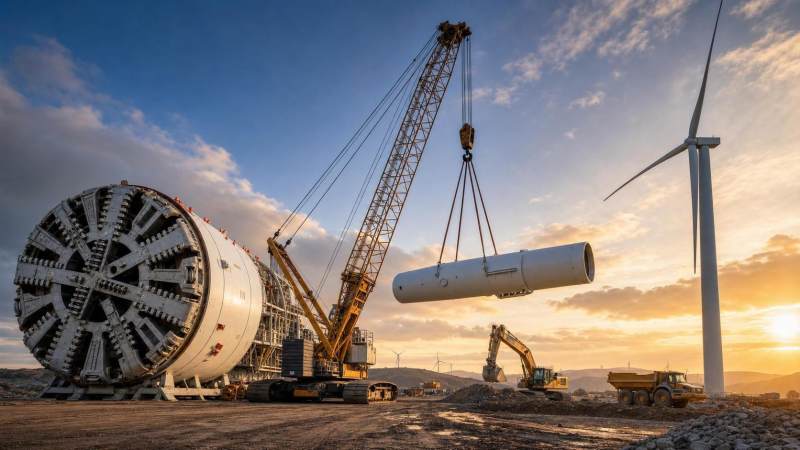
Global infrastructure development is no longer a distant macro trend. It now shapes how equipment is specified, when fleets are secured, and how quickly projects can move from tender to execution.
Across transport corridors, energy assets, urban tunnels, and mining-linked logistics, investment cycles are becoming faster and less forgiving. Equipment demand is rising, but so is the cost of choosing the wrong capacity.
That shift matters because project timelines are increasingly influenced by machinery availability, digital readiness, component supply, and site-specific performance. In practice, schedule risk often begins long before ground is broken.
Viewed through the lens of TF-Strategy, the connection is clear: physical machine parameters, construction methods, and infrastructure strategy now have to be assessed together rather than in isolation.
Why equipment demand is changing faster than before
The current phase of global infrastructure development is broader than traditional road and bridge expansion. It includes metro systems, mountain tunnels, renewable energy bases, grid upgrades, ports, mining corridors, and industrial relocation.
Each category draws on a different mix of heavy equipment. Yet they now compete for the same manufacturing slots, transport resources, specialist operators, and after-sales support networks.
This creates a structural change in demand. Buyers are not only seeking more machines. They are seeking more certainty around uptime, lead time, fuel profile, automation compatibility, and spare parts continuity.
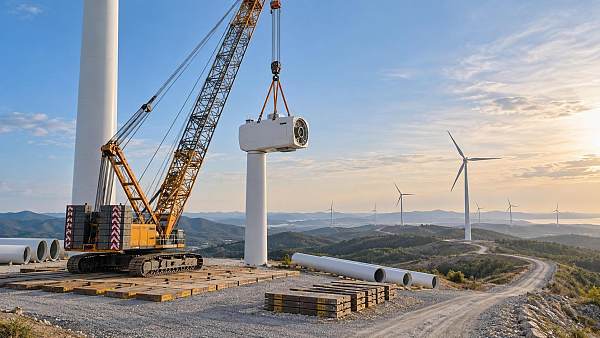
A crawler crane for offshore-adjacent wind installation, for example, is no longer judged only by rated lifting capacity. Transport modularity, erection speed, wind tolerance, and service response can alter the full project schedule.
The same logic applies to TBM deployment. Cutter head material, geology matching, spoil handling, and maintenance intervals have direct consequences for tunneling speed and milestone reliability.
From demand volume to demand quality
One of the most important changes in global infrastructure development is the move from simple volume demand to quality-adjusted demand. The market does not reward raw scale alone.
It rewards machines that fit the job environment with precision. High-altitude haulage, remote tunnel drives, ultra-heavy lifts, and long-cycle pavement programs all require different operating assumptions.
This is where intelligence becomes commercially relevant. TF-Strategy’s focus on TBMs, ultra-large excavators, crawler cranes, large road machinery, and mining dump trucks reflects the equipment classes most exposed to strategic infrastructure pressure.
In other words, demand today is shaped by mission fit. A machine that is slightly more expensive but reduces downtime, site changes, and component wear may protect margins better than a lower-priced alternative.
What buyers are evaluating more closely
- Lead time visibility across manufacturing, shipping, assembly, and commissioning
- Performance under specific geology, climate, elevation, and duty cycles
- Digital integration, including remote diagnostics and predictive maintenance
- Energy transition alignment, especially fuel efficiency and electrification potential
- Lifecycle support, parts resilience, and field service depth
How project timelines are being reshaped
Project timelines used to be defined mainly by civil sequencing and finance release. Now they are heavily influenced by procurement timing, vendor coordination, and equipment readiness.
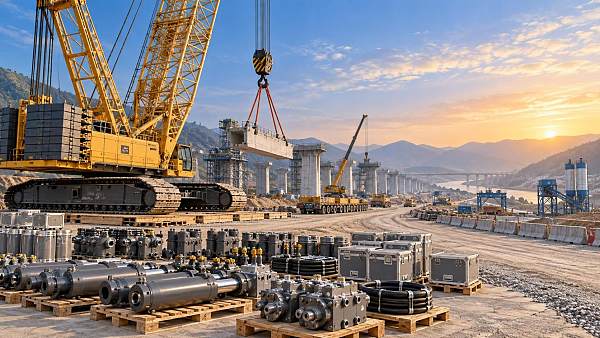
In many regions, global infrastructure development is compressing pre-construction periods. Sponsors want earlier output, but equipment supply chains still face bottlenecks in steel, hydraulics, control systems, and transport permits.
That mismatch creates a new planning challenge. Teams may finalize design packages before they have realistic delivery confidence for key machines. The result is hidden schedule fragility.
Timelines are also being reshaped by specialization. A standard machine can sometimes arrive faster, but may require more adaptation onsite. A purpose-configured unit may take longer to source, yet shorten the construction window.
The better choice depends on the full sequence, not a single purchase event.
The five equipment pillars behind the shift
The shape of global infrastructure development becomes easier to understand when broken into critical equipment systems rather than broad investment headlines.
Tunnel boring machines
TBMs are central to dense urban expansion, water transfer, and mountain crossings. Their demand is tied not only to tunnel volume, but also to ground complexity, settlement limits, and urban disruption controls.
A delayed TBM launch can shift multiple downstream milestones. Segment supply, cutter replacement strategy, and mucking systems must be planned as one package.
Ultra-large excavators and mining dump trucks
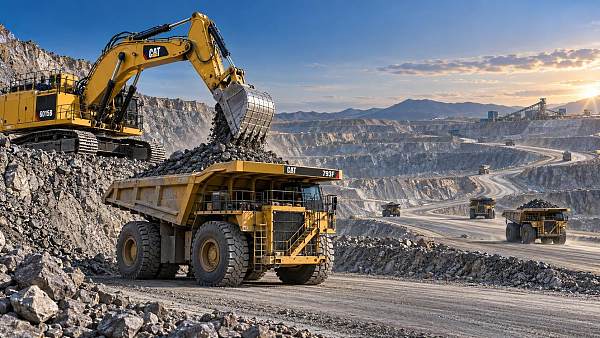
These machines support resource-linked infrastructure and the extraction base behind steel, copper, aggregates, and energy transition minerals. Their availability affects more than mining output.
They influence the material backbone of global infrastructure development itself. When haulage efficiency or digging productivity falls, the ripple reaches construction inputs and cost models.
Crawler cranes and large road machinery
Crawler cranes are increasingly decisive in wind, nuclear, petrochemical, and prefabricated industrial projects. Large road machinery, meanwhile, anchors delivery quality in expressways and smart transport corridors.
Both categories show the same pattern. Precision, continuity, and predictable service support now matter as much as headline capacity.
What deserves closer attention in the current cycle
Several signals stand out in the present phase of global infrastructure development, especially for projects exposed to heavy machinery intensity.
- Tender pipelines are becoming more visible, which helps early planning but also accelerates competition for the same machine classes.
- Digital capabilities are moving from optional upgrades to schedule-control tools, particularly where remote diagnostics reduce stoppage duration.
- Material innovation is changing replacement intervals, especially in wear-critical components such as TBM cutter systems.
- Low-emission and electric heavy equipment are becoming commercially relevant where fuel logistics, regulation, or site sustainability targets matter.
- Total cost of ownership is being reviewed alongside delivery confidence, not after procurement decisions are made.
This is why intelligence platforms matter more now. A useful market view is not just news about new orders. It is the ability to connect tenders, raw material signals, equipment evolution, and field performance into one decision framework.
A practical way to evaluate equipment choices
In practical terms, equipment decisions should be treated as timeline decisions. The purchase price is visible immediately, but schedule consequences often appear later and cost more.
A more resilient evaluation model usually includes four layers: project conditions, machine fit, support depth, and scenario risk.
Four questions worth testing early
- Does the machine match the real operating environment, not just the design assumption?
- Can logistics, assembly, and commissioning be completed within the required mobilization window?
- Are spare parts, technicians, and monitoring systems available close to the project timeline?
- What happens to output, safety, and cost if the machine underperforms for thirty days?
These questions sound simple, yet they often reveal whether a project plan is robust or merely optimistic.
Where to focus next
Global infrastructure development will keep driving demand across heavy equipment, but the advantage will not come from reacting late to visible shortages.
It will come from reading project signals earlier, comparing equipment pathways against delivery risk, and linking engineering requirements to commercial timing with more discipline.
For that reason, the next useful step is usually a structured review of current pipeline exposure: which projects depend on specialized machinery, where lead times are least certain, and which technical parameters could change the schedule most.
When global infrastructure development is assessed through equipment intelligence rather than headlines alone, planning becomes clearer, procurement becomes sharper, and project timelines become more defensible.
Related News
 Sep 15, 2026How to Evaluate Infrastructure Equipment Suppliers for Complex Project RequirementsInfrastructure equipment solutions supplier evaluation guide for complex projects: assess technical fit, lifecycle cost, reliability, local support, and contract risk.
 Sep 14, 2026What Drives Surface Mining Equipment Cost Across a Mine’s Operating Life?Surface mining equipment cost depends on fleet matching, fuel, wear, maintenance, availability, and rebuild timing. Explore lifecycle strategies that protect output and margins.
 Sep 13, 2026Crawler Crane Application Analysis for Wind Farms, Bridges, and Confined SitesCrawler crane application analysis for wind farms, bridges, and confined sites—optimize lift paths, ground conditions, access, and schedules for safer project delivery.
 Sep 12, 2026Open-Pit Mining in North America: Key Project Risks and Planning PrioritiesOpen-pit mining North America: uncover key risks and planning priorities for geology, permitting, water, fleet strategy, and resilient project delivery.
Ms. Elena Rodriguez
Weekly Insights
Stay ahead with our curated technology reports delivered every Monday.