
Extreme Temperature Mining: How to Choose Equipment for Heat, Cold, and Thermal Shock
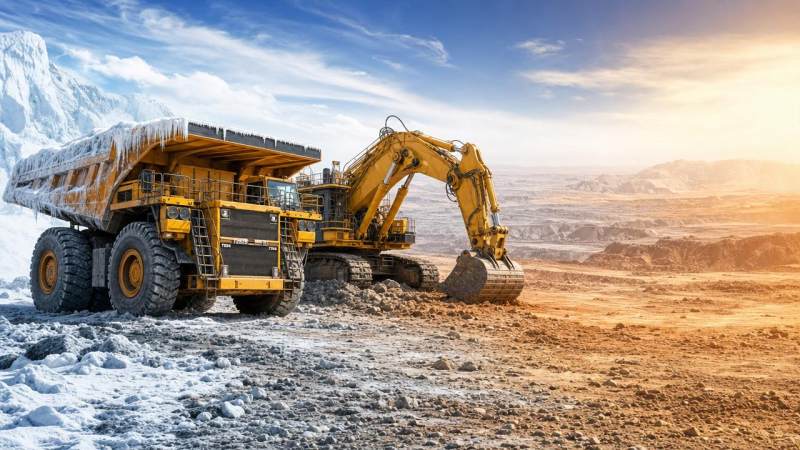
Extreme temperature mining is no longer a niche concern tied to a few remote sites. It now shapes equipment selection across open-pit mines, high-altitude haul roads, Arctic developments, desert operations, and projects where machines cycle between hot loads and freezing downtime.
In these conditions, standard specifications can look acceptable on paper while failing in service. Heat degrades fluids, cold stiffens seals, and repeated thermal shock accelerates fatigue in metals, electronics, and welded structures.
That matters because downtime in heavy industry is rarely an isolated maintenance event. A stalled haul truck, excavator, or support machine can disrupt drilling, loading, crushing, and transport across the whole production chain.
For platforms followed by TF-Strategy, this is also a strategic issue. The same logic applies across mining dump trucks, ultra-large excavators, TBM support systems, and lifting machinery working in thermally unstable environments.
Why thermal conditions change equipment decisions
Extreme temperature mining is not simply about choosing a machine with a wider ambient rating. The real question is whether the entire system remains stable through start-up, operation, shutdown, and maintenance.
A machine may survive peak heat yet suffer chronic hydraulic leakage at dawn. Another may start in deep cold but lose productivity because swing drives, batteries, or tire compounds never reach efficient working behavior.
Thermal shock makes the challenge harder. Equipment exposed to strong sun, blasting dust, cold nights, washdowns, or hot process materials experiences rapid expansion and contraction, often at different rates across components.
This is why equipment evaluation should move beyond catalog temperature bands. It needs to examine how thermal stress interacts with duty cycle, material selection, control architecture, and service access.
The main failure paths in heat, cold, and thermal shock
In practice, extreme temperature mining failures usually begin in a few predictable areas. The value lies in spotting how they connect rather than reviewing them as isolated technical features.
Powertrain and cooling
High ambient heat reduces cooling margin and raises the risk of derating. Radiators clog faster in dusty mines, fan systems work harder, and engine compartments retain more heat after shutdown.
In very cold conditions, fuel quality, viscosity, and start-up lubrication become critical. Cold starts increase wear, while idling strategies used for protection can raise fuel burn and maintenance load.
Hydraulics and sealing
Hydraulic systems often reveal the true suitability of equipment for extreme temperature mining. Fluid viscosity shifts affect response time, pump efficiency, hose pressure behavior, and valve accuracy.
Seal materials matter just as much. Elastomers that perform well at moderate temperature may harden, crack, or lose elasticity when exposed to prolonged cold or repeated hot-cold transitions.
Electrical and control systems
Sensors, harnesses, displays, and connectors frequently become the hidden weak points. Heat accelerates insulation aging, while condensation during thermal cycling can undermine signal reliability and control stability.
This is especially relevant as heavy equipment becomes more digital. Remote diagnostics, drive-by-wire controls, and 5G-assisted operation increase dependence on thermally stable electronics.
Structures, tires, and wear parts
Steel structures, weld zones, bucket lips, undercarriage parts, and dump bodies respond differently under thermal stress. Brittle fracture risk rises in cold service, while heat can worsen distortion and accelerate wear.
Tires and track components also deserve close attention. Compound behavior, inflation stability, and impact resistance can shift sharply between cold mornings, loaded uphill hauls, and heated braking cycles.
What to evaluate before comparing brands or models
A useful review starts with the site profile, not the brochure. Ambient temperature range is only one layer of the operating envelope.
- Map daily and seasonal temperature swings, not only annual averages.
- Identify thermal shock sources such as washdowns, heated material, strong solar load, and long idle periods.
- Separate operating temperature from storage, transport, and restart conditions.
- Check altitude, dust, humidity, and corrosive exposure because they amplify thermal stress.
- Review duty cycle intensity, payload consistency, and stop-start frequency.
This approach is common in high-authority equipment intelligence. TF-Strategy’s value chain perspective is relevant here because thermal suitability depends on the relationship between machine physics and project execution.
A practical comparison framework
How the operating scenario changes the answer
Not every fleet faces the same thermal problem. Extreme temperature mining should be assessed by equipment role and site behavior, because the dominant risk differs across applications.
Open-pit loading and haulage
Large excavators and mining dump trucks face continuous load, dust, and long operating windows. In hot regions, cooling reserve and brake heat management often decide productivity more than nameplate power.
At high altitude or in polar climates, engine response, battery reliability, and hydraulic warm-up time become equally decisive. Thermal readiness affects both cycle time and component life.
TBM support and underground logistics
TBM-related support equipment may operate in enclosed, humid, and unevenly ventilated spaces. Here, thermal shock often appears through water exposure, condensation, and localized heat around electrical rooms or hydraulic packs.
That makes enclosure integrity, corrosion resistance, and stable sensor performance more important than broad ambient claims alone.
Lifting and support machinery
Crawler cranes and large support units working near energy or petrochemical projects face a different pattern. Long idle periods, weather exposure, and intermittent heavy loads can create severe thermal transitions in structural and control systems.
Selection criteria that hold up in real service
In extreme temperature mining, good equipment selection usually reflects disciplined trade-offs rather than the highest specification count.
- Prioritize validated thermal packages over optional add-ons assembled late.
- Look for component-level traceability, not just machine-level ambient statements.
- Compare maintenance intervals under severe duty, not standard laboratory conditions.
- Check whether software limits, alarms, and derating logic are transparent.
- Review field performance from comparable mines, altitudes, and haul profiles.
Lifecycle cost also needs careful interpretation. A lower purchase price can disappear quickly if the machine requires excessive preheating, frequent hose replacement, or repeated electronic troubleshooting.
The stronger choice is often the one that protects uptime with simpler service routines and better thermal resilience across the whole fleet system.
Where industry attention is moving next
Several trends are changing how extreme temperature mining is evaluated. Electrification is one of them, because battery performance, charging windows, and thermal control add new decision layers.
Remote and semi-autonomous operations are another. As control systems become more connected, thermal stability in sensors, communication hardware, and power electronics becomes central to safe production.
Material innovation also matters. Better steels, seal compounds, insulation systems, and cooling architectures can improve resilience, but only when matched to real site behavior rather than generic severe-service labels.
This is where intelligence-led comparison becomes valuable. A decision framework that links machine parameters, project methods, and commercial consequences is more useful than a simple feature checklist.
A sensible next step for equipment screening
The best way to approach extreme temperature mining is to turn broad climate risk into a structured evaluation file. Start with thermal ranges, cycling patterns, payload demands, and maintenance constraints at site level.
Then compare candidate machines against component ratings, thermal management design, field references, and service practicality. That process usually reveals more than headline horsepower or purchase price ever will.
For operations tied to large infrastructure and heavy industry, the goal is straightforward: choose equipment that keeps performance predictable when the environment is not. That is the real benchmark in extreme temperature mining.
Related News
 Oct 27, 2026Construction Equipment Efficiency: How to Reduce Idle Time on JobsitesBoost construction equipment efficiency with smarter scheduling, telematics, and safe shutdown practices. Discover how to reduce idle time and fuel waste on your jobsite.
 Oct 26, 2026How TBM Electrical Systems Distribute Power and Protect Against FaultsExplore how TBM equipment electrical systems distribute power, coordinate fault protection, and maintain essential services. Learn what to check for safer, more reliable tunneling.
 Oct 25, 2026Comparing Industrial Equipment Suppliers: Lead Times, Warranties, and ServiceMake a smarter industrial equipment supplier comparison. Explore lead times, warranty coverage, and service support to reduce downtime risk and choose with confidence.
 Oct 24, 2026Choosing Lifting Equipment for Middle East Petrochemical Plants in Hazardous AreasExplore petrochemical lifting equipment Middle East plants can rely on. Compare hazardous-area certification, capacity, and heat limits to make informed procurement decisions.
Related News

Ms. Elena Rodriguez
Weekly Insights
Stay ahead with our curated technology reports delivered every Monday.