
How to Build an Infrastructure Compliance Strategy That Reduces Risk Across Projects
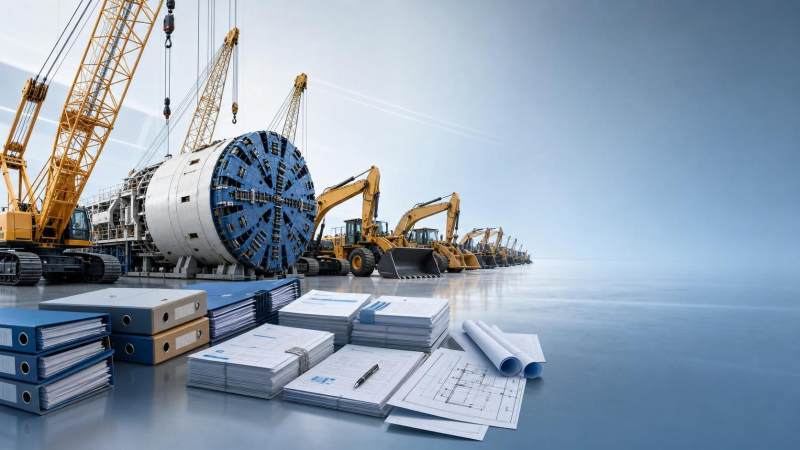
Build the Compliance Strategy Before the First Machine Moves
For project leaders managing complex builds across regions, an effective infrastructure compliance strategy is no longer optional. It is one of the few controls that can still protect schedule, cost, and reputation when a project starts picking up speed. Safety rules, environmental permits, equipment conformity, labor obligations, contractor documentation, and operational limits do not fail one by one. They usually fail in clusters. A missing lifting plan turns into a work stoppage. An unverified emissions requirement holds up imported equipment. A subcontractor works to one standard while the client audits against another.
The practical question is not whether your team has a compliance file somewhere. The question is whether your strategy can reduce real risk across multiple projects, jurisdictions, and contractor layers. If you work around TBMs, crawler cranes, heavy haulage fleets, open-pit mining equipment, or large road machinery, the answer depends on how early you connect technical parameters with project obligations. That link is where many teams still lose control.
Start with a project-by-project obligation map
Do not begin with a generic policy deck. Build an obligation map for each project, then consolidate patterns across the portfolio.
A useful map usually covers five areas: statutory requirements, contract conditions, client standards, equipment-specific rules, and internal controls. These are not the same thing. Teams often treat them as one compliance bucket, which is why gaps stay hidden until an inspection or claim arrives.
- List permits, approvals, reporting duties, and inspection points by project phase.
- Separate mandatory law from contract-driven obligations.
- Flag anything that depends on local authority interpretation as 【待核实】 until confirmed.
- Mark requirements tied to imported machinery, temporary works, blasting, deep excavation, lifting, tunneling, dewatering, waste handling, or fuel storage.
If the project crosses borders, assume terms that sound familiar may still differ in enforcement. “Approved,” “certified,” and “competent person” can mean very different things depending on the market.
Make asset compliance part of the strategy, not an afterthought
In heavy infrastructure, paperwork is often blamed, but the recurring problem is asset mismatch. A TBM, excavator, crane, paver, or mining dump truck may be technically capable and still non-compliant for the intended jobsite because of local emissions rules, transport restrictions, safety device expectations, or operator certification requirements.
Before mobilization, check whether the machine’s configuration actually matches the project environment. For example, lifting capacity charts, ground bearing assumptions, and wind limits for crawler cranes must align with the approved lift studies. For tunneling packages, cutterhead materials, spoil handling systems, and ventilation-related interfaces may trigger additional review depending on geology, urban constraints, and tunnel method. For mining fleets, altitude, ambient temperature, braking performance, and haul road conditions affect not only productivity but also compliance with site safety controls.
This is where intelligence-driven review matters. Teams that monitor equipment trends and regional project requirements early can screen out bad-fit assets before they become expensive exceptions.
Set one governance owner, then define who holds which risk
A strategy without ownership turns into a reporting ritual. Someone at program or portfolio level needs clear authority to challenge project teams, procurement, and subcontractors when compliance assumptions are weak.
That does not mean centralizing everything. It means drawing a clean line between governance and execution. A practical split looks like this:
If nobody can say who owns the risk when a subcontractor document is late or incomplete, the strategy is still too soft.
Check contracts for compliance leakage
A lot of compliance failure is contract failure wearing a different name. Project teams assume requirements have been flowed down. Then a supplier claims the obligation was not explicit, or only applied to the main contractor.
Read the clauses that actually control field behavior: design responsibility, temporary works, inspection and test plans, maintenance records, competent personnel, local certification, environmental monitoring, incident reporting, and authority interface. If the contract language leaves room for interpretation, assume it will be interpreted in the least convenient way once pressure builds.
One useful check is simple: can the field team point to the exact clause, document, or approved standard they are working to? If they can only describe it from memory, you probably have compliance leakage.
Build controls around the moments where projects usually drift
Not every activity needs the same weight. Focus your infrastructure compliance strategy on the points where non-compliance tends to spread fast:
- Bid stage assumptions that are never rechecked after award.
- Design changes that alter method statements, loads, excavation support, or emissions profile.
- Equipment substitution due to supply delay or cost pressure.
- Subcontractor onboarding, especially lower-tier firms.
- Cross-border mobilization of machines, components, and operators.
- Commissioning, trial operations, and handover documentation.
These are the points where a clean file from last month becomes unreliable. Tie approvals and hold points to these moments, not just to monthly reporting cycles.
Use evidence that can survive an audit, a client review, and a claim
Many teams collect documents. Fewer collect usable evidence. Those are different things.
For every critical requirement, ask three questions. What proves compliance? Who validates it? When does it expire or need renewal? This matters for operator competence records, inspection certificates, maintenance logs, lift plans, calibration status, environmental monitoring records, and permit conditions.
Avoid evidence stored only in inboxes or messaging threads. When a regulator, insurer, or employer’s representative asks for proof, delay itself becomes a risk signal.
Do not run one global standard blindly across every market
Consistency is useful. Uniformity can be dangerous. International contractors often try to manage all projects through one master checklist. That helps with internal discipline, but local legal requirements, authority practices, and client expectations still need a market layer on top.
The better approach is a core standard plus jurisdiction-specific modules. Keep your baseline for governance, reporting, and risk rating. Then add local compliance packs for issues such as environmental permits, transport approvals, work-hour rules, technical acceptance of imported machinery, and inspection regime differences. Where local counsel or specialist advisors are needed, say so early. Do not hide that dependency.
Train for judgment, not just awareness
Short inductions rarely solve the real issue. Project leaders need teams who can recognize when a compliant activity is drifting out of compliance because conditions changed. A revised haul road gradient, a new spoil disposal route, a different lifting radius, or a substitution in hydraulic components may all require another review.
That kind of judgment comes from scenario-based reviews tied to actual project methods. Walk teams through recent changes, near misses, rejected documents, and authority comments. You do not need invented case studies. Use your own project history where available, and where not, use current project interfaces and ask what would fail first.
Track a few metrics that actually tell you something
A dashboard full of green indicators can still hide weak control. Focus on metrics that expose friction and delay:
- Open compliance actions past due by risk level.
- Percentage of high-risk activities started before all required approvals were complete.
- Repeat findings by contractor, package, or equipment type.
- Time taken to retrieve critical compliance evidence during audit drills.
- Number of design or method changes that triggered compliance reassessment.
If your reporting never shows tension between delivery pressure and rule adherence, it is probably missing reality.
A workable checklist for project leaders
Before you call the strategy complete, check these points plainly:
- Every project has a current obligation map, not a recycled template.
- Critical equipment has been reviewed for local conformity, not just availability.
- Contract clauses clearly flow down operational compliance duties.
- High-risk activities have hold points tied to approvals and evidence.
- Subcontractor controls extend beyond onboarding paperwork.
- Audit evidence is centralized, current, and traceable.
- Local legal or regulatory questions marked 【待核实】 have named owners and deadlines.
- Metrics show where control is weakening before the project is in trouble.
A solid infrastructure compliance strategy does not make projects slower. It removes the kind of uncertainty that causes stoppages, redesign, rejected equipment, and ugly handovers. If you lead multi-project delivery in heavy infrastructure, that is the standard to work toward: fewer assumptions, cleaner evidence, and earlier decisions on the risks that usually arrive late.
Related News
 Oct 24, 2026Choosing Lifting Equipment for Middle East Petrochemical Plants in Hazardous AreasExplore petrochemical lifting equipment Middle East plants can rely on. Compare hazardous-area certification, capacity, and heat limits to make informed procurement decisions.
 Oct 23, 2026Selecting Lifting Equipment for Nuclear Component Transport: Key Safety CriteriaSelecting lifting machinery for nuclear component transport? Discover essential safety criteria, load control checks, and supplier requirements to guide confident procurement.
 Oct 22, 2026Tunnel Boring Machines in Southeast Asia: EPB vs. Slurry for Soft GroundCompare tunnel boring machines Southeast Asia projects rely on: EPB vs. slurry for soft ground. Discover how groundwater, settlement risks, and spoil handling shape the right choice.
 Oct 21, 2026Choosing Tunneling Equipment for the Middle East: Rock, Soil, and GroundwaterCompare underground tunneling equipment Middle East projects need. Explore rock, soil, groundwater, and TBM options to reduce risk and make confident procurement decisions.



Ms. Elena Rodriguez
Weekly Insights
Stay ahead with our curated technology reports delivered every Monday.