
Geotechnical Construction Methods Explained: When to Use Piles, Anchors, or Grouting
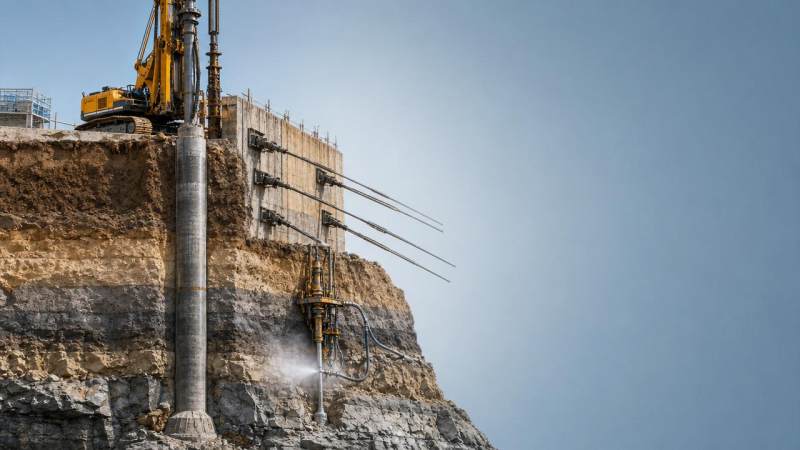
Geotechnical Construction Methods Explained: When to Use Piles, Anchors, or Grouting
Choosing the right geotechnical construction methods often decides whether a project remains stable, on schedule, and within budget.
That is especially true in tunnels, deep excavations, transport corridors, mines, and energy facilities.
For engineering teams, the real challenge is rarely picking a familiar method.
The challenge is matching ground behavior, structural demand, access limits, and construction risk.
Among the most common geotechnical construction methods, piles, anchors, and grouting serve very different purposes.
They may even appear together in one project, but they should never be treated as interchangeable.
This guide explains how each solution works, where it fits best, and how to choose with confidence.
It also reflects the practical mindset seen across global heavy infrastructure intelligence at TF-Strategy.
Why geotechnical construction methods matter early
Ground risk is often underestimated during early planning.
Yet poor geotechnical decisions usually become expensive after excavation starts or foundations are loaded.
A pile system may control settlement but do little for seepage.
Anchors may stabilize a wall but cannot replace deep bearing support.
Grouting may reduce permeability but may not carry design loads alone.
This is why geotechnical construction methods must be selected against a clear problem statement.
- Is the main issue low bearing capacity?
- Is the concern lateral movement or uplift?
- Is groundwater inflow driving risk?
- Are neighboring structures sensitive to vibration or settlement?
- Is installation speed more critical than ultimate capacity?
When teams answer those questions early, method selection becomes far more reliable.
When piles are the right choice
Piles are load-transfer elements installed to reach stronger soil or rock at depth.
Among geotechnical construction methods, piles are the primary answer when shallow soils cannot safely support structures.
They work through end bearing, shaft friction, or a combination of both.
Typical pile applications
- Bridge piers over soft alluvium
- High-rise foundations in urban fill
- Port and marine structures
- Heavy crane pads and industrial plants
- Wind energy foundations with deep weak layers
Use piles when
- Surface soils show low bearing capacity
- Settlement limits are strict
- Structural loads are large or repetitive
- Scour, liquefaction, or compressible layers are present
- Long-term performance matters more than rapid temporary support
Driven piles are fast and predictable, but vibration can be a serious issue near existing assets.
Bored piles reduce vibration, though spoil handling, slurry control, and quality assurance become more demanding.
So in practice, pile selection is never only about capacity. It is also about constructability.
When anchors make more sense
Anchors resist tensile forces by transferring load into stable ground beyond a failure zone.
In geotechnical construction methods, anchors are usually selected for lateral support, uplift resistance, or slope stabilization.
They are common in tieback walls, dam works, retaining structures, and cavern entrances.
Best-fit anchor scenarios
- Deep excavations in tight urban sites
- Permanent retaining walls needing reduced internal bracing
- Slopes with shallow instability planes
- Structures exposed to buoyancy uplift
- Portal stabilization in tunnel approaches
Use anchors when
- The key demand is tension, not vertical compression
- Space constraints limit struts or buttresses
- Ground movement must be tightly controlled
- Excavation depth creates high lateral earth pressure
- Construction staging benefits from open work areas
Anchors can speed excavation because they keep the pit more open than internal bracing systems.
Still, they need careful checks on free length, bond length, creep, corrosion protection, and property line limits.
That last point matters. Some sites cannot legally install anchors beneath adjacent land.
When grouting delivers the better solution
Grouting injects fluid material into soil or rock to improve ground behavior.
Among geotechnical construction methods, grouting is the most flexible when the objective is improvement rather than direct structural support.
Depending on the technique, grouting can reduce permeability, fill voids, increase stiffness, or limit settlement.
Common grouting uses
- Water control around shafts and tunnels
- Void filling behind linings or beneath slabs
- Compensation grouting near settlement-sensitive structures
- Rock mass sealing in fractured zones
- Jet grouting for columns, panels, or bottom plugs
Use grouting when
- Groundwater inflow is the primary risk
- Existing foundations need improvement without major demolition
- Differential settlement must be corrected or prevented
- Irregular voids or fractures make standard foundations unreliable
- Access is limited and low-headroom solutions are needed
Grouting looks simple on paper, but field response can vary sharply with soil gradation and groundwater conditions.
That is why trial sections, monitoring, and grout take records are essential parts of successful delivery.
How to compare piles, anchors, and grouting
The most useful comparison starts with the problem each method solves.
Seen this way, geotechnical construction methods become easier to filter during option studies.
Instead of asking which method is best overall, ask which method best addresses the controlling risk.
Project factors that should drive the decision
Recent infrastructure trends make method selection more demanding, not less.
Urban tunneling is deeper, logistics windows are tighter, and nearby assets are more sensitive.
That means geotechnical construction methods must be judged against both engineering and delivery realities.
- Ground profile quality. Sparse investigation data leads to weak method selection.
- Groundwater regime. Water pressure can completely change feasibility.
- Load path. Compression, tension, uplift, and lateral loads require different answers.
- Site access. Large rigs, spoil removal, and headroom constraints matter early.
- Environmental limits. Noise, vibration, slurry, and disposal rules can eliminate options.
- Program pressure. Some methods mobilize faster but carry more uncertainty.
- Monitoring strategy. Instrumentation should be planned with the method, not after it.
In actual project delivery, the winning solution is often the one that best balances risk, speed, and controllability.
Common mistakes in selecting geotechnical construction methods
Several avoidable mistakes appear again and again across major works.
- Using piles where water cut-off is actually the main issue
- Choosing anchors without checking easement or boundary restrictions
- Treating grouting as a guaranteed fix without field trials
- Ignoring construction equipment limits during design development
- Underestimating monitoring and verification requirements
These mistakes do not just affect cost.
They affect claims exposure, sequencing, stakeholder confidence, and safety margins.
A disciplined selection process is therefore one of the strongest controls available to project leadership.
A practical decision framework
If you need a simple way to screen geotechnical construction methods, use this sequence.
- Define the controlling failure mode first.
- Separate load support, water control, and movement control.
- Check whether one method solves the main issue or only a symptom.
- Review installation impacts on adjacent assets and schedule.
- Match the option to available plant, crews, and quality controls.
- Validate with testing, instrumentation, and contingency planning.
This approach keeps technical decisions tied to real delivery conditions.
It also supports clearer communication between design teams, contractors, and commercial stakeholders.
For organizations tracking heavy infrastructure globally, that linkage is increasingly important.
The best geotechnical construction methods are not chosen by habit. They are chosen by evidence, constraints, and the risks that matter most on site.
Related News
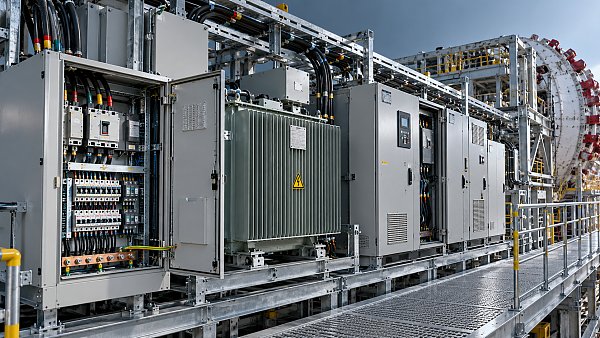
 Oct 26, 2026How TBM Electrical Systems Distribute Power and Protect Against FaultsExplore how TBM equipment electrical systems distribute power, coordinate fault protection, and maintain essential services. Learn what to check for safer, more reliable tunneling.
 Oct 25, 2026Comparing Industrial Equipment Suppliers: Lead Times, Warranties, and ServiceMake a smarter industrial equipment supplier comparison. Explore lead times, warranty coverage, and service support to reduce downtime risk and choose with confidence.
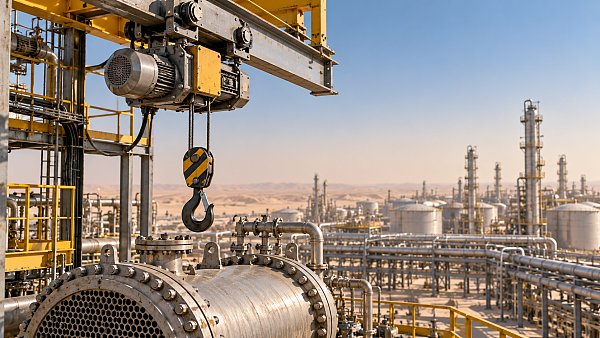
 Oct 24, 2026Choosing Lifting Equipment for Middle East Petrochemical Plants in Hazardous AreasExplore petrochemical lifting equipment Middle East plants can rely on. Compare hazardous-area certification, capacity, and heat limits to make informed procurement decisions.
 Oct 23, 2026Selecting Lifting Equipment for Nuclear Component Transport: Key Safety CriteriaSelecting lifting machinery for nuclear component transport? Discover essential safety criteria, load control checks, and supplier requirements to guide confident procurement.
Related News

Ms. Elena Rodriguez
Weekly Insights
Stay ahead with our curated technology reports delivered every Monday.