
Geotechnical Construction Methods: When to Use Soil Nailing, Anchors, or Grouting
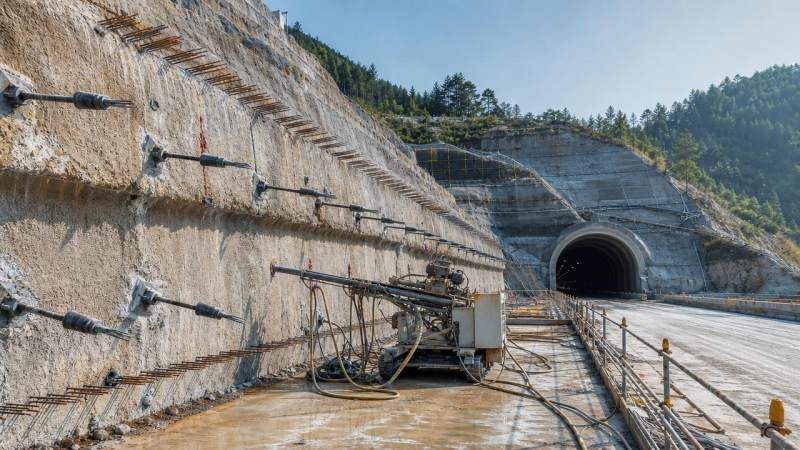
Choosing among geotechnical construction methods often decides whether a stabilization plan stays practical under real site pressure. In slopes, shafts, portals, deep cuts, and underground approaches, the difference between soil nailing, anchors, and grouting is not only technical. It affects safety margins, construction speed, equipment selection, groundwater control, and long-term performance. For infrastructure programs linked to tunneling, mining access, transport corridors, and heavy lifting foundations, that decision deserves closer scrutiny.
Why this decision matters now
Geotechnical risk has become more visible across major civil works. Projects are moving into denser urban corridors, steeper terrain, deeper excavations, and mixed ground conditions. At the same time, delivery schedules are tighter, and tolerance for rework is lower.
That is why geotechnical construction methods are receiving more attention from both design teams and delivery planners. A support system must match not only the soil or rock mass, but also the excavation sequence, nearby structures, drainage conditions, and access for drilling equipment.
This is especially relevant in the world observed by TF-Strategy, where tunnel boring machines, open-pit mining fleets, crawler cranes, and large road machinery all depend on stable ground interfaces. Portal slopes, haul road cuts, crane pads, shaft entries, and retaining systems are not secondary details. They influence machine uptime, logistics continuity, and total project risk.
Three methods, three different roles
Although they are often discussed together, these geotechnical construction methods solve different problems.
Soil nailing
Soil nailing reinforces an existing ground mass from the top down as excavation proceeds. Steel bars are drilled and grouted into the slope or cut face, then combined with facing elements such as shotcrete and mesh.
It works by improving the internal stability of the soil block. Rather than holding back the ground from outside, it strengthens the ground so it behaves as one reinforced mass.
Anchors
Anchors, including tiebacks and rock anchors, transfer loads from a wall, structure, or unstable zone into a deeper competent layer. They are usually active systems when prestressed, though passive arrangements also exist.
Anchors are often selected when higher loads must be resisted, wall movement must be tightly controlled, or structural retention systems need a stronger restraint mechanism.
Grouting
Grouting is broader than reinforcement alone. It injects material into voids, fractures, or permeable zones to reduce water flow, improve strength, limit settlement, or stabilize loose ground before excavation.
In practice, grouting is often a companion method. It may support soil nailing or anchoring by improving bond conditions, reducing seepage, or treating difficult zones that drilling alone cannot solve.
When soil nailing is the better fit
Soil nailing is commonly preferred for temporary or permanent support of cut slopes and near-vertical excavations in stiff soils, weathered rock, or mixed ground that can stand for a short time during staged excavation.
Its value becomes clear when the site needs a top-down process with limited footprint. This suits urban cuts, transport corridors, tunnel approaches, and portal stabilization where space behind the face is unavailable for a large retaining structure.
Among geotechnical construction methods, soil nailing is often attractive because drilling rigs are relatively compact, material quantities are manageable, and the support evolves with excavation progress.
- Use it where the ground can remain briefly stable between excavation stages.
- Use it when deformation tolerance is moderate rather than extremely strict.
- Use it when right-of-way is limited and backside access is constrained.
- Use it when a reinforced soil mass is more practical than a heavy retaining wall.
It becomes less suitable in very soft clays, highly organic soils, collapsible fills, or heavily saturated ground with poor short-term stand-up time. In those cases, the face may not remain stable long enough for a nailing sequence.
Where anchors become the stronger option
Anchors are typically chosen when structural demand is higher and displacement control is more critical. Deep excavations beside roads, rail, utilities, basements, marine edges, or industrial facilities often fall into this category.
They are also common in rock slopes where discrete unstable blocks need restraint, and in retaining walls that must resist large lateral loads without bulky internal bracing.
For geotechnical construction methods in constrained sites, anchors can create working space advantages. By transferring force into deeper competent strata, they reduce the need for large support elements inside the excavation.
The main watchpoints are legal easements, subsurface congestion, corrosion protection, testing requirements, and the reliability of the anchor bond zone. Anchor performance depends heavily on drilling quality and load verification.
Why grouting is often the hidden decision driver
Grouting is sometimes treated as a secondary measure, yet many difficult sites are won or lost on ground treatment. If groundwater inflow, fissured rock, karst features, loose fills, or voided zones are present, grouting may become the enabling step.
In tunneling and shaft works, pre-excavation grouting can reduce inflow and improve face stability. In mining access works, it can improve slope zones weakened by fractures. In foundation or crane platform preparation, it can help reduce local settlement risk.
Among geotechnical construction methods, grouting is the least visible after completion but often the most decisive in managing uncertainty below the surface.
- Use permeation grouting when pore spaces can accept low-viscosity material.
- Use compaction grouting when densification and controlled displacement are needed.
- Use fissure or curtain grouting when water-bearing cracks must be sealed.
- Use jet grouting when in-situ soil must be transformed into soil-cement columns.
The limitation is predictability. Grout takes the path the ground allows, not the path drawings prefer. That makes pilot trials, staged verification, and real-time monitoring especially important.
A practical comparison for real projects
Site decisions rarely start from a single method. More often, the choice sits at the intersection of geology, sequence, access, water, and risk tolerance.
This is why experienced teams often combine geotechnical construction methods. A nailed wall may need drainage and local grouting. An anchored system may require pre-treatment to secure the bond length. A tunnel portal may use both nails and anchors across different zones.
What should guide the evaluation
A useful evaluation starts with the failure mechanism, not the preferred product. The key question is what must be controlled: global slope movement, local block failure, seepage, settlement, or deformation near sensitive assets.
After that, several filters become practical.
- Ground character: strength, layering, discontinuities, permeability, and weathering profile.
- Construction sequence: top-down cuts, staged excavation, pre-support, or emergency stabilization.
- Water behavior: perched water, inflow paths, pressure relief, and drainage compatibility.
- Access constraints: rig reach, traffic control, overhead clearance, and working platform stability.
- Verification needs: pull-out tests, load tests, instrumentation, and observational adjustments.
- Lifecycle view: durability, inspection access, maintenance burden, and failure consequences.
In sectors tracked by TF-Strategy, this broader view is essential. Support choices affect more than a retaining face. They can alter haul access in mines, the assembly zone for crawler cranes, TBM launch readiness, and the delivery reliability of major infrastructure packages.
How to move from selection to action
The most reliable next step is to build a decision matrix around the project’s actual ground model and construction sequence. That means comparing soil nailing, anchors, and grouting against the same set of variables rather than judging them in isolation.
It also helps to separate what is known from what is assumed. If bond conditions, groundwater response, or stand-up time remain uncertain, targeted investigation and field trials may reduce more risk than another round of desktop comparison.
Geotechnical construction methods deliver their best results when method selection, equipment capability, and project staging are treated as one system. That is usually where the strongest decisions emerge: not from the label of the method, but from how well it fits the ground, the machinery, and the operational pressure of the site.
Related News
 Oct 23, 2026Selecting Lifting Equipment for Nuclear Component Transport: Key Safety CriteriaSelecting lifting machinery for nuclear component transport? Discover essential safety criteria, load control checks, and supplier requirements to guide confident procurement.
 Oct 22, 2026Tunnel Boring Machines in Southeast Asia: EPB vs. Slurry for Soft GroundCompare tunnel boring machines Southeast Asia projects rely on: EPB vs. slurry for soft ground. Discover how groundwater, settlement risks, and spoil handling shape the right choice.
 Oct 21, 2026Choosing Tunneling Equipment for the Middle East: Rock, Soil, and GroundwaterCompare underground tunneling equipment Middle East projects need. Explore rock, soil, groundwater, and TBM options to reduce risk and make confident procurement decisions.
 Oct 20, 2026Which Heavy Machinery Maintenance Standards Apply to Your Construction Fleet?Discover which heavy machinery maintenance standards apply to your fleet. Clarify legal duties, OEM requirements, and inspection rules to reduce risk and keep equipment ready for work.
Related News

Ms. Elena Rodriguez
Weekly Insights
Stay ahead with our curated technology reports delivered every Monday.