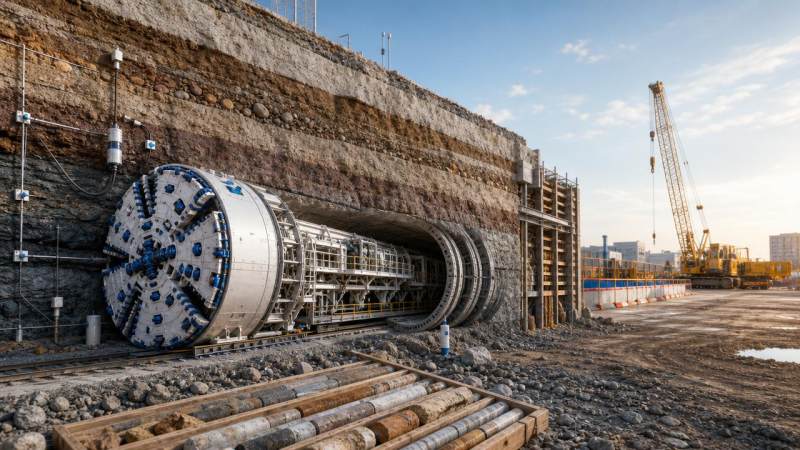
In high-stakes infrastructure tendering, technical evaluators need more than equipment specifications—they need ground-risk clarity, constructability signals, and reliable cost assumptions.
These geotechnical construction insights help teams connect subsurface behavior with TBM selection, excavation strategy, lifting plans, haulage logistics, and safety margins.
By translating geological uncertainty into practical bid intelligence, contractors can reduce contingency blind spots and present safer, more defensible proposals.
What evaluators really need from geotechnical intelligence
The core search intent behind this topic is not academic geology. Evaluators want decision-ready evidence that improves bid accuracy and reduces delivery exposure.
They need to know whether the proposed method fits the ground, whether productivity assumptions are realistic, and where hidden cost escalation may occur.
A safer bid is not simply a cheaper bid with a larger contingency. It is a proposal where technical risks are identified, priced, allocated, and controlled.
For tunnel, mining, road, lifting, and heavy haulage projects, ground conditions influence every major engineering choice, from equipment sizing to shift planning.
Strong geotechnical construction insights should therefore bridge site investigation data, machine capabilities, construction sequencing, and contractual risk language.
Turning subsurface uncertainty into bid assumptions
Most bid failures begin when limited borehole information is treated as certainty. The safer approach is to define confidence ranges around critical parameters.
Evaluators should examine rock strength, fracture frequency, groundwater pressure, abrasivity, swelling potential, contamination, and weathering variability across the project alignment.
Each factor should be translated into specific construction impacts, including advance rates, tool wear, support class frequency, dewatering demand, and disposal strategy.
This conversion is where raw ground data becomes commercial intelligence. It allows estimators to connect geological behavior with time, cost, safety, and claims exposure.
For example, abrasive quartz-rich rock may not only reduce TBM cutter life. It can also affect logistics, downtime, inventory, and procurement lead times.
Likewise, soft ground with unexpected water inflow can reshape face pressure strategy, spoil handling, surface settlement control, and emergency response planning.
How ground conditions should influence equipment selection
Technical evaluators should question whether proposed equipment is selected for the actual ground model, not merely for availability or headline capacity.
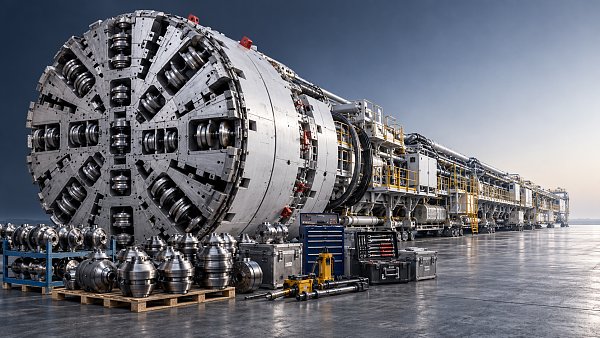
In tunneling, TBM type selection must reflect permeability, mixed-face probability, boulder risk, fault zones, and expected pressure transitions along the drive.
An earth pressure balance machine may offer settlement control in soft ground, while a slurry system may be stronger under high groundwater pressure.
However, the preferred choice depends on spoil treatment, logistics footprint, power demand, maintenance access, and contractor experience under similar conditions.
In open-pit mining, excavator and truck matching should account for material fragmentation, bench geometry, floor stability, haul road grade, and seasonal moisture.
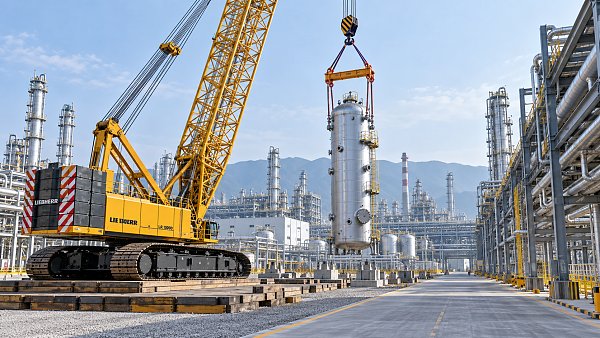
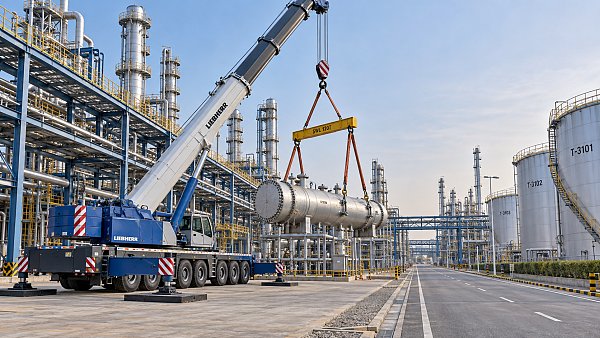
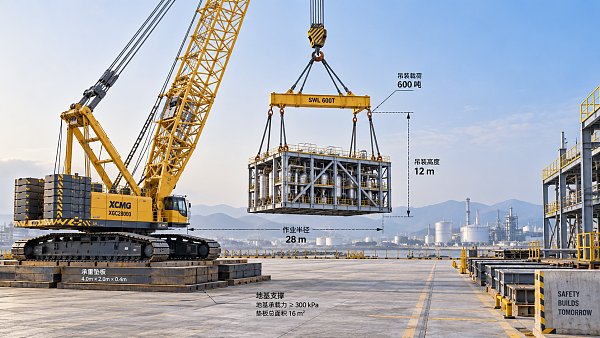
For crawler cranes and ultra-large lifting, geotechnical review must confirm bearing capacity, mat design, settlement tolerance, and load path stability during rotation.
Road machinery decisions also depend on subgrade variability, compaction response, drainage behavior, and material sensitivity to temperature or moisture changes.
Constructability signals that separate realistic bids from optimistic bids
A bid becomes safer when constructability assumptions are tested against real ground behavior, access constraints, equipment limits, and temporary works requirements.
Evaluators should look for a clear explanation of how the contractor will manage transitions between soil types, rock classes, aquifers, and structural zones.
Optimistic bids often assume uniform productivity. Defensible bids divide the works into geotechnical domains with different outputs, supports, crews, and risk allowances.
For TBM projects, domain-based planning may define cutterhead intervention frequency, ring build cycle, conditioning strategy, and launch or reception chamber risks.
For mining projects, it may define diggability, blasting variation, haul road maintenance intensity, tire wear, and production reliability during wet seasons.
For heavy lifting, it may define crane pad preparation, settlement monitoring, wind shutdown thresholds, ground improvement requirements, and contingency lift paths.
The strongest proposals make these links explicit. They show evaluators that ground risk has been engineered into the method, not hidden behind generic statements.
Cost and schedule: where geotechnical risks usually hide
Geotechnical risk rarely appears as one dramatic cost line. It usually hides inside productivity, consumables, support materials, standby time, and rework.
Technical evaluators should test whether the bid includes realistic allowances for cutter tools, wear parts, ground support, dewatering systems, and monitoring instruments.
They should also examine whether equipment utilization assumptions reflect maintenance windows, access restrictions, mucking delays, weather interruptions, and safety hold points.
A contractor may present an attractive unit rate, yet depend on advance rates that are not credible under the stated geological conditions.
Schedule risk is equally important. Adverse ground can slow production, but it can also trigger redesign, permit changes, logistics congestion, and interface disputes.
Better bid evaluation compares the proposed schedule with independent geotechnical domains, not only with total project length or average daily productivity.
When a proposal explains the cost logic behind ground response measures, evaluators gain confidence that the price is disciplined rather than speculative.
Safety margins should be engineered, not asserted
Safety language is common in bids, but evaluators need proof that safety margins are built into design, equipment operation, and field controls.
For underground works, this includes face stability control, gas monitoring, convergence measurement, emergency egress planning, and ground support verification procedures.
For open-pit mines, it includes slope monitoring, bench inspection, haul road geometry, traffic separation, and fatigue-aware equipment dispatching.
For crane operations, it includes ground bearing verification, lift plan review, exclusion zones, wind management, and continuous settlement observation.
Safety margins should be tied to measurable triggers. Examples include groundwater inflow thresholds, deformation limits, vibration criteria, or haul road deterioration indicators.
When triggers are defined before mobilization, the project team can respond early instead of debating responsibility after conditions deteriorate.
This approach improves worker safety while also protecting the contractor from unplanned shutdowns, incident investigations, and reputational damage.
What a strong geotechnical bid package should include
A technically mature bid should include a ground risk register that links each hazard to likelihood, consequence, mitigation, owner interface, and cost treatment.
It should also present the interpretation basis, including borehole coverage, laboratory testing, geophysics, historical project references, and identified data gaps.
Evaluators should expect method statements that show how the proposed equipment will respond to variable ground, not simply operate under ideal conditions.
For TBM bids, useful evidence includes cutterhead rationale, conditioning strategy, intervention planning, segment design assumptions, and muck treatment arrangements.
For surface excavation, useful evidence includes slope control, blasting approach, drainage measures, fleet sizing, maintenance planning, and material handling pathways.
For large lifting, useful evidence includes geotechnical platform design, load spread calculations, settlement tolerance, inspection frequency, and contingency actions.
The package should also define monitoring responsibilities, reporting cadence, decision thresholds, and escalation routes when ground conditions diverge from assumptions.
Using geotechnical construction insights to compare bidders fairly
Evaluators often face proposals that use different assumptions, formats, and levels of technical transparency. A structured comparison framework reduces subjective judgment.
First, compare how each bidder interprets the same ground data. Differences may reveal stronger expertise, excessive optimism, or misunderstood subsurface behavior.
Second, compare whether construction methods are adjusted by geotechnical domain. Uniform methods across variable terrain should be treated cautiously.
Third, compare equipment resilience. The best machine on paper may underperform if support systems, maintenance access, or logistics are weak.
Fourth, compare risk ownership. A bid that transfers every unknown to the client may not provide genuine cost or schedule certainty.
Finally, compare monitoring and response plans. Strong bidders define how decisions will be made when the ground behaves differently from predictions.
This evaluation method rewards proposals that are realistic, transparent, and controllable, rather than proposals that simply appear low at tender stage.
Digital tools are useful only when tied to field decisions
Digital ground models, remote monitoring, 5G-controlled equipment, and automated reporting can improve bid quality, but only when linked to decisions.
A model that visualizes geology is helpful. A model that changes support classes, fleet deployment, or cutter inventory is commercially valuable.
Technical evaluators should ask whether digital tools improve prediction, detection, response time, or documentation in ways that reduce project risk.
For TBM operations, real-time torque, thrust, penetration, and chamber pressure data can validate ground assumptions and detect transitions earlier.
For mining fleets, payload, tire temperature, grade, and road condition data can improve dispatching and maintenance under difficult ground conditions.
For lifting works, settlement sensors and load monitoring can support safer execution, especially where crane platforms sit on treated or variable soils.
The value of digital intelligence lies in closing the loop between forecast, field behavior, operational action, and contractual evidence.
Common red flags technical evaluators should challenge
One red flag is a bid that references geotechnical risk generally but does not identify specific zones, mechanisms, or response actions.
Another is a productivity estimate based on average conditions, without sensitivity testing for adverse ground, water inflow, access restrictions, or support changes.
Evaluators should also question equipment proposals that ignore mixed ground, high abrasivity, weak foundations, or extreme climate effects on performance.
Very low contingencies deserve scrutiny when investigation coverage is limited, alignments are long, or geological transitions are poorly constrained.
Contract language can also create danger. Ambiguous definitions of unforeseen ground conditions may lead to disputes, claims, and delayed decisions.
A final warning sign is overreliance on past project success without proving that the geological, logistical, and contractual conditions are comparable.
Challenging these issues before award helps prevent a technically fragile bid from becoming an expensive construction problem.
Building a safer bid review workflow
A practical workflow begins by separating factual ground data from interpretation. This prevents teams from treating assumptions as confirmed conditions.
Next, evaluators should map geotechnical domains and assign construction impacts to each domain, including productivity, equipment stress, safety controls, and monitoring.
The third step is to test the proposed method against worst credible conditions, not only against the most likely baseline.
Fourth, reviewers should verify that cost allowances match the mitigation measures described in the technical proposal and risk register.
Fifth, the team should check whether contractual mechanisms support timely decisions when actual conditions differ from tender assumptions.
This workflow supports clearer scoring, better negotiation questions, and more consistent recommendations to procurement, engineering, and executive stakeholders.
It also helps contractors prepare bids that are technically defensible, commercially realistic, and easier for clients to trust.
Conclusion: safer bids start with ground-risk clarity
Geotechnical construction insights are valuable because they transform uncertain subsurface information into practical choices about machines, methods, money, and safety.
For technical evaluators, the best bid is not the one with the most impressive equipment list or the lowest headline price.
The best bid explains how ground behavior has shaped equipment selection, construction sequencing, productivity assumptions, monitoring plans, and risk allocation.
When these connections are visible, evaluators can distinguish disciplined engineering judgment from optimistic tender positioning and vague contingency language.
For complex earth engineering projects, safer bids emerge when geological uncertainty is openly analyzed, commercially priced, and operationally controlled from the beginning.
That is the practical value of strong geotechnical intelligence: it helps teams bid with confidence before the ground begins testing every assumption.