
High Altitude Mining Challenges: Equipment Performance, Oxygen Limits, and Safety Controls
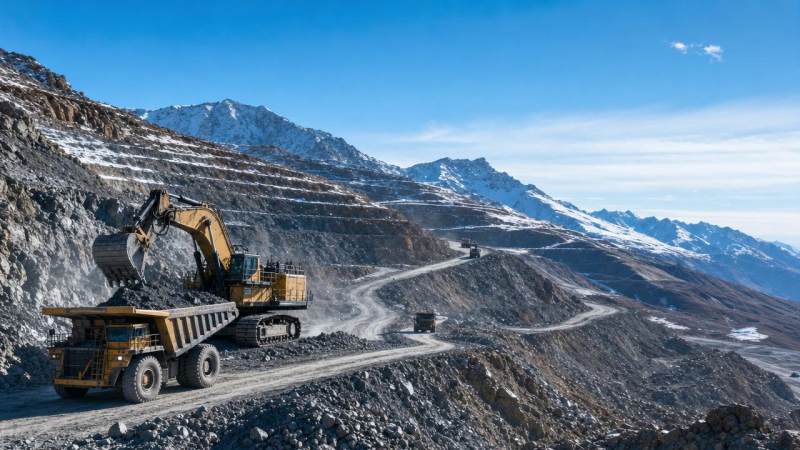
High altitude mining pushes every system harder than many site plans first assume. Thin air cuts engine output, slows human recovery, changes combustion, and raises the margin for error.
For operations tied to open-pit production, heavy haulage, and remote mountain logistics, small efficiency losses can quickly become reliability and safety problems.
That is why high altitude mining needs more than stronger equipment. It needs clear control points, realistic derating rules, and a site discipline that matches elevation risk.
Drawing on the heavy-industry perspective of TF-Strategy, this article focuses on practical actions that help stabilize machine performance, oxygen exposure, and field safety in extreme elevation conditions.
Why high altitude mining changes normal operating assumptions
[Image 01: High-altitude open-pit mine with haul trucks, excavators, and steep haul roads under thin-air conditions]
At altitude, air density drops. Engines get less oxygen for combustion, cooling systems reject heat less efficiently, and brakes face longer thermal stress on downhill haul roads.
The human side is just as important. Lower oxygen can reduce concentration, delay reaction time, and make routine inspection work feel harder than expected.
In high altitude mining, these limits often overlap. A slightly derated truck, a tired operator, and an overloaded ramp schedule can combine into a preventable incident.
The first checks worth tightening
- Confirm engine derating curves by elevation, not by brochure rating alone, and match them to actual payload, gradient, and ambient temperature on each haul route.
- Set oxygen exposure thresholds for work zones, mobile crews, and maintenance bays, then link them to shift length, acclimatization rules, and emergency response timing.
- Review cooling, braking, and tire temperature trends together, because in high altitude mining one overloaded subsystem usually signals broader operating imbalance.
- Check fuel quality, cold-start reliability, and air filtration condition more often, since thin air and dust together can distort engine response and increase wear rates.
- Use route-specific speed limits and load caps instead of mine-wide averages, especially where switchbacks, altitude gain, and surface roughness amplify braking demand.
- Audit radio coverage and remote monitoring reliability across pit walls and mountain corridors, because delayed communication can turn a minor equipment issue into a rescue event.
Equipment performance problems that appear earlier at elevation
In high altitude mining, equipment usually fails less from one dramatic cause and more from accumulated stress that was never recalibrated for elevation.
Ultra-large excavators, mining dump trucks, and support machines may all remain “operational,” yet still work outside their healthiest performance window.
Engine, cooling, and powertrain controls
- Re-baseline fuel burn and cycle time after altitude transfer, because old lowland benchmarks can hide engine stress and make normal-looking output appear acceptable.
- Track turbocharger behavior and intake pressure closely, since unstable boost response often appears before visible loss of hauling performance or repeated fault alarms.
- Reduce preventive maintenance intervals for cooling packs and radiator cleaning where dust is persistent, as reduced air density already weakens heat rejection capacity.
- Validate transmission shift logic under full-load climbs, because prolonged hunting between gears increases heat, wastes fuel, and shortens drivetrain life.
Brake, tire, and downhill control
A common blind spot in high altitude mining is treating brake risk as only a maintenance issue. In reality, it is also a road design, dispatch, and payload control issue.
- Measure retarder use, brake temperature, and descent duration by route segment, then adjust dispatch spacing before downhill congestion starts stacking thermal load.
- Inspect tire pressure and shoulder wear during temperature swings, because cold mornings and hot braking cycles can produce misleading readings and uneven casing stress.
- Confirm runaway-lane readiness and signage visibility in snow, dust, or low light, since emergency controls are only useful when drivers can access them instantly.
Oxygen limits are not only a medical issue
Low oxygen affects more than health screenings. It changes how inspections are performed, how quickly errors are noticed, and how safely repairs are finished.
This matters in high altitude mining, where maintenance often happens outdoors, under wind, cold, and schedule pressure from continuous production targets.
Field controls that reduce oxygen-related risk
- Build acclimatization into deployment plans, especially after rapid travel from low elevation, because first-week fatigue can quietly reduce inspection quality and judgment.
- Use pulse oximetry and symptom reporting together, not separately, since some workers compensate well on numbers while still showing poor coordination or focus.
- Place oxygen stations near high-exertion zones such as fueling, tire service, and field welding points, where physical demand often spikes without warning.
- Shorten exposure time for non-routine jobs at peak elevation, especially confined troubleshooting or lifting support work that requires sustained concentration.
- Train supervisors to recognize subtle cognitive decline, because altitude-related risk often appears first as slower decisions, skipped checks, or weak hazard communication.
Where quality control should focus first in high altitude mining
Quality control in high altitude mining works best when it moves beyond paperwork and follows the actual stress path through the machine and the shift.
TF-Strategy often highlights this cross-link between physical parameters, machine design, and operating method. That approach is especially useful in mountain mining environments.
One practical rule helps: if production drops, do not only inspect the machine. Inspect the road, the payload practice, the shift schedule, and the oxygen exposure pattern together.
Two common site situations that deserve early intervention
[Image 02: Maintenance and safety team reviewing truck thermal data and oxygen controls at a mountain mining dispatch center]
When haul trucks slow down but no major fault appears
This is common in high altitude mining. Dispatch may see longer cycle times, yet workshop reports show no critical component failure.
Usually the cause is combined derating, heavier rolling resistance, and cautious downhill behavior after brake heating. Review route segments, payload spread, and cooling trends before replacing parts.
When inspections are completed but field risk still feels high
This often points to human-performance drift. Check whether inspections are being rushed late in shift, after long climbs, or during rapid weather change.
In high altitude mining, “inspection complete” does not always mean “inspection effective.” Timing, fatigue, and oxygen stress can quietly reduce defect detection quality.
Practical actions that usually deliver quick gains
- Split performance dashboards by elevation band and route type, so abnormal trends in high altitude mining are not hidden inside mine-wide average data.
- Align maintenance windows with the harshest thermal and dust periods, because timing service work well can reduce repeat failures more than adding parts stock.
- Combine safety briefings with actual machine data from trucks and excavators, making altitude risk visible through temperatures, cycle losses, and braking behavior.
- Review contractor and visitor readiness before site access, especially for lifting, welding, or electrical support tasks that demand fast reactions at elevation.
- Use remote monitoring where terrain allows, a growing practice aligned with TF-Strategy’s focus on digital heavy-equipment control and safer decision support.
- Escalate small trend changes early, because in high altitude mining minor power loss or fatigue signals often appear days before a serious event.
What often gets missed during planning
Many plans account for altitude in broad terms, but not in operating detail. That gap creates friction between expected capacity and safe daily output.
- Weather swings can change tire behavior, visibility, and road traction within hours, so high altitude mining plans should include fast review triggers, not only daily reports.
- Support infrastructure matters as much as fleet size; weak workshop heating, poor bay ventilation, or limited oxygen support can slow repair quality.
- Transfer learning from other heavy sectors helps, including TBM logistics, crawler crane lift planning, and long-duty cooling management across large machinery fleets.
The broader lesson is simple. High altitude mining should be managed as a system, not as isolated equipment or medical issues.
A stronger response starts with accurate derating, route-based control, oxygen-aware scheduling, and tighter checks on braking, cooling, and fatigue patterns.
For teams using heavy-industry intelligence to improve uptime and control risk, the next step is to compare current site rules against actual altitude exposure, machine data, and haul-road reality.
When those three match, high altitude mining becomes more stable, more predictable, and much safer to run.
Related News
 Oct 20, 2026Which Heavy Machinery Maintenance Standards Apply to Your Construction Fleet?Discover which heavy machinery maintenance standards apply to your fleet. Clarify legal duties, OEM requirements, and inspection rules to reduce risk and keep equipment ready for work.
 Oct 19, 2026Sizing Industrial Hydraulic Power Packs: Pressure, Flow, and Duty CycleSize industrial hydraulic power packs with confidence. Learn how pressure, flow, and duty cycle affect performance, energy costs, and heat control—and avoid costly sizing mistakes.
 Oct 18, 2026How Equipment Specifications Affect Purchase, Installation, and Operating CostsExplore equipment specification planning cost factors that shape purchase, installation, and operating budgets. Compare lifecycle costs, avoid oversizing, and buy with confidence.
 Oct 17, 2026Tunnel Boring Machine Supplier List: Compare TBM Types and Service CoverageExplore our tunnel boring machinery supplier list to compare EPB, slurry and hard rock TBMs, assess service coverage and lifecycle costs, and build a smarter procurement shortlist.
Ms. Elena Rodriguez
Weekly Insights
Stay ahead with our curated technology reports delivered every Monday.