
How to Evaluate Tunneling Machinery for Infrastructure Projects by Ground and Tunnel Type
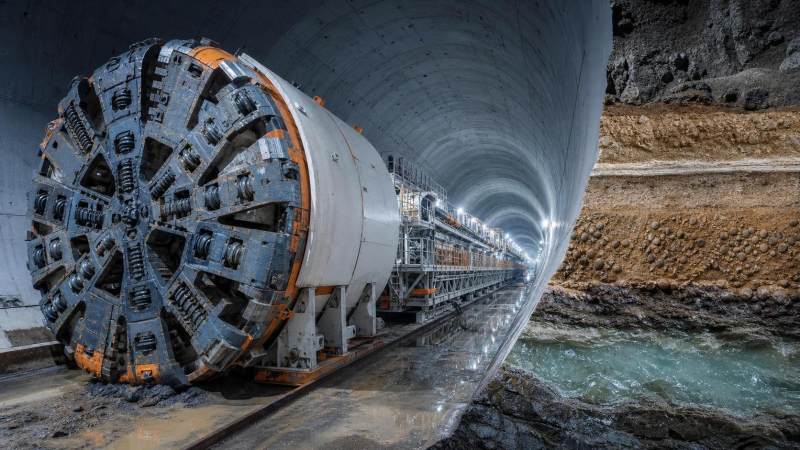
How to Evaluate Tunneling Machinery for Infrastructure Projects by Ground and Tunnel Type
Choosing the right tunneling machinery for infrastructure work begins with the ground, not the brochure.
Machine selection affects schedule stability, safety exposure, cutter consumption, settlement control, and total project cost.
That is why tunneling machinery for infrastructure projects should be evaluated as a full delivery system, not a standalone machine.
Ground conditions, tunnel geometry, water pressure, logistics, and maintenance access all shape what will actually perform in the field.
In practical terms, the best choice is rarely the biggest or most advanced option.
It is the tunneling machinery for infrastructure scope that matches risk profile, production targets, and operating constraints with the least friction.
This guide explains how to evaluate tunneling machinery for infrastructure projects by ground type and tunnel application, with a focus on decisions that hold up under real project pressure.
Start with Ground Conditions, Not Equipment Catalogs
The first screening step is geotechnical clarity.
Before comparing suppliers, define the expected mix of soft ground, mixed face, weathered rock, hard rock, faults, and groundwater behavior.
For tunneling machinery for infrastructure planning, incomplete geology often leads to the most expensive mistakes.
A machine that excels in uniform clay may struggle badly in boulders, abrasive strata, or sudden transitions between soil and rock.
Key ground variables should be reviewed together:
- Soil type, plasticity, and stickiness
- Rock strength, abrasivity, and fracture frequency
- Groundwater level and inflow risk
- Mixed-face probability along the alignment
- Gas, voids, swelling, or squeezing behavior
- Settlement sensitivity around nearby assets
Once these variables are credible, tunneling machinery for infrastructure comparison becomes far more disciplined.
It also becomes easier to separate real capability from sales language.
Match Machine Type to Ground Behavior
Different tunnel boring approaches solve different ground problems.
When evaluating tunneling machinery for infrastructure projects, machine type should follow failure modes, not just production goals.
Soft Ground and Urban Settlement Control
In soft, water-bearing soils, Earth Pressure Balance machines are often preferred.
They support face stability by balancing pressure with conditioned excavated material.
This is especially useful in metro work beneath roads, utilities, and buildings.
For this type of tunneling machinery for infrastructure, review conditioning systems, screw conveyor design, and settlement monitoring integration.
High Water Pressure and Unstable Fine Soils
Slurry TBMs are stronger candidates where groundwater pressure is high and face support must be tightly managed.
They can perform well in sands, silts, gravels, and complex subsea or river-crossing sections.
However, the full slurry separation plant must be counted in logistics, energy use, footprint, and maintenance planning.
Hard Rock and Long Mountain Tunnels
Hard rock TBMs are commonly selected for competent rock and long drives with stable production potential.
Here, cutterhead power alone is not enough.
Evaluate disc cutter life, penetration rate, backup train reliability, and access for cutter changes.
For long-distance tunneling machinery for infrastructure projects, downtime can erase any headline performance advantage.
Consider Mixed Ground as a Separate Risk Class
Mixed-face tunneling deserves special attention because it combines multiple failure mechanisms in one alignment.
One side of the face may hold firm rock while the other side loosens under wet soil conditions.
That imbalance can drive vibration, uneven wear, face instability, and poor steering response.
This is where tunneling machinery for infrastructure projects needs flexible cutterhead design and adaptable operating modes.
Selection reviews should test these questions:
- Can the machine manage rapid transitions without long stoppages?
- Is the cutter layout suitable for both wear resistance and soil discharge?
- How robust is face pressure control during variable permeability?
- What is the contingency plan for tool change under pressure?
Recent project experience shows mixed ground often causes more schedule disruption than uniformly difficult rock.
Evaluate Tunnel Geometry and Project Constraints
Ground type matters, but geometry can rule out otherwise strong equipment choices.
Tunneling machinery for infrastructure projects must fit the alignment, launch conditions, and site access reality.
Review these constraints early:
- Tunnel diameter and segmental lining requirements
- Curve radius and steering tolerance
- Depth of cover and surface protection demands
- Shaft size, launch chamber limits, and retrieval access
- Muck removal path and ventilation arrangement
- Utility congestion and work-hour restrictions
A high-capacity TBM can still be the wrong answer if the launch site cannot support assembly, slurry handling, or backup train movement.
In urban projects, compact logistics often become as decisive as excavation performance.
Look Beyond Advance Rate to Whole-Life Performance
Many evaluations overemphasize theoretical advance rate.
In reality, tunneling machinery for infrastructure value comes from sustained performance across the full construction cycle.
The better commercial question is simple: what output remains after downtime, wear, delays, and support demand are included?
A practical evaluation matrix should compare:
This broader view usually leads to more reliable tunneling machinery for infrastructure decisions than speed data alone.
Test Supplier Capability as Hard as Machine Capability
A strong machine with weak support can become a project liability very quickly.
That is why tunneling machinery for infrastructure procurement should include a structured supplier due diligence process.
Focus on operating evidence, not presentation quality.
- Reference projects with similar geology and diameter
- Documented uptime and intervention history
- Lead time for cutters, seals, hydraulic parts, and controls
- Local field engineers and commissioning support
- Training quality for operators and maintenance teams
- Digital diagnostics and reporting transparency
The clearer the supplier’s field record, the lower the uncertainty around your tunneling machinery for infrastructure selection.
Build a Decision Framework Around Risk, Cost, and Delivery
The final decision should combine engineering fit and delivery realism.
At this point, tunneling machinery for infrastructure projects should be ranked using weighted criteria rather than opinion-led debate.
A practical framework often includes five scoring blocks:
- Geological compatibility and face control
- Production reliability across the full alignment
- Capital cost, operating cost, and spare demand
- Site logistics and installation feasibility
- Supplier response capacity and lifecycle support
This approach creates a visible audit trail for why one option outperforms another.
It also helps commercial, technical, and construction teams align around the same risk language.
From a market intelligence perspective, this is where better decisions are usually made.
Teams that define failure scenarios early tend to choose tunneling machinery for infrastructure work with stronger delivery resilience.
That matters even more as urban density, environmental scrutiny, and cost pressure keep rising.
In the end, the right tunneling machinery for infrastructure projects is the one that fits the ground, respects the tunnel, and protects the schedule from predictable surprises.
Related News
 Oct 19, 2026Sizing Industrial Hydraulic Power Packs: Pressure, Flow, and Duty CycleSize industrial hydraulic power packs with confidence. Learn how pressure, flow, and duty cycle affect performance, energy costs, and heat control—and avoid costly sizing mistakes.
 Oct 18, 2026How Equipment Specifications Affect Purchase, Installation, and Operating CostsExplore equipment specification planning cost factors that shape purchase, installation, and operating budgets. Compare lifecycle costs, avoid oversizing, and buy with confidence.
 Oct 17, 2026Tunnel Boring Machine Supplier List: Compare TBM Types and Service CoverageExplore our tunnel boring machinery supplier list to compare EPB, slurry and hard rock TBMs, assess service coverage and lifecycle costs, and build a smarter procurement shortlist.
 Oct 16, 2026Heavy-Duty Petrochemical Lifting: Selecting Cranes by Load, Radius, and Site AccessExplore heavy-duty petrochemical lifting solutions. Compare cranes by load, radius, site access, and ground support to reduce project risk and optimize lifting costs.
Ms. Elena Rodriguez
Weekly Insights
Stay ahead with our curated technology reports delivered every Monday.