
Heavy Equipment Maintenance Checklist: How to Reduce Downtime and Prevent Costly Failures
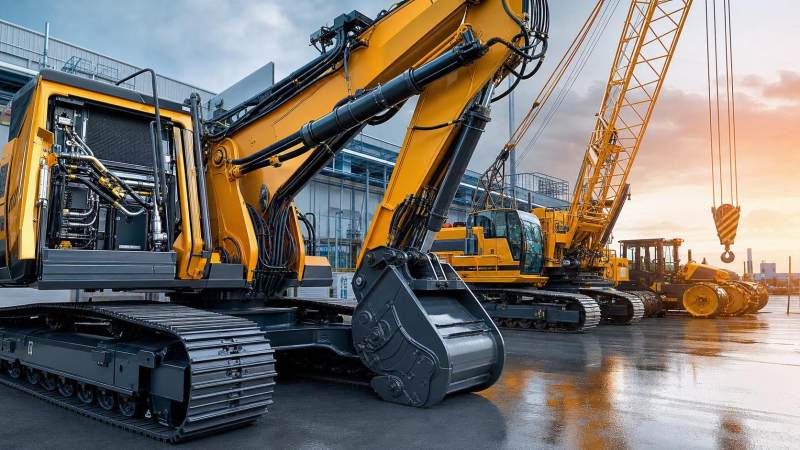
Heavy equipment maintenance starts with operating reality, not a generic service interval
Heavy equipment maintenance matters most when machines carry production risk every hour they run.
A tunnel boring machine below a city, an excavator in an open-pit mine, and a crawler crane on a wind project do not fail for the same reasons.
That is why a useful checklist must follow application conditions, duty cycle, load profile, and environment before it follows the calendar.
In practice, strong heavy equipment maintenance reduces unscheduled stoppages, protects component life, and keeps repair planning aligned with project deadlines.
Across TBM systems, mining fleets, lifting equipment, and road machinery, the same principle holds.
The checklist is not paperwork.
It is the operating discipline that turns field observations into fewer failures and lower total cost.
Different sites create different maintenance priorities
The biggest mistake in heavy equipment maintenance is assuming similar machines need the same inspection depth.
A machine working in abrasive rock, high altitude, or stop-start lifting cycles ages differently, even when model numbers match.
TF-Strategy often frames this through the link between physical parameters and construction methodology.
That view is useful because maintenance decisions rarely fail on parts alone.
They fail when service planning ignores how geology, haul roads, climate, operator habits, and payload variation interact.
A good heavy equipment maintenance checklist therefore begins with three questions.
- Is the machine exposed to continuous load, shock load, or idle-heavy intermittent work?
- Which systems are mission-critical for safety, mobility, and production continuity?
- What site factors accelerate wear beyond the OEM baseline?
Once those answers are clear, the checklist becomes more precise and far more useful.
In tunneling, hidden wear builds faster than visible damage
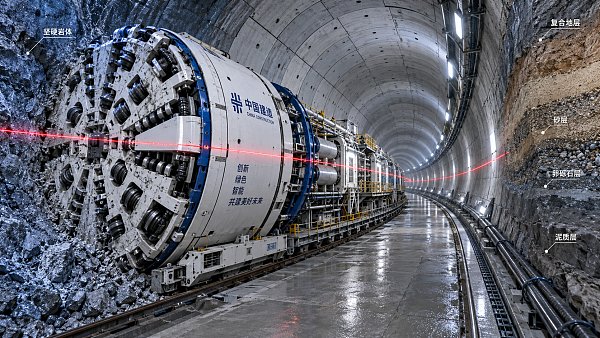
TBM maintenance is often judged by cutter consumption, but that is only one layer of risk.
In confined underground operations, minor issues in hydraulics, slurry circulation, seals, or guidance systems can trigger major schedule disruption.
Here, heavy equipment maintenance should emphasize condition trends rather than visible defect checks alone.
Pressure fluctuation, abnormal vibration, oil contamination, and heat rise often appear before mechanical failure becomes obvious.
A practical checklist in this setting usually gives extra attention to cutterhead drive units, hydraulic hoses, bearing temperatures, lubrication points, and backup power readiness.
The common misjudgment is focusing on components that are easy to replace while overlooking systems that are difficult to access underground.
When access windows are narrow, maintainability matters as much as component price.
Open-pit mining equipment needs a checklist built around fatigue and contamination
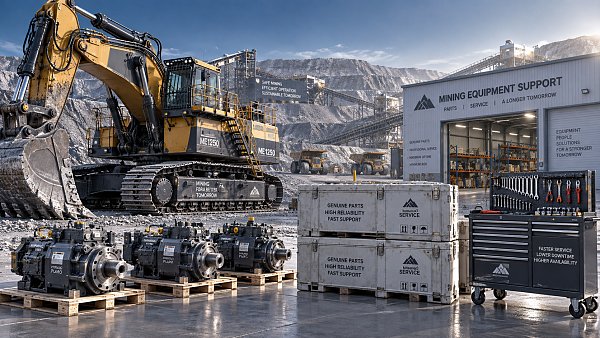
Mining excavators and dump trucks work in punishing cycles.
Dust ingress, brake heat, structural fatigue, tire stress, and payload inconsistency create a different heavy equipment maintenance profile.
In this environment, fluid cleanliness and structural inspection deserve the same weight.
A clean filter does not guarantee a healthy hydraulic system if fine contamination already circulates through pumps and valves.
Likewise, a truck that still meets output targets may already show early cracking around high-stress weld zones.
More effective heavy equipment maintenance in mines usually includes engine air intake checks, oil sampling, undercarriage review, brake system temperatures, payload sensor verification, and frame inspection at known fatigue points.
The site may also require shorter intervals during seasonal transitions, especially where rain, freeze-thaw cycles, or haul road deterioration change load behavior.
For crawler cranes, the risk is often in low-frequency but high-consequence failure points
Lifting equipment does not always accumulate wear through continuous motion.
Many issues emerge through infrequent peak loads, setup variation, and long standby periods between critical lifts.
That changes the checklist logic.
Heavy equipment maintenance for crawler cranes should place more attention on wire ropes, boom connection points, slew systems, load moment indicators, hydraulic cylinders, and ground-contact components.
Corrosion, calibration drift, and improper storage can be as dangerous as visible wear.
This is especially true on wind, nuclear, and petrochemical jobs where lift precision and regulatory scrutiny are both high.
A recurring mistake is treating low utilization as low maintenance demand.
In reality, low-frequency use often hides lubrication failure, seal aging, and sensor inaccuracy until the most critical operating moment.
Road machinery and paving fleets depend on consistency more than dramatic repair events
Large road machinery rarely gets attention for catastrophic breakdown alone.
Its maintenance value often appears in surface quality, paving uniformity, thermal control, and daily production rhythm.
For pavers, rollers, and milling machines, heavy equipment maintenance should connect mechanical condition with output precision.
Screed performance, conveyor condition, vibration system stability, drum wear, and sensor calibration directly affect finish quality.
The checklist should therefore include not only fluids and fasteners, but also temperature control, material feed stability, leveling response, and cleanup discipline after each shift.
More common than a major failure is gradual drift.
That drift increases rework, fuel use, and schedule friction long before a machine stops completely.
A simple comparison shows why one checklist never fits every fleet
The core categories may repeat, but the inspection emphasis changes by application.
This is where heavy equipment maintenance becomes a management tool, not just a workshop activity.
What a practical heavy equipment maintenance checklist should always include
Despite the differences, some checklist elements belong in every serious maintenance routine.
- Daily operating observations, including noise, temperature, leakage, and response delay.
- Lubrication control by point, grade, quantity, and actual interval.
- Fluid and filter tracking supported by contamination checks, not replacement guesses.
- Structural review for cracks, loose fasteners, abnormal wear paths, and alignment shift.
- Electrical and sensor verification where automation or remote control affects safe operation.
- Service history feedback so recurring faults are traced by condition, not only by repair date.
In more advanced fleets, digital monitoring can strengthen heavy equipment maintenance.
Still, telemetry only helps when alarm thresholds match the machine’s real duty cycle.
Common misjudgments usually come from looking at one variable in isolation
Many failures are not caused by missing maintenance altogether.
They come from maintenance that is technically completed but poorly adapted.
- Using OEM intervals without adjusting for dust, altitude, moisture, or extreme temperature.
- Replacing parts by hours alone while ignoring trend data and site-specific failure modes.
- Focusing on purchase price and overlooking access difficulty, downtime cost, and labor hours.
- Treating similar equipment across projects as if load profile and risk exposure were identical.
- Checking visible components carefully while skipping calibration, contamination, or hidden fatigue points.
In actual operations, the better judgment is to connect component condition with project consequence.
A minor issue on a noncritical support unit is not the same as a minor issue on a bottleneck machine.
The best next step is to build a checklist around risk, access, and consequence
Heavy equipment maintenance works best when the checklist reflects where failure hurts most.
Start by mapping each machine to its operating environment, critical systems, service access limits, and downtime impact.
Then separate daily observations, scheduled inspections, condition-based triggers, and shutdown tasks.
That structure makes maintenance more actionable across tunneling, mining, lifting, and road construction settings.
For organizations following global heavy industry shifts, the stronger approach is not a longer checklist.
It is a sharper one, shaped by real operating conditions, evolving technology, and the cost of getting the judgment wrong.
Review the site conditions first, compare failure patterns second, and refine the heavy equipment maintenance checklist before the next peak workload arrives.
Related News
 Sep 21, 2026Industrial Supplier Evaluation: A Risk-Based Scorecard for Quality, Capacity, and DeliveryIndustrial supplier evaluation made practical: use a risk-based scorecard to assess quality, capacity, and delivery reliability, reduce project risk, and select suppliers with confidence.
 Sep 20, 2026Comparing Heavy Equipment Warranty Suppliers: Coverage, Claims, and Downtime RiskSupplier comparison for heavy equipment warranty: evaluate coverage, claims speed, service networks, and downtime risk to protect uptime and project costs.
 Sep 19, 2026Mining Truck Technology Trends: What Fleet Managers Should Prioritize for 2026Mining truck technology trends for 2026: prioritize electrification, autonomy, predictive maintenance, and road intelligence to improve fleet uptime, safety, and cost control.
 Sep 17, 2026How TBM Guidance Technology Maintains Alignment Through Curves and Variable GroundTunnel boring machine guidance technology helps teams maintain precise alignment through curves and variable ground, reducing risk, improving lining accuracy, and protecting schedules.


Ms. Elena Rodriguez
Weekly Insights
Stay ahead with our curated technology reports delivered every Monday.