
Infrastructure Construction Planning: How to Match Equipment to Project Scale and Ground Conditions
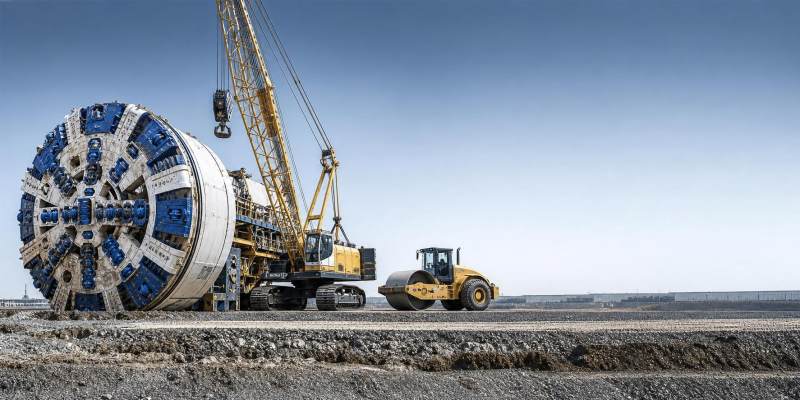
Infrastructure Construction Planning: How to Match Equipment to Project Scale and Ground Conditions
In infrastructure construction, equipment selection shapes cost, safety, and schedule from day one.
The wrong machine can delay access, overload logistics, or fail in unstable ground.
The right match does more than lift output.
It aligns machine capability with site conditions, production targets, and delivery risk.
That is where practical infrastructure construction planning becomes a competitive advantage.
Across tunnels, mines, highways, and lifting yards, selection logic should start from the ground up.
This guide explains how to connect project scale, geology, and fleet design into smarter equipment decisions.
Start with Project Scale, Not Equipment Catalogs
Many teams begin infrastructure construction planning by comparing machine size and headline output.
That approach looks efficient, but it often misses the real operating envelope.
Project scale is not only length, volume, or lifting weight.
It also includes staging space, access roads, utility constraints, and crew coordination limits.
In real jobs, a larger machine can create more bottlenecks than value.
A practical review should define the project through five scale questions:
- What daily output is required to protect the contract schedule?
- How much working space exists for assembly, turning, and maintenance?
- What transport limits affect machine delivery and mobilization?
- How stable is the upstream supply of fuel, parts, and consumables?
- Which activities must run in parallel without interfering with each other?
These answers create a scale profile.
That profile is far more useful than choosing equipment by nominal capacity alone.
Ground Conditions Decide the Real Equipment Fit
Ground conditions are usually the turning point in infrastructure construction planning.
A machine that works well in uniform ground may struggle badly in mixed or changing layers.
That is especially true for tunneling, open-pit work, embankment preparation, and heavy lifting platforms.
For TBM Projects
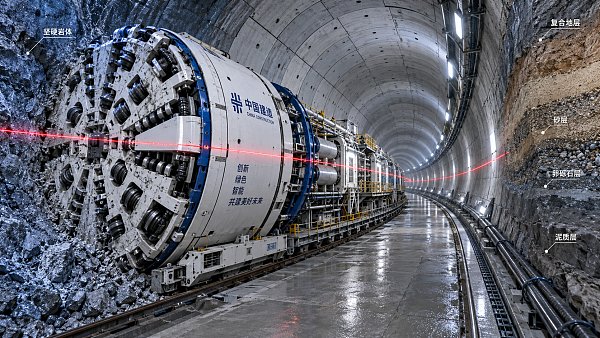
TBM selection should reflect rock strength, abrasiveness, groundwater pressure, and fault frequency.
Mixed geology often punishes overconfident assumptions.
A flexible shield design, cutterhead strategy, and support system may matter more than maximum advance rate.
Key decision checks include:
- Will the face encounter sharp transitions between soft soil and hard rock?
- How often will cutter tools need replacement?
- Can slurry, earth pressure, or drainage systems handle peak water events?
- Is segment transport synchronized with tunneling pace?
For Surface and Road Projects
In roadworks and site formation, ground bearing capacity drives machinery stability and paving quality.
Soft subgrade can reduce compaction efficiency and increase rework.
This means infrastructure construction decisions should connect rollers, graders, and pavers to material behavior, not only lane width.
For Cranes and Heavy Lifting
Crawler crane planning often fails when teams focus on load chart values without enough ground analysis.
Lift capacity is only part of the story.
Soil support, weather exposure, and travel path stability are equally important in infrastructure construction planning.
Match Equipment by Operating System, Not by Single Machine
One of the clearest shifts in infrastructure construction is system-based equipment planning.
Projects fail less often when machines are selected as coordinated production units.
A powerful primary machine cannot compensate for weak support assets.
A more reliable framework includes four layers:
- Core production unit, such as a TBM, excavator fleet, paver train, or crawler crane.
- Material flow support, including haulage, spoil removal, segment supply, and fueling.
- Ground control support, such as drainage, dewatering, stabilization, or temporary reinforcement.
- Service layer, covering maintenance access, spare parts, operators, and remote diagnostics.
This systems view is especially useful in large infrastructure construction packages.
It reveals hidden dependencies before they become schedule claims.
It also improves equipment utilization, because supporting assets are sized to actual cycle times.
Balance Capacity with Access, Maintenance, and Risk
The best equipment plan is rarely the most aggressive one.
In infrastructure construction, excess capacity can create hidden costs.
Larger machines usually need wider logistics windows, heavier foundations, and more specialized technicians.
That may be acceptable on flagship projects.
It becomes risky when access is tight or site conditions are still evolving.
Use this practical filter before final selection:
- Can the machine be assembled without disrupting parallel work fronts?
- Is preventive maintenance possible within the site layout?
- Are critical components locally available or easily imported?
- How quickly can the team recover from a major breakdown?
- Will weather or altitude reduce real output below planned output?
These questions sound basic, but they often decide whether infrastructure construction remains predictable.
More importantly, they connect procurement choices with risk control instead of treating them separately.
Use a Ground-Driven Equipment Matrix
A simple matrix can make infrastructure construction planning much more objective.
The goal is not to predict everything.
The goal is to compare realistic options against the same decision factors.
Once this matrix is complete, equipment selection becomes easier to defend internally and commercially.
Where Intelligence Adds Value in Infrastructure Construction
The market is changing fast.
Equipment choice now depends on more than supplier brochures and past habits.
Recent infrastructure construction decisions are increasingly shaped by data on parts cycles, remote diagnostics, energy use, and regional supply risk.
That is why intelligence platforms such as TF-Strategy matter.
By connecting heavy machinery performance with geology, construction methods, and strategic project demand, decision-makers get a clearer view of what will work in practice.
This is especially relevant for TBMs, ultra-large excavators, crawler cranes, road machinery, and mining dump trucks.
Each asset class performs differently under changing ground, climate, and logistics pressure.
Better intelligence helps teams reduce TCO, protect uptime, and improve delivery quality on high-value projects.
A Practical Decision Path
If the selection process feels too broad, simplify it into a short decision path.
- Define output targets and site constraints.
- Map ground conditions in enough detail to capture change zones.
- Build equipment options as operating systems, not standalone units.
- Stress-test each option against maintenance, logistics, and weather risk.
- Select the option with the strongest balance of uptime, safety, and total project value.
That sequence keeps infrastructure construction planning grounded in field reality.
It also creates a clearer basis for supplier discussion and internal approval.
When project scale and ground conditions are treated as one decision system, equipment fit improves dramatically.
That usually means fewer surprises in the field and stronger control over schedule risk.
For any team managing complex infrastructure construction, the smartest next step is simple: plan from the ground, verify with data, and choose equipment that fits the whole job.
Related News
 Sep 21, 2026Industrial Supplier Evaluation: A Risk-Based Scorecard for Quality, Capacity, and DeliveryIndustrial supplier evaluation made practical: use a risk-based scorecard to assess quality, capacity, and delivery reliability, reduce project risk, and select suppliers with confidence.
 Sep 20, 2026Comparing Heavy Equipment Warranty Suppliers: Coverage, Claims, and Downtime RiskSupplier comparison for heavy equipment warranty: evaluate coverage, claims speed, service networks, and downtime risk to protect uptime and project costs.
 Sep 19, 2026Mining Truck Technology Trends: What Fleet Managers Should Prioritize for 2026Mining truck technology trends for 2026: prioritize electrification, autonomy, predictive maintenance, and road intelligence to improve fleet uptime, safety, and cost control.
 Sep 17, 2026How TBM Guidance Technology Maintains Alignment Through Curves and Variable GroundTunnel boring machine guidance technology helps teams maintain precise alignment through curves and variable ground, reducing risk, improving lining accuracy, and protecting schedules.
Ms. Elena Rodriguez
Weekly Insights
Stay ahead with our curated technology reports delivered every Monday.