
How Intelligent Drilling Rigs Improve Penetration Rates in Variable Mining Ground Conditions
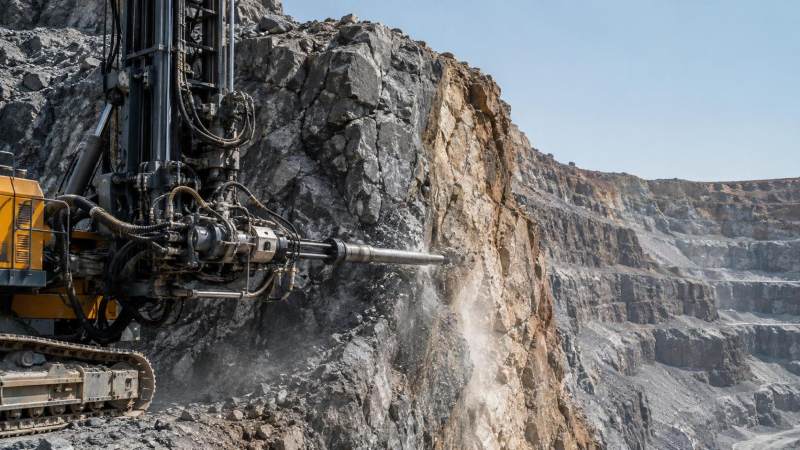
A drilling plan can look sound at the start of a shift and still lose production within a few metres. A bench may move from weathered material into competent rock, a fractured zone may open unexpectedly, or a wet clay seam may cause cuttings to pack around the bit. The visible symptom is usually a falling penetration rate, but the operational impact is broader: extra fuel consumption, premature consumable wear, unstable hole quality, delayed blasting, and a schedule that becomes harder to recover.
Intelligent drilling rigs improve penetration rates in variable mining ground conditions by turning changing rock response into actionable control inputs. Rather than holding fixed settings for feed force, rotation speed, flushing, and impact energy, the rig monitors drilling behaviour and adjusts within defined limits. The practical objective is not simply to drill at the highest possible speed. It is to keep the bit working in its effective range while protecting the drill string, maintaining hole accuracy, and avoiding stoppages caused by poor parameter choices.
Why fixed drilling settings lose efficiency across changing strata
Traditional drilling practice often depends on an operator selecting a reasonable parameter set based on the expected geology. That approach can work well in uniform ground. Mining faces, however, are rarely uniform over an entire pattern. Rock strength, abrasiveness, jointing, moisture, and confinement can change between holes or within the same hole.
A setting that is effective in hard, massive rock may be too aggressive in fractured ground. Excessive feed can cause the bit to bind, deflect, or repeatedly strike broken material rather than cut fresh rock. Conversely, conservative feed and impact settings may leave a rig underpowered when it reaches stronger material. The result is slow advance that appears safe but wastes available drilling capacity.
Variable conditions also make it difficult to diagnose whether low penetration is caused by geology or by a developing equipment issue. Reduced rate of penetration may stem from a dull bit, insufficient air flow, blocked flushing passages, poor rod coupling, hydraulic temperature, compressor performance, or a genuine change in formation. Without reliable operating data, crews can respond by increasing force or impact pressure, which may temporarily raise output while accelerating wear or worsening hole deviation.
What the rig needs to sense before it can adapt
Mining equipment intelligence begins with measurement. An intelligent rig does not need to “identify” every rock type perfectly to be useful; it needs to recognize meaningful changes in drilling resistance and system behaviour quickly enough to support better control decisions.
The most useful operating signals commonly include:
- Penetration rate: how rapidly the bit advances under current conditions.
- Feed pressure or feed force: whether the bit is being pushed with enough force to cut efficiently, without overloading it.
- Rotation pressure and torque response: indicators of bit engagement, friction, binding, or changing rock texture.
- Impact pressure: the hammer energy available to fracture the rock in top-hammer or down-the-hole drilling systems.
- Flushing air or water flow: essential for removing cuttings, cooling the bit, and preventing recirculation of broken material.
- Depth, inclination, and alignment data: needed to relate changes in performance to a specific zone within the hole and to verify drilling accuracy.
These signals are more valuable when interpreted as a pattern rather than in isolation. A reduction in penetration rate accompanied by rising rotation pressure may suggest increased hardness, poor cuttings removal, or bit wear. A sudden drop in feed resistance and unstable rotation can indicate fractured or voided ground. Intelligent control logic can flag these patterns, adjust parameters within safe operating windows, and present the operator with a clearer reason to intervene when automation alone is not appropriate.
Adaptive control keeps the bit in a productive operating window
Penetration rate is strongly influenced by the relationship between feed force, rotation, impact energy, and flushing. Each should support the others. Applying more impact energy without adequate feed may cause inefficient striking. Increasing feed force where cuttings are not clearing can compact debris at the hole bottom. Raising rotation in abrasive ground may increase wear faster than it improves cutting.
An intelligent rig can use parameter recipes as a starting point, then adapt around them as actual conditions deviate from expectations. The recipe establishes limits appropriate to the hole diameter, bit type, drill method, ground category, and desired accuracy. Real-time control then makes smaller, coordinated changes rather than relying on broad manual adjustments.
When the rig enters harder or more competent rock
In a stronger formation, the rig may see a progressive decline in penetration while feed and rotation demand rise. The appropriate response is not automatically maximum feed. Depending on the drilling system, the controller may increase impact energy, refine feed to maintain bit contact, and adjust rotation to achieve effective rock breakage. It should also monitor whether the added input is producing actual penetration. If energy demand increases but advance does not recover, the problem may be bit condition or cuttings evacuation rather than rock strength alone.
This distinction matters for planning. Repeatedly forcing a worn bit through hard ground can consume time and damage the drilling system while giving the impression that geology is the sole constraint. Performance data allows supervisors to compare similar depths and rock zones across the pattern, making consumable-change decisions less dependent on guesswork.
When fractured, blocky, or highly jointed material appears
Fractured ground often creates a different problem: the rig may penetrate quickly at first, but the hole can become unstable. Broken material may collapse, the bit may catch on irregular faces, and the drill string can deflect. High feed force that worked in competent rock can make these effects worse.
Adaptive drilling control may reduce feed, moderate impact, and prioritize stable rotation and flushing. The goal is to avoid driving the bit into loose fragments without sufficient cleaning. In production drilling, this can preserve hole straightness and reduce the chance that a planned hole must be redrilled or abandoned. Where the geology creates a real risk of wall collapse or water inflow, the rig data should trigger a review of drilling method, casing needs, or hole design rather than attempting to solve the condition through parameter changes alone.
When wet fines or clay-rich seams affect flushing
Wet fines are frequently mistaken for a simple hardness problem because penetration falls and torque may rise. Yet adding feed or impact can worsen the obstruction. Fine, sticky material may not evacuate efficiently, allowing cuttings to circulate at the bottom of the hole. The bit then spends energy grinding debris instead of breaking intact rock.
Here, intelligent drilling rigs can detect the mismatch between input energy and progress. The useful corrective sequence generally involves checking flushing performance first, reducing the tendency to pack material, and only then restoring drilling energy as the hole cleans. A controlled pause or cleaning cycle may be more productive than sustained drilling at a low advance rate. This is one of the clearest examples of why maximum instantaneous power does not always equal maximum shift production.
Use geological feedback to manage the whole drilling pattern
The value of mining equipment intelligence increases when rig data is connected to drilling management rather than viewed only at the machine. Each hole becomes a record of depth-based conditions: penetration trends, pressure changes, interruptions, deviations, and operator interventions. Across a pattern, those records can reveal where ground conditions are changing faster than the pre-drill model suggested.
A project leader can use this information to make practical decisions before problems multiply. A cluster of holes with unusually low penetration at similar depths may justify revising expected drill time for the remaining rows. Repeated flushing alarms along one geological boundary may point to a need for different operating settings or greater attention to water management. Holes showing consistent deviation can prompt a review of collaring practice, mast alignment, rod condition, or drill-and-blast design assumptions.
Data should not be treated as proof of geology on its own. It is a decision aid that becomes stronger when paired with face mapping, blast-hole logs, geotechnical observations, and maintenance records. Its main advantage is speed: it helps the team identify where expected performance no longer matches actual conditions.
Automation works best when operating boundaries are explicit
Automated parameter control is most reliable when crews define the limits that must not be crossed. These limits can relate to feed pressure, rotation load, hydraulic temperature, air pressure, mast angle, vibration, or allowable hole deviation. The rig can then optimize within a safe and mechanically sensible range without encouraging destructive operation.
Before deploying adaptive settings broadly, establish a disciplined baseline. Record the bit and rod configuration, compressor or water system condition, target hole geometry, expected rock zones, and normal penetration behaviour. A baseline does not need to be complicated, but it should distinguish a healthy drilling system from a rig already operating with worn consumables or reduced flushing capacity. Otherwise, intelligent controls may compensate for a maintenance problem instead of exposing it.
Operators remain central to the process. Automation can respond faster to measured changes, but the operator can see collar conditions, excessive vibration, unexpected water, loose material, and access constraints that sensors may not interpret fully. The most effective arrangement is not one in which the machine replaces judgement. It is one in which the rig handles rapid parameter corrections while the operator and supervisor decide when the condition requires a different drilling approach.
Where projects often lose the expected benefit
One weak implementation approach is to activate digital monitoring while retaining generic parameter recipes for every bench. This produces more data but not necessarily better penetration. Recipes should reflect drilling method, hole diameter, rock properties, bit design, and local operating constraints. A large-diameter production hole in abrasive rock will not respond like a smaller pre-split hole in fractured material.
Another mistake is judging performance only by metres drilled per hour. A rig may show high speed while consuming bits rapidly, producing poor-quality holes, or creating frequent interruptions downstream. Useful performance review should combine rate of penetration with consumable use, non-drilling time, rework, hole accuracy, and maintenance events. This gives a more realistic view of whether the rig is improving productive drilling rather than merely increasing momentary advance.
Finally, data quality must be protected. Sensors, calibration, depth tracking, and event coding need routine attention. If a blocked flushing line is recorded inconsistently, or bit changes are not logged, the historical record becomes difficult to interpret. Reliable mining equipment intelligence depends as much on disciplined operating records as on the onboard technology.
A practical rollout path for variable-ground drilling
Start with the ground transitions that cause the most disruption: a hard band that slows the pattern, a broken zone that causes deviation, or wet material that repeatedly affects flushing. Define the observable symptoms, the normal parameter range, and the actions permitted automatically. Then review whether the control changes improve stable advance without creating higher wear, alarms, or hole-quality issues.
- Map expected geology against planned hole locations and depths, including known transition zones.
- Confirm the drilling system is mechanically sound before using performance data to interpret ground behaviour.
- Set parameter envelopes for distinct ground categories rather than relying on one fixed operating mode.
- Configure alerts around meaningful deviations, such as sustained penetration loss, abnormal torque response, poor flushing, or repeated alignment correction.
- Review the data after each pattern with drilling, geology, maintenance, and blast personnel where their decisions are affected.
- Update parameter recipes only after confirming that a pattern reflects repeatable conditions rather than an isolated equipment fault.
The strongest gain from intelligent drilling rigs is operational predictability. Variable ground will always affect drilling, but real-time sensing and adaptive control reduce the delay between a geological change and an appropriate response. That allows teams to protect penetration rates where conditions permit, slow down deliberately where stability demands it, and avoid losing time through avoidable wear, poor flushing, and reactive troubleshooting.
Related News
 Oct 19, 2026Sizing Industrial Hydraulic Power Packs: Pressure, Flow, and Duty CycleSize industrial hydraulic power packs with confidence. Learn how pressure, flow, and duty cycle affect performance, energy costs, and heat control—and avoid costly sizing mistakes.
 Oct 18, 2026How Equipment Specifications Affect Purchase, Installation, and Operating CostsExplore equipment specification planning cost factors that shape purchase, installation, and operating budgets. Compare lifecycle costs, avoid oversizing, and buy with confidence.
 Oct 17, 2026Tunnel Boring Machine Supplier List: Compare TBM Types and Service CoverageExplore our tunnel boring machinery supplier list to compare EPB, slurry and hard rock TBMs, assess service coverage and lifecycle costs, and build a smarter procurement shortlist.
 Oct 16, 2026Heavy-Duty Petrochemical Lifting: Selecting Cranes by Load, Radius, and Site AccessExplore heavy-duty petrochemical lifting solutions. Compare cranes by load, radius, site access, and ground support to reduce project risk and optimize lifting costs.
Ms. Elena Rodriguez
Weekly Insights
Stay ahead with our curated technology reports delivered every Monday.