
How Infrastructure Supply Intelligence Supports Smarter Sourcing Decisions
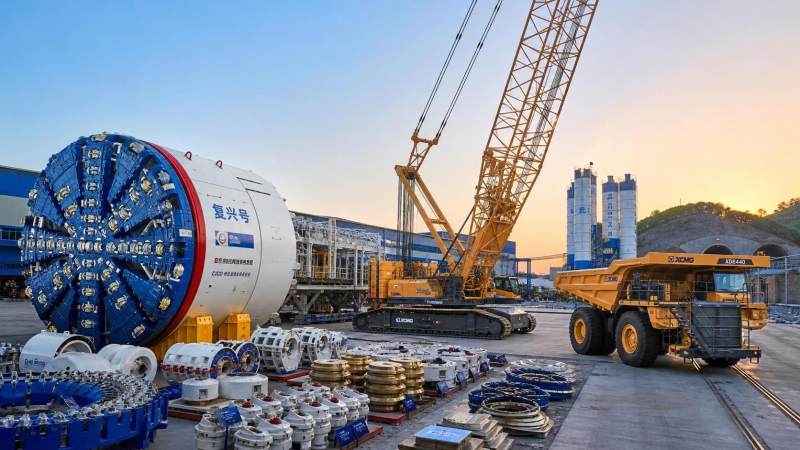
A procurement team can have a technically suitable machine on paper and still make a poor sourcing decision. This often happens when an urgent tunnel package, mine expansion, wind installation campaign, or road-building program creates pressure to secure equipment quickly. The buyer may see a quoted purchase price, a delivery promise, and a familiar supplier name, yet lack a reliable view of actual production capacity, component availability, project demand in competing regions, or the cost of keeping the asset productive over its full operating life.
Infrastructure supply intelligence sourcing improves the decision by turning scattered market signals into purchasing criteria. It helps buyers judge not only whether a TBM, crawler crane, ultra-large excavator, road machine, or mining dump truck can be bought, but whether it can be commissioned, supported, supplied with critical parts, and operated economically within the project schedule. The practical direction is simple: source against the operating requirement and supply risk, not against the initial quotation alone.
When a normal sourcing process stops being enough
Traditional sourcing methods work reasonably well when specifications are stable, suppliers are interchangeable, and a late delivery can be absorbed. Heavy infrastructure equipment rarely fits those conditions. A tunnel boring machine must align with geological conditions, tunnel geometry, segment logistics, cutterhead maintenance plans, and site power arrangements. A crawler crane may be selected around lift capacity, but its suitability also depends on boom configuration, transport constraints, ground bearing conditions, erection support, and the availability of trained crews.
In these situations, procurement risk is often hidden between departments. Engineering may focus on performance limits. Project controls may focus on mobilization dates. Maintenance may be concerned about hydraulic systems, wear parts, diagnostics, and technician response. Commercial teams may compare bids that appear similar but include different assumptions about commissioning, spare parts, warranty exclusions, or operator support.
Supply intelligence connects these views before the order is committed. It does not replace engineering review or contract discipline. Instead, it gives procurement a structured way to test the assumptions behind an offer: Is the claimed delivery window realistic? Is the supplier allocating output to other large projects? Are key assemblies subject to long lead times? Does the proposed support model match the machine’s duty cycle and project location?
Start with the decision that actually needs to be made
Buyers sometimes begin by asking for a list of available suppliers. That is useful only after the sourcing decision has been defined. The more useful starting question is whether the project needs ownership, rental, a refurbished asset, a supplier-operated package, or a phased procurement strategy.
For example, a mine with a long operating horizon may justify ownership of large excavators and haul trucks if its expected utilization supports a lifecycle business case. A contractor handling a concentrated lift campaign may find that renting a crawler crane reduces exposure to idle time, transport complexity, and residual-value uncertainty. A road contractor may benefit from standardizing a paver fleet when recurring work requires consistent paving quality, while a one-off package may justify a more flexible arrangement.
Before comparing suppliers, document the non-negotiable operating requirements:
- Required output, capacity, reach, payload, advance rate, or paving tolerance.
- Expected operating hours, production peaks, and idle periods.
- Site limitations such as altitude, temperature, gradients, underground ventilation, access roads, and electrical supply.
- Mobilization date, commissioning window, and consequences of schedule slippage.
- Maintenance model, including whether the site has qualified technicians and suitable workshop facilities.
- Critical consumables and components, such as TBM cutters, hydraulic parts, undercarriage assemblies, tires, batteries, or drivetrain modules.
- Safety, control-system, and interoperability requirements that cannot be changed after deployment.
This brief should distinguish between “must have” requirements and features that are merely preferred. Without that separation, a sourcing process can become dominated by attractive specifications that do not materially improve project delivery.
Map the supply chain behind the machine, not just the final supplier
A heavy machine is a collection of supply chains. Its delivery date can depend on engines or electric drive systems, hydraulic pumps, bearings, control hardware, fabricated structures, specialized tires, batteries, cutterhead steel, and transport permits. A supplier may have assembly capacity while still facing constraints in one critical subsystem. Procurement teams that look only at finished-equipment availability can miss the component risk that determines whether the promised delivery date holds.
For a TBM, the procurement review should look beyond the machine body. Cutterhead configuration, disc cutter supply, backup systems, conveyor arrangements, segment handling equipment, and spare-parts packages can each influence launch readiness. For open-pit equipment, tire availability, payload monitoring systems, powertrain support, and access to major rebuild components may matter more to availability than the nominal machine specification.
Ask suppliers to clarify which elements are built to order, which are standard stock items, and which depend on third-party manufacturers. The answer does not need to expose confidential supplier information to be useful. Procurement needs enough transparency to identify schedule dependencies, alternatives, and contractual protections.
Use demand signals to challenge optimistic availability claims
Availability is not a fixed market condition. It changes with major project awards, seasonal construction windows, mine development programs, energy installations, port activity, and regional transport restrictions. A buyer assessing a crane or specialized tunneling package should ask whether the apparent supply is already informally reserved by other projects, whether the asset is due for refurbishment, and whether the proposed mobilization route is feasible.
Demand intelligence is especially valuable when several projects require similar equipment at the same time. Crawler cranes capable of handling large components, high-capacity haulage units, and specialized TBM support systems are not always interchangeable. A unit may meet a headline capacity requirement but be unsuitable because its configuration, attachments, controls, or transport plan cannot meet the site schedule.
Rather than treating a supplier’s delivery statement as a yes-or-no answer, break it into events: manufacturing completion, factory testing, shipping readiness, transport, site assembly, commissioning, and production acceptance. Each event has different risks and owners. This approach also makes it easier to compare quotations that use vague phrases such as “available soon” or “subject to production schedule.”
Compare total cost under the project’s real operating conditions
The lowest acquisition cost can become the most expensive choice when the machine consumes more energy, requires frequent specialist intervention, causes production bottlenecks, or lacks nearby parts support. Lifecycle cost analysis should therefore be built around how the asset will actually be used rather than a generic ownership model.
For equipment with intensive duty cycles, include planned maintenance, expected wear items, fluids or charging infrastructure, transport, assembly and dismantling, operator training, insurance obligations, and site modifications. With mining trucks, payload efficiency, grade performance, tire consumption, energy use, and workshop capacity can materially change the economic picture. With a TBM, cutter consumption, intervention requirements, backup logistics, and alignment with ground conditions may outweigh a lower initial machine price.
There is no need to pretend that every cost can be known precisely before procurement. The goal is to identify the cost categories most sensitive to the chosen option and test them using credible operating assumptions. A useful comparison separates fixed commitments from variable exposure:
- Fixed commitments: purchase or rental price, mobilization, commissioning, basic warranty, and minimum service charges.
- Usage-driven costs: fuel or electricity, consumables, wear parts, operator hours, maintenance labor, and transport between work fronts.
- Risk-driven costs: standby time, replacement equipment, schedule disruption, emergency freight, and penalties arising from inadequate support.
Risk-driven cost is often omitted because it is difficult to estimate. That is precisely why it should be discussed before selection. If a machine is central to the critical path, even a modest difference in service responsiveness or spare-part coverage can justify a higher initial commitment.
Score suppliers on evidence, not presentation quality
Technical brochures and commercial presentations can make competing offers look alike. A more disciplined evaluation asks what evidence supports each claim. A supplier proposing a specialized asset should be able to describe the configuration being offered, the assumptions behind capacity figures, maintenance intervals, required site resources, lead-time dependencies, and the scope of field support.
A weighted scorecard can help, but only if it is not used to disguise weak information with numerical precision. Give greater weight to criteria that affect project failure: verified delivery path, configuration fit, service coverage, parts strategy, safety compatibility, and contractual clarity. Price remains important, but it should not compensate for an unproven mobilization plan or a vague support commitment.
Questions that expose gaps early
- What conditions must be in place before the equipment can be accepted for productive operation?
- Which spare parts are recommended for the first operating period, and what lead times apply after that stock is consumed?
- Is the quoted configuration identical to the configuration used for stated performance figures?
- What site preparation, lifting, electrical, fuel, ventilation, or workshop requirements fall outside the supplier’s scope?
- Who is responsible when a delayed third-party component affects commissioning?
- Can the supplier provide a clear escalation process for technical faults during critical operations?
These questions are not intended to create an adversarial procurement process. They help both sides identify constraints before they become claims, variations, or unplanned downtime.
Build flexibility into the contract where the intelligence is uncertain
Not every risk can be eliminated through better market research. Geological uncertainty, weather interruptions, shipping disruption, changing project sequence, and component failures can alter an equipment plan after award. The procurement response should be proportional: lock down what can be verified, and preserve options where uncertainty remains material.
For rental or service arrangements, this may mean defining substitution rules, standby terms, minimum availability expectations, maintenance windows, and the process for approving equivalent replacement units. For purchases, it can mean agreeing on factory acceptance tests, delivery milestones, documentation requirements, spare-parts packages, training scope, and remedies tied to clearly defined obligations. A contract cannot make a constrained supply chain unconstrained, but it can clarify who acts, pays, and decides when a disruption occurs.
Flexibility also applies internally. Procurement should avoid committing to a specification so early that engineering cannot respond to new ground information, revised lift studies, or changes in haul profiles. Controlled specification alternatives can protect the schedule without lowering the required operating standard.
Turn intelligence into a repeatable sourcing routine
The strongest sourcing decisions are not based on one market snapshot. They are updated as design maturity, project timing, supplier capacity, and site conditions change. A practical routine is to revisit the equipment risk register at key points: before tender release, after bid clarification, before contract award, before mobilization, and when a major project assumption changes.
At each review, focus on what has changed rather than recreating the entire analysis. Has a competing project increased demand for the same equipment class? Has a long-lead component moved from an estimated date to a confirmed manufacturing slot? Has the maintenance strategy changed because the site workshop will not be ready? Has a revised production plan increased the required utilization rate?
This is where infrastructure supply intelligence sourcing becomes operational rather than informational. It gives procurement a basis for adjusting timing, supplier mix, spare-parts coverage, contract terms, or equipment strategy before an issue reaches the site. For capital-intensive infrastructure work, the better decision is rarely the one with the lowest visible price. It is the one whose delivery path, operating fit, and lifecycle exposure have been tested against the conditions the project will actually face.
Related News
 Oct 17, 2026Tunnel Boring Machine Supplier List: Compare TBM Types and Service CoverageExplore our tunnel boring machinery supplier list to compare EPB, slurry and hard rock TBMs, assess service coverage and lifecycle costs, and build a smarter procurement shortlist.
 Oct 16, 2026Heavy-Duty Petrochemical Lifting: Selecting Cranes by Load, Radius, and Site AccessExplore heavy-duty petrochemical lifting solutions. Compare cranes by load, radius, site access, and ground support to reduce project risk and optimize lifting costs.
 Oct 15, 2026Crane Selection for Petrochemical Turnarounds: Capacity, Radius, and Site AccessExplore petrochemical lifting solutions cranes can deliver, with expert guidance on capacity, working radius, and site access to help you plan a safer, more efficient turnaround.
 Oct 14, 2026High-Capacity Heavy Lifting Solutions: Matching Load, Radius, and Ground ConditionsDiscover heavy lifting solutions high capacity projects demand—compare load charts, working radius, and ground conditions to select a feasible, cost-effective system.


Ms. Elena Rodriguez
Weekly Insights
Stay ahead with our curated technology reports delivered every Monday.