
Heavy equipment maintenance costs more when these signs are ignored
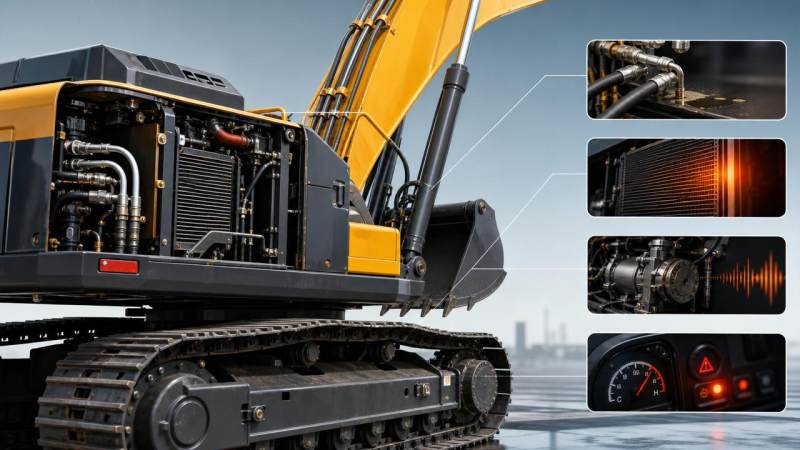
Heavy equipment maintenance often feels easy to delay when the machine still starts, moves, and finishes the shift. Yet for operators, that delay is usually where repair costs begin to multiply. The core reality is simple: ignored warning signs rarely stay small. They grow into longer downtime, damaged components, unsafe working conditions, and repair bills that are far higher than the cost of early intervention.
For frontline users, the most useful question is not “How do I maintain every system perfectly?” It is “Which signs tell me this machine is becoming expensive to run?” That is the practical search intent behind this topic. Operators want to know what to watch, what matters first, and how to prevent small faults from turning into major failures.
In heavy industry, the cost of inaction is rarely limited to one broken part. A small hydraulic leak can contaminate other components. An unusual vibration can damage pins, bearings, hoses, or structures around the original fault. A delayed undercarriage inspection can increase fuel use, reduce stability, and accelerate wear across multiple systems at once.
This is why heavy equipment maintenance is not just a workshop issue. It begins with what the operator notices during startup, movement, loading, lifting, braking, digging, or shutdown. Machines usually signal trouble early. The problem is that those signals are often dismissed as normal aging, weather effects, or “something to check later.”
Why ignored warning signs become expensive so quickly
Heavy equipment is built for hard duty, but that does not mean it tolerates neglect without consequence. Most high repair costs come from chain reactions. One weak component places stress on another. A small issue then spreads through the system until the repair scope becomes larger, slower, and more expensive than expected.
For operators, the financial impact shows up in several ways at once: lower productivity, extra fuel burn, longer idle time, emergency callouts, parts shortages, and possible damage to adjacent systems. In some cases, a machine can still work while declining. That is what makes the risk deceptive. Performance drops gradually, but the repair bill often arrives suddenly.
Ignoring signs also increases safety exposure. On cranes, dump trucks, excavators, road machinery, and mining equipment, poor braking response, steering looseness, unstable hydraulic behavior, or warning alarms can quickly move from maintenance concern to operational hazard. Early reporting protects not only the asset, but also the crew and the schedule.
When operators understand how these small signs connect to cost, they make better decisions. They stop asking whether a warning is “serious enough” and start asking whether continued operation will increase total damage. That shift in mindset is one of the most practical ways to reduce maintenance cost over time.
Which signs operators should never ignore
The most expensive failures often begin with ordinary symptoms: a new noise, a small leak, a warmer-than-usual reading, slower response, or unusual smoke. None of these should be treated as background machine personality. If the equipment did not behave that way before, it deserves attention now.
Start with fluid leaks. Oil, coolant, fuel, transmission fluid, and hydraulic fluid leaks are among the clearest indicators that heavy equipment maintenance cannot wait. Even a slow leak matters. It can reduce lubrication, raise operating temperature, attract dirt, damage seals, and create secondary failures in pumps, cylinders, lines, or gearboxes.
Watch for temperature changes next. Engines, hydraulic systems, final drives, bearings, and braking systems often reveal trouble through heat before they fail outright. If a machine is consistently running hotter than normal, or if one side is hotter than the other, the issue may involve friction, poor lubrication, restricted flow, overloading, or cooling system weakness.
Unusual noises are another major warning category. Grinding, knocking, whining, hissing, rattling, squealing, or banging usually point to wear, looseness, pressure loss, misalignment, or metal-to-metal contact. The exact cause may vary, but the operator’s role is not to diagnose every root cause alone. It is to recognize that the sound is new, specific, and worth immediate reporting.
Vibration is especially important because it often indicates developing mechanical damage. A new vibration in the cab, undercarriage, boom, turntable, frame, tires, or tracks may signal imbalance, bearing wear, loose hardware, structural fatigue, or drivetrain trouble. Machines under repetitive stress rarely “shake themselves better” with more operating hours.
Performance changes should also be treated seriously. If the machine feels weaker, slower, less responsive, or rougher than usual, do not assume it is only load-related. Reduced breakout force, sluggish swing, delayed travel response, hard shifting, poor lifting stability, and uneven steering often point to wear that will become more expensive if ignored.
Smoke and exhaust changes can reveal costly developing faults. Black smoke may suggest incomplete combustion or overfueling. Blue smoke may indicate oil burning. White smoke may point to coolant issues or incomplete fuel burn, depending on operating conditions. Operators do not need to solve the entire engine problem on the spot, but they should treat visible exhaust changes as maintenance signals, not as normal variation.
Dashboard alerts, fault codes, and warning lights should never be overridden mentally just because the machine still works. Modern equipment uses electronic monitoring to flag issues long before total failure. The habit of clearing or ignoring alerts without follow-up is one of the simplest ways to turn manageable maintenance into avoidable repair expense.
How small problems become major repair bills
To understand why heavy equipment maintenance costs rise so sharply, it helps to look at how failure spreads. Consider a hydraulic hose with minor abrasion. If ignored, the hose may rupture under pressure. That can stop work immediately, contaminate surrounding parts, damage a cylinder or pump through pressure instability, and create a safety event that requires cleanup and emergency service.
A similar pattern happens with undercarriage wear. On tracked machines, worn rollers, loose track tension, damaged sprockets, and neglected chain wear do not stay isolated for long. They change load distribution across the system. The machine becomes less efficient, components wear faster, and eventual replacement involves more parts than if the issue had been caught early.
Engine cooling issues are another example. A clogged radiator, weak fan, dirty cooler pack, or low coolant level may initially show up only as gradual temperature rise. If ignored, that heat can affect seals, hoses, oil condition, and combustion efficiency. In the worst cases, overheating leads to head gasket failure, warped components, or complete engine damage.
On wheeled equipment, tire neglect can have the same multiplier effect. Improper inflation, uneven wear, cuts, and heat buildup increase rolling resistance and fuel use. They also place additional strain on suspension, steering, braking, and drivetrain components. A tire issue that seems minor in the morning can become a costly productivity and safety problem by the end of the shift.
Structural issues follow this pattern too. Small cracks near welds, attachment points, booms, frames, or lifting structures can expand under repeated loading cycles. If caught early, repair may involve localized reinforcement. If ignored, the same issue may require extensive downtime, complex repair procedures, and operational restrictions that affect the entire project schedule.
What operators can check every shift without slowing production
Good heavy equipment maintenance does not mean turning operators into full-time mechanics. It means building a short, repeatable observation routine that catches expensive problems early. The best pre-shift checks are practical, consistent, and focused on signs that affect safety, reliability, and repair cost.
Before startup, walk around the machine. Look under it for fresh leaks. Check hoses, fittings, cylinders, pins, guards, tires or tracks, steps, handrails, lights, and visible wiring. Notice anything wet, loose, cracked, bent, missing, or rubbed through. Many failures announce themselves visually long before performance drops.
At startup, pay attention to how the machine sounds and how quickly systems stabilize. Hard starting, longer cranking, delayed pressure build, weak battery behavior, rough idle, or new warning indicators should all be noted. Early-start symptoms often reveal lubrication, fuel, electrical, or hydraulic problems before they become shift-stopping events.
During operation, compare current behavior with the machine’s normal pattern. Does it steer the same? Lift the same? Brake the same? Swing smoothly? Track straight? Hold pressure? Experienced operators are often the first to sense changes that no static inspection would catch. That operating feel is valuable maintenance intelligence.
Also watch gauges continuously, not casually. Rising temperature, falling pressure, increased fuel consumption, and repeated alerts are not background data. They are evidence. If possible, connect observations with the task being performed. For example, if overheating appears during sustained travel or heavy lifting, that context helps maintenance teams diagnose the issue faster.
At shutdown, perform a quick post-shift look. New leaks, hot spots, unusual smells, loosened hardware, or visible debris around cooling areas can appear only after the machine has worked hard. A two-minute check at the end of the shift may prevent a much longer outage before the next one.
Why reporting quality matters as much as reporting speed
One reason maintenance costs stay high is not only late reporting, but vague reporting. Saying “the machine feels off” is better than saying nothing, but it does not always help technicians find the fault quickly. The more precise the operator’s report, the faster the repair process moves and the lower the risk of repeat downtime.
A strong report should describe what happened, when it happened, and under what conditions. Include the location of the issue, the type of sound or behavior observed, whether it was constant or intermittent, what task the machine was doing, and whether any warning light or code appeared. Details reduce guesswork.
For example, “hydraulic noise from the left side after warm-up while raising the boom under load” is far more useful than “hydraulics seem noisy.” The first report gives the maintenance team operating conditions, system focus, and repeatability clues. Better information usually leads to faster diagnosis and lower labor cost.
Photos, short videos, and timestamped notes can improve this process even more where site rules allow. On large fleets or remote jobsites, that documentation helps maintenance planners prioritize work before the machine reaches a more serious failure point. Good operator reporting is one of the lowest-cost ways to improve maintenance outcomes.
High-cost warning areas by equipment type
Different machines fail in different ways, but some warning zones deserve special attention. On excavators and TBM support equipment, monitor hydraulic responsiveness, swing smoothness, pin and bushing wear, undercarriage condition, and cooling performance. These systems directly affect productivity and are expensive when allowed to degrade.
On crawler cranes, operators should be highly alert to load-handling irregularities, boom or jib abnormal movement, wire rope condition, slew bearing behavior, hydraulic drift, and outrigger or track stability. Small abnormalities in lifting equipment should never be normalized, because maintenance and safety risk are closely linked.
For mining dump trucks, tire heat, suspension behavior, brake response, steering feel, transmission shift quality, and engine cooling are major cost indicators. These machines work in punishing environments, and delayed maintenance can rapidly escalate because of payload stress, haul cycles, and extreme temperatures.
On large road machinery, screed consistency, vibration systems, material flow, hydraulic pressure stability, and drum or tire condition can strongly affect both machine health and work quality. Here, ignored maintenance signs can create a double cost: equipment repair plus rework of the finished road surface.
Across all equipment categories, contamination is a hidden cost driver. Dust, mud, water, and poor lubrication practices shorten component life dramatically. Operators who protect machines from contamination through good daily habits often prevent failures that look mechanical at first but actually began as cleanliness and fluid-management problems.
How early action lowers total cost, not just immediate repair cost
Some operators hesitate to report issues because they worry about being blamed for downtime. In reality, the more expensive outcome is usually continuing to run a machine that is clearly signaling trouble. Early action may stop production briefly, but delayed action often stops it for much longer and at a far higher cost.
Early intervention helps control the full cost picture: fewer damaged parts, shorter repair hours, less emergency transport, fewer secondary failures, and lower disruption to project sequencing. It also protects fuel efficiency and machine availability, which matter greatly on tight schedules and high-utilization sites.
There is also a planning advantage. When issues are reported early, maintenance teams can often schedule parts, labor, and service windows more effectively. Planned repairs are almost always cheaper than emergency repairs because they avoid crisis logistics, rushed troubleshooting, and unplanned idle crews waiting for the machine to return.
For operators, this means maintenance awareness is not separate from production. It supports production. A machine that starts cleanly, runs at correct temperature, responds consistently, and shows no worsening symptoms is easier to trust and easier to plan around. Reliability is productivity in a practical, day-to-day form.
Building a maintenance mindset on the jobsite
The best heavy equipment maintenance culture is not based on fear. It is based on attention, consistency, and shared responsibility. Operators do not need to overreact to every sound, but they do need to resist the habit of normalizing change. When something is different, the right response is to observe it clearly and communicate it early.
Supervisors and maintenance teams can support this by making reporting easy, acknowledging useful operator feedback, and closing the loop after inspections. When operators see that reporting leads to action instead of delay, they are more likely to raise concerns sooner. That improves both machine health and site performance.
Simple checklists help, but mindset matters more than paperwork alone. The goal is not to create more forms. It is to help operators identify the few signs that most often lead to expensive damage: leaks, heat, noise, vibration, smoke, alerts, and performance loss. Those signs deserve immediate attention every time.
In a heavy industry environment shaped by tight schedules, hard duty cycles, and rising asset costs, the operators who recognize early warning patterns provide real value. They protect uptime, reduce avoidable repair escalation, and help the machine deliver its intended life with fewer disruptive failures.
Conclusion
Heavy equipment maintenance becomes expensive when warning signs are treated as background noise instead of early evidence. Most major failures do not arrive without notice. They begin with small, visible, audible, or measurable changes that operators can catch during normal work if they know what to look for.
If you operate excavators, cranes, road machinery, mining trucks, or other heavy equipment, the most cost-effective habit is simple: do not ignore leaks, heat, vibration, noise, smoke, alerts, or performance changes. Report them clearly, check them early, and treat small faults as opportunities to prevent large ones.
In the end, the lowest maintenance cost is rarely achieved by postponing action. It is achieved by spotting trouble early, communicating it well, and fixing it before one damaged part turns into a shutdown, a safety risk, and a much larger repair bill.
Related News
 Oct 06, 2026Selecting Petrochemical Overhead Cranes for Hazardous Areas and Heavy Process LoadsPetrochemical overhead cranes for hazardous areas: learn how to match capacity, duty, controls, corrosion protection, and maintenance access for safer, reliable lifts.
 Oct 05, 2026Tunneling Equipment Specification Planning: Key Criteria for Ground and Project RisksEquipment specification planning tunneling: learn how to match TBM systems to ground risks, geometry, safety, logistics, and lifecycle cost for more reliable project delivery.
 Oct 04, 2026Nuclear Lifting Equipment Cost: Budgeting for Compliance, Testing, and Lifecycle RiskNuclear lifting equipment cost explained: budget for compliance, proof-load testing, installation, documentation, and lifecycle risk to make confident procurement decisions.
 Oct 03, 2026How to Assess TBM Manufacturers for Hard-Rock Tunneling Projects?Choose the right tunnel boring machine manufacturer for hard-rock projects. Explore key criteria for design, lifecycle cost, factory quality, and service support.
Ms. Elena Rodriguez
Weekly Insights
Stay ahead with our curated technology reports delivered every Monday.