
Why construction safety standards change from site to site
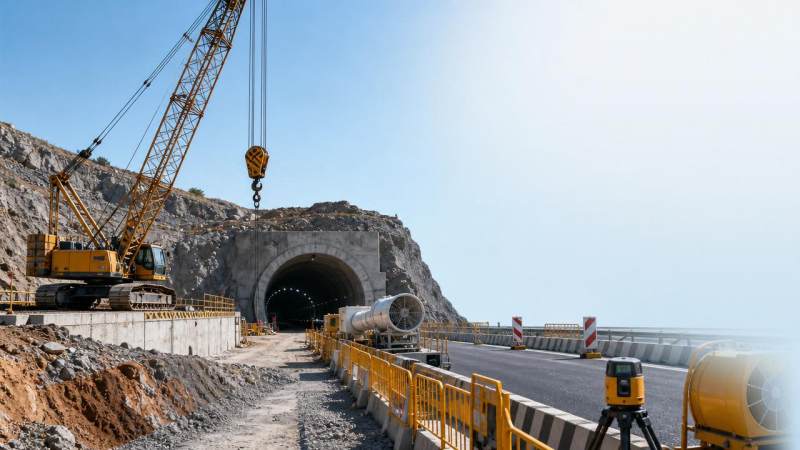
Construction safety standards often vary from site to site because each project presents different ground conditions, equipment risks, regulatory demands, and workforce profiles. For quality control and safety managers, understanding these differences is essential to preventing incidents, maintaining compliance, and improving execution. This article explains why construction safety standards are not one-size-fits-all and how site-specific factors shape safer, more efficient operations.
Why do construction safety standards change from site to site?
For safety leaders, the phrase construction safety standards does not simply mean a fixed rulebook. It means a framework that must be interpreted against actual site conditions, machine loads, geological uncertainty, subcontractor competence, and local legal expectations.
A tunnel launch shaft, an open-pit haul road, a crawler crane lift pad, and a highway paving zone may all belong to the same contractor, yet each demands different controls. The hazard profile changes, so the required safety measures change as well.
This is especially true in heavy industry, where equipment mass, ground pressure, lifting geometry, blasting adjacency, ventilation limits, and traffic separation can turn a standard procedure into an unsafe one if copied without adaptation.
- Ground and geology alter excavation stability, dewatering needs, slope protection, and machine access planning.
- Equipment type changes the risk mix, from rotating components and suspended loads to confined-space entry and high-voltage interfaces.
- Regional regulations affect permit systems, documentation depth, inspection frequency, and training records.
- Workforce composition influences communication methods, supervision intensity, and competency verification.
For quality control and safety managers, the operational question is not whether standards exist. It is how to convert general requirements into site-specific controls that hold up under real production pressure, tight schedules, and complex equipment interfaces.
Which site conditions most strongly reshape construction safety standards?
The fastest way to understand shifting construction safety standards is to examine the factors that force change. In heavy civil and resource projects, four variables usually drive most safety adjustments: environment, machinery, people, and compliance obligations.
1. Ground, weather, and physical environment
A dry urban cut-and-cover project is not managed like a mountain tunnel portal. Soft ground, karst features, freeze-thaw cycles, high groundwater, desert dust, or high-altitude exposure each affect protective systems, monitoring intervals, and emergency planning.
Even the same crawler crane can require different exclusion zones and matting strategies depending on bearing capacity, wind regime, and adjacent structures. The site environment changes acceptable operating envelopes.
2. Machinery scale and energy sources
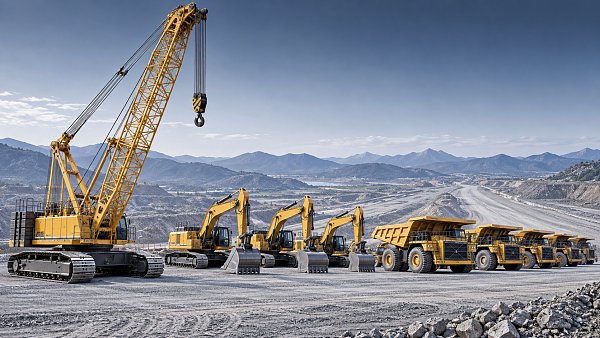
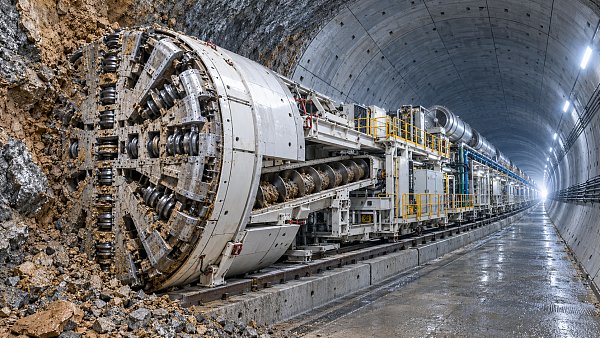
In heavy equipment operations, risk severity rises with stored energy, machine mass, working radius, and failure consequences. TBM backup systems, ultra-large excavators, mining dump trucks, and road machinery all demand different guarding, isolation, and movement control practices.
As electrification and remote operation expand, construction safety standards are also shifting toward battery protocols, software interlocks, cyber-secure control permissions, and mixed manual-autonomous traffic management.
3. Workforce capability and contractor mix
A stable, experienced core team can execute a permit-to-work system differently from a project with frequent labor turnover and multiple subcontractors. Site-specific induction, language adaptation, supervisor ratios, and task observation frequency may need to be increased.
4. Local law, client rules, and insurance expectations
Construction safety standards often combine statutory law, client technical specifications, insurer requirements, OEM instructions, and internal contractor procedures. The tightest applicable condition often becomes the practical site standard.
The table below shows how different site variables typically alter safety controls in heavy engineering environments.
The key lesson is simple: construction safety standards change because exposure pathways change. Good safety management does not resist that variation. It documents, measures, and controls it.
How do project type and equipment class affect safety decisions?
Project type matters because the equipment-task-environment combination determines both the probability of failure and the severity of outcomes. In TF-Strategy’s core sectors, this difference is highly visible.
TBM and underground works
Tunnel projects demand strong controls for confined spaces, slurry or spoil handling, cutterhead intervention, fire suppression, ventilation continuity, and segment erection. Construction safety standards here are shaped by escape distance, ground behavior, and machine maintenance access.
Open-pit mining and ultra-large excavators
In open-pit settings, haul road geometry, berm dimensions, blind-spot management, fatigue control, dust suppression, and slope monitoring dominate. Large machine interactions require strict traffic separation and disciplined pre-start inspection routines.
Crawler cranes and heavy lifting
Lift safety depends on load path planning, rigging integrity, crane assembly quality, outrigger or track bearing support, weather thresholds, and interface control with adjacent trades. A lift that is routine in one yard can become critical in a congested energy project.
Road machinery and live traffic environments
Road construction adds moving public vehicles, night work, temporary traffic management, heated materials, and repetitive worker-machine contact. Standards must account for visibility, lane closure timing, and rapid handover between phases.
For managers comparing work packages, the matrix below helps show why the same corporate policy can produce different site rules.
This comparison is useful for procurement and planning teams as well. Equipment selection, contractor qualification, and delivery sequencing should all reflect these differing construction safety standards from the start, not after mobilization.
What should quality control and safety managers review before work starts?
Many incidents occur not because standards were absent, but because site adaptation was incomplete. A pre-start review should connect design assumptions, machine parameters, manpower capability, and emergency response to the actual workfront.
- Validate physical conditions, including bearing capacity, access width, overhead clearance, ventilation flow, drainage, and weather exposure.
- Match construction safety standards to the machine envelope, such as turning radius, lifting chart limits, braking distance, energy isolation points, and maintenance access constraints.
- Check competency records for operators, riggers, signalers, confined-space attendants, maintenance staff, and supervisors.
- Review permits, method statements, emergency routes, medical response time, and communication language coverage.
- Define stop-work triggers such as rainfall thresholds, wind limits, gas readings, slope movement, or traffic congestion.
For quality personnel, this review also protects inspection integrity. If acceptance criteria ignore field conditions, nonconformance will rise. If they are too vague, unsafe improvisation fills the gap.
How can better intelligence improve site-specific construction safety standards?
Heavy industry projects increasingly depend on timely, technical intelligence rather than generic safety summaries. This is where TF-Strategy has practical value for decision-makers working across tunneling, mining, lifting, and large infrastructure delivery.
Because TF-Strategy tracks equipment evolution, raw material trends, project tenders, and operating methods, it helps managers see how construction safety standards are changing alongside machine scale, digital control, energy transition, and cross-border project delivery.
- Geological and boring insight supports safer planning for TBM deployment, shaft access, and intervention readiness.
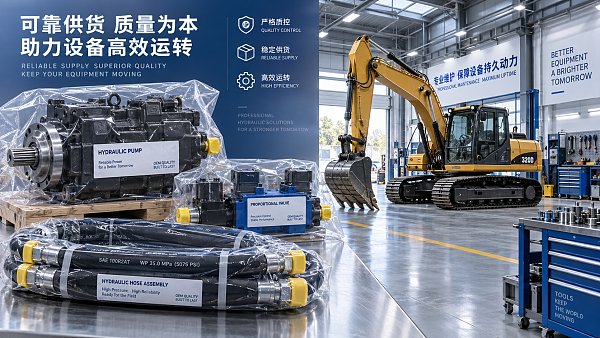
- Hydraulic power analysis helps teams understand failure points, maintenance interfaces, and machine energy isolation requirements.
- Heavy haulage intelligence improves route risk assessment, fleet interaction planning, and TCO-conscious equipment choices.
- Commercial insight helps contractors align safety investments with project value, delivery quality, and long-term operating resilience.
For safety managers under budget pressure, this matters. The goal is not to overspend on universal controls. It is to invest in the controls that match the real hazard profile of the site and the machinery deployed on it.
Which standards and compliance references are commonly relevant?
Construction safety standards are site-specific, but they should still be anchored in recognized compliance frameworks. Exact requirements vary by country and client, yet several reference categories appear repeatedly in major projects.
- National occupational health and safety law governing employer duties, reporting, and worker protection.
- Equipment manufacturer instructions for operation, maintenance, load limits, and prohibited configurations.
- Client technical specifications, especially on lifting plans, confined-space controls, traffic management, and auditing.
- International management system references such as ISO 45001 for structured occupational health and safety management.
- Project-specific engineering reviews for temporary works, geotechnical stability, and emergency preparedness.
Managers should be careful not to confuse certification with field control. A certified management system can support consistency, but it does not replace workface-specific risk assessment, supervision, and verification.
Common mistakes when applying construction safety standards across different sites
The most common failure is copy-paste management. Teams reuse a method statement from a previous project, keep the same exclusion distances, or assume identical staffing is adequate. In heavy engineering, those shortcuts create blind spots quickly.
Mistake 1: Treating compliance documents as enough
Documentation can look complete while critical field assumptions remain untested. Ground moisture, haul-road deterioration, rigging wear, or ventilation imbalance may invalidate a paper-compliant plan.
Mistake 2: Ignoring interface risks
A site may have good controls for individual tasks yet still fail at boundaries: crane operations beside excavation, dump trucks near pedestrians, or TBM maintenance during simultaneous logistics movement.
Mistake 3: Underestimating change management
Weather shifts, scope changes, replacement crews, or altered production targets should trigger a fresh review of construction safety standards. If they do not, the site is often operating under outdated assumptions.
FAQ: practical questions from safety and quality teams
How do I know whether site-specific construction safety standards are sufficient?
Check whether the standards translate into observable controls: barriers, permits, inspection points, equipment limits, emergency routes, and stop-work criteria. If teams cannot explain those controls at the workface, the standard is not yet operational.
What should be prioritized when budget is limited?
Prioritize high-consequence risks first: lifting stability, ground failure, machine-pedestrian interaction, confined-space atmosphere, and energy isolation. These usually offer the greatest risk reduction per unit of spending.
Are global standards enough for international projects?
No. Global frameworks create consistency, but local law, site geology, labor capability, and client specifications still determine the final construction safety standards. International projects need both corporate structure and local adaptation.
How often should standards be reviewed during execution?
Review them at every major phase change, after incidents or near misses, when weather or geology shifts, when critical equipment changes, and when new subcontractors enter the site. High-risk works may justify daily verification.
Why choose us for heavy-industry safety insight and decision support?
If your team needs to interpret construction safety standards for tunneling, mining, heavy lifting, road machinery, or heavy haulage, TF-Strategy offers a sharper basis for decision-making than generic summaries. Our focus is the connection between machine parameters, construction methodology, and strategic project demands.
You can consult us on practical topics that matter to quality control and safety managers: equipment parameter confirmation, project-fit selection logic, delivery timing implications, site-specific risk factors, heavy-equipment operating trends, and compliance-sensitive planning considerations.
This is especially useful when you are evaluating TBM deployment conditions, reviewing ultra-large excavator operating risk, planning crawler crane work packs, comparing haulage strategies, or aligning safety expectations with project cost and delivery pressure.
Contact TF-Strategy to discuss equipment selection support, technical scenario analysis, construction methodology review, certification-related considerations, delivery-cycle questions, or tailored intelligence for your next complex project. Better construction safety standards begin with better project-specific insight.
Related News
 Oct 08, 2026How to Evaluate a Heavy Machinery Information Platform for Project Equipment SourcingHeavy machinery information platform guide: compare equipment fit, source reliability, lifecycle costs, supplier capability, and compliance to make smarter sourcing decisions.
 Oct 07, 2026How to Evaluate a Hydraulic System Component Supplier for Heavy Equipment UptimeChoose a hydraulic system component supplier with proven quality, technical fit, and reliable delivery to reduce heavy equipment downtime and lifecycle costs.
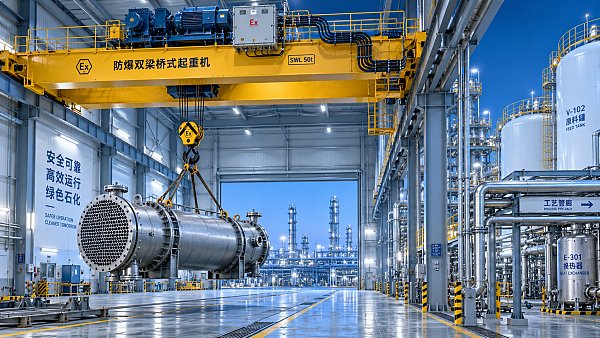
 Oct 06, 2026Selecting Petrochemical Overhead Cranes for Hazardous Areas and Heavy Process LoadsPetrochemical overhead cranes for hazardous areas: learn how to match capacity, duty, controls, corrosion protection, and maintenance access for safer, reliable lifts.
 Oct 05, 2026Tunneling Equipment Specification Planning: Key Criteria for Ground and Project RisksEquipment specification planning tunneling: learn how to match TBM systems to ground risks, geometry, safety, logistics, and lifecycle cost for more reliable project delivery.
Ms. Elena Rodriguez
Weekly Insights
Stay ahead with our curated technology reports delivered every Monday.