
When heavy equipment downtime points to maintenance planning gaps
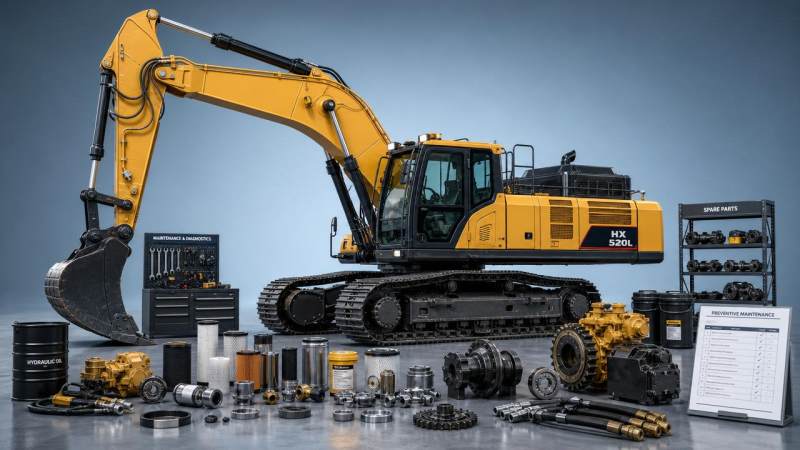
When heavy equipment downtime becomes a recurring issue, it often signals deeper maintenance planning gaps rather than isolated mechanical failures. For after-sales maintenance teams, identifying these weak points is critical to improving uptime, controlling service costs, and supporting reliable field performance. This article explores how better planning, data visibility, and preventive strategies can turn reactive repairs into a more resilient maintenance approach.
Why a checklist approach works better for heavy equipment downtime analysis
For after-sales maintenance personnel, repeated heavy equipment stoppages usually involve more than one cause. A machine may fail because of wear, but the real issue may be poor lubrication scheduling, delayed parts replenishment, weak inspection routines, or incomplete service records. A checklist approach helps teams avoid guesswork. Instead of reacting only to the visible fault, they can review the full maintenance chain: planning, inspection, spare parts, technician readiness, operating conditions, and feedback loops.
This is especially relevant in sectors tracked by TF-Strategy, where TBMs, mining dump trucks, crawler cranes, road machinery, and ultra-large excavators operate under high loads, remote conditions, and strict delivery schedules. In these environments, every hour of heavy equipment downtime can trigger labor delays, project penalties, idle support assets, and higher total cost of ownership. A structured review process gives maintenance teams a practical way to identify where planning gaps are hiding.
Start here: the first items to confirm before blaming the machine
Before replacing components or escalating warranty claims, after-sales teams should first confirm whether the downtime pattern points to maintenance planning failure. The following checklist is a strong starting point.
- Check whether failures are recurring at similar operating hours, loads, or jobsite conditions. Repetition usually means the maintenance plan is not aligned with actual use.
- Verify whether preventive maintenance tasks were completed on time, skipped, or shortened due to production pressure.
- Review service history for incomplete records, missing inspection notes, or unclear root-cause coding.
- Confirm whether the right consumables, filters, lubricants, and wear parts were available before planned service windows.
- Assess whether operators reported early warning signs such as temperature rise, unusual noise, vibration, hydraulic drift, or power loss.
- Compare current maintenance intervals with OEM recommendations and actual site severity, including dust, altitude, moisture, and duty cycle.
- Identify whether technicians had the correct diagnostic tools, software access, and job instructions during the previous intervention.
If several of these items show inconsistency, then the heavy equipment problem is likely not just mechanical. It is a planning issue that needs system correction, not only component replacement.
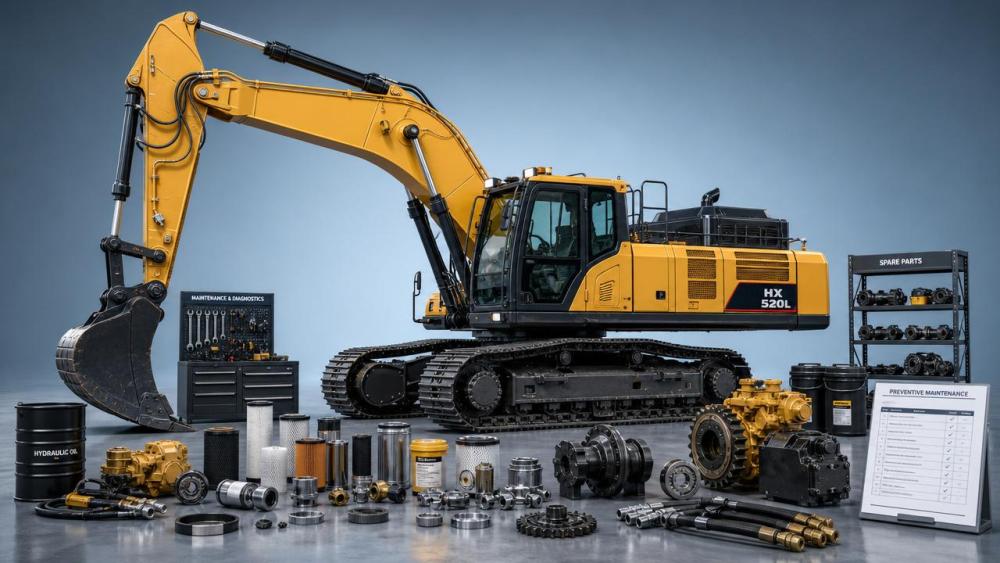
Core maintenance planning checklist: what must be reviewed in detail
1. Service interval accuracy
One of the most common planning gaps in heavy equipment maintenance is using fixed service intervals for variable operating reality. A mining excavator in abrasive material, a TBM in unstable geology, and a crawler crane in repetitive heavy lifts should not always follow the same practical interval even if the manual starts from a standard baseline. After-sales teams should check whether intervals are adjusted for actual fuel burn, load cycles, ambient temperature, contamination exposure, and idle-to-work ratio.
2. Spare parts readiness
Poor parts planning often turns a small issue into long heavy equipment downtime. Review whether critical spares are categorized by failure probability and lead time. Fast-moving filters and seals should not be managed the same way as major hydraulic pumps, cutter head tools, slewing components, or drivetrain assemblies. Maintenance planning must include minimum stock levels, emergency supply channels, and clear approval authority for urgent orders.
3. Inspection quality and reporting discipline
A checklist is only useful if inspections are completed consistently. Teams should confirm whether inspection sheets include measurable standards instead of vague comments. For example, “hose condition OK” is weaker than “no abrasion to reinforcement, no leak trace, clamp torque verified.” Better reporting helps reveal heavy equipment degradation before it becomes a stoppage event.
4. Data visibility across service teams
Many planning failures come from fragmented information. Field technicians, parts coordinators, service managers, and customer site supervisors may all hold part of the story. The maintenance plan should connect telematics, inspection logs, oil analysis, fault codes, and operator feedback in one view. When data is isolated, heavy equipment issues appear random even when they are predictable.
A practical table for judging where the gap is
Key differences by equipment type and field condition
Not all heavy equipment downtime should be interpreted the same way. After-sales teams need to adjust their checklist depending on machine type and work environment.
TBM and underground systems
For TBM fleets, maintenance planning should prioritize cutter wear tracking, seal integrity, slurry or spoil handling systems, hydraulic stability, and access constraints. A small missed inspection underground can create long recovery time because component access is difficult and stoppage affects the full tunnel sequence.
Open-pit mining excavators and dump trucks
In mining, heavy equipment often runs in continuous cycles with high vibration, dust, and thermal stress. Key planning items include tire or undercarriage condition, payload-related fatigue, cooling system cleanliness, filtration effectiveness, and shift-based inspection compliance. Downtime here often exposes poor coordination between production targets and maintenance windows.
Crawler cranes and lifting equipment
For crawler cranes, safety-critical maintenance planning is essential. Teams should verify boom pin inspection frequency, hoist brake condition, hydraulic cylinder sealing, load moment indicator calibration, and assembly-disassembly damage checks. In lifting operations, even short heavy equipment downtime can become a contract and safety risk.
Commonly overlooked items that quietly create downtime
Many after-sales teams focus on visible failures and miss the routine gaps that create repeat events. The following overlooked items deserve regular review.
- Incomplete failure coding. If the service system does not classify failures correctly, trend analysis becomes unreliable.
- No feedback from field repairs into the maintenance plan. Lessons learned must change checklists, intervals, or parts stocking rules.
- Operator behavior not included in the review. Harsh startup, overload habits, and poor daily checks can distort equipment reliability.
- Overreliance on calendar-based servicing. Heavy equipment needs hour-based and condition-based triggers as well.
- Weak handover between shifts or between customer and service team. Missing small observations often means missing early warning.
- No severity ranking for planned work. If all jobs appear equal, urgent reliability risks may wait too long.
Execution guide: how after-sales maintenance teams can close the gap
Once a planning weakness is confirmed, action should be practical and phased. The goal is not to build a complicated system overnight, but to create a maintenance process that reduces avoidable heavy equipment downtime within a measurable period.
Short-term actions for the next 30 days
- Review the top five downtime causes by machine family.
- Create a critical spares list for each major heavy equipment category.
- Standardize one field inspection checklist with measurable pass-fail criteria.
- Set a rule that every repeated failure must receive root-cause review.
Medium-term actions for the next 90 days
- Link telematics and service records to identify interval mismatch.
- Build severity-based maintenance priorities instead of simple first-in, first-out scheduling.
- Train technicians and operators together on early warning recognition.
- Track mean time to repair, repeat failure rate, and parts waiting time as core KPIs.
Longer-term capability building
The strongest after-sales organizations turn maintenance from a repair function into a reliability function. That means adding condition monitoring, improving digital documentation, refining service packages by duty cycle, and using field intelligence to support customer planning. In a global heavy equipment environment shaped by large infrastructure, remote operations, and energy transition projects, this capability becomes a commercial advantage as well as a technical one.
FAQ: quick answers for maintenance teams
How do I know if downtime is a maintenance planning problem or a product defect?
Look for repetition patterns, skipped inspections, delayed parts, or unchanged failure modes after repair. If the same heavy equipment issue returns under similar conditions, planning gaps are likely involved even when a component is also weak.
What metric should be improved first?
For most after-sales teams, repeat failure rate and parts waiting time offer the fastest insight. These metrics directly show whether heavy equipment maintenance planning is preventing avoidable stoppages.
Can preventive maintenance alone solve the issue?
Not always. Preventive maintenance helps, but heavy equipment operating in severe duty often requires condition-based adjustments, better data capture, and stronger parts planning to achieve reliable uptime.
Final checklist before you escalate or redesign the service plan
Before moving into a broader service optimization program, confirm these five points: whether maintenance intervals reflect real duty cycles, whether critical spare parts are positioned correctly, whether service records support trend analysis, whether repeated failures receive true root-cause closure, and whether field feedback changes the maintenance plan. If these basics are weak, heavy equipment downtime will continue to return in expensive cycles.
If you need to further evaluate parameters, service scope, equipment suitability, parts lead time, budget impact, or cooperation models, the best next step is to prepare machine operating data, recent downtime records, top failure categories, site condition details, and current maintenance intervals before discussion. That information will make any heavy equipment reliability review faster, more accurate, and far more actionable.
Related News
 Sep 22, 2026How to Evaluate a High-Altitude Mining Solutions Manufacturer for Remote ProjectsEvaluate a high-altitude mining solutions manufacturer with proven derating, cooling, service logistics, and lifecycle-cost support for remote projects.
 Sep 21, 2026Industrial Supplier Evaluation: A Risk-Based Scorecard for Quality, Capacity, and DeliveryIndustrial supplier evaluation made practical: use a risk-based scorecard to assess quality, capacity, and delivery reliability, reduce project risk, and select suppliers with confidence.
 Sep 20, 2026Comparing Heavy Equipment Warranty Suppliers: Coverage, Claims, and Downtime RiskSupplier comparison for heavy equipment warranty: evaluate coverage, claims speed, service networks, and downtime risk to protect uptime and project costs.
 Sep 19, 2026Mining Truck Technology Trends: What Fleet Managers Should Prioritize for 2026Mining truck technology trends for 2026: prioritize electrification, autonomy, predictive maintenance, and road intelligence to improve fleet uptime, safety, and cost control.



Ms. Elena Rodriguez
Weekly Insights
Stay ahead with our curated technology reports delivered every Monday.