
How does high altitude mining change equipment choices?
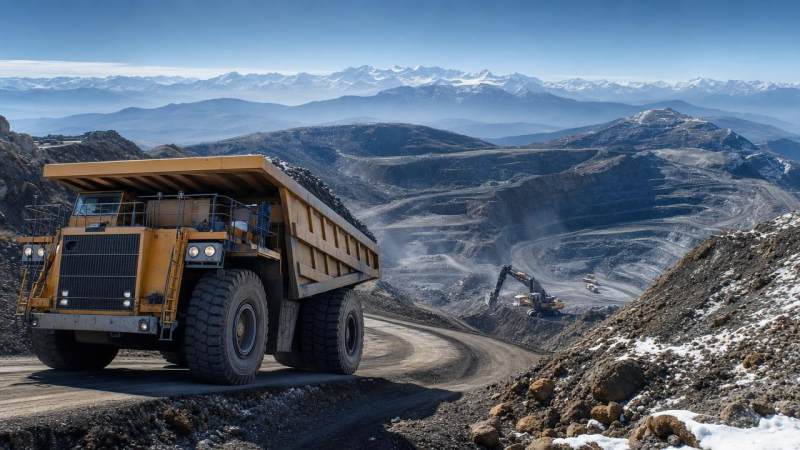
In high altitude mining, thinner air, colder starts, steeper haul roads, and stricter derating rules directly reshape equipment selection. For technical evaluators, the challenge is not simply choosing bigger machines, but matching engine performance, braking systems, hydraulics, tire behavior, and payload efficiency to extreme site conditions. This article explores how altitude changes equipment choices and what parameters matter most for reliable, cost-effective operations.
For mines operating at 2,500 m, 3,500 m, or above 4,000 m, equipment decisions become a system engineering exercise. Air density drops, combustion efficiency changes, cooling margins narrow, and operators face higher demands on traction, safety, and maintenance planning.
For technical assessment teams, the priority is to compare real site conditions against machine derating curves, brake capacity, hydraulic response, and tire heat resistance. In high altitude mining, an apparently suitable machine at sea level can become an inefficient or risky asset once deployed uphill.
Why altitude changes equipment selection at the source
The first shift in high altitude mining is physical, not administrative. As elevation rises, oxygen availability declines. For diesel-powered fleets, this often means lower engine output, slower turbo response during cold starts, and higher sensitivity to fuel quality and filtration performance.
Engine derating begins earlier than many project teams expect
A common technical rule of thumb is that naturally aspirated engines may lose roughly 3% power for every 300 m above baseline conditions. Turbocharged systems perform better, but at 3,000 m to 4,500 m they still face measurable derating, especially during heavy uphill haul cycles.
That matters for loading tools, drilling rigs, support dozers, and especially mining dump trucks. If the haul profile includes 8% to 12% gradients, a nominal payload target may no longer align with safe cycle time, brake temperature, or fuel burn expectations.
Key altitude-driven performance impacts
- Reduced combustion efficiency and lower usable engine power
- Longer cold-start periods at temperatures from -10°C to -25°C
- Lower cooling effectiveness due to thinner air
- Higher drivetrain stress on long uphill and downhill cycles
- Increased braking demand where haul roads exceed 6 km per descent
These changes explain why high altitude mining equipment selection cannot rely on brochure payload alone. Technical evaluators need to compare site altitude, road gradient, ambient temperature range, duty cycle hours, and maintenance support capability as one combined decision set.
The table below shows how altitude typically affects major equipment selection factors in open-pit and heavy haul environments.
The main conclusion is simple: in high altitude mining, a machine should be selected by usable performance at elevation, not by nominal rating at standard atmospheric conditions. This is where many procurement mistakes begin.
The most critical machine systems to evaluate
Technical evaluators should break the decision into subsystems. In high altitude mining, the best choice is usually the machine that preserves stable output, safe downhill control, and predictable maintenance intervals across a 20 to 24 hour production schedule.
1. Powertrain and torque reserve
At altitude, rated horsepower matters less than torque delivery across the working band. A truck or excavator that holds usable torque between 1,200 and 1,800 rpm may outperform a higher-rated competitor if it spends less time hunting gears on a 10% grade.
Transmission matching also becomes more important. Technical teams should check gear spacing, retarder integration, and launch performance under full payload. On steep haul roads, poor transmission calibration can reduce cycle efficiency by 8% to 15% over a shift.
2. Braking and retarding systems
In high altitude mining, downhill safety can outweigh uphill speed. Long descents with repeated loaded cycles can overheat service brakes if retarding systems are underspecified. Dynamic retarders, engine braking, and integrated speed-hold logic should be reviewed as a package.
For trucks moving 90 t, 120 t, or 220 t payload classes, evaluators should examine brake energy dissipation, descent duration, and road maintenance quality. Loose surfaces and cold conditions can increase stopping distance while also reducing tire grip.
3. Cooling, filtration, and cold-weather startup
Thinner air reduces cooling efficiency, while dusty mine atmospheres increase clogging risk. At 3,800 m, a truck may need more frequent radiator cleaning and more conservative alarm thresholds than the same unit at 800 m.
Cold starts are another hidden cost. If ambient temperatures fall below -15°C, startup strategy should include battery sizing, intake heating, low-temperature lubricants, and hydraulic oil warm-up time. Poor startup discipline can shorten component life within the first 500 to 1,000 operating hours.
4. Tires, traction, and contact patch behavior
Tire choice in high altitude mining is not only about load index. Evaluators should review tread compound, heat tolerance, cut resistance, inflation monitoring, and road profile. On abrasive haul roads with large daily temperature swings, tire life can vary by 20% or more between unsuitable and suitable specifications.
This is also one area where intelligence-led selection can reduce TCO. Sources that track mining dump truck behavior under altitude and extreme temperature conditions, such as the analytical perspective reflected by 无, can help teams compare operational suitability beyond headline machine size.
How equipment type changes by mining function
High altitude mining does not affect all equipment equally. A rope shovel, hydraulic excavator, support loader, bulldozer, grader, and rigid dump truck face different load patterns. Selection must therefore be function-specific, even on the same site.
Loading equipment
Excavators and loaders need stable hydraulic behavior, breakout force retention, and responsive swing performance in cold conditions. If altitude and temperature reduce hydraulic responsiveness, pass matching with trucks can slip from 4 passes to 5 passes, lowering productivity.
Haulage equipment
For rigid or articulated mining trucks, the focus is on payload derating, brake security, cooling margin, and cycle time. It is often better to choose a truck that consistently hauls 92% to 95% of nominal payload safely than one that reaches 100% only under ideal conditions.
Road support equipment
Graders, dozers, and water trucks matter more at altitude because road quality directly affects traction, tire wear, and brake heating. A 2% improvement in rolling resistance can create meaningful savings across a fleet operating 12 to 18 hours per day.
The following comparison table helps technical evaluators align equipment priorities with typical mine functions.
The practical takeaway is that high altitude mining fleets should be balanced, not merely upsized. A weak support fleet can erase the gains of well-selected primary loading and haulage assets.
A technical evaluation framework for procurement and deployment
For procurement teams, the safest approach is to use a structured review model. In high altitude mining, at least 4 categories should be scored before approval: performance at elevation, safety margin, maintainability, and cost per productive tonne.
A 5-step review process
- Define site envelope: altitude, temperature range, road grade, cycle distance, and dust level.
- Request derating data: engine output, payload impact, cooling limits, and brake capacity at target elevation.
- Verify service conditions: parts lead time, technician access, diagnostic tools, and fluid requirements.
- Model operating economics: fuel use, tire wear, maintenance intervals, and expected availability over 12 months.
- Run controlled field validation: measure cycle time, brake temperature trends, and startup reliability.
This process prevents overreliance on factory nominal data. It also creates a comparable basis between diesel, hybrid, and emerging electric solutions, especially as some mines evaluate remote or low-emission fleet transitions.
Common mistakes technical evaluators should avoid
- Using sea-level performance sheets as the main selection reference
- Ignoring descent energy when choosing truck classes
- Underspecifying cold-start aids for -20°C morning conditions
- Focusing on purchase price instead of TCO over 8,000 to 12,000 annual operating hours
- Neglecting road maintenance equipment in the fleet plan
For organizations that rely on heavy-equipment intelligence, TF-Strategy’s broader perspective on heavy haulage, open-pit mining, and strategic engineering analysis aligns well with this kind of evidence-based evaluation. Even where product data is limited, consistent technical screening is what protects project economics.
Operational risk, maintenance planning, and lifecycle value
In high altitude mining, equipment choice is inseparable from maintenance strategy. A machine with slightly higher capital cost may deliver better lifecycle value if it reduces unplanned stoppage frequency, extends brake service intervals, or protects tire life on severe haul profiles.
Maintenance intervals often compress at altitude
Dust, cold starts, and higher thermal cycling can shorten effective inspection intervals. For example, air intake checks may move from every 250 hours to every 125 hours in severe conditions, while brake and retarder inspections may need tighter review after repeated long descents.
Fluids also matter more. Hydraulic oils, coolants, and fuels should be matched to temperature range and contamination risk. If a site swings from -18°C at dawn to 12°C by afternoon, fluid stability becomes a daily reliability issue, not a minor service preference.
Lifecycle value is built on availability, not only capacity
For most mining operations, the real target is stable fleet availability above 85% to 90%, not occasional peak output. A technically appropriate machine class can reduce overheating events, operator fatigue, and emergency maintenance interventions, all of which directly affect cost per tonne.
When comparing suppliers or fleet concepts, technical teams should ask one central question: what configuration delivers repeatable production under altitude constraints with the least compromise in safety and serviceability? That question often reveals more value than headline capacity claims.
What technical evaluators should prioritize next
High altitude mining changes equipment choices by shifting attention from nominal machine size to altitude-adjusted performance. Engine derating, braking security, cooling performance, hydraulic startup behavior, tire durability, and road support capability all become primary selection criteria.
For technical evaluators, the strongest decisions come from site-specific scoring, subsystem review, and field validation over real gradients and temperature cycles. Mines above 3,000 m should treat these checks as essential rather than optional, especially for large haulage and continuous loading fleets.
If your team is comparing fleet options for demanding open-pit or heavy haul applications, now is the time to refine your altitude evaluation framework, review derating assumptions, and benchmark lifecycle risks. Contact us to discuss a tailored equipment assessment approach, obtain a customized selection roadmap, or learn more about practical solutions for high altitude mining.
Related News
 Oct 06, 2026Selecting Petrochemical Overhead Cranes for Hazardous Areas and Heavy Process LoadsPetrochemical overhead cranes for hazardous areas: learn how to match capacity, duty, controls, corrosion protection, and maintenance access for safer, reliable lifts.
 Oct 05, 2026Tunneling Equipment Specification Planning: Key Criteria for Ground and Project RisksEquipment specification planning tunneling: learn how to match TBM systems to ground risks, geometry, safety, logistics, and lifecycle cost for more reliable project delivery.
 Oct 04, 2026Nuclear Lifting Equipment Cost: Budgeting for Compliance, Testing, and Lifecycle RiskNuclear lifting equipment cost explained: budget for compliance, proof-load testing, installation, documentation, and lifecycle risk to make confident procurement decisions.
 Oct 03, 2026How to Assess TBM Manufacturers for Hard-Rock Tunneling Projects?Choose the right tunnel boring machine manufacturer for hard-rock projects. Explore key criteria for design, lifecycle cost, factory quality, and service support.
Ms. Elena Rodriguez
Weekly Insights
Stay ahead with our curated technology reports delivered every Monday.