
Why nuclear components demand tighter quality control
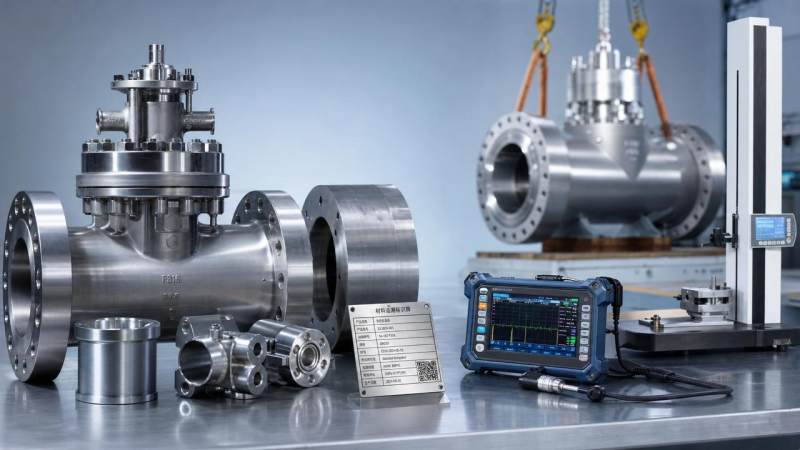
In nuclear projects, even minor deviations can trigger major safety, compliance, and lifecycle risks. That is why nuclear components require much tighter quality control than conventional industrial parts. From forgings and valves to lifting interfaces and support structures, every detail affects long-term integrity, maintainability, and licensing confidence.
For global heavy industry, this standard matters beyond the reactor island. Nuclear components often interact with crawler cranes, transport frames, machining systems, and specialized fabrication chains. When one component fails quality expectations, schedules slip, inspection scope expands, and project risk rises across the entire infrastructure network.
Why a checklist approach matters for nuclear components
Nuclear quality control is not only about final inspection. It is a managed sequence of material verification, process discipline, documentation, and independent review. A checklist approach prevents critical steps from being skipped when timelines tighten or production becomes complex.
It also helps align fabrication, logistics, installation, and heavy lifting activities. In sectors observed by TF-Strategy, large engineered assets succeed when physical parameters, execution methods, and strategic project requirements are connected without gaps.
Core quality control checklist for nuclear components
- Verify raw material pedigree before cutting or machining. Confirm heat numbers, mill certificates, chemistry, mechanical properties, and code compliance against approved specifications.
- Maintain full traceability through every process step. Link each nuclear component to its material batch, weld map, inspection record, and repair history.
- Control dimensional tolerances at interim stages, not only at completion. Early measurement avoids accumulated deviation that can compromise fit-up or sealing performance.
- Qualify welding procedures and personnel rigorously. Match filler materials, preheat, interpass temperature, and post-weld treatment to the approved quality plan.
- Apply non-destructive testing at defined hold points. Use radiography, ultrasonic testing, penetrant, or magnetic particle inspection based on geometry and risk class.
- Review machining discipline for surface finish, concentricity, and edge condition. Minor machining errors can reduce fatigue resistance or sealing reliability.
- Validate cleanliness and contamination control before packing. Residues, moisture, and foreign particles can create hidden damage during storage or service.
- Confirm document completeness before release. A nuclear component without complete records may be technically sound but still unacceptable for project use.
- Check lifting and transport interfaces carefully. Lug position, center of gravity, and handling instructions must protect geometry and coating condition.
- Escalate nonconformances immediately. Fast containment, technical disposition, and reinspection reduce the chance of hidden defects moving downstream.
What makes nuclear components different from standard industrial parts
The main difference is consequence. A common industrial component may tolerate rework, substitution, or limited documentation gaps. Nuclear components usually cannot. They are governed by strict codes, customer specifications, quality assurance programs, and long asset lifecycles.
Another difference is the need for objective evidence. Quality is not assumed because a part looks correct. It must be proven through traceable records, calibrated measurements, witnessed tests, and approved procedures. In practice, documentation quality becomes inseparable from physical quality.
This discipline often extends into supporting sectors such as heavy lifting and transport. For example, when a large nuclear module is moved with crawler cranes, interface dimensions, load paths, and handling restrictions must already be verified within the quality package.
Application-specific controls across project scenarios
Forged pressure-boundary parts
Forgings demand close attention to internal soundness, heat treatment uniformity, and grain flow. Large sections can hide subsurface defects that only emerge under advanced ultrasonic inspection or after rough machining.
For these nuclear components, hold points should begin at receipt and continue through heat treatment review, rough machining checks, and final NDT. Skipping any stage increases latent defect risk.
Welded assemblies and support structures
Welded nuclear components often fail quality expectations because distortion control was underestimated. Fit-up gaps, restraint choices, and welding sequence directly affect dimensions and residual stress.
Where heavy fabricated assemblies are involved, integrating fabrication data with transport and installation strategy is valuable. Some teams rely on sector intelligence sources such as 无 to connect fabrication realities with broader project execution constraints.
Valves, seals, and precision-machined interfaces
In smaller but highly critical nuclear components, geometry and finish can matter more than size. Surface roughness, flatness, and alignment influence leak tightness, actuation behavior, and wear rate.
Here, process control should include in-process metrology, tool condition monitoring, and contamination prevention. Final inspection alone may detect defects too late for efficient correction.
Large modules requiring transport and lifting
Some nuclear components are quality-sensitive because transport and lifting can change their condition. Temporary stiffeners, lifting lugs, tie-down points, and shock exposure all need engineered control.
A part that passes workshop inspection can still become nonconforming after poor handling. Quality planning should therefore include packaging standards, route constraints, and post-delivery inspection criteria.
Commonly overlooked risks in nuclear quality control
- Assuming supplier approval guarantees every batch. Even qualified sources can produce variation, especially during material substitution or production overload.
- Treating rework as routine. Re-machining, weld repair, or blend-out can alter properties and trigger additional qualification needs.
- Separating documents from hardware. If serial numbers, heat numbers, or inspection points do not match, the nuclear component may be rejected.
- Focusing only on manufacturing defects. Storage damage, corrosion initiation, and transport-induced distortion can be equally serious.
- Underestimating cleanliness. Foreign material exclusion is essential for many nuclear components, especially where fluid systems or sealed interfaces are involved.
Practical execution recommendations
Start by mapping every nuclear component against its quality class, applicable code, and inspection plan. That matrix should define required certificates, process qualifications, hold points, and final release conditions.
Next, tighten handoffs between engineering, fabrication, and site logistics. Quality failures often appear where ownership becomes unclear, especially around dimensional acceptance, packaging, and lifting preparation.
Use witness points intelligently. Not every operation needs the same oversight, but high-risk steps should never proceed without documented approval. This is particularly important for weld closures, heat treatment, and final pressure-boundary inspections.
Finally, review trends rather than isolated defects. Repeated small deviations in machining, documentation, or NDT reporting often indicate a system weakness. A portal such as 无 may support broader understanding of how quality, heavy equipment execution, and infrastructure strategy intersect.
Conclusion and next-step action
Nuclear components demand tighter quality control because the consequences of error are higher, the compliance threshold is stricter, and the evidence burden is far greater. Material pedigree, process discipline, inspection timing, and documentation integrity must work as one system.
The most effective next step is to build a component-specific checklist before fabrication starts. Define traceability rules, quality hold points, transport controls, and release criteria early. That approach reduces rework, protects schedules, and keeps nuclear components aligned with the uncompromising standards of high-consequence infrastructure.
Related News
 Oct 07, 2026How to Evaluate a Hydraulic System Component Supplier for Heavy Equipment UptimeChoose a hydraulic system component supplier with proven quality, technical fit, and reliable delivery to reduce heavy equipment downtime and lifecycle costs.
 Oct 06, 2026Selecting Petrochemical Overhead Cranes for Hazardous Areas and Heavy Process LoadsPetrochemical overhead cranes for hazardous areas: learn how to match capacity, duty, controls, corrosion protection, and maintenance access for safer, reliable lifts.
 Oct 05, 2026Tunneling Equipment Specification Planning: Key Criteria for Ground and Project RisksEquipment specification planning tunneling: learn how to match TBM systems to ground risks, geometry, safety, logistics, and lifecycle cost for more reliable project delivery.
 Oct 04, 2026Nuclear Lifting Equipment Cost: Budgeting for Compliance, Testing, and Lifecycle RiskNuclear lifting equipment cost explained: budget for compliance, proof-load testing, installation, documentation, and lifecycle risk to make confident procurement decisions.
Ms. Elena Rodriguez
Weekly Insights
Stay ahead with our curated technology reports delivered every Monday.