
How extreme temperature mining changes equipment failure risk
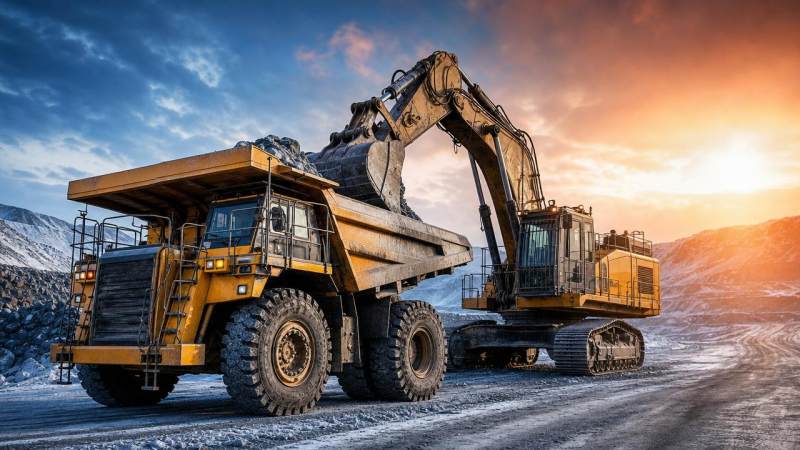
In extreme temperature mining, equipment failure risk is never just a maintenance issue. It directly affects safety, uptime, fuel efficiency, and total cost control. Heat waves, deep cold, and rapid temperature swings change how hydraulic oil flows, how seals age, how electronics behave, and how metal structures absorb stress. In high-output mines, these effects accumulate quietly until a hose bursts, a controller faults, or a tire fails under load.
For heavy industry operations, extreme temperature mining demands a more disciplined inspection logic. Standard service intervals often miss temperature-driven damage pathways. A checklist-based approach helps identify early signs before they develop into unplanned shutdowns, secondary component damage, or safety incidents across haulage, excavation, drilling, and support fleets.
Why a checklist matters in extreme temperature mining
Equipment in extreme temperature mining rarely fails from one single cause. Failure risk rises when thermal stress interacts with vibration, dust loading, high payloads, altitude, and long duty cycles. A checklist turns scattered symptoms into a repeatable decision process.
This matters across the broader infrastructure chain as well. Open-pit mining fleets support energy, metals, cement, transport, and major construction programs. When temperature-related failures stop production, the impact reaches blasting schedules, crusher feed stability, and downstream project delivery.
Core inspection checklist for extreme temperature mining equipment
- Check hydraulic oil viscosity at start-up and peak operating temperature. Slow response, pressure fluctuation, or cavitation noise often indicates thermal mismatch, contamination, or degraded additive performance.
- Inspect hoses, seals, and O-rings for hardening, softening, swelling, or cracking. Extreme temperature mining rapidly shortens elastomer life, especially around pumps, cylinders, articulation joints, and brake circuits.
- Measure coolant condition, radiator cleanliness, fan performance, and thermostat response. Overheating in hot zones and incomplete warm-up in cold zones both accelerate engine wear and fuel inefficiency.
- Test batteries, cable insulation, connectors, and grounding points. Cold reduces cranking power, while heat speeds corrosion and insulation breakdown in control cabinets and machine harnesses.
- Review tire pressure, tread temperature, sidewall damage, and rim condition. In extreme temperature mining, underinflation in heat and impact brittleness in cold both elevate haul truck failure risk.
- Examine structural welds, boom sections, frames, and dump bodies for thermal fatigue indicators. Repeated heating and cooling can widen microcracks long before visible deformation appears.
- Verify lubrication points, grease grade selection, and auto-lube cycle timing. Grease that is too stiff in cold or too thin in heat leaves pins, bushings, and bearings exposed.
- Confirm sensor calibration and enclosure sealing. Temperature shock can create false readings, condensation, and intermittent faults in pressure, speed, and payload monitoring systems.
- Track start-up behavior, idle duration, and thermal stabilization time. Aggressive loading before systems reach operating range is a common trigger for avoidable failures.
- Compare maintenance records with weather history and duty cycles. Failure trends in extreme temperature mining become clearer when service data is linked to ambient extremes and payload intensity.
How heat changes equipment failure pathways
In hot-climate extreme temperature mining, the most obvious threat is overheating. Yet many failures start before alarm thresholds are reached. Hydraulic oil thins, internal leakage rises, and pump efficiency drops. Operators may compensate by increasing throttle or cycle intensity, which adds even more heat.
Electronics also suffer. Inverters, displays, engine control modules, and telematics units can drift outside stable ranges when cabinet cooling is poor. Dust-packed radiators and restricted airflow make the problem worse, especially on ultra-large excavators and mining dump trucks operating on long uphill hauls.
Hot-weather focus points
- Reduce heat soak after shutdown by managing parking location, ventilation, and restart timing for high-value machines.
- Shorten inspection intervals for cooling packs, brake systems, and tires during seasonal peaks.
- Watch for lubricant oxidation, varnish formation, and seal extrusion around high-pressure circuits.
How cold changes equipment failure pathways
Cold-region extreme temperature mining creates a different pattern. Lubricants thicken, batteries weaken, and metal becomes less forgiving under impact. A machine may start, but critical systems can still be far from safe operating condition. That gap between start-up and true readiness is where many failures occur.
Hydraulic systems are especially vulnerable. Slow circulation increases pressure spikes, while stiff hoses and seals lose flexibility. On haul roads, frozen ground and hidden obstacles raise shock loads, amplifying stress on suspension, rims, dump body mounts, and welded joints.
Cold-weather focus points
- Extend warm-up routines until oil temperature, steering response, and brake behavior stabilize under light load.
- Protect electrical cabinets and connectors from condensation during indoor-outdoor transitions.
- Inspect impact-sensitive parts after shift start, not only at end-of-day service windows.
Risks from rapid thermal cycling
Some of the highest failure risk in extreme temperature mining comes from repeated thermal cycling rather than constant heat or cold. Day-night swings, high-altitude weather shifts, washdown practices, and movement between heated workshops and open pits all create expansion and contraction stress.
These cycles damage connectors, weld toes, glass, sensor housings, and composite materials. Moisture intrusion often follows. Once condensation enters a connector or module, corrosion and intermittent faults can continue long after surface conditions appear normal.
Commonly missed items in extreme temperature mining
One overlooked issue is using the correct fluid, but not for the actual duty profile. A lubricant that performs well in ambient temperature may still fail under long uphill haul cycles, heavy digging resistance, or repeated cold starts.
Another missed item is connector health. Teams often replace sensors when the root cause is thermal movement, corrosion, or weak pin tension inside plugs exposed to vibration and dust.
Tire management is also underappreciated. In extreme temperature mining, pressure, speed, payload, and road condition interact continuously. A tire issue is rarely only a tire issue; it may reflect haul road heat, braking pattern, or loading imbalance.
Finally, structural inspection is often too visual. Early thermal fatigue can sit below paint, around attachment points, or near previous repair zones. NDT sampling becomes more valuable when temperature extremes are frequent.
Practical execution steps
- Set seasonal maintenance triggers based on forecast temperature bands, not only calendar intervals.
- Separate cold-start inspection sheets from normal-shift inspection sheets to capture early thermal risk.
- Link telematics data with ambient temperature, payload, idle time, and alarm history for trend analysis.
- Standardize lubricant, coolant, and seal selection by machine class, site altitude, and thermal exposure.
- Use targeted NDT and oil analysis on machines showing repeated temperature-related anomalies.
- Review shutdown, parking, and restart practices because thermal recovery strongly affects component life.
Conclusion and next action
Extreme temperature mining changes equipment failure risk by altering the basic behavior of fluids, elastomers, metals, electronics, and tires. The result is not just more wear, but different wear patterns that standard maintenance routines may overlook.
The most effective next step is to convert site experience into a temperature-specific checklist, then align it with service records, telematics, and inspection findings. In extreme temperature mining, disciplined thermal risk control protects uptime, strengthens safety performance, and supports better life-cycle decisions across heavy equipment fleets.
Related News
 Oct 08, 2026How to Evaluate a Heavy Machinery Information Platform for Project Equipment SourcingHeavy machinery information platform guide: compare equipment fit, source reliability, lifecycle costs, supplier capability, and compliance to make smarter sourcing decisions.
 Oct 07, 2026How to Evaluate a Hydraulic System Component Supplier for Heavy Equipment UptimeChoose a hydraulic system component supplier with proven quality, technical fit, and reliable delivery to reduce heavy equipment downtime and lifecycle costs.
 Oct 06, 2026Selecting Petrochemical Overhead Cranes for Hazardous Areas and Heavy Process LoadsPetrochemical overhead cranes for hazardous areas: learn how to match capacity, duty, controls, corrosion protection, and maintenance access for safer, reliable lifts.
 Oct 05, 2026Tunneling Equipment Specification Planning: Key Criteria for Ground and Project RisksEquipment specification planning tunneling: learn how to match TBM systems to ground risks, geometry, safety, logistics, and lifecycle cost for more reliable project delivery.
Ms. Elena Rodriguez
Weekly Insights
Stay ahead with our curated technology reports delivered every Monday.