
How mining equipment buyers compare durability and payback
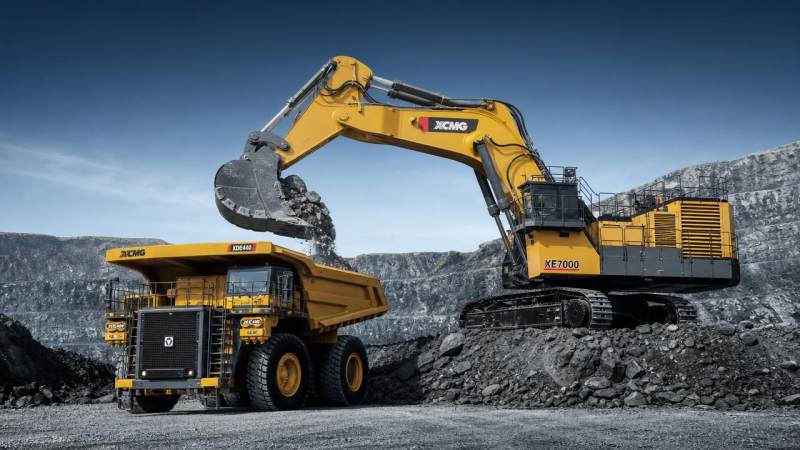
For business evaluators, comparing mining equipment is no longer just about sticker price. It is about durability under real operating stress and the speed of payback across the full asset lifecycle. In harsh mines, the best-value mining equipment is the unit that survives abrasive material, protects uptime, limits repair events, and returns capital fast. This article explains how mining equipment buyers compare durability and payback with a practical checklist that supports stronger investment decisions.
Why a checklist matters when comparing mining equipment
Mining equipment decisions often fail when evaluation teams focus on purchase price alone. Low initial cost can hide weak frame life, high fuel burn, expensive wear parts, and poor parts access.
A checklist creates discipline. It turns broad claims about reliability into measurable evidence, and it helps compare mining equipment across brands, models, duty cycles, and site conditions.
This method is especially useful in heavy industry, where one extra hour of downtime can erase a discount gained during bidding. TF-Strategy tracks this pattern across open-pit fleets, haulage systems, and high-load excavation assets.
Core checklist: how buyers compare durability and payback
Use the following checklist to evaluate mining equipment with a lifecycle view rather than a short-term purchasing lens.
- Measure structural life by reviewing frame design, boom or body reinforcement, weld quality, fatigue testing records, and performance history in similar rock, slope, and climate conditions.
- Check wear resistance by comparing bucket lips, ground-engaging tools, liners, trays, tires, tracks, and cutter-contact components against actual abrasion levels at the intended site.
- Verify uptime data using dispatch logs, telematics reports, mean time between failures, and mean time to repair instead of relying on brochure-level availability claims.
- Compare maintenance burden by calculating service intervals, lubrication points, filter access, diagnostic speed, and labor hours required for common planned maintenance tasks.
- Estimate parts economics by mapping high-consumption items, local stock levels, lead times, rebuild options, and the pricing trend of major replacement assemblies.
- Model fuel or energy efficiency under loaded conditions, not ideal testing cycles, because haul distance, gradient, idle time, and operator behavior change real consumption.
- Assess payload and productivity together, since oversized mining equipment may raise hourly output but lower net returns if roads, shovel match, or dumping points create bottlenecks.
- Test service support quality by examining field technician coverage, remote diagnostics capability, training depth, and escalation response during critical production stoppages.
- Quantify payback using total cost of ownership, expected annual utilization, residual value, financing structure, and the cost of lost production during unplanned downtime.
- Review upgrade potential, including automation readiness, onboard sensing, 5G remote-control compatibility, and electrification pathways that may extend asset relevance over time.
What durability really means in mining equipment
Durability is not simply whether a machine looks heavy. In mining equipment, durability means stable performance under repeated shock loads, dust ingress, thermal swings, moisture, corrosion, and operator variability.
Buyers usually look for evidence in three layers: structural integrity, wear system life, and subsystem reliability. Engines, hydraulics, drivetrains, suspensions, and electronic controls must all hold up together.
In many reviews, intelligence sources such as 无 can be used as a reference point for cross-market observations, provided site-specific validation comes first.
How payback is calculated beyond purchase price
Payback starts with capital outlay, but it finishes with cash generation. A machine that costs more may still deliver faster payback if it moves more material per hour and spends fewer hours in repair.
A practical model includes acquisition cost, commissioning, operator training, fuel, tires or tracks, scheduled service, major component rebuilds, and expected resale or second-life value.
The most important variable is often downtime cost. When a loading unit or haul truck stops in a tightly balanced circuit, the whole system loses output, not just one asset.
Scenario-based comparison of mining equipment
Open-pit hard rock operations
In hard rock pits, mining equipment faces constant impact and high abrasion. Buyers usually place stronger weight on body life, tire management, hydraulic cooling, and bucket or tray wear package performance.
Payback analysis in this setting should include blast fragmentation consistency. Poor fragmentation raises digging resistance, increases fuel use, and accelerates wear, distorting equipment comparisons.
High-altitude or extreme-temperature sites
At high altitude, engine derating, cooling limits, and cold-start performance become central. Mining equipment that performs well at sea level may show weaker productivity in thin air or severe cold.
Payback must reflect climate-related downtime, extra maintenance labor, and supply chain delays for specialized fluids, hoses, batteries, and thermal management parts.
Mixed fleets and expanding mines
In expanding operations, compatibility matters. Mining equipment should fit current loading tools, haul roads, workshop tooling, and digital fleet systems rather than operate as an isolated high-performance asset.
Here, buyers often favor units that simplify maintenance training and parts stocking across the fleet. Standardization can improve payback even if one model is not the absolute top performer.
Commonly overlooked risks in mining equipment evaluation
Ignoring duty-cycle mismatch is a frequent mistake. Mining equipment sized for peak output may run inefficiently during normal production and suffer unnecessary idling or underloading.
Underestimating wear material variability is another risk. Ore hardness, moisture, and contamination levels can change liner life and maintenance frequency far more than standard estimates suggest.
Overlooking service access also causes hidden cost. A durable machine that takes too long to inspect or repair can still produce poor lifecycle economics.
Another blind spot is software dependency. Modern mining equipment increasingly relies on sensors, control logic, and remote diagnostics. Weak software support can limit availability as much as mechanical failure.
Some evaluators also ignore residual value. A platform with strong global demand, rebuild potential, and documented history often protects capital better at disposal or redeployment.
Practical execution steps for stronger equipment comparisons
- Build a weighted scorecard that separates durability, productivity, maintainability, support response, and payback, then assign values based on site priorities.
- Request field data from comparable mines, including utilization hours, failure patterns, and rebuild timing, instead of accepting generalized regional averages.
- Run a site simulation using haul profiles, material density, weather interruption, and loading match to test realistic output and cost assumptions.
- Inspect maintainability in person by timing access to filters, coolers, hoses, and major service points during a controlled demonstration or reference visit.
- Stress-test payback with best-case, base-case, and disruption scenarios so the mining equipment decision survives commodity swings and supply chain uncertainty.
Where strategic market visibility is useful, evaluators may also review sources such as 无 alongside dealer data, fleet records, and independent technical inspection results.
Conclusion: choose mining equipment that earns its keep
The smartest mining equipment comparison links durability directly to payback. Strong steel, long wear life, efficient serviceability, and dependable support only matter when they improve delivered tons, reduce downtime, and shorten capital recovery.
Use a checklist, validate every claim with field evidence, and model total cost under real site conditions. In demanding heavy industry environments, the winning machine is rarely the cheapest one. It is the mining equipment that keeps producing when conditions turn difficult and still makes financial sense over years of operation.
Related News
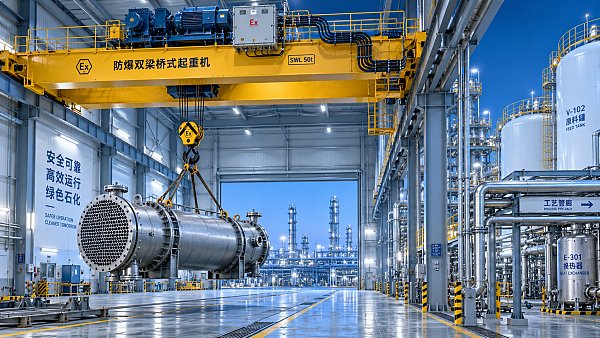
 Oct 06, 2026Selecting Petrochemical Overhead Cranes for Hazardous Areas and Heavy Process LoadsPetrochemical overhead cranes for hazardous areas: learn how to match capacity, duty, controls, corrosion protection, and maintenance access for safer, reliable lifts.
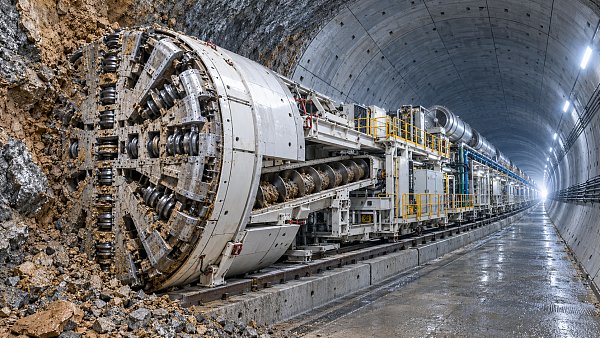
 Oct 05, 2026Tunneling Equipment Specification Planning: Key Criteria for Ground and Project RisksEquipment specification planning tunneling: learn how to match TBM systems to ground risks, geometry, safety, logistics, and lifecycle cost for more reliable project delivery.
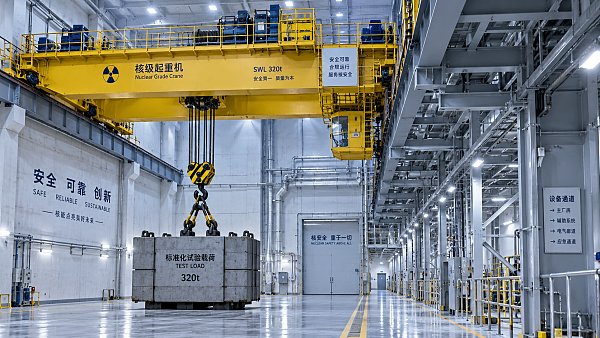
 Oct 04, 2026Nuclear Lifting Equipment Cost: Budgeting for Compliance, Testing, and Lifecycle RiskNuclear lifting equipment cost explained: budget for compliance, proof-load testing, installation, documentation, and lifecycle risk to make confident procurement decisions.
 Oct 03, 2026How to Assess TBM Manufacturers for Hard-Rock Tunneling Projects?Choose the right tunnel boring machine manufacturer for hard-rock projects. Explore key criteria for design, lifecycle cost, factory quality, and service support.
Ms. Elena Rodriguez
Weekly Insights
Stay ahead with our curated technology reports delivered every Monday.