
How mining equipment maintenance cuts downtime and cost
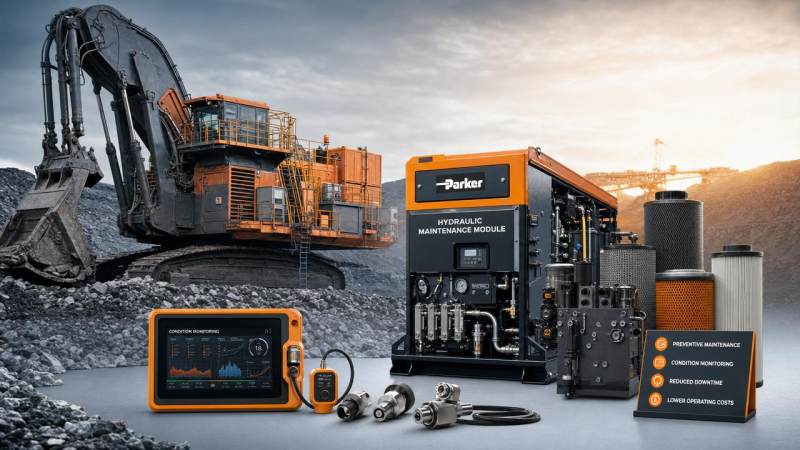
For after-sales maintenance teams, mining equipment maintenance is more than routine service. It directly affects uptime, fuel use, repair budgets, and total machine life.
In harsh mine environments, small defects grow fast. A loose hose, worn liner, or delayed filter change can trigger major failure and expensive production loss.
This guide explains how mining equipment maintenance reduces downtime and cost. It answers common questions with practical methods, field logic, and implementation advice.
Why does mining equipment maintenance have such a strong effect on downtime?
Mining systems run under high load, dust, vibration, heat, and shock. These conditions accelerate wear in engines, hydraulics, undercarriages, structures, and electrical circuits.
When maintenance is reactive, failures arrive without warning. A damaged pump may stop a haul truck, excavator, or crusher support unit for many hours.
Production losses often exceed the repair invoice. One stalled machine can disrupt loading, hauling, blasting schedules, and downstream material flow across the site.
Effective mining equipment maintenance interrupts this chain. It detects early symptoms before they become critical faults that require long shutdowns or secondary repairs.
The best programs focus on failure prevention, not only failure response. That shift improves availability and makes planning easier across mixed fleets and changing ground conditions.
For heavy industry intelligence platforms like TF-Strategy, this link between machine condition and project continuity is central to lowering total cost of ownership.
Which failures cause the biggest hidden losses?
- Hydraulic contamination that damages pumps, valves, and cylinders
- Cooling issues that overheat engines and shorten component life
- Undercarriage wear that increases fuel burn and travel instability
- Electrical faults that create intermittent shutdowns and slow diagnosis
- Lubrication neglect that causes bearing seizure and metal scoring
What does a strong mining equipment maintenance plan actually include?
A reliable plan combines daily inspection, scheduled servicing, condition monitoring, records control, and parts readiness. Each element supports faster detection and better repair timing.
Daily checks should be short but disciplined. They should cover leaks, abnormal sounds, fluid levels, tire or track condition, safety systems, and visible structural cracks.
Scheduled service intervals must match duty cycle, not just calendar time. Machines in abrasive, high-altitude, or extreme temperature zones need adjusted frequencies.
Condition-based methods add more precision. Oil sampling, vibration tracking, thermal scans, and telematics alerts reveal problems before failure reaches the operating crew.
Good mining equipment maintenance also needs clean documentation. Work orders, failure codes, repeat defects, and component history show where costs are rising.
Without records, teams repeat the same repair. With records, they identify root causes, weak suppliers, poor service intervals, or operator patterns linked to damage.
What should be standardized first?
- Pre-start inspection checklist
- Lubrication routes and intervals
- Fluid sampling process and contamination limits
- Shutdown reporting for abnormal noise, heat, or vibration
- Parts coding and reorder points for critical items
How does predictive servicing lower cost compared with reactive repair?
Reactive repair usually costs more because damage spreads. A failed seal may contaminate hydraulic oil, then damage multiple components instead of one low-cost part.
Predictive servicing catches warning signs early. Maintenance can then be scheduled during planned stops, shift changes, or low-demand windows.
That timing matters. Planned intervention reduces emergency labor, express freight, production interruption, and unsafe troubleshooting under pressure.
Telematics has made mining equipment maintenance more accurate. Alerts for pressure drift, coolant temperature, idle time, and fault codes guide technicians toward likely causes.
Oil analysis is especially valuable in heavy equipment. It reveals metal particles, water ingress, viscosity change, and contamination trends across engines, gearboxes, and hydraulics.
The result is better decision quality. Teams replace components when data supports it, not too early and not after failure has already multiplied costs.
Reactive versus predictive maintenance
Which maintenance mistakes raise costs even when service is frequent?
Frequent service does not guarantee good mining equipment maintenance. Poor methods can waste money and still leave machines exposed to failure.
One common mistake is over-maintenance. Replacing parts too early increases spend and may introduce contamination, fitting errors, or unnecessary machine stoppage.
Another mistake is ignoring cleanliness. Dirty tools, open containers, and poor storage practices send abrasive particles straight into sensitive hydraulic systems.
Some programs focus only on major assemblies. Yet hoses, filters, wiring connectors, fasteners, and seals often trigger the failures that stop production first.
Weak root-cause analysis is another cost driver. Replacing the failed part without understanding why it failed leads to repeated breakdowns and low confidence.
Training gaps matter too. Even advanced diagnostics lose value if inspections are inconsistent, symptoms are misread, or warning codes are routinely ignored.
What warning signs should never be postponed?
- Repeated overheating under normal load
- Milky oil, burnt smell, or visible metal particles
- Drop in breakout force, travel speed, or lifting stability
- Frequent alarm resets or intermittent electrical loss
- Cracks near pins, booms, frames, or mounting points
How should parts inventory support mining equipment maintenance?
Parts strategy strongly influences downtime. Even a simple repair becomes expensive when a critical seal kit, sensor, filter, or bearing is unavailable onsite.
The goal is not maximum stock. The goal is smart stock based on failure criticality, lead time, usage rate, and equipment commonality.
Critical spares should cover high-impact failures with long replacement delays. Common consumables should be visible, coded clearly, and protected from contamination.
Mining equipment maintenance improves when inventory data connects with service history. That link reveals which parts are driving repeat downtime or abnormal consumption.
Storage conditions also matter. Rubber, electronics, lubricants, and precision components degrade if exposed to dust, moisture, UV, or poor handling.
In remote mining regions, this planning becomes even more valuable. Freight delays and customs issues can turn a small missing part into a week of lost output.
Simple spare parts priority guide
How can teams measure whether mining equipment maintenance is really working?
A maintenance program should be judged by outcomes, not activity. More work orders do not automatically mean better machine health.
Start with availability, mean time between failures, planned versus unplanned maintenance ratio, and maintenance cost per operating hour.
Track repeat failures carefully. If the same fault returns, root causes remain unresolved or repair standards are inconsistent.
Also monitor inspection compliance. Missed daily checks often predict future breakdown clusters, especially in fleets working long shifts in abrasive ground.
Useful mining equipment maintenance metrics should be simple enough for field action. Reports that no one uses will not improve uptime.
A balanced scorecard often works best because it combines reliability, cost, response speed, parts readiness, and safety performance in one view.
FAQ summary table
Mining equipment maintenance delivers the most value when it is preventive, data-informed, and tightly connected to parts planning and field execution.
The payoff is clear: fewer unexpected failures, shorter stoppages, lower repair escalation, and longer machine life in demanding operating conditions.
For complex heavy equipment ecosystems, disciplined maintenance is not a support task. It is a practical strategy for protecting productivity and reducing total ownership cost.
Use the questions above to audit current practice, identify weak points, and prioritize the next improvements in your mining equipment maintenance program.
Related News
 Oct 06, 2026Selecting Petrochemical Overhead Cranes for Hazardous Areas and Heavy Process LoadsPetrochemical overhead cranes for hazardous areas: learn how to match capacity, duty, controls, corrosion protection, and maintenance access for safer, reliable lifts.
 Oct 05, 2026Tunneling Equipment Specification Planning: Key Criteria for Ground and Project RisksEquipment specification planning tunneling: learn how to match TBM systems to ground risks, geometry, safety, logistics, and lifecycle cost for more reliable project delivery.
 Oct 04, 2026Nuclear Lifting Equipment Cost: Budgeting for Compliance, Testing, and Lifecycle RiskNuclear lifting equipment cost explained: budget for compliance, proof-load testing, installation, documentation, and lifecycle risk to make confident procurement decisions.
 Oct 03, 2026How to Assess TBM Manufacturers for Hard-Rock Tunneling Projects?Choose the right tunnel boring machine manufacturer for hard-rock projects. Explore key criteria for design, lifecycle cost, factory quality, and service support.
Ms. Elena Rodriguez
Weekly Insights
Stay ahead with our curated technology reports delivered every Monday.