
Why open-pit mining safety plans fail before risks appear
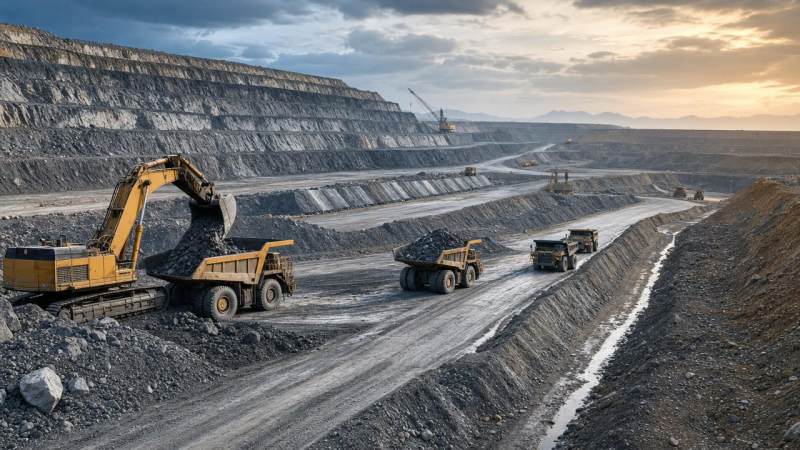
Many open-pit mining safety plans fail long before an incident occurs—not because hazards are invisible, but because controls, communication, and field execution drift apart. For quality and safety managers, strengthening open-pit mining safety means identifying weak signals early, aligning procedures with real operating conditions, and turning static plans into active risk management tools that work before danger escalates.
In large surface mines, risk rarely appears as a single dramatic event. It usually builds through small deviations: a berm reduced by 300 mm, a pre-start check skipped on the night shift, water accumulation left unmanaged for 48 hours, or dispatch data that never reaches the supervisor responsible for field controls. By the time a serious event happens, the plan has often already failed in practice.
For quality control personnel and safety managers, this gap is the real issue. A documented system may meet internal requirements, but open-pit mining safety depends on whether haul roads, drill-and-blast zones, pit slopes, maintenance areas, and contractor interfaces are managed consistently under changing production pressure. In heavy industry, the quality of execution is what determines whether the safety plan remains alive.
From the TF-Strategy perspective, effective safety management in open-pit operations is not separate from equipment intelligence, process discipline, and operational visibility. It is tied directly to excavator cycle stability, dump truck traffic patterns, communication latency, weather response, and the ability to convert field observations into timely decisions. That is why many plans fail before risks appear: they are written for compliance, but not engineered for operational drift.
Where open-pit mining safety plans break down first
Most failures begin at the interface between planning and execution. A safety plan may define responsibilities across 5 to 7 roles, but if shift supervisors, dispatch teams, maintenance crews, and contractors interpret controls differently, the site develops multiple operating realities. That fragmentation weakens open-pit mining safety long before formal indicators show deterioration.
1. Static risk assessments in a dynamic pit
Open-pit conditions can change within a single 12-hour shift. Bench geometry, groundwater seepage, visibility, traffic volume, and equipment availability all shift rapidly. Yet many mines still review key risk assessments weekly or only after an incident. A document updated every 7 days cannot fully control conditions that change every 2 to 4 hours.
This is especially common in mixed fleets where ultra-large excavators, wheel loaders, service trucks, and 90-ton to 290-ton mining dump trucks share routes. If the original plan does not account for temporary rerouting, queuing at shovel locations, or edge proximity during spotting, controls become outdated while still appearing valid on paper.
2. Control measures that are technically correct but operationally weak
Some controls fail because they are too generic. “Maintain safe distance from edge” is not enough for field execution. Teams need measurable thresholds such as berm height relative to wheel radius, spotter requirements in low-visibility conditions, exclusion zone distances during blasting, or drainage inspection intervals after rainfall above a defined trigger such as 15 mm to 25 mm.
When controls are vague, quality and safety managers cannot verify them consistently. That weakens audit integrity and causes frontline teams to rely on personal judgment instead of standardized execution. In open-pit mining safety, unclear controls often create hidden variability rather than reliable compliance.
3. Production pressure that silently overrides the plan
A mine can lose control of risk without openly rejecting safety rules. More often, production urgency gradually changes how rules are applied. Pre-task reviews shrink from 10 minutes to 3. Road inspections move from every shift to once per day. Equipment defects remain in service until the next planned stop, even if the delay is 24 to 72 hours.
This silent override is one of the most common reasons open-pit mining safety plans fail early. Safety managers should not only ask whether a control exists. They should ask whether the operation still has enough time, staffing, and authority to execute that control under peak output demand.
The table below shows typical early-stage failure points and the practical signals that quality and safety teams should monitor before incident rates increase.
The key lesson is that early warning signals are usually operational, not administrative. A mine does not need more paperwork first. It needs better visibility into where work practice has drifted from planned controls.
Why execution drift is the real safety risk in open-pit operations
Execution drift happens when frontline behavior gradually moves away from the original design of the safety system. In open-pit mining safety, this drift is dangerous because the mine is a moving production environment with heavy equipment, multiple contractors, changing ground conditions, and long operating hours. Small deviations can combine across 3 or 4 departments before anyone recognizes the pattern.
Field complexity often exceeds plan complexity
A typical pit may run 2 or 3 shifts, dozens of mobile assets, and several simultaneous work zones. If the plan defines only broad obligations, teams improvise. That is not always due to poor discipline. Sometimes the field scenario simply contains more variables than the procedure anticipated: changing shovel position, limited radio coverage, contractor turnover, or weather-driven road deterioration within 6 hours.
Common drift triggers
- Temporary route changes without revised traffic control mapping
- Shift handovers that transfer production data but not risk status
- Maintenance backlog affecting brakes, lighting, cameras, or steering response
- Supervisor span of control that exceeds practical observation capacity
- Contractor induction completed once, but not refreshed after task changes
Safety plans often underweight contractor and interface risk
Many open-pit sites depend on contractors for drilling, blasting, road maintenance, dewatering, tyre service, or light-vehicle support. Each interface adds variability. If one contractor works to a 24-hour maintenance response expectation while site management assumes 8 hours, the control system already contains a timing gap. That gap can become critical during weather events or equipment congestion.
Quality managers should test whether the plan defines who owns each control, what evidence proves completion, and what escalation time applies. Without these three elements, open-pit mining safety becomes a matter of assumption rather than verification.
Lagging indicators arrive too late
Recordable incidents, equipment damage counts, or lost-time rates are useful, but they are late-stage signals. By the time these metrics rise, the operation may have already tolerated drift for weeks. Leading indicators are more valuable: missed inspections per shift, unresolved berm defects older than 12 hours, unclosed action items beyond 7 days, or repeated speeding events on the same haul segment.
This is where digitalization matters. TF-Strategy consistently observes that the strongest safety systems are not those with the most forms, but those with faster feedback loops between equipment status, field conditions, and accountable decisions.
How quality and safety managers can rebuild a plan before failure escalates
Improving open-pit mining safety does not always require rewriting the entire management system. In many operations, the better approach is to rebuild the weak links between risk identification, control design, verification, and response. A practical reset can be done in 4 steps over 2 to 6 weeks, depending on site complexity.
Step 1: Re-map critical tasks by exposure, not by department
Start with the highest-exposure workflows: loading near pit edges, reversing at shovel approach, road maintenance under traffic, blast clearance, dewatering near unstable ground, and fatigue-sensitive night haulage. For each task, identify the top 3 failure modes and the exact control owner. This produces clearer action than a department-by-department review.
Step 2: Convert generic rules into measurable field controls
Every critical control should have an observable standard. Examples include inspection frequency every shift, spotter use under visibility below a defined threshold, road grading response within 8 hours of defect reporting, or exclusion barriers established before maintenance begins. If a control cannot be measured, it is difficult to audit and easy to bypass.
Step 3: Build a short-cycle verification routine
Annual reviews are not enough. Quality and safety teams should use daily and weekly routines. A 10-minute pre-shift review, one mid-shift field verification, and one weekly cross-functional control audit can reveal drift early. Over a 30-day period, these routines create a more accurate picture than a large monthly review alone.
Step 4: Escalate unresolved risks using time-based triggers
Unresolved hazards need deadlines, not vague follow-up. For example, blocked drainage near active travel routes may require action within 4 hours, damaged edge protection within the same shift, and recurring speeding hotspots within 24 hours through traffic redesign or enforcement. Time-based escalation prevents risk acceptance from becoming routine.
The following framework helps teams turn a static plan into a live control system with clear review cycles and ownership.
What matters here is not complexity but discipline. A short, repeatable verification cycle usually outperforms a large but infrequent review process.
Selection criteria for stronger safety systems in heavy mining environments
When reviewing procedures, technologies, or advisory support, safety managers should assess whether the solution improves control reliability in real operations. Strong open-pit mining safety systems are practical, measurable, and integrated with production realities rather than isolated from them.
Four decision criteria that matter
- Does the system define critical controls with measurable thresholds?
- Can supervisors verify performance within a single shift?
- Does it cover contractor interfaces, maintenance delays, and traffic changes?
- Can the site convert field observations into action within 4, 8, or 24 hours depending on severity?
What advanced operations are doing differently
More advanced mines increasingly connect open-pit mining safety to operational intelligence. This includes better equipment condition visibility, digital defect logging, geotechnical monitoring, and short-interval management of traffic and route changes. Even without full automation, these practices reduce the delay between identifying a hazard and applying a control.
For organizations managing large excavators, mining dump trucks, and multi-contractor work fronts, the most useful improvements are often not dramatic. They are targeted: clearer ownership, faster communication, fewer uncontrolled handoffs, and better linkage between field conditions and decision authority.
Frequent mistakes to avoid
- Treating the annual review as the primary safety improvement tool
- Assuming a completed checklist means the control was effective
- Using incident-free periods as proof that drift does not exist
- Separating quality audits from frontline operational observation
- Focusing only on operator behavior while ignoring system design
Building a more resilient open-pit mining safety culture
A resilient system is one that detects weak signals early and corrects them before they combine into an event. In open-pit mining safety, that means the plan must behave like a working control network, not a document archive. It should reflect current equipment patterns, site conditions, contractor realities, and the real pace of production.
For quality control and safety leaders, the priority is clear: identify where execution drift starts, define measurable controls, verify them in short cycles, and escalate unresolved issues by time and severity. This is where professional industry intelligence also adds value. Better understanding of machinery behavior, field constraints, and infrastructure operating trends helps teams design controls that match real heavy-equipment environments.
TF-Strategy supports this decision process by connecting equipment insight, operational trends, and practical engineering intelligence across open-pit mining and heavy industry. If your team is reviewing risk controls, contractor interfaces, or field execution gaps, now is the right time to strengthen the system before the next deviation grows into a serious event.
Contact us to discuss your operational challenges, request a tailored intelligence-based review, or learn more solutions for improving open-pit mining safety in complex surface mining environments.
Related News
 Oct 06, 2026Selecting Petrochemical Overhead Cranes for Hazardous Areas and Heavy Process LoadsPetrochemical overhead cranes for hazardous areas: learn how to match capacity, duty, controls, corrosion protection, and maintenance access for safer, reliable lifts.
 Oct 05, 2026Tunneling Equipment Specification Planning: Key Criteria for Ground and Project RisksEquipment specification planning tunneling: learn how to match TBM systems to ground risks, geometry, safety, logistics, and lifecycle cost for more reliable project delivery.
 Oct 04, 2026Nuclear Lifting Equipment Cost: Budgeting for Compliance, Testing, and Lifecycle RiskNuclear lifting equipment cost explained: budget for compliance, proof-load testing, installation, documentation, and lifecycle risk to make confident procurement decisions.
 Oct 03, 2026How to Assess TBM Manufacturers for Hard-Rock Tunneling Projects?Choose the right tunnel boring machine manufacturer for hard-rock projects. Explore key criteria for design, lifecycle cost, factory quality, and service support.
Ms. Elena Rodriguez
Weekly Insights
Stay ahead with our curated technology reports delivered every Monday.