
How to choose construction safety equipment that cuts site risk
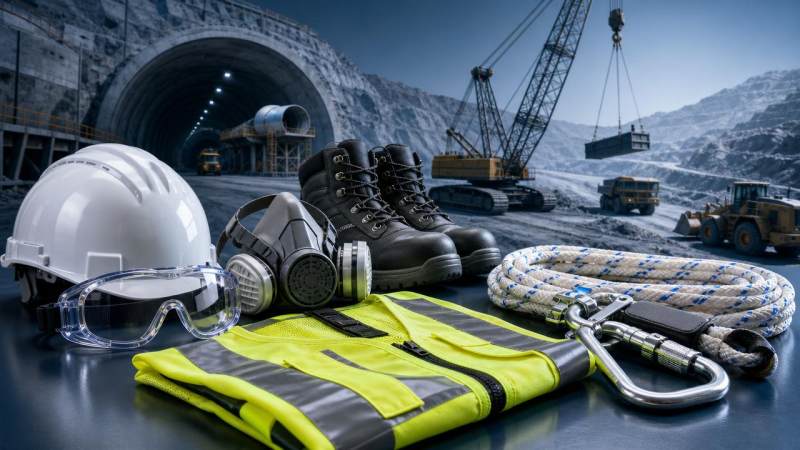
Choosing the right construction safety equipment is not just about compliance—it is a direct strategy for reducing site risk, protecting crews, and keeping complex projects on schedule. For quality control and safety managers, the best decisions come from matching equipment performance, task demands, and real-world site hazards. This guide outlines how to evaluate safety gear with a practical, risk-focused approach.
In heavy construction environments such as tunnel boring, open-pit mining, crawler crane lifting, and large road machinery operations, safety decisions affect more than individual workers. They influence downtime, inspection pass rates, equipment availability, and delivery reliability across projects that often run for 12 to 36 months.
For safety managers and quality control teams, the challenge is not simply buying more gear. It is selecting construction safety equipment that fits hazard levels, environmental stress, crew behavior, and maintenance capacity. A poor match can create blind spots, raise replacement costs, and leave critical risks uncontrolled.
Understand the Site Risk Profile Before Selecting Equipment
The most effective construction safety equipment program starts with a structured hazard review. On complex sites, 70% of avoidable equipment mismatch issues come from buying according to catalog descriptions instead of actual exposure conditions, work cycles, and machine interaction points.
A tunnel site, for example, may require head protection, respiratory control, lighting support, hearing protection, and gas monitoring in the same 50-meter work zone. An open-pit mine may prioritize visibility, anti-slip footwear, fall prevention near maintenance platforms, and heat stress monitoring across 2 or 3 shifts.
Map hazards by task, zone, and frequency
Safety managers should break risk into at least 4 dimensions: task type, exposure duration, environmental severity, and consequence level. This helps prevent over-specifying low-risk activities while under-protecting high-risk maintenance, lifting, or confined-space operations.
- Task type: excavation, lifting, welding, drilling, haulage, paving, or confined entry
- Exposure duration: under 30 minutes, 1 to 4 hours, or full-shift use
- Environmental severity: dust, vibration, water, altitude, heat, low visibility, or chemical contact
- Consequence level: minor injury potential, lost-time risk, or fatal hazard exposure
Critical questions before purchase
Before approving any purchase order, ask whether the gear is intended for routine work, intermittent intervention, or emergency response. Equipment used once per week can tolerate different comfort and battery expectations than gear worn for 8 to 12 hours daily.
The next table shows a practical way to align hazard categories with equipment requirements across heavy infrastructure and machinery-intensive sites.
The key lesson is that construction safety equipment should be chosen by operating context, not by a generic site checklist. When hazard mapping is specific, procurement becomes easier, training becomes more relevant, and replacement planning becomes more predictable.
Focus on Performance Criteria, Not Just Product Category
Many sites purchase PPE and safety systems by category alone: helmets, gloves, vests, goggles, harnesses. But category does not equal suitability. The better approach is to compare performance thresholds such as impact rating, ingress resistance, visibility class, battery duration, and compatibility with other protective gear.
This is especially important in heavy equipment sectors where workers often wear 4 to 6 protective items at once. If eyewear fogs under a respirator, or hearing protection conflicts with communication devices, protection may exist on paper but fail in actual use.
Five performance filters for better selection
- Protection level matched to actual hazard intensity
- Comfort for full-shift wear, especially over 8 to 10 hours
- Durability under dust, water, vibration, and temperature swings
- Compatibility with helmets, radios, visors, or fall protection
- Inspection and replacement simplicity for site supervisors
Examples by equipment type
Respiratory protection on road milling or tunneling jobs should be evaluated for filter change frequency, seal integrity, and worker acceptance. A unit that performs well in a lab but requires adjustment every 20 minutes can slow work and encourage non-compliant use.
For fall protection around large cranes or elevated maintenance access, harness selection should consider anchor points, lanyard length, movement restriction, and inspection intervals. In many projects, a 6-month formal inspection cycle is common, with daily visual checks before use.
Below is a selection framework that helps quality and safety teams compare performance criteria across common construction safety equipment groups.
Using these filters helps purchasing teams compare more than price. It also supports lifecycle thinking, because replacement rates, cleaning demands, and fit failure can raise total ownership cost by 15% to 30% over a project phase.
Build a Procurement Process That Supports Compliance and Use
The best construction safety equipment still fails if procurement is disconnected from supervision and worker behavior. Safety managers should treat equipment selection as a 5-step operational process rather than a one-time purchase event.
A practical 5-step buying workflow
- Define hazard scenarios and user groups by task or machine area
- Shortlist products using performance and compatibility criteria
- Run field trials with 5 to 15 end users for at least 3 working days
- Review inspection, cleaning, and replacement requirements
- Approve standard issue lists and reorder thresholds
Why field trials matter
A brief field trial often reveals problems that technical sheets do not show. Gloves may reduce grip on hydraulic fittings. Boots may feel stable on dry surfaces but slip on bentonite slurry. Face shields may interfere with communication headsets during lifting coordination.
For projects involving TBM maintenance crews, haul truck technicians, or crane erection teams, trial feedback should include at least 6 checks: fit, mobility, visibility, fatigue, cleaning ease, and observed non-compliance triggers.
Common procurement mistakes
- Choosing the lowest unit price without measuring replacement frequency
- Ignoring sizing diversity for multinational or mixed-gender crews
- Buying single-purpose gear for multi-risk work zones
- Failing to stock 2 to 4 weeks of critical replacement items
- Not aligning issue records with incident review and QC findings
A stronger process reduces not only injury risk but also audit friction. When item specifications, issue logs, and inspection routines are documented, safety and quality teams can respond faster to internal reviews, client audits, and subcontractor coordination checks.
Match Safety Equipment to Harsh Heavy-Industry Conditions
Heavy civil and mining-adjacent projects expose construction safety equipment to harsher conditions than standard commercial building sites. Dust loading, vibration, mud, humidity, temperature shifts, and long work cycles can shorten usable life if products are not selected for those realities.
On mountain tunnels or high-altitude mine roads, temperatures can swing from below 0°C at night to above 30°C during the day. In such cases, material flexibility, anti-fog behavior, glove dexterity, and garment layering become operational issues, not just comfort preferences.
Environment-specific selection points
- Wet conditions: prioritize slip resistance, fast-drying fabrics, corrosion-resistant hardware
- Dust-intensive zones: choose sealed eyewear and respirator systems with clear filter management
- High-noise machinery areas: ensure hearing protection works with radio communication
- Night or low-visibility work: use reflective garments and task lighting with practical battery life
Maintenance planning is part of selection
Equipment life depends on care routines. If a site cannot clean, dry, inspect, and store gear correctly, a lower-maintenance option may be safer than a technically superior item that degrades quickly. Safety managers should define weekly checks, monthly audits, and replacement triggers before purchase approval.
For reusable items, many contractors use a 3-tier maintenance approach: operator pre-use inspection, supervisor weekly verification, and formal monthly review by safety or warehouse staff. This structure is simple enough to scale across large fleets and rotating crews.
Use Safety Data, Training, and Supplier Support to Improve Results
Selection does not end when construction safety equipment is delivered. The next performance gains come from training quality, issue tracking, and supplier responsiveness. A site that measures usage problems can improve protection faster than one that only counts inventory.
What to track after deployment
Safety managers should monitor at least 5 indicators: fit complaints, replacement rate, inspection failure rate, task-specific non-use, and incident linkage. Even a 90-day review cycle can reveal which products create fatigue, fogging, grip loss, or repeated damage under field conditions.
For example, if one glove model shows a 25% higher monthly replacement rate in excavator maintenance teams than in general labor crews, the issue may be abrasion, oil exposure, or mismatch with precision work. That is a selection insight, not merely a stock problem.
What good suppliers should provide
Reliable suppliers should support specification review, sample evaluation, training materials, replacement availability, and documentation clarity. In B2B projects, lead time matters. A standard item available in 7 to 15 days may be safer operationally than a premium product with an uncertain 6-week replenishment cycle.
For strategic projects involving TBM drives, mine fleet support, or ultra-large lifting, the best partners also understand how safety gear interacts with machine workflows. That broader perspective helps align worker protection with uptime, inspection discipline, and quality delivery targets.
Frequently overlooked decision points
- Whether replacement parts are locally available
- Whether instructions are clear for multilingual crews
- Whether gear remains functional after repeated cleaning cycles
- Whether accessories from different suppliers work together safely
These details often determine whether construction safety equipment performs consistently through a project’s middle and late stages, when fatigue, schedule pressure, and changing subcontractor mix can increase operational risk.
Choosing construction safety equipment that truly cuts site risk requires more than checking compliance boxes. It means connecting hazard mapping, performance criteria, field testing, maintenance planning, and supplier support into one disciplined process. For quality control and safety managers in heavy infrastructure, that approach protects crews while also supporting uptime, audit readiness, and delivery reliability.
TF-Strategy closely follows the realities of tunnel boring, mining, lifting, and large machinery operations where safety choices directly affect project execution. If you need help evaluating risk-focused equipment strategies for demanding work environments, contact us to get a tailored solution, discuss product selection priorities, or explore more heavy-industry safety insights.
Related News
 Oct 08, 2026How to Evaluate a Heavy Machinery Information Platform for Project Equipment SourcingHeavy machinery information platform guide: compare equipment fit, source reliability, lifecycle costs, supplier capability, and compliance to make smarter sourcing decisions.
 Oct 07, 2026How to Evaluate a Hydraulic System Component Supplier for Heavy Equipment UptimeChoose a hydraulic system component supplier with proven quality, technical fit, and reliable delivery to reduce heavy equipment downtime and lifecycle costs.
 Oct 06, 2026Selecting Petrochemical Overhead Cranes for Hazardous Areas and Heavy Process LoadsPetrochemical overhead cranes for hazardous areas: learn how to match capacity, duty, controls, corrosion protection, and maintenance access for safer, reliable lifts.
 Oct 05, 2026Tunneling Equipment Specification Planning: Key Criteria for Ground and Project RisksEquipment specification planning tunneling: learn how to match TBM systems to ground risks, geometry, safety, logistics, and lifecycle cost for more reliable project delivery.
Ms. Elena Rodriguez
Weekly Insights
Stay ahead with our curated technology reports delivered every Monday.