
Petrochemical Lifting Solutions for Refineries: Planning Safe Heavy Equipment Handling
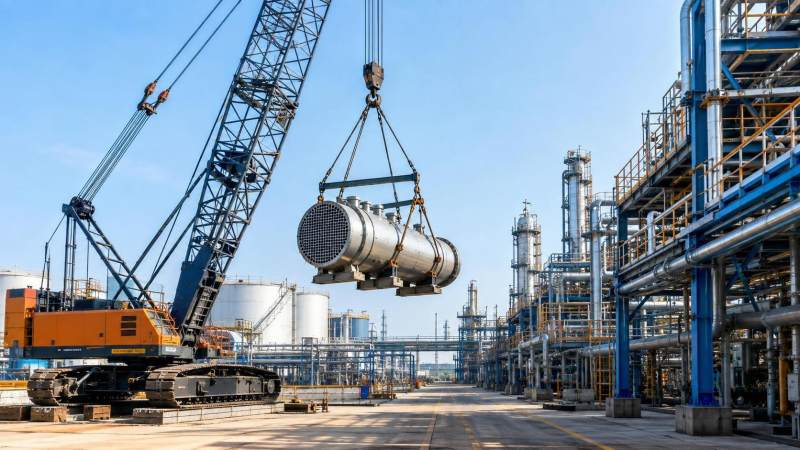
Petrochemical Lifting Solutions for Refineries: Planning Safe Heavy Equipment Handling
Refinery lifting work rarely fails because a team forgot that a vessel is heavy. It fails when weight, geometry, access, operating constraints, ground conditions, and the human decisions around the lift are treated as separate issues. During a turnaround, a reactor internals package may need to come out through a limited overhead opening. A replacement exchanger may arrive before adjacent scaffolding is removed. A crane may have adequate nominal capacity on paper but lose practical capacity once boom length, radius, hook block, rigging, wind, and clearance are accounted for.
That is why dependable petrochemical lifting solutions refinery teams use are not simply a question of selecting the largest available crane. They are engineered handling strategies. The work combines load verification, crane configuration, rigging design, transport route review, work-front coordination, and active control of changing site conditions. For project leaders, this approach is less about producing more documents and more about eliminating late surprises that can stop a shutdown-critical lift.
A refinery lift begins with the real load, not the drawing title
Equipment data sheets are an important starting point, but they should not be mistaken for a lift-ready weight statement. In refinery brownfield work, the item being handled may include blinds, temporary spool pieces, insulation remnants, internal components, preservation materials, or lifting lugs added during fabrication. Conversely, an old vessel may have missing internals or accumulated deposits that change its expected condition. If the lifting weight is uncertain, the responsible engineering team needs a conservative and documented method for resolving that uncertainty before crane selection is finalized.
The center of gravity deserves equal attention. A horizontal exchanger with a channel cover at one end, a vertical drum with platforms attached, or a prefabricated pipe rack module can look visually balanced while behaving quite differently once suspended. Pick points should not be assumed to be symmetrical simply because they appear symmetrical on a general arrangement drawing. The load path through trunnions, padeyes, lifting lugs, shackles, spreader beams, and slings must be reviewed as a system.
A useful planning question is simple: what is the heaviest credible configuration that will actually leave the work area? That figure should include the hook block, rigging, lifting beam, and any below-the-hook equipment where relevant. Crane charts apply to the complete lifted load, not only to the process equipment nameplate weight.
Crane selection is a geometry exercise as much as a capacity exercise
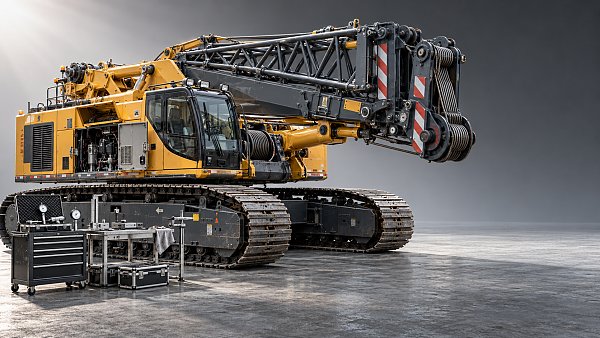
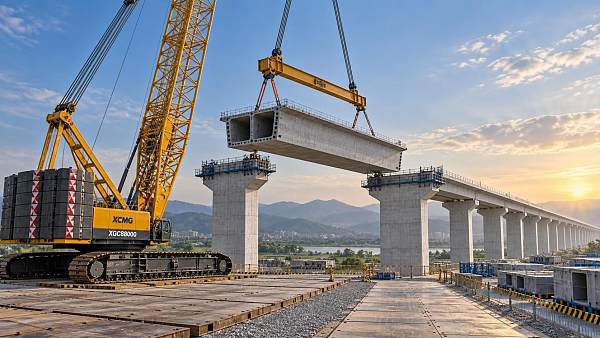
Crawler cranes are often central to large petrochemical installations because they can provide high capacity with a stable working envelope and can be configured for long-term work fronts. Yet they are not automatically the best answer. A mobile crane may be more practical for isolated exchanger pulls, valve removals, or work where the crane must mobilize through narrow plant roads. Gantry arrangements, strand-jack systems, hydraulic skidding, or jacking-and-sliding methods may be safer when headroom is restricted or when the lift must be executed inside an operating unit.
The critical question is not “What crane can lift this load?” It is “What crane can place this load at every point of the intended path?” A crane may be comfortable at the initial pick radius yet approach a limiting condition while slewing around a structure, booming down near a pipe rack, or placing a component onto temporary supports. The planning team should map the full movement: pick, clear, rotate if required, travel or slew, approach, set-down, and de-rig.
This is especially important during refinery shutdowns, when temporary facilities can transform the geometry of a familiar unit. Scaffolds, laydown areas, firewater hoses, welding shelters, parked aerial lifts, and temporary cable routes may not appear on the original plot plan. A site walkdown with the lifting supervisor, construction lead, operations representative, and crane provider often exposes constraints that a desktop review misses.
Capacity margin is not spare capacity for poor planning
It is tempting to describe a crane as “oversized” if its published chart is well above the planned load. In practice, this language can hide risk. Configuration changes, a larger operating radius, changed counterweight arrangements, reduced outrigger support, or revised rigging can narrow that margin quickly. The lift plan should identify the governing configuration and the governing point in the movement, then be checked against the current manufacturer information and applicable site requirements.
For tandem lifts, the discipline needs to be even tighter. Load sharing can shift during pick-up because of crane position, boom deflection, differing hoist speeds, or a center of gravity that was estimated incorrectly. Dual-crane work should be reserved for situations where it is genuinely necessary and planned as a controlled engineered operation, not as an improvised answer to an access problem.
Ground bearing pressure can decide whether the plan is viable
Refineries are built on a mixture of paved roads, buried services, former construction areas, drainage corridors, compacted fill, and surfaces that may have been repaired many times. A crane setup area that looks solid can still conceal weak subgrade, underground lines, vaults, culverts, or process drains. With crawler cranes, the issue includes track bearing pressure along the travel path; with mobile cranes, outrigger reactions and mat design become central.
The correct response is not to add timber mats by habit. Matting must suit the expected reactions and the verified ground condition. Where geotechnical information is limited or the work is near known underground structures, a project team should obtain a suitable engineering review rather than accepting visual judgement alone. It is much cheaper to adjust the crane location, improve the working platform, or revise the lift method before mobilization than to discover settlement during the operation.
Drainage also matters. Rain can alter site access and soil performance rapidly, particularly around temporary crane pads. A robust plan identifies weather triggers, inspection responsibilities, and the authority to suspend work if the setup condition changes.
Rigging is where many “routine” lifts become non-routine
Rigging design should match the equipment, not merely the load weight. Sling angles increase leg tension. Sharp edges can damage soft slings. Wide vessels may require spreader beams to control sling geometry and prevent side loading at lift points. Long modules may need multiple lifting points, equalization arrangements, or temporary bracing to maintain their structural integrity during the pick.
Refinery equipment also creates awkward interfaces. Corroded lifting lugs may need inspection before use. Newly fabricated items may have designated lift points, but the plan should still verify their intended direction of loading and whether they are suitable for the proposed rigging arrangement. Process nozzles, handrails, platforms, and instrument connections are not convenient attachment points just because they are accessible.
Before the main lift, teams often benefit from a controlled trial take-up: enough tension to confirm balance, rigging alignment, clearance, and any unexpected movement, while the load is still close to its support. This is not a substitute for engineering, but it can reveal a practical issue before the component is fully suspended.
The route between the crane and the foundation is part of the lift plan
Heavy equipment handling in a refinery is frequently a combined lifting and transport problem. A vessel can arrive by heavy-haul trailer, be transferred to modular transporters, then lifted, skidded, or tailing-assisted into its final position. Every handoff introduces a new interface: load securement, trailer turning radius, overhead obstructions, bridge or culvert restrictions, laydown availability, and timing with plant logistics.
The route should be physically checked, not assumed from satellite imagery or an old logistics drawing. A low pipe bridge, a temporary electrical installation, or a sharp turn near a process unit can alter the entire delivery strategy. For large components, the best lifting solution may be decided weeks earlier by the transport route and the available laydown area.
There is also a schedule issue that project teams sometimes underestimate: a crane can be ready while the work front is not. Foundations may lack final release, anchor bolt protection may still be in place, access steel may be incomplete, or adjacent contractor activities may prevent the crane from entering the exclusion zone. Lifting plans should be linked to construction readiness gates, not treated as a standalone package prepared by the heavy-lift contractor alone.
Control the operating environment, not just the suspended load
Refineries add hazards that are less prominent on open construction sites. Work can occur near live lines, hydrocarbon systems, energized equipment, restricted access routes, and operating units with strict permit controls. The lift team needs clear boundaries between construction authority and operations authority. A technically sound crane plan still cannot proceed if isolation status, area access, gas testing requirements, or simultaneous operations have not been resolved.
A practical lift briefing should cover more than hand signals. It should confirm the exact travel path, designated signal person, radio protocol, exclusion zone, stop-work triggers, weather limits established for the lift, emergency response arrangements, and the sequence of actions if the load needs to be landed unexpectedly. When several contractors are involved, ambiguity about who has final command is a serious weakness.
Real-time discipline matters because site conditions move faster than paperwork. A delivery vehicle may block the planned crane route. Wind conditions may change. A scaffold may be altered after the walkdown. Any material change to the setup, load, rigging, crane configuration, or route should trigger a pause and appropriate review rather than a quiet field adjustment.
What a project leader should demand before approving the work
The best lift packages are readable by the people who must execute them. They do not bury the critical decisions under generic safety language. Before release, project leadership should be able to see a clear answer to the following questions:
- Has the equipment weight, center of gravity, and lifting-point condition been confirmed to an appropriate level for the planned work?
- Does the crane configuration remain adequate through the complete lifting path, including the most demanding radius and clearance point?
- Have ground conditions, crane support arrangements, access roads, and underground constraints been reviewed?
- Are rigging components and below-the-hook devices suited to the load geometry and intended loading direction?
- Have operations, construction, transport, scaffolding, and other affected parties agreed on the work-front sequence?
- Is there a defined process for stopping and revalidating the lift when site conditions change?
These questions sound basic, but they expose the difference between a crane booking and an engineered handling plan. They also help prevent a common turnaround problem: discovering that the lift is physically possible only after access, sequencing, or isolation windows have already been committed.
Using heavy-equipment intelligence earlier in the project
For major refinery projects, lifting decisions should begin during constructability review rather than shortly before installation. The choice to fabricate a larger module, relocate a vessel, alter a pipe rack opening, or change equipment orientation can substantially affect crane class, mobilization strategy, and shutdown duration. Early review does not guarantee a simpler lift, but it gives the project team time to choose between alternatives while design changes are still manageable.
This is where cross-sector heavy equipment intelligence can be useful. The same reasoning applied to crawler crane selection for wind, nuclear, mining, and petrochemical work—machine configuration, ground interface, transport constraints, and operational sequencing—helps teams compare options without reducing the problem to rated capacity alone. TF-Strategy’s focus on ultra-large lifting machinery and construction methodology reflects this broader reality: physical equipment parameters only become useful when connected to the conditions of the actual worksite.
Safe refinery lifting is ultimately built through decisions made before the hook takes the load. Verify what is being lifted, understand the whole path, protect the ground and the work area, and give the field team clear authority to stop when reality no longer matches the plan. In petrochemical heavy handling, that discipline is what keeps a demanding lift from becoming an expensive interruption.
Related News
 Oct 23, 2026Selecting Lifting Equipment for Nuclear Component Transport: Key Safety CriteriaSelecting lifting machinery for nuclear component transport? Discover essential safety criteria, load control checks, and supplier requirements to guide confident procurement.
 Oct 22, 2026Tunnel Boring Machines in Southeast Asia: EPB vs. Slurry for Soft GroundCompare tunnel boring machines Southeast Asia projects rely on: EPB vs. slurry for soft ground. Discover how groundwater, settlement risks, and spoil handling shape the right choice.
 Oct 21, 2026Choosing Tunneling Equipment for the Middle East: Rock, Soil, and GroundwaterCompare underground tunneling equipment Middle East projects need. Explore rock, soil, groundwater, and TBM options to reduce risk and make confident procurement decisions.
 Oct 20, 2026Which Heavy Machinery Maintenance Standards Apply to Your Construction Fleet?Discover which heavy machinery maintenance standards apply to your fleet. Clarify legal duties, OEM requirements, and inspection rules to reduce risk and keep equipment ready for work.
Related News


Structural Load Expert
Weekly Insights
Stay ahead with our curated technology reports delivered every Monday.