
How to Specify Heavy-Duty Infrastructure Equipment for High-Load Earthworks
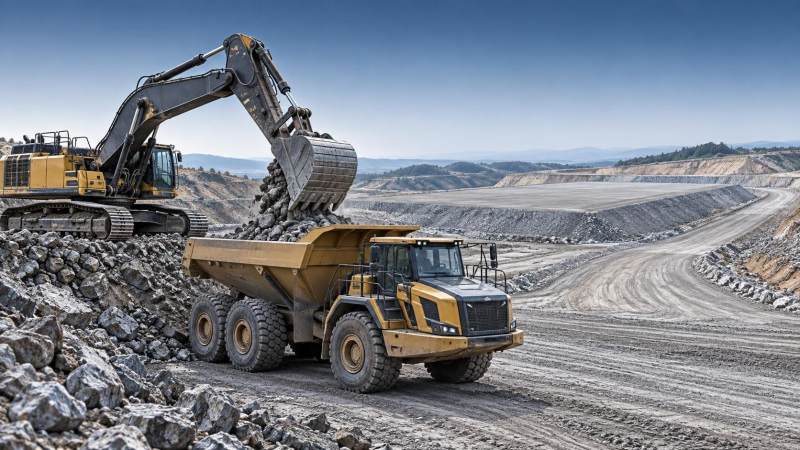
A high-load earthworks package can look straightforward on a schedule: strip overburden, cut and fill, load, haul, compact, and prepare the working platform for the next trade. In reality, the equipment decision made before mobilization often determines whether that sequence remains productive or becomes a chain of delays. A machine that appears oversized on paper may be constrained by haul-road geometry, weak subgrade, bridge limits, fuel logistics, or an operator skill gap. A smaller unit may achieve excellent utilization until it encounters fragmented rock, sustained gradients, or a production peak that it cannot absorb.
Specifying heavy duty infrastructure equipment for high-load earthworks is therefore not a matter of buying maximum horsepower or the largest bucket. It is a process of matching machine capability to geology, material movement, operating hours, site access, safety exposure, maintenance support, and delivery risk. For project managers, the objective is not simply to put iron on the ground; it is to build a dependable production system that can maintain pace under changing conditions.
Start with the production system, not the individual machine
Earthworks equipment is frequently evaluated unit by unit: excavator payload, truck body volume, dozer blade capacity, compactor operating weight. Those figures matter, but a high-load operation succeeds or fails as a connected cycle. Excavation, loading, hauling, dumping, spreading, grading, and compaction must be balanced. If one stage consistently falls behind, the rest of the fleet either waits or works inefficiently.
Before reviewing equipment models, define the work package in operational terms. Separate bulk excavation from selective excavation; distinguish free-dig material from rip-and-load rock; identify material intended for reuse, material requiring treatment, and unsuitable spoil. A project may need a very different fleet for a deep rock cut than for a broad embankment built from moisture-sensitive fill, even when the total cubic volume appears similar.
A practical equipment brief should establish:
- Required production by shift, week, and critical construction phase;
- Expected material types, particle size, abrasiveness, density, moisture condition, and variability;
- Average and maximum haul distances, gradients, road width, turning areas, and dumping arrangements;
- Working hours, seasonal weather exposure, altitude, ambient temperatures, and visibility constraints;
- Platform bearing capacity and the locations where equipment must operate near edges, slopes, structures, or live traffic;
- Mobilization limits, including transport permits, lifting plans, assembly space, and available service infrastructure.
This brief changes the conversation from “Which machine is bigger?” to “What operating system will deliver the planned quantity with acceptable risk?” That distinction is especially important on projects where a missed handover can affect tunnelling access, concrete works, mine development, rail formation, or a major utility corridor.
Read the ground before sizing the fleet
Ground conditions are not a preliminary technical detail; they are the foundation of every equipment specification. Geotechnical investigations should be reviewed alongside the construction method, not filed away after design approval. The relevant question is not only whether material can be excavated, but how it behaves over a full shift.
Dense rock may demand ripping, drilling and blasting, or purpose-built attachments before a hydraulic excavator can load it efficiently. Sticky clay can reduce bucket fill, increase carryback, contaminate haul roads, and make compaction more difficult. Saturated fine-grained soils may limit the ground pressure that crawler equipment can safely exert. Mixed faces create another problem: a fleet optimized for large, uniform volumes can lose its advantage when operators must constantly switch between precision trimming, sorting, and heavy loading.
For excavators, evaluate breakout force, arm force, boom and arm geometry, bucket configuration, hydraulic response, undercarriage durability, and attachment compatibility. A larger bucket is not automatically more productive if it cannot achieve consistent fill factors or if oversized fragments cause repeated loading interruptions. Bucket selection should reflect the material rather than a theoretical volume target. Reinforced rock buckets, abrasion-resistant wear packages, side protection, and quick-coupler arrangements may all be justified where the material profile is demanding.
Ground-bearing pressure deserves equal attention. Tracked machines spread load more effectively than wheeled units, but track width, shoe design, machine weight distribution, and repeated travel paths still affect stability and rutting. On weak or recently placed fill, the specification may need to include temporary access treatment, matting, low-ground-pressure configurations, or a staged working-platform plan. Do not assume that a machine can work safely simply because it has tracks.
Capacity must be matched across the load-and-haul cycle
The classic mismatch is a powerful excavator waiting for trucks. The less obvious mismatch is an oversized truck fleet causing congestion at the face, unsafe reversing, and queueing at the dump. Both situations inflate cost without improving output.
When selecting excavation and haulage equipment, assess the complete cycle: truck spotting, loading passes, travel time in both directions, grade resistance, rolling resistance, dumping time, maneuvering, and expected delays. Productive matching normally aims for a manageable number of excavator passes per truck while maintaining safe, stable loading. The right answer varies with material density, bucket fill, truck payload policy, road conditions, and operator technique.
Payload is often misunderstood. Haul trucks should be specified around legal, mechanical, and site-specific payload limits—not nominal body volume alone. Loose-density variation can turn a seemingly appropriate body into an overloaded truck in dense material or an underfilled one in light, wet, or bulky material. On public-road interfaces, axle loads and permitting may govern the decision more strongly than mine-style production logic.
For long hauls or severe gradients, evaluate retarding performance, braking system demands, tire heat exposure, drivetrain suitability, and fuel or energy consumption under actual duty cycles. An articulated dump truck may offer mobility and traction on poor ground, while a rigid-frame mining truck can be more suitable for high-volume, well-maintained haul roads. Neither is universally superior. The haul route is the deciding factor.
Specify for sustained duty, not a demonstration cycle
High-load earthworks place different demands on machines than intermittent construction tasks. A fleet may be expected to operate through extended shifts, dust, vibration, temperature swings, and continuous loading. The relevant performance question is therefore: can the machine sustain productive output over its planned duty cycle while still allowing inspection, refuelling, lubrication, and planned maintenance?
Engine power should be considered with cooling capacity, hydraulic efficiency, torque characteristics, fuel quality tolerance, filtration, and derating at altitude or in high ambient temperatures. In a hot, dusty cut, cooling-pack access and cleaning procedures can matter as much as rated power. In remote work, fuel-water separation, robust filtration, and ease of daily checks may prevent more downtime than an incremental increase in engine output.
Ask suppliers and internal plant teams to describe the intended duty profile in plain terms: loading blasted rock, continuous trenching, pushing wet fill, maintaining haul roads, lifting heavy pipe sections, or operating in a confined urban excavation. Then test whether the proposed configuration is designed for that work. Counterweight choices, boom lengths, auxiliary hydraulic circuits, guarding, undercarriage packages, track shoe width, tire compounds, automatic lubrication, and telematics settings should follow the application—not a generic stock specification.
Road machinery also needs application-specific thinking. Motor graders and dozers are essential to haul-road quality, which directly affects truck speed, tire life, fuel burn, operator fatigue, and safety. Compactors must be chosen according to lift thickness, soil type, moisture management, and required density verification. Treating road maintenance and compaction as secondary support activities is a costly error. They are production enablers.
Where lifting enters the earthworks scope, plan the interface early
Earthmoving packages often include more lifting than initially expected: installing precast drainage units, handling large culverts, positioning crusher components, placing site plant, supporting bridge foundations, or assembling heavy equipment. In these situations, crawler cranes may be part of the infrastructure equipment strategy rather than a separate procurement exercise.
The crane specification must account for the actual lift radius, configuration, ground-bearing capacity, travel requirement, wind restrictions, rigging weight, and space for assembly. A lift chart is only meaningful when read with the exact boom configuration and working radius. The most common planning weakness is to select a crane according to the weight of the component while underestimating rigging, radius growth, and platform constraints.
On large sites, the interaction between crane routes, haul roads, excavator zones, and pedestrian exclusion areas should be mapped before mobilization. A high-capacity crane positioned on an inadequate platform can create a critical safety issue and disrupt the entire earthworks sequence. The lifting plan, temporary works design, and traffic management plan must speak to one another.
Total cost of ownership is a project-control tool
Purchase price or rental rate is visible and easy to compare. Total cost of ownership is harder to estimate, but it is closer to the decision that matters. It includes fuel or energy use, consumables, tires and undercarriage wear, planned servicing, unplanned downtime, transport, insurance, operator requirements, parts availability, resale or redeployment value, and the cost of lost production when a critical asset fails.
For long-duration projects, examine service intervals and the practical time needed to complete them. Ask where technicians will be based, what parts are held locally, how diagnostic support works, and whether the site has the tools required for routine repairs. A remote mine development or mountain corridor cannot rely on the same response assumptions as a metropolitan project with dealer support nearby.
Telematics can improve control when it is linked to a real management routine. Utilization, idle time, fuel consumption, overload events, fault codes, maintenance alerts, and location data are useful only if someone reviews them and can act. The value is not in collecting dashboards; it is in identifying a slipping haul-road condition, an emerging overheating issue, or a loading pattern that is driving avoidable fuel use.
Build resilience into the specification
Every high-load project faces variability: an unexpected hard band, a rain event, a delayed permit, a disrupted fuel supply, or a production surge before a milestone. The fleet should not be sized so tightly that one unavailable machine stops the operation. Resilience may mean a standby unit for a bottleneck activity, interchangeable attachments, commonality of filters and wear components, additional haul-road maintenance capacity, or contractual access to supplementary equipment.
This does not mean over-equipping the site. It means identifying the true constraints. If a single primary excavator feeds every truck, its availability deserves special protection. If the route contains a steep segment that governs haulage speed, investment in road preparation may provide more value than adding trucks. If material quality varies sharply, flexible processing or stockpiling arrangements may protect the loading fleet from repeated interruptions.
A decision gate before committing equipment
Before issuing a purchase order, rental agreement, or subcontract plant schedule, project leaders should hold a cross-functional review with construction, geotechnical, HSE, plant, logistics, and commercial representatives. Confirm the production assumptions, validate ground conditions, check transport and assembly constraints, and challenge the availability plan. Include operators in the discussion where possible; they often recognize visibility, access, attachment, and maintainability problems long before they appear in a spreadsheet.
The final specification for heavy duty infrastructure equipment should state more than machine class and capacity. It should define the operating environment, required attachments and protection, payload controls, safety technology, maintenance expectations, data requirements, acceptance criteria, and responsibilities for support. That level of clarity gives suppliers a realistic basis for proposing equipment and gives the project team a defensible basis for comparing options.
For project managers navigating major earth engineering decisions, the strongest equipment choice is rarely the most imposing machine in the fleet. It is the one that fits the material, the route, the work sequence, and the people who must keep the operation moving. In an industry shaped by power and precision, disciplined specification is what turns raw capacity into reliable project progress.
Related News
 Oct 24, 2026Choosing Lifting Equipment for Middle East Petrochemical Plants in Hazardous AreasExplore petrochemical lifting equipment Middle East plants can rely on. Compare hazardous-area certification, capacity, and heat limits to make informed procurement decisions.
 Oct 23, 2026Selecting Lifting Equipment for Nuclear Component Transport: Key Safety CriteriaSelecting lifting machinery for nuclear component transport? Discover essential safety criteria, load control checks, and supplier requirements to guide confident procurement.
 Oct 22, 2026Tunnel Boring Machines in Southeast Asia: EPB vs. Slurry for Soft GroundCompare tunnel boring machines Southeast Asia projects rely on: EPB vs. slurry for soft ground. Discover how groundwater, settlement risks, and spoil handling shape the right choice.
 Oct 21, 2026Choosing Tunneling Equipment for the Middle East: Rock, Soil, and GroundwaterCompare underground tunneling equipment Middle East projects need. Explore rock, soil, groundwater, and TBM options to reduce risk and make confident procurement decisions.

Ms. Elena Rodriguez
Weekly Insights
Stay ahead with our curated technology reports delivered every Monday.