
How to Choose Earthmoving Equipment for Road, Quarry, and Mining Applications
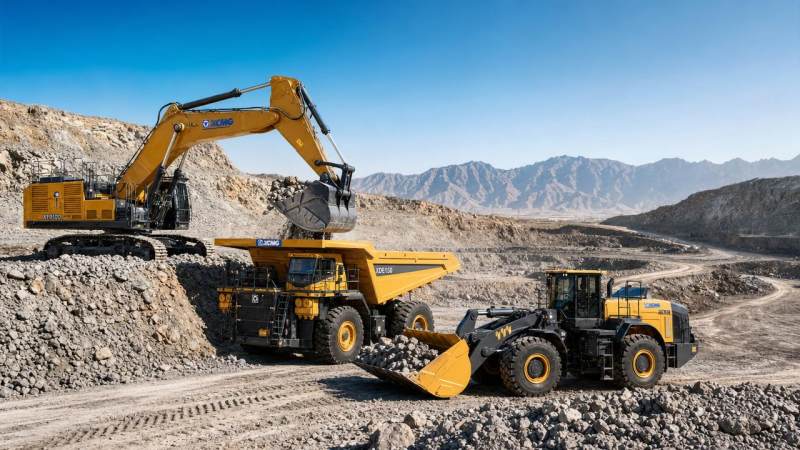
How to Choose Earthmoving Equipment for Road, Quarry, and Mining Applications
Choosing the right earthmoving equipment shapes production speed, fuel burn, safety, and cost from day one.
In road building, quarry work, and mining, the same machine rarely performs equally well across every site condition.
That is why equipment selection should start with application fit, not brand preference or fleet habit.
The best decision usually comes from matching machine capability with material type, haul distance, terrain, and utilization targets.
For teams managing large infrastructure or extraction projects, smart earthmoving equipment choices also reduce rehandling and idle time.
A more practical approach is to evaluate the whole working cycle, from digging and loading to hauling, dumping, and site recovery.
When that cycle is balanced, output becomes steadier and total cost of ownership becomes easier to control.
Start with the Job, Not the Machine
The first step in choosing earthmoving equipment is defining what the site actually demands every hour.
Road projects often require precision grading, material spreading, and efficient movement across long linear work zones.
Quarry operations usually focus on tough rock handling, face loading, stockpile management, and short repetitive haul cycles.
Mining sites demand high-volume production, durability, and performance under harsher gradients, dust, and weather extremes.
These differences change the ideal mix of excavators, loaders, dozers, graders, dump trucks, and support units.
In practical terms, selection becomes easier when each machine is tied to a measurable task.
- Excavation depth and breakout force
- Loading height and bucket fill factor
- Haul route quality and travel speed
- Required daily output and peak demand
- Available maintenance support and fuel logistics
This job-first method helps avoid overspecifying earthmoving equipment that looks powerful but stays underused.
Match Earthmoving Equipment to Application Conditions
Application conditions should drive machine size, undercarriage type, attachment choice, and haulage configuration.
Road Construction
Road work typically benefits from flexible earthmoving equipment that can move fast between sections.
Wheeled loaders and articulated dump trucks often work well where surfaces change frequently.
Motor graders and medium dozers matter when subgrade accuracy affects downstream paving quality.
If the route is narrow or passes through urban zones, compact turning radius becomes especially valuable.
Quarry Operations
In quarries, earthmoving equipment must tolerate abrasive material and repeated loading cycles.
Large wheel loaders are often favored for stockpile movement and quick truck loading.
Hydraulic excavators work better where bench geometry and blasted rock require selective digging.
Tire wear, bucket edge life, and vibration resistance should be reviewed early, not after procurement.
Mining Applications
Mining requires earthmoving equipment built for scale, endurance, and predictable uptime.
Machine matching becomes critical because a poorly sized loader can bottleneck the entire haul fleet.
At this level, payload consistency, cycle timing, and service access often matter more than headline horsepower.
Evaluate the Five Selection Factors That Matter Most
A reliable earthmoving equipment decision usually comes down to five factors.
1. Material Characteristics
Loose soil, blasted rock, clay, and wet overburden behave very differently during digging and hauling.
Dense or sticky material may require higher breakout force and different bucket design.
2. Ground and Terrain
Soft ground can reduce mobility and increase fuel use across the whole earthmoving equipment fleet.
Steep grades demand stronger braking, traction, and haul route management.
3. Production Target
Daily tonnage goals should determine machine count, payload class, and loading tool size.
Buying larger earthmoving equipment without stable utilization often raises cost per ton.
4. Haul Distance and Cycle Time
Short hauls can favor loaders and rigid repeat cycles, especially in quarries.
Longer and rougher hauls may justify articulated trucks or larger mining dump trucks.
5. Service Environment
Remote operations need earthmoving equipment with easier parts access and strong dealer support.
That point is becoming more important as projects move into higher altitude and harsher climate zones.
Compare Common Machine Types Before You Commit
This comparison helps narrow the earthmoving equipment shortlist before supplier discussions begin.
Look Beyond Purchase Price
Many selection mistakes happen when upfront price outweighs life-cycle thinking.
The better question is how each earthmoving equipment option performs across fuel, maintenance, wear parts, and uptime.
A lower-priced unit with poor availability can quickly become the most expensive asset on site.
This is especially true in mining and quarry settings where lost production compounds fast.
- Estimate fuel cost per ton or per cubic meter
- Review expected tire, track, and GET consumption
- Check mean time between failures
- Assess technician access and spare parts lead time
- Model resale value and fleet standardization benefits
A full cost view usually leads to more defensible earthmoving equipment decisions.
Use a Simple Selection Framework
A practical framework keeps equipment selection from turning into a purely subjective debate.
- Define material, terrain, haul profile, and production target.
- List the earthmoving equipment types that fit the application.
- Compare cycle time, payload match, and fuel performance.
- Score supplier support, parts network, and telematics capability.
- Test the preferred setup against peak and off-peak demand.
This method works well because it connects machine selection with operational reality.
It also makes internal approval easier, since every earthmoving equipment choice is backed by measurable criteria.
Final Decision: Choose for Fit, Balance, and Longevity
The right earthmoving equipment is rarely the biggest machine or the cheapest offer.
It is the equipment set that balances output, mobility, reliability, and cost over the full project cycle.
For road construction, flexibility and precision often matter most.
For quarries, cycle speed and wear resistance usually drive the better result.
For mining, uptime, payload match, and support depth tend to decide long-term value.
If you evaluate earthmoving equipment through those lenses, decisions become clearer and project performance becomes more predictable.
A disciplined selection process today can protect margins, improve safety, and create a stronger operating base for the next project.
Related News
 Oct 24, 2026Choosing Lifting Equipment for Middle East Petrochemical Plants in Hazardous AreasExplore petrochemical lifting equipment Middle East plants can rely on. Compare hazardous-area certification, capacity, and heat limits to make informed procurement decisions.
 Oct 23, 2026Selecting Lifting Equipment for Nuclear Component Transport: Key Safety CriteriaSelecting lifting machinery for nuclear component transport? Discover essential safety criteria, load control checks, and supplier requirements to guide confident procurement.
 Oct 22, 2026Tunnel Boring Machines in Southeast Asia: EPB vs. Slurry for Soft GroundCompare tunnel boring machines Southeast Asia projects rely on: EPB vs. slurry for soft ground. Discover how groundwater, settlement risks, and spoil handling shape the right choice.
 Oct 21, 2026Choosing Tunneling Equipment for the Middle East: Rock, Soil, and GroundwaterCompare underground tunneling equipment Middle East projects need. Explore rock, soil, groundwater, and TBM options to reduce risk and make confident procurement decisions.

Ms. Elena Rodriguez
Weekly Insights
Stay ahead with our curated technology reports delivered every Monday.