
How to Choose Earthmoving Equipment for Site Conditions, Payload, and Cycle Time
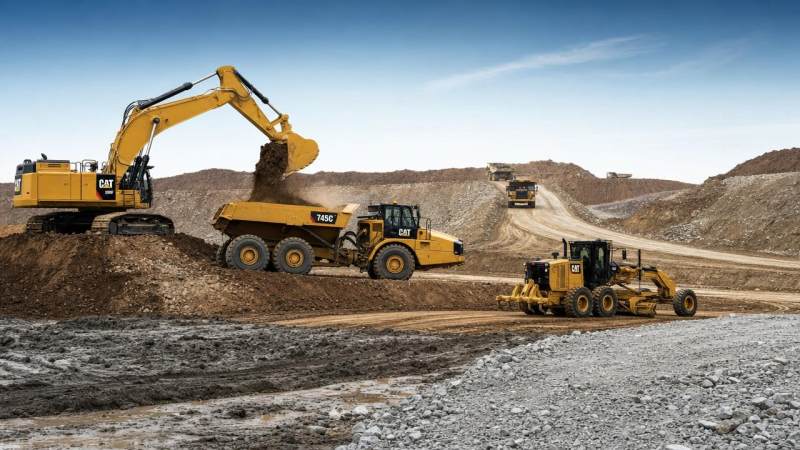
Choosing earthmoving equipment is rarely a matter of picking the biggest machine available. Site conditions, payload expectations, and cycle time targets shape whether a fleet delivers steady output or creates hidden bottlenecks. In excavation, mining support, roadbuilding, and large infrastructure work, the right match affects fuel burn, tire wear, safety margins, and schedule confidence just as much as headline production capacity.
That is why earthmoving equipment selection has become a strategic topic across global heavy industry. As projects move into tougher geology, remote terrain, tighter environmental controls, and higher capital pressure, equipment decisions need to connect physical machine data with real operating conditions. This is the kind of practical intelligence TF-Strategy tracks across open-pit mining, heavy lifting, tunneling support, and large road machinery, where performance depends on disciplined matching rather than simple specification comparison.
What the selection problem really involves
At a basic level, earthmoving equipment includes excavators, wheel loaders, bulldozers, articulated dump trucks, rigid dump trucks, scrapers, graders, and support machines that move, load, spread, or shape material.
The real challenge is not choosing one machine in isolation. It is choosing a working system. A loader may be productive on paper, yet underperform if haul roads are soft, truck bodies are oversized, or swing angles are too wide.
In practice, three variables dominate most decisions. The ground must support the machine. The payload must suit the handling objective. The cycle time must align with production targets and downstream processes.
If one of those variables is ignored, the fleet usually compensates through higher idle time, underloading, rehandling, or rising maintenance stress.
Site conditions often decide the workable machine class
Ground reality should come before catalog capacity. A machine that works efficiently on compact dry benches may struggle in clay, blasted rock, wet fill, steep grades, or confined urban access zones.
Terrain, bearing pressure, and mobility
Soft or waterlogged ground increases sinkage risk and rolling resistance. In those settings, tracked earthmoving equipment often gains an advantage because it spreads weight more effectively and maintains traction.
On firm surfaces with frequent travel, wheeled machines may offer faster repositioning and lower travel-cycle losses. That matters on road projects, stockyard handling, and medium-distance loading operations.
Geology and material behavior
Loose overburden, fractured rock, abrasive ore, sticky clay, and mixed demolition spoil all behave differently in the bucket and on the truck bed. Bucket fill factors, breakout needs, and spillage rates change with every material type.
This is especially relevant in projects adjacent to TBM spoil handling, quarry stripping, and mine development. Material flow is not just about volume. It is about fragmentation, moisture, density, and how fast that material can be loaded cleanly.
Climate and altitude
High altitude reduces engine performance. Extreme heat affects cooling margins and tire life. Cold regions can create hydraulic sluggishness and harder starts. In those environments, earthmoving equipment selection should include derating assumptions, not nominal brochure values.
Payload is more than a truck body number
Payload planning often fails when volume and weight are treated as the same thing. They are not. A heaped bucket of wet clay carries very different mass from a heaped bucket of blasted limestone or dry topsoil.
The most useful question is whether the loading tool, haul unit, and target production rate are balanced under actual material density. Overloading shortens component life. Underloading wastes capital and slows tonnage output.
A good rule is to size earthmoving equipment around sustainable payload, not theoretical maximums. Productive fleets spend more time repeating stable cycles than chasing occasional peak loads.
Cycle time is where productivity gains are usually won
Cycle time combines loading, swinging, travel, dumping, return travel, queueing, and repositioning. Even small delays in one stage compound over a full shift.
That is why two fleets with similar earthmoving equipment ratings can deliver very different daily output. The faster operation is often the one with fewer interruptions, cleaner haul paths, and better loading geometry.
Where time is usually lost
- Trucks waiting because loading passes are inefficient.
- Excavators swinging too far due to poor bench layout.
- Dozers rehandling material that should have been placed once.
- Reduced travel speed on rough, narrow, or steep haul routes.
- Fueling, maintenance, and shift-change gaps not reflected in plans.
In roadbuilding and mining support work, the most effective earthmoving equipment decision may be a smaller machine with faster repeat cycles, not a larger unit with longer loading intervals and higher idle exposure.
Matching equipment to typical operating scenarios
Different projects reward different fleet logic. The right answer changes with haul distance, material hardness, space limits, and output stability requirements.
This scenario-based view matters because global projects increasingly combine multiple heavy systems. A site may involve spoil handling near a tunneling zone, haul support for a crusher, and precision grading for access roads within the same schedule window.
Why the industry is paying closer attention
The pressure on fleet decisions is growing from several directions. Capital costs remain high. Fuel and energy strategies are shifting. Uptime expectations are tighter. Environmental and safety reporting is more detailed than before.
More importantly, digital monitoring now exposes poor matching much earlier. Payload systems, telematics, idle reports, tire data, and machine health dashboards show whether earthmoving equipment is truly balanced or simply busy.
TF-Strategy’s broader view across ultra-large excavators, mining dump trucks, crawler cranes, and road machinery reflects this same pattern. Physical parameters alone are no longer enough. Decision quality depends on connecting machine capability with method, terrain, and project economics.
That is also why electrification and remote operation should not be treated as separate trends. They influence payload planning, shift utilization, charging or fueling patterns, and cycle design.
A practical framework for better equipment decisions
A useful selection process starts with the material map, not the sales sheet. Define what is being moved, how far, over what surface, under which weather and shift conditions.
Then test payload assumptions against actual density and road resistance. After that, model cycle time using realistic queue, loading, and maneuvering conditions rather than ideal travel speeds.
- Start with ground, gradient, and access constraints.
- Check bucket size against truck body and pass count.
- Estimate cycle time with shift losses included.
- Compare fuel, tire, wear-part, and maintenance exposure.
- Review whether the fleet can scale as phases change.
This approach keeps earthmoving equipment decisions tied to total cost of ownership and schedule reliability, not just acquisition price or nominal output.
From selection to ongoing review
Even a well-matched fleet should not remain static. Ground dries out or softens. Blast fragmentation changes. Haul roads deteriorate. Work fronts shift. The right earthmoving equipment mix at mobilization may need adjustment within weeks.
The most reliable next step is to build a short decision sheet around site condition, payload range, and target cycle time for each work zone. That creates a repeatable basis for comparing machine classes, checking vendor proposals, and reviewing field data after startup.
Where uncertainty is high, it helps to benchmark decisions against broader heavy-industry intelligence, especially in projects that overlap mining, tunneling support, or large infrastructure logistics. Better equipment choices usually come from clearer operating assumptions. Once those assumptions are visible, the fleet plan becomes easier to defend, refine, and scale.
Related News
 Oct 23, 2026Selecting Lifting Equipment for Nuclear Component Transport: Key Safety CriteriaSelecting lifting machinery for nuclear component transport? Discover essential safety criteria, load control checks, and supplier requirements to guide confident procurement.
 Oct 22, 2026Tunnel Boring Machines in Southeast Asia: EPB vs. Slurry for Soft GroundCompare tunnel boring machines Southeast Asia projects rely on: EPB vs. slurry for soft ground. Discover how groundwater, settlement risks, and spoil handling shape the right choice.
 Oct 21, 2026Choosing Tunneling Equipment for the Middle East: Rock, Soil, and GroundwaterCompare underground tunneling equipment Middle East projects need. Explore rock, soil, groundwater, and TBM options to reduce risk and make confident procurement decisions.
 Oct 20, 2026Which Heavy Machinery Maintenance Standards Apply to Your Construction Fleet?Discover which heavy machinery maintenance standards apply to your fleet. Clarify legal duties, OEM requirements, and inspection rules to reduce risk and keep equipment ready for work.
Related News

Ms. Elena Rodriguez
Weekly Insights
Stay ahead with our curated technology reports delivered every Monday.