
How to Choose Lifting Machinery for Construction: Capacity, Reach, and Site Limits
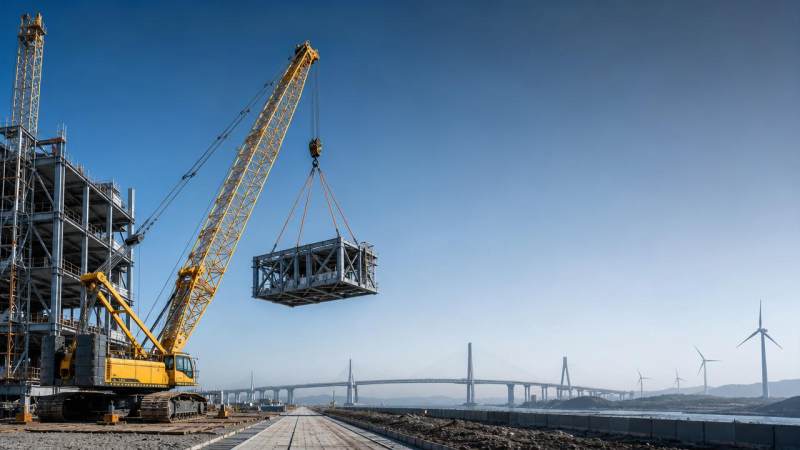
How to Choose Lifting Machinery for Construction: Capacity, Reach, and Site Limits
Selecting the right lifting machinery for construction is a procurement decision that affects safety, schedule certainty, and total project cost.
Beyond headline capacity, equipment must match working radius, boom configuration, ground limits, transport routes, operator availability, and compliance rules.
For wind, petrochemical, bridge, mining, and high-rise projects, the largest machine is not always the most effective choice.
The best lifting machinery for construction aligns real site constraints with predictable performance, controlled risk, and efficient execution.
Why Site Scenario Comes Before Rated Capacity
A crane chart is not a project plan. Rated capacity only applies under defined radius, boom length, counterweight, and ground conditions.
Every lift is shaped by access, assembly area, underground utilities, wind exposure, lifting height, and load geometry.
Choosing lifting machinery for construction should start with the actual lifting scenario, not a single maximum tonnage figure.
TF-Strategy views this decision through “Power and Precision”: physical parameters must be connected to construction methodology.
That connection helps reduce idle equipment, unnecessary mobilization, rework, and safety exposure on complex infrastructure projects.
High-Rise Construction: Reach, Setup Space, and Cycle Time
High-rise sites often have narrow streets, limited laydown areas, and continuous vertical material movement.
Tower cranes, luffing jib cranes, and mobile cranes each solve different access problems in dense urban environments.
For this scenario, lifting machinery for construction must be judged by hook height, jib radius, slew restrictions, and climbing sequence.
A luffing jib crane may outperform a larger flat-top crane when surrounding buildings limit oversailing.
Cycle time also matters. Faster lifting of rebar, formwork, façade panels, and MEP modules can protect the overall schedule.
Wind Power Projects: Heavy Components and Long Radius Lifts
Wind projects demand extreme lift height, careful ground preparation, and strong control under changing weather.
Nacelles, tower sections, hubs, and blades create different lifting challenges, even on the same wind farm.
Crawler cranes are often preferred because they combine heavy capacity with stability and controlled movement across prepared pads.
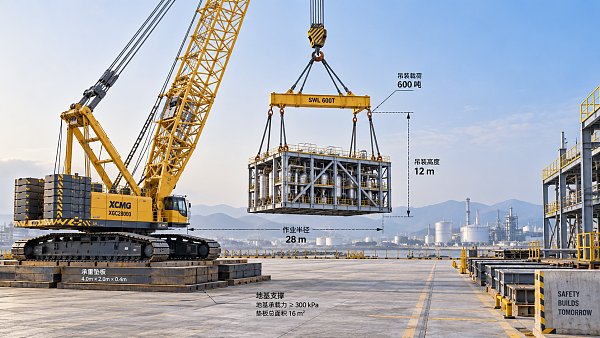
When selecting lifting machinery for construction in wind projects, review boom system, superlift configuration, wind limits, and pad bearing pressure.
Transport logistics can be decisive. Narrow roads, turning radius, bridge limits, and component escort rules affect the real equipment choice.
Petrochemical and Industrial Sites: Precision Near Live Assets
Refineries and petrochemical plants require controlled lifting near pipes, vessels, racks, tanks, and operating units.
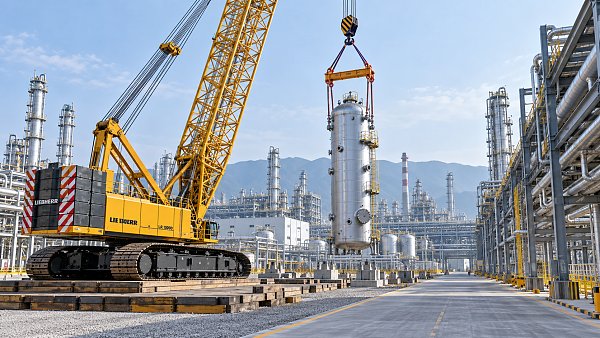
Heavy vessel installation may require crawler cranes, lattice boom cranes, or multi-crane lifting plans.
Here, lifting machinery for construction must support accuracy, redundancy, and strict permit control.
The critical question is not only whether the machine can lift the load.
It is whether the lift can be completed safely within shutdown windows, exclusion zones, and hazardous area constraints.
Load path simulation, outrigger reaction checks, and contingency planning should be completed before mobilization.
Bridge and Infrastructure Works: Mobility Across Changing Workfaces
Bridge construction involves repetitive lifts, changing terrain, traffic control, and variable access along the alignment.
Segments, girders, launching equipment, precast beams, and temporary works all require different lifting logic.
Mobile cranes can provide speed when road access is reliable and lifts are distributed across multiple points.
Crawler cranes may be stronger where ground preparation is possible and heavy picks repeat from stable positions.
For bridge work, lifting machinery for construction should be assessed against reach over obstacles, setup duration, traffic impact, and relocation frequency.
Mining and Heavy Earth Engineering: Durability Under Harsh Conditions
Mining and earth engineering sites create harsh lifting conditions, including dust, gradients, vibration, altitude, and temperature extremes.
Maintenance lifts for excavators, dump trucks, conveyors, crushers, and processing equipment often require robust mobile or crawler cranes.
In this setting, lifting machinery for construction must be evaluated for reliability, service support, hydraulic performance, and transportability.
The strategic value lies in avoiding production interruption, not simply completing one heavy lift.
A smaller machine with local service coverage may deliver lower total cost than a larger machine with weak support.
Comparing Scenario Demands for Better Equipment Matching
This comparison shows why lifting machinery for construction should be selected through scenario fit, not generic machine preference.
Capacity: Read the Load Chart Like a Risk Document
Capacity is the most visible specification, but it is also the most commonly misunderstood.
The actual lifting capacity depends on radius, boom length, counterweight, outrigger extension, ground slope, and attachment weight.
Rigging weight, hook block weight, spreader beams, shackles, and lifting frames must be included in total lifted mass.
A safe selection of lifting machinery for construction should include a margin for uncertainty and field variation.
- Confirm the heaviest load and its center of gravity.
- Check the radius at the worst lifting position.
- Include all rigging and below-hook devices.
- Review derating for wind, slope, and operating mode.
Reach and Boom Configuration: Match Geometry to the Lift Path
Reach determines whether the load can be placed without unsafe repositioning or excessive radius.
Boom type influences assembly time, transport complexity, working envelope, and sensitivity to wind.
Telescopic booms support flexible setup and fast relocation, especially in urban and road-based projects.
Lattice booms often provide stronger performance for heavy lifts at height, especially with crawler cranes.
When choosing lifting machinery for construction, compare the entire lift path instead of one pick point.
Clearance above structures, swing radius, tail swing, and boom laydown area can all limit feasible options.
Ground Bearing and Site Limits: The Hidden Decision Factor
Many lifting plans fail because ground limits are checked too late.
Cranes transfer high loads through tracks, outriggers, mats, or temporary platforms.
Soft soil, backfilled trenches, basements, culverts, and buried utilities can restrict crane placement.
The selection of lifting machinery for construction must include geotechnical data and bearing pressure calculations.
Crane mats, steel plates, engineered platforms, or soil improvement may be required before lifting begins.
Ignoring these limits can turn an available machine into an unusable machine on arrival.
Transport, Assembly, and Mobilization: Cost Beyond Rental Rate
The visible rental or purchase price is only one part of the decision.
Large cranes may require many trailers, road permits, escorts, assembly cranes, and extended setup time.
Transport limits can change the preferred lifting machinery for construction, especially in remote wind or mining areas.
A machine with slightly lower capacity may be better if it reduces mobilization complexity and accelerates first lift.
Total cost should include delivery, assembly, disassembly, permits, fuel, standby time, operators, and site preparation.
Compliance, Digital Control, and Operator Availability
Compliance requirements vary by region, project type, and lifting risk category.
Certification, inspection records, load testing, operator licenses, and lift plans should be verified before commitment.
Modern lifting machinery for construction may include load moment indicators, telematics, wind monitoring, cameras, and anti-collision systems.
These tools support safer decisions, but they do not replace competent planning and disciplined execution.
Operator availability is also strategic. A technically suitable machine can create delay if qualified operators are scarce.
Practical Scenario Adaptation Checklist
- Define the lift scenario, including load, radius, height, and installation tolerance.
- Map site limits, including access, ground bearing, obstacles, and exclusion zones.
- Compare crane charts using worst-case radius and full rigging weight.
- Evaluate transport, permits, assembly area, and support equipment.
- Check operator competence, inspection records, and regional compliance.
- Review total cost, including standby, fuel, mats, and mobilization.
This checklist keeps lifting machinery for construction aligned with real project conditions and measurable risk controls.
Common Misjudgments That Increase Risk and Cost
The first mistake is selecting by maximum rated capacity without checking working radius.
The second is assuming ground conditions are acceptable because similar work was done nearby.
The third is ignoring transport restrictions until the selected machine cannot reach the site efficiently.
Another mistake is overlooking weather sensitivity, especially for tall booms, blades, panels, and modular structures.
It is also risky to treat lifting machinery for construction as an isolated asset rather than part of a construction system.
The machine, ground, rigging, crew, sequence, and emergency plan must work together.
From Equipment Choice to Strategic Project Intelligence
Heavy equipment decisions are becoming more data-driven as infrastructure projects grow larger and more specialized.
TF-Strategy connects machinery parameters, engineering scenarios, and market intelligence for tunnel, mining, lifting, and road machinery sectors.
For lifting machinery for construction, this means looking beyond brochures toward site intelligence, TCO, delivery quality, and safety performance.
A structured evaluation reduces uncertainty before tenders, mobilization, shutdowns, and critical lifts.
Action Guide: Build the Next Lift Decision on Verified Data
Before selecting lifting machinery for construction, create a lift data pack with load drawings, site layout, ground report, and schedule constraints.
Then compare feasible machines by capacity at radius, reach geometry, ground reaction, mobilization effort, and compliance readiness.
The strongest decision is not the biggest crane. It is the safest and most economical fit for the actual scenario.
With disciplined evaluation, lifting machinery for construction becomes a strategic tool for power, precision, and reliable project delivery.
Related News
 Oct 17, 2026Tunnel Boring Machine Supplier List: Compare TBM Types and Service CoverageExplore our tunnel boring machinery supplier list to compare EPB, slurry and hard rock TBMs, assess service coverage and lifecycle costs, and build a smarter procurement shortlist.
 Oct 16, 2026Heavy-Duty Petrochemical Lifting: Selecting Cranes by Load, Radius, and Site AccessExplore heavy-duty petrochemical lifting solutions. Compare cranes by load, radius, site access, and ground support to reduce project risk and optimize lifting costs.
 Oct 15, 2026Crane Selection for Petrochemical Turnarounds: Capacity, Radius, and Site AccessExplore petrochemical lifting solutions cranes can deliver, with expert guidance on capacity, working radius, and site access to help you plan a safer, more efficient turnaround.
 Oct 14, 2026High-Capacity Heavy Lifting Solutions: Matching Load, Radius, and Ground ConditionsDiscover heavy lifting solutions high capacity projects demand—compare load charts, working radius, and ground conditions to select a feasible, cost-effective system.
Ms. Elena Rodriguez
Weekly Insights
Stay ahead with our curated technology reports delivered every Monday.