
How to Choose a Heavy Equipment Supplier Based on Lead Time, Service, and Parts Support
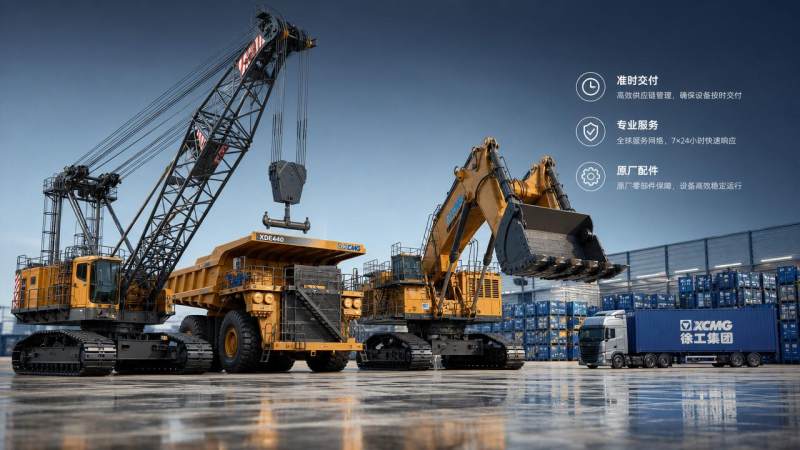
Why does the right heavy equipment supplier matter more than the lowest quote?
Price is visible on day one. Downtime, delayed commissioning, and emergency freight appear later, often when the project can least absorb them.
That is why choosing a heavy equipment supplier should start with operating risk, not with a simple unit-cost comparison.
In sectors linked to tunneling, mining, lifting, and large road construction, delivery certainty shapes everything from crew planning to cash flow.
A supplier that ships on time but fails on service can still become expensive. The same is true for a supplier with attractive pricing but weak parts support.
More informed buyers now look at the full chain: production lead time, field response, spare parts readiness, and technical problem-solving capacity.
This is especially relevant in heavy industry, where machines such as TBMs, crawler cranes, mining dump trucks, and ultra-large excavators operate under tight schedules.
Platforms like TF-Strategy highlight this broader view by connecting machinery parameters, project methods, and strategic infrastructure demand rather than isolating price.
When comparing a heavy equipment supplier, what should be checked before pricing?
A practical evaluation begins with fit. Not every heavy equipment supplier is built for the same project complexity, region, or uptime requirement.
Before reviewing quotations, it helps to verify whether the supplier regularly supports equipment in similar duty cycles and site conditions.
- Equipment category depth, such as TBM systems, open-pit machinery, crawler cranes, or large paving fleets.
- Regional delivery experience, including ports, customs, inland transport, and site access restrictions.
- Installed base size, which often signals parts demand forecasting and technical learning.
- Ability to support digital diagnostics, remote troubleshooting, and maintenance planning.
- Service network strength for field commissioning, operator training, and breakdown response.
In actual sourcing work, the stronger supplier is often not the one with the broadest catalog, but the one with the clearest execution record.
That matters even more as equipment becomes more connected, more electrified, and more dependent on software and hydraulic integration.
How much should lead time influence the supplier decision?
Lead time should carry significant weight because delays ripple through civil works, labor deployment, rental exposure, and contractual penalties.
The key point is that headline lead time is not enough. A heavy equipment supplier should explain what sits inside that timeline.
It helps to separate manufacturing time, component dependency, outbound logistics, customs clearance, site assembly, and commissioning readiness.
For example, a crawler crane may be available ex-works, yet still face long delays from boom configuration transport or local permit issues.
A TBM-related package can look on schedule until cutter tools, hydraulic units, or electrical subassemblies create hidden bottlenecks.
A useful way to test a heavy equipment supplier is to ask for milestone dates rather than one final delivery promise.
This kind of questioning turns lead time into something measurable. It also helps compare one heavy equipment supplier against another on equal terms.
What does strong after-sales service actually look like?
Good service is not just a hotline. It is the supplier’s ability to restore productivity under real site pressure.
A capable heavy equipment supplier usually defines service in layers: commissioning, preventive maintenance, remote diagnosis, field intervention, and escalation for major failures.
What matters most is response quality. Fast acknowledgment means little if the technician arrives without the right tools, software access, or parts visibility.
In high-value fleets, service quality often depends on technical depth in hydraulics, controls, structural loads, wear systems, and operator behavior.
That is why many buyers now ask for service KPIs written into the discussion, even before contract drafting.
- Maximum response time for remote support and site dispatch.
- Availability of local technicians or certified partners.
- Commissioning checklists and operator handover documents.
- Planned maintenance intervals and consumables guidance.
- Escalation process for recurring or safety-related failures.
In practice, the best heavy equipment supplier is often the one that prevents problems early, not the one that reacts most dramatically after a breakdown.
Why is parts support often the deciding factor after equipment arrives?
Because many ownership problems begin after handover. A machine can be technically sound and still become a cost burden if parts are slow or unpredictable.
Parts support should be evaluated by fill rate, stocking logic, interchangeability, and urgency handling rather than by catalog size alone.
For abrasive or high-cycle applications, the questions become even sharper. Wear parts for buckets, cutter heads, undercarriages, or brake systems directly affect uptime.
A reliable heavy equipment supplier should identify which parts are critical, which are consumable, and which require local safety stock.
This is where sector intelligence becomes useful. TF-Strategy’s coverage of material iteration, component trends, and heavy-duty operating conditions reflects why parts planning cannot be generic.
It also helps to distinguish between standard replacement items and proprietary components tied to firmware, sensors, or integrated control systems.
If those proprietary parts have a single-source dependency, the supplier must show mitigation options before selection is finalized.
A quick judgment table for parts readiness
Where do buyers most often misjudge a heavy equipment supplier?
One common mistake is assuming global brand visibility automatically means strong local execution. That is not always the case.
Another is treating service and parts as contract add-ons instead of core selection criteria. By then, leverage is lower and risks are harder to correct.
Buyers also underestimate configuration complexity. A standard machine and a project-specific package can have very different lead times and support needs.
There is also a tendency to compare suppliers using annual price targets while ignoring life-cycle variables such as fuel use, tire wear, tool consumption, or idle-time losses.
The better approach is to compare total operating impact. That includes availability, maintenance burden, training effort, and spare parts exposure.
In demanding heavy equipment markets, a lower purchase price can easily disappear within one quarter of poor field support.
So how should the final supplier shortlist be built?
A workable shortlist usually combines commercial discipline with technical realism. The goal is not to find the perfect supplier, but the most dependable fit.
Start by ranking each heavy equipment supplier against three weighted factors: lead time reliability, service capability, and parts support maturity.
Then stress-test the top candidates using actual project scenarios, such as delayed shipping, a major hydraulic failure, or urgent wear-part replacement.
If a supplier answers those scenarios with detail, ownership, and measurable actions, that is usually more valuable than a polished presentation.
- Map the equipment to site conditions and operating intensity.
- Verify milestone-based lead time, not only promised delivery date.
- Check field service structure, escalation path, and technician coverage.
- Review critical spares strategy and proprietary parts risk.
- Compare total cost of ownership, not purchase price alone.
Heavy industry is moving toward smarter diagnostics, cleaner powertrains, and more complex supply chains. That makes supplier quality more strategic than ever.
If the next sourcing round involves tunneling, mining, lifting, or large road equipment, build the decision around uptime protection first.
A strong heavy equipment supplier supports not just delivery, but project continuity. That is usually where the best long-term value is found.
Related News
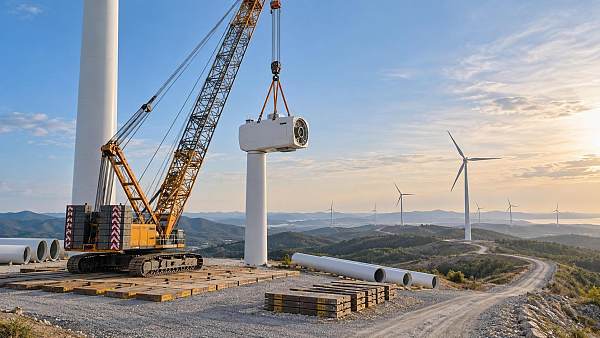
 Sep 13, 2026Crawler Crane Application Analysis for Wind Farms, Bridges, and Confined SitesCrawler crane application analysis for wind farms, bridges, and confined sites—optimize lift paths, ground conditions, access, and schedules for safer project delivery.
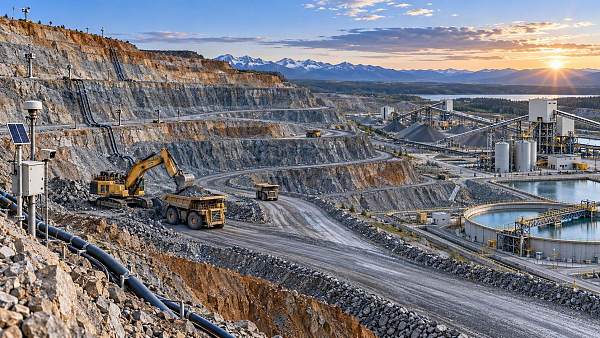
 Sep 12, 2026Open-Pit Mining in North America: Key Project Risks and Planning PrioritiesOpen-pit mining North America: uncover key risks and planning priorities for geology, permitting, water, fleet strategy, and resilient project delivery.
 Sep 11, 2026TBM Systems in Southeast Asia: Key Selection Factors for Variable Ground ConditionsTBM systems Southeast Asia: discover key selection factors for variable ground, pressure control, monsoon resilience, and safer tunnel delivery.
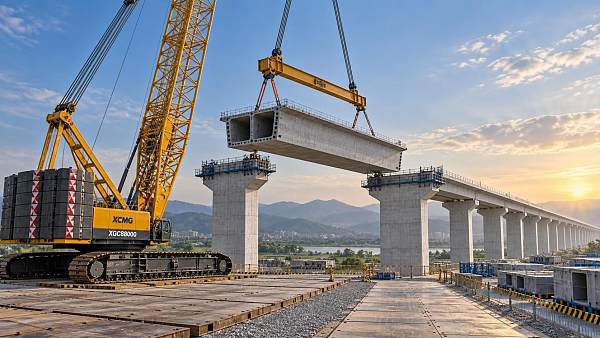
 Sep 10, 2026How to Select Bridge Lifting Machinery for Span, Load, and Site ConstraintsLifting machinery for bridges: learn how to match capacity, span, radius, ground conditions, and access constraints for safer, cost-effective bridge erection.

Ms. Elena Rodriguez
Weekly Insights
Stay ahead with our curated technology reports delivered every Monday.