
Infrastructure Development Strategies for Remote Projects: Budget, Phasing, and Risk Control
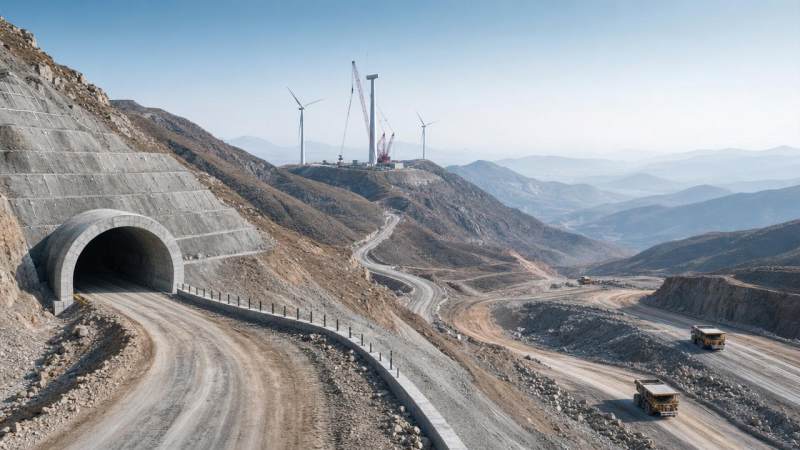
Why remote sites force different infrastructure development strategies
Remote projects rarely fail because of one dramatic event. More often, they drift off course through small budget misses, delayed logistics, and weak sequencing decisions.
That is why strong infrastructure development strategies start with context, not with a standard cost template. A tunnel drive in fractured rock behaves differently from a desert haul road or a wind farm lifting zone.
In practice, the same capital number can produce very different outcomes. Distance to spare parts, crew rotation cycles, weather windows, and equipment utilization shape the real economics.
For heavy industry platforms such as TF-Strategy, this matters because physical machine parameters only become useful when linked to construction methods and local execution risk.
Well-built infrastructure development strategies therefore balance three things at once: disciplined capital allocation, phased delivery logic, and a risk model grounded in field conditions.
Budget logic changes when access is difficult and downtime is expensive
Budget planning for remote projects is rarely about finding the lowest initial figure. The more useful question is where interruption costs become larger than purchase savings.
A TBM launch site, for example, may justify higher early spending on cutter inventory, power stability, and geological verification. A stoppage underground can cascade into ventilation, crew, and segment supply losses.
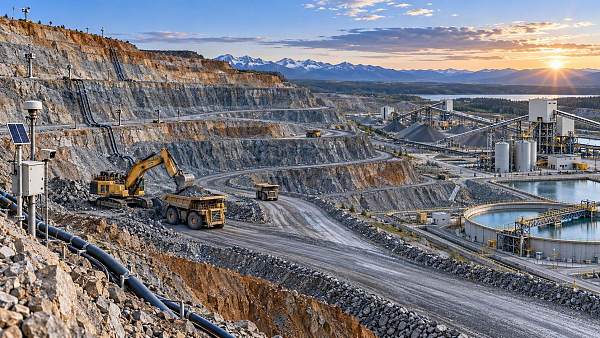
Open-pit mining infrastructure creates a different pressure. Here, ultra-large excavators and mining dump trucks depend on fuel, tire, road condition, and dispatch reliability more than on a single construction milestone.
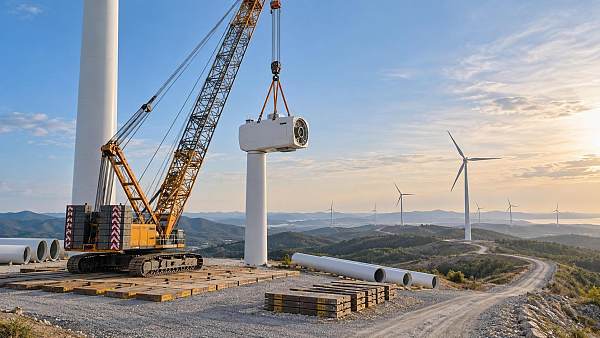
For crawler crane operations in wind, nuclear, or petrochemical projects, the budget focus shifts again. Lift planning, ground bearing preparation, and component arrival sequence matter more than headline crane rates.
This is where practical infrastructure development strategies outperform generic estimating. They isolate cost drivers that remain hidden in standard spreadsheets.
A useful way to compare budget pressure points
The pattern is clear. Infrastructure development strategies should protect the most expensive interruption, not simply trim visible line items.
Phasing works best when early packages remove later uncertainty
Phasing is often misunderstood as a cash management exercise. In remote work, it is mainly a risk sequencing tool.
The first phase should not always be the fastest to mobilize. It should be the phase that reduces downstream uncertainty the most.
For TBM projects, that may mean front-loading geological investigation, adit access, temporary power, and slurry or muck handling routes before committing to full boring pace.
In open-pit developments, the smarter sequence may begin with haul roads, drainage, workshops, and dispatch systems. Large excavators perform poorly when support infrastructure trails behind production goals.
For ultra-large lifts, preassembly yards and transport interfaces often deserve earlier completion than some permanent civil elements. The reason is simple: missed lift windows can idle several contractors at once.
Effective infrastructure development strategies therefore use phasing to test assumptions. Each stage should validate access, productivity, and support reliability before scale increases.
What phased delivery should confirm before expansion
- Whether transport corridors handle actual axle loads and seasonal deterioration.
- Whether temporary power and communication systems support full equipment utilization.
- Whether maintenance response times match critical machine uptime targets.
- Whether local material quality stays stable enough for paving, lining, or foundation work.
- Whether labor rotation and safety routines remain reliable after activity intensifies.
Different remote environments create different risk control priorities
Risk control is not a single checklist. It changes with terrain, machine class, and the consequences of failure.
In underground work, hidden geology is the dominant uncertainty. Infrastructure development strategies must connect boring data, cutter wear expectations, and emergency response capacity.
In open-pit operations, the priority often shifts toward haul safety, slope water management, and component fatigue. Production can continue under stress for a time, which makes delayed failures especially costly.
High-altitude and extreme-temperature logistics introduce another layer. Mining dump trucks and support fleets may show acceptable nominal performance yet lose efficiency through braking stress, thermal cycling, and fuel handling issues.
Large road machinery brings a different exposure. If paving and compaction windows are short, quality defects become embedded quickly and are expensive to correct later.
A strong intelligence-led approach, like the one TF-Strategy promotes, helps compare equipment capability against method-specific risk rather than against brochure-level claims.
Where similar projects are often misread
One common mistake is assuming that two remote projects share the same needs because they use similar machines. They rarely do.
A crawler crane in a coastal wind project faces transport timing, corrosion exposure, and wind-window limits. The same crane class in petrochemical work may be constrained more by ground interface and lift congestion.
Another mistake is focusing on machine specification while ignoring support architecture. An advanced excavator or electric mining truck cannot deliver value if charging, dispatch, or workshop capability is underbuilt.
Budget misjudgment is also common. Teams may cut early contingency to protect headline approval numbers, then pay more later through standby costs, urgent freight, and rework.
Infrastructure development strategies fail when procurement, construction method, and operating conditions are treated as separate decisions. In remote work, they are tightly connected.
Signals that the project logic needs adjustment
- Temporary facilities keep expanding after heavy equipment has already mobilized.
- Spare parts strategy depends on emergency air freight.
- Phase gates are based on calendar dates, not operating readiness.
- Cost reviews track purchase price but not utilization loss.
- Site assumptions ignore seasonal access or material variability.
How to adapt infrastructure development strategies before capital is locked in
The most practical move is to establish a scenario-based decision baseline. This means comparing not only equipment options, but also method, logistics, maintenance, and recovery paths.
For TBM work, confirm rock conditions, cutter consumption assumptions, muck logistics, and backup system resilience together. Reviewing them separately hides interaction risk.
For mining and heavy haul programs, match fleet size with road geometry, workshop reach, tire strategy, and weather disruption tolerance. Production plans should reflect service reality.
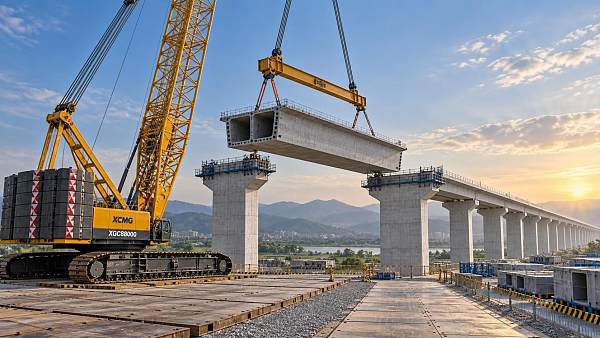
For lifting-intensive construction, verify crane access, foundation readiness, transport envelope, and component storage sequence in one integrated review.
These infrastructure development strategies become stronger when intelligence sources capture tender trends, raw material movement, electrification shifts, and regional execution constraints at the same time.
A practical decision sequence
- Define the interruption that would damage economics most severely.
- Place early capital where that interruption can be prevented or shortened.
- Set phase gates around operating proof, not only construction progress.
- Stress-test the plan against weather, access loss, and spare part delays.
- Refresh assumptions as field data replaces desktop estimates.
A grounded next step for complex remote programs
Good infrastructure development strategies are rarely built from abstract best practice alone. They improve when project teams compare site realities, machine behavior, and phasing logic in the same frame.
The next useful step is to map each remote package against three questions: what failure is most expensive, what must be validated early, and what support system keeps core assets productive.
That approach creates clearer budget priorities, more credible schedules, and risk control that fits the terrain instead of fighting it.
When the review includes equipment intelligence, construction methodology, and long-run operating cost together, infrastructure development strategies become far more resilient and far more practical to execute.
Related News
 Sep 13, 2026Crawler Crane Application Analysis for Wind Farms, Bridges, and Confined SitesCrawler crane application analysis for wind farms, bridges, and confined sites—optimize lift paths, ground conditions, access, and schedules for safer project delivery.
 Sep 12, 2026Open-Pit Mining in North America: Key Project Risks and Planning PrioritiesOpen-pit mining North America: uncover key risks and planning priorities for geology, permitting, water, fleet strategy, and resilient project delivery.
 Sep 11, 2026TBM Systems in Southeast Asia: Key Selection Factors for Variable Ground ConditionsTBM systems Southeast Asia: discover key selection factors for variable ground, pressure control, monsoon resilience, and safer tunnel delivery.
 Sep 10, 2026How to Select Bridge Lifting Machinery for Span, Load, and Site ConstraintsLifting machinery for bridges: learn how to match capacity, span, radius, ground conditions, and access constraints for safer, cost-effective bridge erection.

Ms. Elena Rodriguez
Weekly Insights
Stay ahead with our curated technology reports delivered every Monday.