
How to Choose a Tunnel Boring Machine Manufacturer for Large Projects
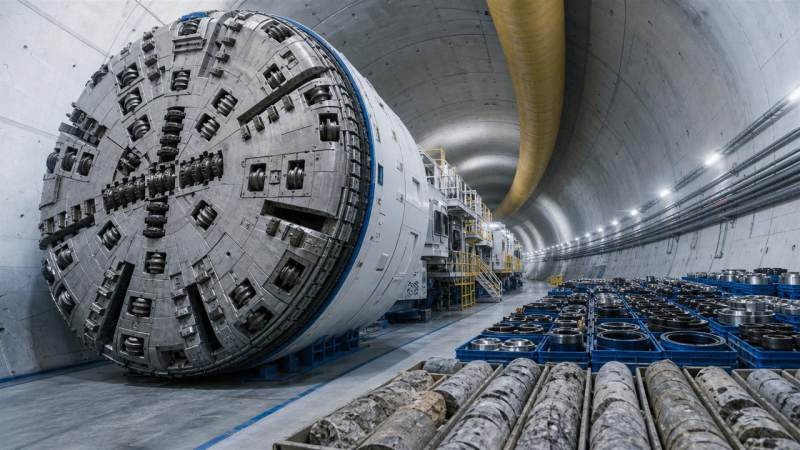
Selecting the right tunnel boring machine manufacturer can determine whether a large infrastructure project stays on schedule, controls total cost, and manages geological risk effectively.
For project managers and engineering leaders, the decision goes far beyond equipment price—it requires evaluating technical capability, cutterhead design, after-sales support, delivery reliability, and proven performance in comparable ground conditions.
This guide outlines the key factors that help project teams choose a manufacturer capable of supporting high-stakes tunneling projects from feasibility planning to final breakthrough.
Why the Tunnel Boring Machine Manufacturer Decision Carries Project-Level Risk
A TBM is not a standalone purchase. It is a project system combining geology interpretation, mechanical design, logistics, assembly, commissioning, monitoring, maintenance, and risk response.
For metro lines, water transfer tunnels, railway tunnels, utility corridors, and mountain passages, the wrong tunnel boring machine manufacturer can create cost exposure before excavation begins.
A price-focused decision may overlook cutter wear, intervention frequency, power demand, segment erection accuracy, muck handling, spare parts lead time, and technical response capacity.
The procurement question is not only “Can the machine bore?”
- Can the manufacturer translate site investigation data into a realistic TBM configuration and risk register?
- Can the team support design changes when mixed ground, water pressure, or abrasive zones are identified late?
- Can spare parts, cutter tools, and field engineers reach the site without disrupting the critical path?
- Can performance assumptions be connected to schedule planning, crew productivity, and total cost of ownership?
TF-Strategy approaches this decision through “Power and Precision” intelligence, linking physical machine parameters with construction methods and infrastructure strategy.
Start with Ground Conditions Before Shortlisting a Tunnel Boring Machine Manufacturer
A reliable shortlist begins with geology, not brochures. The manufacturer’s proposed TBM type must match face stability, permeability, abrasiveness, fracture zones, and alignment constraints.
Project teams should ask each tunnel boring machine manufacturer to explain how design decisions respond to borehole records, laboratory tests, hydrogeology, and geotechnical uncertainty.
Common tunneling scenarios and manufacturer evaluation priorities
The following table helps engineering leaders connect project scenarios with procurement questions before issuing a request for proposal to any tunnel boring machine manufacturer.
The best match is rarely the most powerful machine alone. It is the configuration that converts geological uncertainty into manageable operational decisions.
Procurement Criteria Project Managers Should Rank, Not Just Check
A tunnel boring machine manufacturer should be assessed with weighted criteria. Equal scoring hides risk, especially when schedule, ground behavior, and logistics complexity differ by project.
Before negotiation, project leaders should define which risks are commercially unacceptable, technically manageable, or transferable through contract terms and service commitments.
Recommended evaluation matrix
Use this matrix to compare each tunnel boring machine manufacturer with evidence-based scoring rather than relying on reputation, lowest bid, or sales presentation quality.
This matrix should be adapted to contract model, financing conditions, local import procedures, and the owner’s tolerance for delivery uncertainty.
Technical Parameters That Separate a Proposal from a Deliverable Machine
A credible proposal from a tunnel boring machine manufacturer should include more than diameter and price. It should show how parameters interact during excavation.
Torque, thrust, cutterhead rotation, screw conveyor capacity, slurry circuit design, sealing pressure, and guidance systems must align with the construction method.
Questions to ask during technical clarification
- What parameter margins are built into the machine for unexpected hard bands, boulders, water inflow, or clay clogging?
- How will the cutterhead be inspected, maintained, and modified if the ground differs from the baseline report?
- Which sensors are included for pressure, temperature, vibration, torque, thrust, and settlement-related operating control?
- How does the backup system support daily advance targets without creating bottlenecks in segments or muck removal?
Project teams should require traceable calculations, not only parameter claims. A tunnel boring machine manufacturer should explain assumptions in language planners can use.
How to Compare TBM Types Without Oversimplifying the Decision
Choosing between EPB, slurry shield, hard rock TBM, or hybrid solutions depends on ground conditions, environmental constraints, site layout, and risk allocation.
An experienced tunnel boring machine manufacturer will not force one technology into every tender. It will clarify trade-offs and define mitigation measures.
Practical comparison of common TBM solutions
The table below supports early discussions with a tunnel boring machine manufacturer when project teams need to compare technology suitability and operational implications.
The right choice depends on a balanced view of geological probability, not only expected ground. Risk zones should receive disproportionate attention during selection.
Delivery Reliability, Service Support, and Total Cost of Ownership
For large projects, the purchase price is only one part of cost. Delayed manufacturing, slow customs documents, and unavailable cutters can exceed initial savings.
A tunnel boring machine manufacturer should provide a realistic schedule covering design freeze, factory acceptance, disassembly, shipping, site assembly, commissioning, and trial boring.
Service capabilities that influence total cost
- Spare parts planning should identify long-lead components, cutter tools, seals, electrical modules, and hydraulic parts before launch.
- Training should cover operators, maintenance staff, data analysts, safety teams, and construction managers responsible for daily decisions.
- Remote support should include diagnostics procedures, communication protocols, and escalation rules during abnormal excavation conditions.
- Field engineers should have clear mobilization terms, language capability, safety access documents, and defined response windows.
TF-Strategy emphasizes TCO thinking because project leaders need visibility across equipment, logistics, production rate, maintenance, downtime, and risk response costs.
Compliance, Documentation, and Contractual Clarity
International tunneling projects often involve owner requirements, lender reviews, local safety rules, environmental controls, and import compliance obligations.
A tunnel boring machine manufacturer should support technical documentation for design review, factory inspection, site acceptance, operator safety, and maintenance planning.
Documents to request before contract award
- Preliminary design package including machine layout, main parameters, cutterhead concept, backup system, and interface drawings.
- Factory acceptance procedure covering mechanical checks, electrical systems, hydraulic testing, control logic, and safety functions.
- Operation and maintenance documentation with inspection intervals, lubrication requirements, troubleshooting steps, and spare parts lists.
- Compliance references related to machinery safety, pressure systems, electrical standards, lifting interfaces, and local site regulations.
Project teams should avoid vague compliance promises. Requirements should be written into the technical specification, contract annexes, and acceptance milestones.
Common Mistakes When Choosing a Tunnel Boring Machine Manufacturer
Many procurement problems begin when commercial pressure compresses technical review. Short deadlines often make teams accept assumptions that later become claims.
Mistake 1: Comparing only machine diameter and price
Two TBMs with the same diameter can differ significantly in thrust, torque, wear protection, guidance accuracy, access design, and backup system capacity.
Mistake 2: Treating references as universal proof
A reference project is useful only when geology, drive length, site constraints, logistics, and contractual responsibilities are comparable to the planned project.
Mistake 3: Ignoring consumables and intervention time
Cutter consumption, hyperbaric intervention, screw conveyor wear, slurry separation parts, and seals can materially affect productivity and financial performance.
Mistake 4: Underestimating information flow
A tunnel boring machine manufacturer should be integrated into reporting workflows so operating data supports decisions, not only post-event troubleshooting.
Implementation Roadmap from Shortlist to Breakthrough
Selecting a tunnel boring machine manufacturer is a staged decision. Each phase should reduce uncertainty and create stronger alignment between owner, contractor, and supplier.
Recommended procurement and execution steps
- Define geological baseline, project constraints, settlement limits, alignment geometry, launch shaft dimensions, and target production assumptions.
- Issue a structured RFP requiring design basis, risk assumptions, technical drawings, schedule, service plan, and commercial exclusions.
- Hold clarification meetings where each tunnel boring machine manufacturer explains parameter choices and responds to scenario-based questions.
- Score technical, commercial, service, logistics, and compliance factors using weighted criteria approved by project leadership.
- Lock acceptance milestones for factory testing, delivery documentation, site assembly, commissioning, and initial performance verification.
This roadmap prevents selection from becoming a last-minute purchasing event. It makes manufacturer capability visible before the project depends on it.
FAQ for Project Managers Evaluating TBM Suppliers
How early should we engage a tunnel boring machine manufacturer?
Engagement should begin during feasibility or early design when geology, alignment, shaft layout, and construction method are still adjustable.
Early input helps identify machine constraints, logistics risks, and procurement lead times before tender commitments become difficult to change.
What is the most important technical factor in selection?
There is no single universal factor. For urban soft ground, face pressure control may dominate; for hard rock, cutter strategy may be decisive.
The right tunnel boring machine manufacturer will connect parameters to your risk profile instead of presenting a generic specification sheet.
Should we choose a manufacturer with the lowest initial quote?
Lowest initial cost can be attractive, but it may exclude backup capacity, spare parts, field support, documentation, or required customization.
A better comparison includes total cost of ownership, delivery reliability, risk allocation, and the cost of downtime during critical excavation phases.
How can we verify manufacturer experience?
Ask for comparable project references, not only general project lists. Review ground conditions, tunnel length, TBM type, challenges, and support scope.
If confidentiality limits disclosure, request anonymized technical summaries and structured explanations of lessons learned from similar projects.
Why Choose TF-Strategy for Manufacturer Intelligence and Selection Support
TF-Strategy is built for decision makers who need more than supplier introductions. Our Strategic Intelligence Center tracks TBM technology, heavy machinery trends, tenders, and material shifts.
Our Geological Boring Fellows, Hydraulic Power Analysts, and Heavy Haulage Strategists interpret machine parameters in relation to construction methodology and infrastructure strategy.
For teams evaluating a tunnel boring machine manufacturer, TF-Strategy can support parameter confirmation, supplier comparison, procurement risk mapping, delivery cycle review, and customization discussions.
We can also help project leaders clarify certification expectations, service requirements, spare parts planning, and quotation questions before commercial negotiation begins.
If your project involves urban tunneling, mountain excavation, water conveyance, or complex mixed ground, consult TF-Strategy before locking the shortlist.
Bring your alignment data, preliminary geology, target schedule, budget constraints, and procurement questions. We will help turn manufacturer selection into a controlled engineering decision.
Related News
 Oct 17, 2026Tunnel Boring Machine Supplier List: Compare TBM Types and Service CoverageExplore our tunnel boring machinery supplier list to compare EPB, slurry and hard rock TBMs, assess service coverage and lifecycle costs, and build a smarter procurement shortlist.
 Oct 16, 2026Heavy-Duty Petrochemical Lifting: Selecting Cranes by Load, Radius, and Site AccessExplore heavy-duty petrochemical lifting solutions. Compare cranes by load, radius, site access, and ground support to reduce project risk and optimize lifting costs.
 Oct 15, 2026Crane Selection for Petrochemical Turnarounds: Capacity, Radius, and Site AccessExplore petrochemical lifting solutions cranes can deliver, with expert guidance on capacity, working radius, and site access to help you plan a safer, more efficient turnaround.
 Oct 14, 2026High-Capacity Heavy Lifting Solutions: Matching Load, Radius, and Ground ConditionsDiscover heavy lifting solutions high capacity projects demand—compare load charts, working radius, and ground conditions to select a feasible, cost-effective system.
Ms. Elena Rodriguez
Weekly Insights
Stay ahead with our curated technology reports delivered every Monday.