
How to Choose a Tunnel Boring Machine for Hard Rock, Soft Ground, and Mixed Face Conditions

Choosing the right tunnel boring machine now requires more than matching diameter and thrust. Ground variability, project finance pressure, and tighter delivery targets have changed selection logic across global tunneling programs.
In hard rock, soft ground, and mixed face conditions, the best tunnel boring machine is the one that balances geology, support method, cutter wear, power demand, and long-term reliability.
This matters because TBM selection shapes advance rate, intervention frequency, segment quality, energy use, and risk exposure. A poor fit can lock a project into delays, redesigns, and costly ground treatment.
For an intelligence-led platform such as TF-Strategy, the key insight is simple: machine choice is becoming a strategic engineering decision, not just an equipment purchase.
Why tunnel boring machine selection is becoming more complex
Recent projects show a clear shift. Tunnels are longer, alignments are deeper, and urban corridors leave less tolerance for settlement, water inflow, vibration, and unplanned stoppages.
At the same time, geology is less forgiving. Many routes pass through variable strata where hard rock lenses, fractured zones, clay bands, and groundwater pressure appear within short chainages.
This means a tunnel boring machine must perform beyond its nominal design point. Flexibility, condition monitoring, and maintainability are increasingly as important as peak penetration rate.
The market is also changing. Owners want lower total cost of ownership, faster commissioning, better safety records, and digital visibility into cutter consumption and drive performance.
The strongest trend signals come from ground condition diversity
The central question is no longer “Which TBM is most powerful?” It is “Which tunnel boring machine architecture can absorb geological uncertainty without destroying economics?”
Hard rock favors strength, wear resistance, and stable penetration
Hard rock tunnels usually call for open gripper TBMs or single and double shield machines. Selection depends on intact rock strength, fracturing, abrasivity, and support timing.
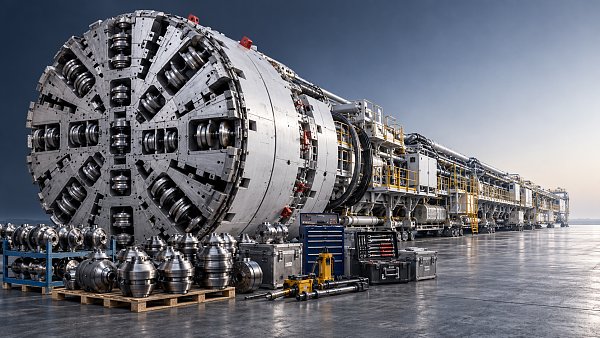
Critical factors include disc cutter diameter, cutterhead opening ratio, installed power, torque reserve, and the machine’s ability to manage blocky or squeezing ground sections.
Soft ground demands pressure control and face stability
Soft ground often requires EPB or slurry technology. Here, a tunnel boring machine must control face pressure, settlement, muck conditioning, and water-bearing soil behavior.
The wrong pressure balance system can trigger over-excavation, slurry losses, or ring build issues. In dense cities, those failures quickly become contractual and public-risk problems.
Mixed face conditions reward adaptability over specialization
Mixed face is often the most dangerous environment for a tunnel boring machine. Part of the face may be rock, while another part is soft soil, voided material, or water-charged ground.
In these conditions, uneven loading, unstable pressure response, and cutterhead imbalance can increase wear, slow advance, and raise intervention risk.
The main forces shaping tunnel boring machine choice
How selection criteria differ across hard rock, soft ground, and mixed face
A high-quality tunnel boring machine evaluation should score geology, support method, logistics, maintenance access, and expected downtime under realistic operating scenarios.
For hard rock projects
- Assess UCS, Cerchar abrasivity, joint spacing, and groundwater.
- Match machine type to support timing and rock mass behavior.
- Check cutterhead design for chip removal efficiency.
- Verify bearing capacity, torque margin, and backup durability.
Hard rock success depends on sustained performance. A tunnel boring machine with strong penetration but poor cutter life may still lose the schedule battle.
For soft ground tunnels
- Define whether EPB or slurry balance better fits the soil profile.
- Review pressure control range and response speed.
- Analyze muck conditioning requirements and additive supply.
- Confirm segment erection compatibility and tail sealing reliability.
In soft ground, operational consistency matters more than maximum thrust. The right tunnel boring machine minimizes instability events and protects surface assets.
For mixed face alignments
- Prioritize convertible or highly adaptable cutterhead concepts.
- Examine face access, intervention safety, and sealing systems.
- Plan for pressure transitions and variable muck behavior.
- Stress-test the machine against worst-case interface zones.
Mixed face projects often justify a higher initial machine budget. That premium may reduce exposure to the most expensive delays later.
What these shifts mean for project performance and business outcomes
The implications reach beyond excavation. Tunnel boring machine selection affects power infrastructure, slurry treatment, spoil handling, spare inventory, and specialist labor demand.
It also changes contract risk. Machines that fit the geology better tend to reduce claims linked to low advance rate, excessive interventions, and unplanned ground stabilization.
From a strategic perspective, better TBM matching improves cash-flow predictability. It supports more realistic production planning and protects quality across long tunnel drives.
The most important issues to watch before choosing a tunnel boring machine
- Ground investigation quality and how uncertainty is expressed.
- Cutterhead suitability for abrasivity, clogging, and pressure balance.
- Installed power versus real operating duty cycle.
- Main bearing life, seal design, and planned intervention frequency.
- Backup train layout, logistics flow, and maintenance accessibility.
- Digital diagnostics, remote support, and parts availability.
- Compatibility with lining, grouting, and spoil management systems.
These factors reveal whether a tunnel boring machine is optimized only on paper or truly configured for the tunnel’s operational reality.
A practical framework for making the next decision
This framework helps translate technical data into a better commercial decision. It also aligns the tunnel boring machine choice with schedule resilience and long-term asset value.
The clearest next move is a risk-first tunnel boring machine review
The best TBM decisions begin with the hardest ground questions, not the most attractive brochure figures. Hard rock, soft ground, and mixed face each reward different machine strengths.
A successful tunnel boring machine strategy should combine geology intelligence, operating data, cutterhead logic, and lifecycle economics in one evaluation path.
Use project-specific scenarios, compare failure modes, and test support assumptions before locking the specification. That approach usually delivers better speed, lower risk, and stronger total project outcomes.
For organizations tracking global heavy-equipment evolution, this is where intelligence creates value: turning TBM selection into a measurable competitive advantage.
Related News
 Oct 17, 2026Tunnel Boring Machine Supplier List: Compare TBM Types and Service CoverageExplore our tunnel boring machinery supplier list to compare EPB, slurry and hard rock TBMs, assess service coverage and lifecycle costs, and build a smarter procurement shortlist.
 Oct 16, 2026Heavy-Duty Petrochemical Lifting: Selecting Cranes by Load, Radius, and Site AccessExplore heavy-duty petrochemical lifting solutions. Compare cranes by load, radius, site access, and ground support to reduce project risk and optimize lifting costs.
 Oct 15, 2026Crane Selection for Petrochemical Turnarounds: Capacity, Radius, and Site AccessExplore petrochemical lifting solutions cranes can deliver, with expert guidance on capacity, working radius, and site access to help you plan a safer, more efficient turnaround.
 Oct 14, 2026High-Capacity Heavy Lifting Solutions: Matching Load, Radius, and Ground ConditionsDiscover heavy lifting solutions high capacity projects demand—compare load charts, working radius, and ground conditions to select a feasible, cost-effective system.
Ms. Elena Rodriguez
Weekly Insights
Stay ahead with our curated technology reports delivered every Monday.