
How to Evaluate High-Capacity Heavy Haulage for Oversize Project Cargo?
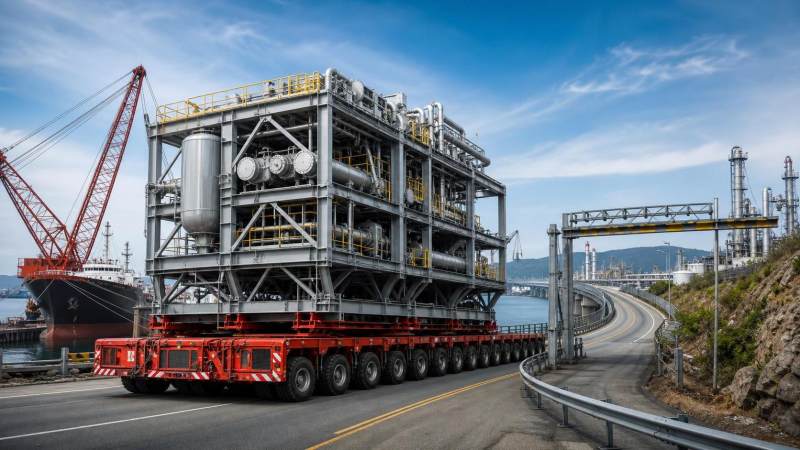
How to Evaluate High-Capacity Heavy Haulage for Oversize Project Cargo?
When oversize project cargo moves across borders, transport is never just a freight line item. It sits inside the project critical path. A delayed transformer, TBM component, crawler crane section, or mining module can idle crews, disrupt erection sequences, and trigger knock-on costs that far exceed the haulage contract itself. That is why evaluating a heavy haulage high capacity solution requires a broader view than “How many tonnes can the trailer carry?”
For engineering and project leaders, the real question is whether a transport setup can move a specific cargo safely, legally, and predictably through a real route under real constraints. Payload is only one variable. Axle load distribution, road geometry, bridge limits, port interfaces, escort requirements, temporary works, weather windows, and unloading conditions often matter just as much.
In heavy industry sectors followed closely by TF-Strategy—from tunnel boring machines and ultra-large excavators to crawler cranes and mining dump trucks—this distinction is familiar. The most successful projects do not separate machinery parameters from construction method and logistics reality. They stitch them together early.
Start with the cargo, not the truck
A surprising number of transport evaluations begin with available equipment fleets. That is backwards. The first step is to define the cargo in enough detail that the transport method can be engineered, not guessed.
Weight is obvious, but total mass alone tells very little. You also need the center of gravity, load footprint, support points, overall dimensions, lifting restrictions, sensitivity to vibration, allowable tilt, packing method, and whether the cargo can be partially dismantled. For example, a dense power unit and a long but lighter steel shell create very different load distribution problems. A TBM cutterhead support frame may tolerate one set of handling conditions; a precision hydraulic module may not.
The most expensive mistake at this stage is treating “oversize” as one category. A 120-tonne item with compact geometry can be easier to move than a much lighter but overlength component that forces route modifications, police escorts, and daytime traffic restrictions. High-capacity heavy haulage is about compatibility between cargo geometry and transport system, not raw tonnage alone.
Route feasibility usually decides the solution
If there is one principle worth remembering, it is this: the route often selects the equipment. A transport plan that looks excellent on paper can fail because of a single bridge classification, roundabout radius, overhead line, weak culvert, or port gate restriction.
A proper evaluation should examine the entire logistics chain, not just the inland leg. That includes origin plant access, port handling limits, vessel discharge arrangement, temporary storage areas, road permits, and final site entry. In remote mining and infrastructure projects, the “last 20 kilometers” can be more difficult than the international leg, especially where roads are unsealed, gradients are steep, or turning space is limited.
This is where experienced teams insist on route surveys and engineering reviews before locking transport configuration. Desk studies are useful, but they are not the same as verifying pavement condition, bridge clearances, intersection geometry, and seasonal restrictions. In some markets, apparent public road capacity says little about what local authorities will actually permit for abnormal loads.
What to examine in the haulage configuration
Once the cargo and route are understood, the heavy haulage high capacity assessment becomes much more practical. The key is to review the transport system as an engineered assembly.
For very large modules, modular hydraulic trailers are often preferred because they allow axle count and arrangement to be adjusted to route conditions. But modularity is not automatically the better answer. In some cases, a lower and simpler trailer setup reduces risk more effectively than a highly configurable system with greater assembly complexity.
Permits, compliance, and local execution are not paperwork details
Cross-border project cargo often fails at the interface between engineering logic and regulatory reality. One country may evaluate abnormal road transport primarily by axle load and geometry; another may focus on escort arrangements, movement hours, or road occupancy risk. Municipal authorities, port authorities, highway agencies, and utilities may all be involved.
This means the haulage provider should be assessed not only for fleet strength, but for permit strategy and local coordination capability. Can the team show how long approvals usually take under similar conditions? Who manages utility lifting, temporary road furniture removal, bridge checks, or civil works if required? Are there fallback routing options if a permit condition changes?
These are not administrative extras. They are core delivery risks. A technically sound transport concept can become commercially weak if the provider underestimates permit lead time or relies on assumptions that have not been validated with the relevant authorities.
Look beyond rate sheets to total project impact
Project teams under budget pressure naturally compare transport quotations by price. That is reasonable, but misleading when the cargo is large enough to influence construction sequence. The cheapest offer may exclude route strengthening, survey updates, standby time, weather delays, police escorts, crane coordination, or transshipment contingencies. Another bidder may price these items because they have already identified them as likely requirements.
A better comparison is total delivered risk. Ask what assumptions sit behind the number. Is the provider pricing a proven route or a provisional one? Have they allowed for temporary works? Does the method reduce site lifting complexity? Can the cargo arrive in the installation sequence the construction team actually needs?
This matters especially in sectors covered by TF-Strategy’s intelligence lens. A crawler crane package, for instance, is not just freight; it is part of erection planning. A mining dump truck body or open-pit excavator module is tied to commissioning logic and maintenance readiness. Transport choices can either support TCO discipline or undermine it before the machine turns a wheel.
Questions that reveal whether a provider really understands the move
You can learn a lot from how a haulage specialist responds to a few direct questions:
- What are the controlling route constraints, and which one is most likely to change the transport setup?
- How is axle loading calculated for this exact cargo configuration?
- What assumptions have been made about cargo center of gravity and support points?
- Which permits require the longest lead time, and what triggers re-submission?
- What happens if the discharge port, access road, or site entry point changes?
- Is there a recovery plan for mechanical failure, road closure, or weather interruption?
- Who signs off the transport engineering pack, and what project information is still missing?
Weak providers tend to answer with generic confidence. Strong providers usually answer with conditions, dependencies, and the exact missing data they need. That is a good sign. Oversize haulage is an engineering service, and careful qualification is usually more valuable than fast reassurance.
Common evaluation mistakes
One common mistake is to freeze the cargo design before logistics input. If a skid frame, lifting lug position, or transport split can be adjusted early, the entire haulage method may become simpler and cheaper. Another is assuming that road transport starts when the cargo leaves port. In practice, interface risks between marine discharge, storage, customs, and inland transport often create the biggest uncertainty.
There is also a tendency to focus on normal operating conditions. Yet many heavy cargo movements take place in imperfect windows: rainy season, night curfews, incomplete site roads, or congested corridors shared with public traffic. A realistic evaluation tests the solution against those edge conditions, not just ideal assumptions.
Why intelligence matters as much as equipment
In heavy machinery logistics, the difference between a manageable move and a problem project often comes down to information quality. TF-Strategy’s view of global earth engineering reflects that reality. Whether the subject is TBM logistics, ultra-large lifting systems, road machinery deployment, or heavy mining transport under altitude and temperature extremes, decision-makers need more than equipment descriptions. They need connections between machine parameters, route constraints, construction method, and commercial exposure.
That kind of stitched intelligence is particularly useful when evaluating unfamiliar corridors, emerging infrastructure markets, or projects where logistics assumptions were made early and never revisited. A high-capacity trailer fleet may be available on paper, but suitability depends on far more than fleet lists.
A practical decision standard
A workable heavy haulage decision is not the one with the biggest payload claim. It is the one that can show, with project-specific logic, that the cargo can move from origin to installation point within known route, permit, handling, and schedule limits.
If you are evaluating options, ask for three things before moving forward: a cargo-specific transport concept, a route-based constraint summary, and a clear list of assumptions that still require confirmation. That usually exposes whether the proposal is engineered or merely estimated.
For oversize project cargo, the best next step is rarely “get a lower rate.” It is “remove the unknowns that could stop the move.” Once those are visible, the right heavy haulage high capacity solution becomes much easier to recognize.
Related News
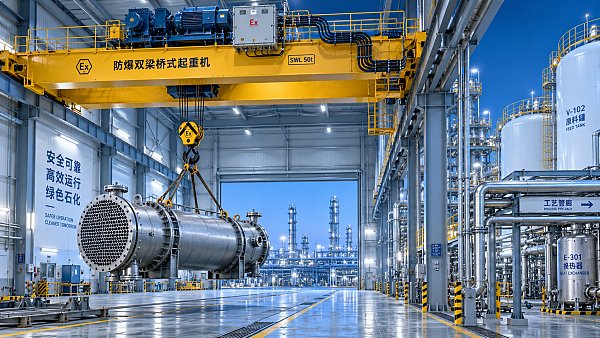
 Oct 06, 2026Selecting Petrochemical Overhead Cranes for Hazardous Areas and Heavy Process LoadsPetrochemical overhead cranes for hazardous areas: learn how to match capacity, duty, controls, corrosion protection, and maintenance access for safer, reliable lifts.
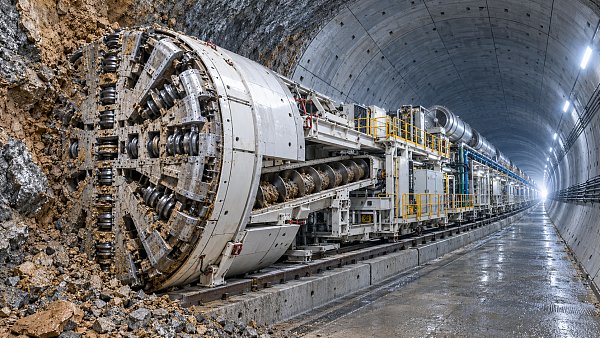
 Oct 05, 2026Tunneling Equipment Specification Planning: Key Criteria for Ground and Project RisksEquipment specification planning tunneling: learn how to match TBM systems to ground risks, geometry, safety, logistics, and lifecycle cost for more reliable project delivery.
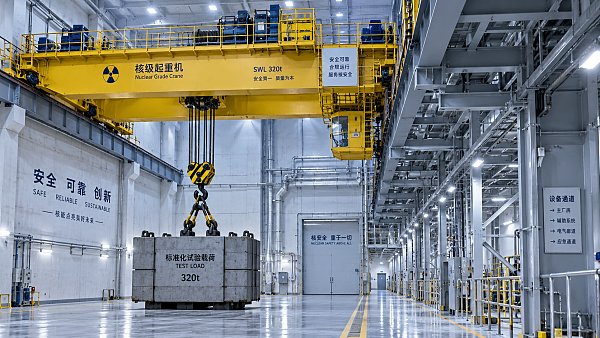
 Oct 04, 2026Nuclear Lifting Equipment Cost: Budgeting for Compliance, Testing, and Lifecycle RiskNuclear lifting equipment cost explained: budget for compliance, proof-load testing, installation, documentation, and lifecycle risk to make confident procurement decisions.
 Oct 03, 2026How to Assess TBM Manufacturers for Hard-Rock Tunneling Projects?Choose the right tunnel boring machine manufacturer for hard-rock projects. Explore key criteria for design, lifecycle cost, factory quality, and service support.
Ms. Elena Rodriguez
Weekly Insights
Stay ahead with our curated technology reports delivered every Monday.