
How to Evaluate a Tunnel Boring Machine Distributor for Project Support and Spare Parts
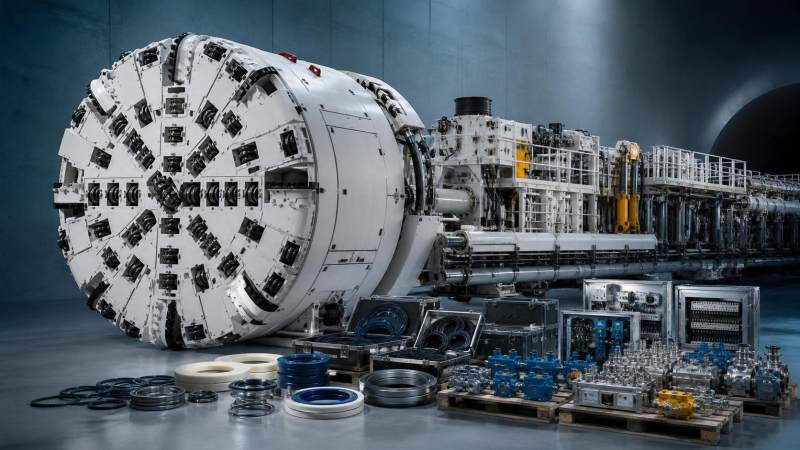
It usually starts with a practical problem, not a strategic one. A tunneling team is preparing for a tight construction window, the machine specification looks acceptable, the commercial offer seems competitive, and then someone asks a simple question: if something fails underground three months from now, who actually helps us? That question often arrives late in the buying process, even though it affects schedule risk more than a small difference in purchase price.
Many equipment evaluations focus heavily on the machine itself and too lightly on the support structure behind it. With a tunnel boring machine distributor, that gap matters. A distributor is not just a sales channel. In real project conditions, it may be the first point of contact for spare parts, site troubleshooting, warranty coordination, field service planning, and communication with the original manufacturer. If that layer is weak, the cost shows up later in downtime, slower decisions, parts substitutions, or emergency logistics that were never in the budget.
When people struggle to compare distributors, the difficulty is usually not a lack of brochures. It is that the real buying question is more operational: which distributor can keep a project moving when conditions underground stop matching the assumptions on paper?
Price is visible. Support weakness usually is not.
A common mistake is treating distributors as interchangeable once they represent a recognized machine brand or have a similar quotation format. On the surface, both may promise spare parts access, technical assistance, and project coordination. The difference often appears only when you test the details.
For example, a distributor may say it can supply cutterhead-related wear components, sealing items, hydraulic parts, or electrical assemblies. That sounds reassuring, but it does not tell you whether those parts are stocked locally, sourced per order, or routed through several approval layers before shipment. The same issue applies to service. “Technical support available” can mean anything from a phone contact during office hours to a field team capable of supporting commissioning, diagnosis, and escalation under urgent conditions.
That is why evaluating a tunnel boring machine distributor should be less about marketing language and more about support mechanics. You are not only buying parts access. You are buying response quality under pressure.
Start with the project conditions, not with the distributor presentation
Before comparing candidates, it helps to define the project support profile you actually need. Without that step, every distributor conversation stays generic.
If your tunnel program involves remote access, difficult geology, restricted surface logistics, or compressed milestone dates, your spare parts and service expectations should be stricter from the beginning. The same applies if the project depends on a customized machine configuration rather than a standard platform. A distributor supporting a straightforward setup may not be equally strong when the machine uses specialized subsystems, nonstandard consumables, or integration changes during assembly and launch.
It helps to break the requirement into working questions:
- Which parts are likely to be consumed regularly versus needed only for critical failures?
- Which failures would stop excavation immediately?
- Which support tasks must happen on site rather than remotely?
- How quickly must the distributor coordinate with the OEM when a technical dispute appears?
- Will your team need support only during delivery, or across assembly, launch, tunneling, breakthrough, and demobilization?
Once these conditions are written down, distributor evaluation becomes much sharper. You are no longer asking, “Can you support this machine?” You are asking, “Show me how you support this machine under these exact operating conditions.”
The manufacturer relationship matters more than many buyers expect
One of the easiest details to overlook is the depth of the distributor’s relationship with the original manufacturer. This is not just about whether the distributor is officially authorized. Authorization is only the starting point. The more useful questions are about access, escalation, and technical transparency.
If a recurring fault appears in a hydraulic, electrical, guidance, or cutterhead-related system, can the distributor obtain direct engineering input from the manufacturer, or does it mainly relay commercial messages? If a replacement part is needed urgently, can it confirm interchangeability, revision compatibility, and lead-time status without long delays? If a design issue emerges, can it bring in factory-level support, or will your site team spend days proving the problem again and again through different channels?
A strong distributor usually has clear pathways into factory engineering, parts systems, and after-sales decision making. You do not need confidential information to verify this. You need process clarity. Ask who handles technical escalation, how warranty and non-warranty cases are separated, how serial-number tracing is managed, and how parts revisions are communicated. Vague answers here are a warning sign.
Look at the spare parts model, not just the parts list
Spare parts evaluation often gets reduced to a catalog review. That is too shallow for tunneling work. The practical issue is whether the distributor can support a usable parts strategy over time.
There are several layers to test.
Stocking logic
Ask which parts are regularly held in stock, which are kept regionally, and which are factory-supplied only after order confirmation. The answer should distinguish fast-moving wear parts from low-frequency critical items. A distributor that cannot explain this distinction may not be managing TBM support in a disciplined way.
Parts identification accuracy
Underground equipment support suffers when the wrong part is ordered under time pressure. Good distributors usually have a reliable method for machine-specific parts identification using serial data, configuration records, and revision history. If they rely too heavily on manual interpretation of descriptions, the risk of mismatch rises.
Criticality awareness
Not every delay has the same consequence. You want a distributor that understands the operational difference between a consumable shortfall and a shutdown event. This sounds obvious, but in practice some suppliers treat every request as a standard procurement transaction. For a tunneling project, some items must move through a priority path.
Substitution discipline
When an original part is unavailable, what happens next? A careful distributor should have a defined approval path for substitutes, especially for components affecting safety, compatibility, sealing, pressure control, alignment, or drive performance. Casual substitution can create a second problem while trying to solve the first.
In this area, outside intelligence can also help. Teams that follow heavy equipment supply trends, component material changes, and project-side maintenance patterns are often better prepared to challenge weak assumptions during distributor review. Industry intelligence platforms focused on TBM and related machinery are useful here not because they replace technical validation, but because they help buyers ask better questions about supply continuity, evolving component issues, and support risk before a contract is signed.
Service coverage should be tested against actual failure scenarios
Many discussions about service support stay too abstract. A better way is to present realistic situations and ask how the distributor would respond.
If ring build performance drops and the site team suspects a subsystem issue, who joins the diagnosis? If an electrical control fault appears during a weekend shift, what first-line support is available? If a critical assembly requires inspection before restart, can the distributor send qualified personnel, or will it only arrange remote consultation? If the problem touches OEM responsibility, who owns communication and decision tracking?
This approach reveals two important things. First, whether the distributor understands field reality. Second, whether it has a structured support chain instead of improvised reactions.
It also helps to ask where service personnel are based, how they are mobilized, and whether they are TBM-specific or shared across unrelated equipment categories. General heavy equipment experience is useful, but TBM support has its own technical and logistical demands. A distributor may be strong in industrial equipment overall and still thin in underground tunneling response.
Documentation quality is a quiet but important signal
Some of the best early warning signs show up in documents rather than meetings. Poorly controlled parts references, unclear service scope wording, inconsistent lead-time statements, or missing exceptions in warranty language often point to future friction.
Review the distributor’s quotation, support scope, and parts handling language carefully. Are technical responsibilities clearly separated from commercial ones? Is there a process for urgent orders? Are Incoterms, packing responsibility, and customs coordination handled clearly enough for your project location? Does the distributor explain which support is included during commissioning and which support becomes chargeable later?
When paperwork is vague, disputes become more likely under time pressure. A tunnel project rarely benefits from “we thought this was included” conversations after the machine is already committed.
Ask for working methods, not promises
A practical evaluation usually improves when buyers stop asking broad questions like “Do you provide good after-sales support?” and instead ask for evidence of working methods.
Useful examples include:
- How do you classify urgent versus routine parts requests?
- What information do you require from the site before opening a technical support case?
- How do you prevent incorrect part dispatch when machine configurations vary?
- Who decides when a problem must be escalated to the manufacturer?
- How are field service visit reports documented and shared?
- How do you handle obsolete or revised part numbers during long project cycles?
These questions are less about catching the distributor out and more about seeing whether support is managed as a system. Mature distributors usually answer with a process. Weaker ones answer with reassurance.
Comparing two distributors becomes easier when you weight risk by project stage
Not every project phase needs the same support intensity, so comparing candidates only on total commercial value can blur important differences.
During pre-delivery and assembly, the main risks may involve documentation accuracy, coordination, and configuration control. At launch and early boring stages, technical responsiveness and fast spare parts identification become more important. During sustained production, wear-part planning, forecasting discipline, and logistics reliability matter more. Near breakthrough or shutdown, specialized service coordination may return to the foreground.
One distributor may be strong in early project handling but less reliable in long-cycle parts support. Another may have solid warehousing discipline but limited field technical depth. That does not automatically disqualify either one, but it changes how you should contract, monitor, and allocate responsibilities.
If you are comparing options, it often helps to score them informally against your highest-risk project stages rather than using a flat supplier template. A distributor that is merely adequate in normal conditions may become expensive under tunnel-specific disruptions.
Where independent market visibility can help
Procurement decisions are easier when the buying team is not relying only on supplier-issued information. In heavy equipment sectors such as TBM, mining, and large lifting machinery, market intelligence can add context around supply trends, technical evolution, and commercial patterns that are not always obvious in a distributor presentation.
For example, if you are already tracking changes in cutterhead materials, component supply pressure, project tender activity, or regional service capacity, you can evaluate distributor claims with more confidence. Intelligence resources focused on earth engineering machinery can be useful as a supplement to due diligence, especially when your team needs to connect machine specifications, maintenance implications, and broader sourcing risk. That does not replace direct verification, but it helps keep the evaluation grounded in industry reality rather than sales framing.
One final filter: imagine the first serious interruption
When the comparison still feels close, a simple mental test helps. Imagine the machine has a serious interruption underground and your team needs action in the next few hours, not just an explanation. Which distributor would most likely reduce confusion? Which one already showed clear ownership, technical structure, and parts discipline during the evaluation? Which one gave answers that matched the way actual projects run?
That is usually the distributor worth taking seriously.
Choosing a tunnel boring machine distributor is not really about finding the lowest visible supply price. It is about reducing the hidden cost of delay, miscommunication, and preventable downtime. Buyers who evaluate support access, spare parts logic, documentation quality, and manufacturer linkage early tend to make calmer decisions later, because they are testing the distributor that will exist after delivery, not just the one that appears during bidding.
Related News
 Oct 08, 2026How to Evaluate a Heavy Machinery Information Platform for Project Equipment SourcingHeavy machinery information platform guide: compare equipment fit, source reliability, lifecycle costs, supplier capability, and compliance to make smarter sourcing decisions.
 Oct 07, 2026How to Evaluate a Hydraulic System Component Supplier for Heavy Equipment UptimeChoose a hydraulic system component supplier with proven quality, technical fit, and reliable delivery to reduce heavy equipment downtime and lifecycle costs.
 Oct 06, 2026Selecting Petrochemical Overhead Cranes for Hazardous Areas and Heavy Process LoadsPetrochemical overhead cranes for hazardous areas: learn how to match capacity, duty, controls, corrosion protection, and maintenance access for safer, reliable lifts.
 Oct 05, 2026Tunneling Equipment Specification Planning: Key Criteria for Ground and Project RisksEquipment specification planning tunneling: learn how to match TBM systems to ground risks, geometry, safety, logistics, and lifecycle cost for more reliable project delivery.
Ms. Elena Rodriguez
Weekly Insights
Stay ahead with our curated technology reports delivered every Monday.