
How to Evaluate a Haulage Equipment Supplier for Reliability, Lead Time, and TCO
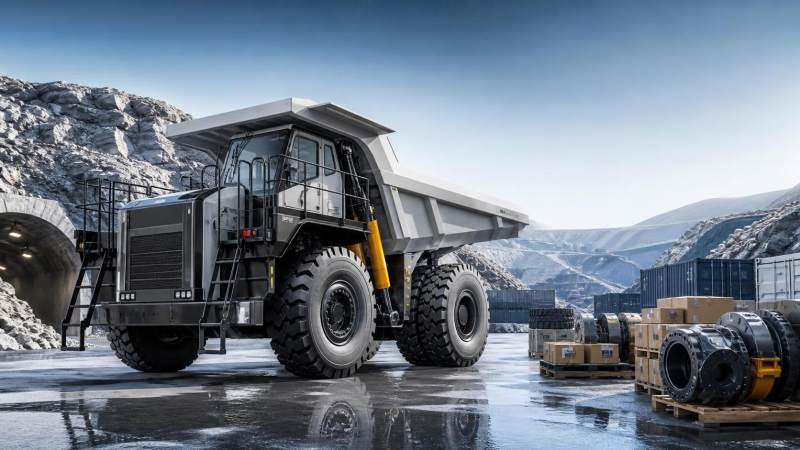
Choosing a haulage equipment supplier is rarely just a comparison of brochures, nominal payload, or purchase price. In mining, tunneling logistics, bulk material handling, and infrastructure works, the real test starts after the PO is issued: does the machine arrive when promised, does it perform under site conditions, and can your team keep it running without excessive parts delays or service gaps? That is where reliability, lead time, and total cost of ownership start to separate one supplier from another.
This is especially true in heavy industry, where haulage equipment is tied to production rhythm. A dump truck standing idle in an open-pit operation, a site carrier delayed at a tunnel portal, or a support vehicle waiting on a hydraulic component can interrupt more than one workfront. Buyers who deal with TBM support systems, large road projects, quarry logistics, or mine expansion programs usually learn the same lesson: the cheapest quote is often the least useful number in the whole evaluation.
Start with the duty cycle, not the catalog
Before evaluating any haulage equipment supplier, define the operating reality in detail. Not “heavy-duty use,” but the actual job: haul distance, gradient, cycle time, material density, altitude, ambient temperature, shift pattern, road condition, and maintenance access. A supplier that looks strong on paper may be a poor fit if its product assumptions were built around different duty cycles.
For example, the supply logic for equipment working in a high-altitude mining environment is not the same as for vehicles supporting urban tunneling or plant logistics. Cooling performance, brake wear behavior, tire strategy, and drivetrain calibration can all shift depending on the terrain and stop-start profile. In sectors followed closely by TF-Strategy, particularly mining dump trucks and large project support fleets, operational context often matters more than nominal specification.
A practical procurement mistake is sending the same RFQ template to every vendor and assuming comparable responses mean comparable solutions. They do not. A reliable supplier should ask difficult questions early. If they are not probing your road design, loading method, average utilization, or maintenance staffing, they may be quoting too generically.
Reliability is a system issue, not a machine label
Buyers often use “reliability” loosely, but in supplier evaluation it should be broken down into things you can verify. Product durability matters, of course, yet supplier reliability also includes manufacturing consistency, component sourcing stability, commissioning support, and the ability to solve failures without long escalation chains.
Ask for evidence of installed base in similar applications, but interpret it carefully. A supplier may have many units in operation, while only a small number actually match your payload class, climate, or route severity. What you want to understand is not simply whether their equipment has sold, but whether it has held up in conditions close to yours.
Good questions include:
- What are the critical wear components in this configuration?
- Which subsystems most often affect availability: hydraulics, braking, electrical, tires, suspension, or controls?
- How are failure reports handled between dealer, regional service team, and factory?
- Are there approved alternative components if the original source faces disruption?
- What parts are recommended as day-one site stock for the first 6 to 12 months?
Notice that none of these questions asks for marketing language. They ask how the supplier behaves when equipment starts accumulating hours. In real projects, that is where confidence is built.
Lead time is more than factory production time
One of the most common purchasing blind spots is treating lead time as a single number. A supplier may quote 120 days, but what does that include? Engineering release, long-lead components, chassis availability, customization, inspection, inland transport, export handling, port congestion, customs, site delivery, and commissioning all sit somewhere in that timeline.
For haulage equipment, long-lead bottlenecks are often hidden in major components rather than final assembly. Engines, transmissions, axles, tires, large hydraulic cylinders, and electronic control modules can all affect delivery. If the supplier depends heavily on external subsystem providers, you need visibility into that chain. Not full supplier disclosure in every case, but enough to understand where schedule risk really sits.
A serious haulage equipment supplier should be willing to separate:
This sounds procedural, but it changes sourcing decisions. Two suppliers with similar quoted delivery may carry very different schedule confidence. In project environments where cranes, excavators, TBM backup systems, and haulage assets must interface on a fixed sequence, schedule reliability has direct cost consequences.
TCO usually gets distorted in three places
Total cost of ownership is easy to mention and easy to misuse. The usual problem is that buyers compare capital price with a rough estimate of fuel burn and stop there. For heavy haulage, that misses the cost categories that often drive lifecycle economics: downtime, tire consumption, component life, maintenance labor intensity, and the logistics cost of parts support.
There are three places where TCO estimates often drift away from reality.
The first is utilization. A low purchase price can look attractive if the machine is assumed to run at ideal availability. But if service access is poor, diagnostics are weak, or parts replenishment is slow, your planned machine hours may never materialize. In a constrained production system, lost output can outweigh any upfront savings.
The second is consumables and wear. Tire strategy, brake life, body wear protection, lubrication intervals, and filter replacement frequency can vary meaningfully by design and application. These items should be modeled against your site profile rather than generic supplier estimates.
The third is end-of-support economics. Some buyers focus on warranty coverage but neglect what happens after the warranty period. Ask about expected support horizon, software update policy where applicable, and whether major components are field-rebuildable or must be replaced as assemblies. This matters even more as digital controls and electrification become more common in heavy machinery. TF-Strategy’s tracking of remote-controlled excavation and electric mining truck adoption reflects the same trend: more intelligence in the machine can improve operations, but only if service capability evolves with it.
Evaluate the service model before you evaluate the promise
A supplier with no local footprint is not automatically a bad choice. A supplier with a local office is not automatically a good one. What matters is the service model behind the sales presence.
Check whether support is dealer-led, factory-led, or shared. Then map response paths. If a machine goes down with a controls fault, who has diagnostic authority? If a structural concern appears, can the local team make decisions, or must everything wait for factory approval? If the project is remote, does the supplier have a field service rotation model, or will your team be expected to stabilize problems until parts and technicians arrive?
This is where reference checks help, but they should be specific. Instead of asking whether support is “good,” ask how long it typically took to receive critical parts, whether technical issues were closed permanently or repeatedly patched, and whether the supplier’s service team understood the customer’s production constraints.
Watch for quoting behavior that signals future friction
The RFQ stage reveals a lot. Suppliers that leave key exclusions vague, avoid naming assumptions, or keep revising scope after commercial discussions often create trouble later. Ambiguity at quotation stage tends to become cost claims, acceptance disputes, or delayed support once the equipment is on site.
A dependable supplier will usually document operating assumptions, warranty boundaries, commissioning requirements, and spare parts recommendations with reasonable clarity. They may still negotiate hard, but they will not hide the operating logic of the equipment.
One useful internal test is this: could your operations, maintenance, and commercial teams all read the supplier’s offer and reach the same understanding of what is being delivered? If not, the problem is not just paperwork. It is a predictability problem.
Build a weighted scorecard, but keep room for judgment
A structured scorecard helps prevent overreaction to price or brand familiarity. Common categories include technical fit, lead time credibility, service capability, parts support, commercial terms, and lifecycle cost. Weighting should reflect project reality. A greenfield mine with a narrow startup window may place more weight on schedule confidence. A long-life infrastructure program may prioritize support depth and rebuild economics.
Still, procurement teams should not let a spreadsheet decide everything. Some risks are hard to quantify cleanly at bid stage. Supplier candor, escalation quality, engineering responsiveness, and willingness to challenge wrong assumptions can matter more than a few points on a formal matrix. In heavy equipment sourcing, judgment is not the enemy of discipline. It is part of discipline.
What experienced buyers usually verify before award
- Whether the quoted machine is already proven in a similar duty cycle, not just a nearby application.
- Which components create the biggest schedule risk and whether those have real supply visibility.
- How many recommended spares should be purchased with the initial equipment package.
- What acceptance criteria apply at factory, at delivery, and after commissioning.
- Who owns training, diagnostics, software access, and escalation during the first operating year.
- How the supplier handles obsolescence for controls, sensors, and electronic modules.
That last point is increasingly relevant. As haulage fleets become more connected and more dependent on telematics, control systems, and remote diagnostics, supplier evaluation moves beyond steel and horsepower. The strategic view used by platforms such as TF-Strategy is useful here: equipment selection is no longer only about machine capability, but also about how machinery, service ecosystems, and project execution fit together over time.
If you are evaluating a haulage equipment supplier for a serious project, do not ask only, “Can they build it?” Ask whether they can deliver it when your schedule needs it, support it when production pressure rises, and keep lifetime cost under control when the easy assumptions stop working. That is usually where the right supplier becomes obvious.
Related News
 Oct 09, 2026Ultra-Large Excavator Bucket Size: Capacity, Width, and Site Fit ExplainedUltra large excavator bucket size explained: compare capacity, width, payload, truck matching, and site conditions to select a reliable, high-productivity bucket.
 Oct 08, 2026How to Evaluate a Heavy Machinery Information Platform for Project Equipment SourcingHeavy machinery information platform guide: compare equipment fit, source reliability, lifecycle costs, supplier capability, and compliance to make smarter sourcing decisions.
 Oct 07, 2026How to Evaluate a Hydraulic System Component Supplier for Heavy Equipment UptimeChoose a hydraulic system component supplier with proven quality, technical fit, and reliable delivery to reduce heavy equipment downtime and lifecycle costs.
 Oct 06, 2026Selecting Petrochemical Overhead Cranes for Hazardous Areas and Heavy Process LoadsPetrochemical overhead cranes for hazardous areas: learn how to match capacity, duty, controls, corrosion protection, and maintenance access for safer, reliable lifts.

Ms. Elena Rodriguez
Weekly Insights
Stay ahead with our curated technology reports delivered every Monday.