
What to Look for in an Industrial Equipment Database for Faster Vendor Screening
For procurement teams working under compressed timelines, the best industrial equipment database is not the one with the most records. It is the one that helps buyers rule vendors in or out quickly, using verified specifications, project-fit evidence, compliance signals, and current market context. In heavy industry, where one sourcing mistake can affect uptime, safety, and project schedules, database quality matters far more than database size.
When buyers search for an industrial equipment database, their core intent is practical. They want a faster way to compare suppliers, reduce screening risk, and avoid wasting time on incomplete or outdated vendor profiles. They are not looking for generic directories. They are looking for a decision tool that supports shortlisting.
That makes the evaluation criteria straightforward. Procurement teams care most about data credibility, relevance to the equipment category, visibility into supplier capability, and signals that help assess execution risk. The strongest databases also support comparison across vendors, regions, project types, and technical requirements without forcing buyers into manual research.
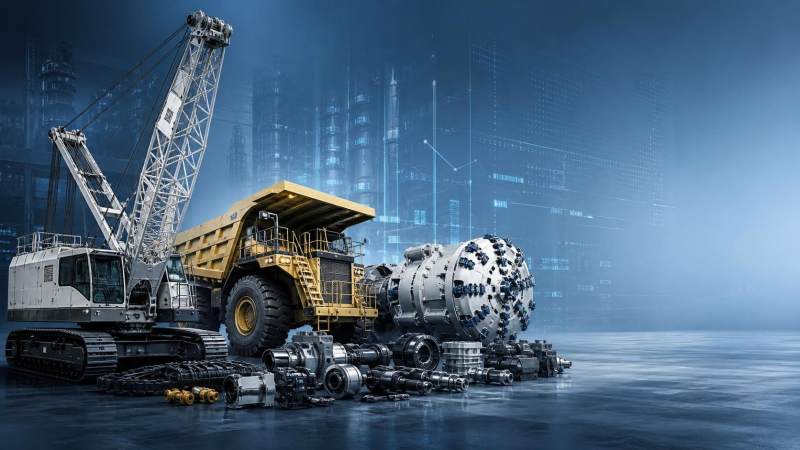
For sectors such as tunnel boring, mining, lifting, and large road construction, this requirement becomes even more important. Equipment is expensive, project conditions are demanding, and vendor suitability depends on more than catalog claims. Buyers need a database that connects machine parameters, delivery history, service support, and market intelligence in one place.
Start with verified technical data, not supplier self-description
The first thing to look for in an industrial equipment database is verified technical information. A procurement team cannot screen vendors efficiently if equipment specifications are vague, inconsistent, or copied directly from promotional material.
At minimum, the database should present structured fields for capacity, dimensions, powertrain, operating weight, lifting performance, excavation range, haulage payload, or other category-specific metrics. Those fields should be standardized enough to support side-by-side comparison.
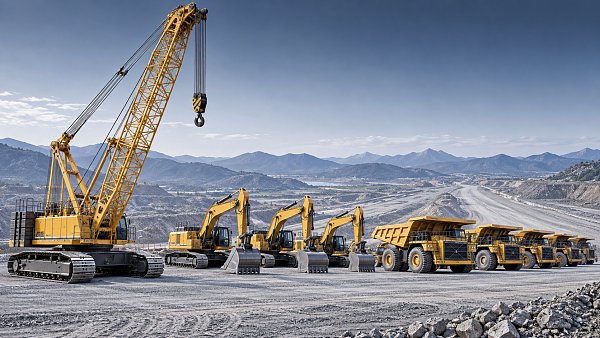
For example, if you are screening crawler crane suppliers, you need more than model names. You need rated lifting capacity, boom configuration ranges, transport requirements, and application suitability for wind, nuclear, or petrochemical projects.
If you are sourcing for open-pit mining or tunneling, the same principle applies. Procurement teams need cutterhead data, geological suitability, truck payload classes, component standards, maintenance intervals, and site-condition compatibility. Without this level of detail, vendor screening slows down immediately.
Verified data matters because procurement decisions often move across multiple stakeholders. Buyers, technical teams, project managers, and executives all need confidence that the shortlisted options are based on factual capability rather than optimistic claims.
Look for project relevance that shows where the equipment actually performs
Technical specifications alone are not enough. A strong industrial equipment database should also show where and how the equipment has been used. Procurement teams need project relevance, because real-world application often reveals more than a product sheet.
This means the database should connect suppliers and equipment models to project types, site conditions, geographies, and operating demands. A vendor may have strong nominal capacity, yet little experience in high-altitude mines, complex tunnel geology, or oversized lifting environments.
For procurement, project relevance shortens screening time by helping teams separate theoretical suitability from proven performance. It reduces the need for repeated back-and-forth with vendors whose experience does not match the sourcing requirement.
Useful project context includes delivered units, application sectors, notable installations, customer segments, and evidence of performance under similar operational conditions. This is especially valuable in heavy industries, where environment, duty cycle, and logistics can determine equipment success.
Databases that surface project intelligence help buyers ask better questions earlier. Instead of starting with broad qualification requests, teams can focus on whether the vendor has delivered in conditions close to the current project scope.
Check whether the database helps you assess vendor risk, not just vendor presence
Many platforms list suppliers. Fewer help procurement teams understand risk. That distinction is critical. Faster vendor screening only works when the database supports informed elimination, not just broad discovery.
A useful industrial equipment database should include signals related to manufacturing capability, aftermarket support, lead time reliability, compliance status, regional service coverage, and operational track record. These indicators help procurement teams judge whether a supplier can execute after winning the order.
In large equipment categories, delivery risk often matters as much as purchase price. A lower-cost supplier can become more expensive if field service is weak, replacement parts are slow, or installation support is unavailable in the target region.
Procurement teams should also look for information tied to certifications, export readiness, localization capability, dealer networks, and financing support where relevant. These details are often what separate a feasible supplier from an impractical one.
The right database helps reduce uncertainty before the formal RFQ stage. That saves time internally and improves supplier engagement quality, because only more realistic candidates move forward.
Prioritize databases built for comparison, not just search
A searchable platform is useful, but search alone does not create procurement speed. The real value comes from comparison. An industrial equipment database should make it easy to evaluate multiple vendors against the same decision criteria.
This means structured filters, normalized data fields, and category-specific comparison views. Buyers should be able to narrow suppliers by technical threshold, region, application, compliance requirement, or support capability without rebuilding spreadsheets from scratch.
For procurement teams handling industrial machinery, comparison features reduce manual effort and improve consistency. They also help standardize shortlisting logic across buyers, business units, and project teams.
Good comparison design is especially important when screening across international markets. Different vendors may describe similar capabilities using different terminology, units, or product classifications. A high-value database resolves those differences into a framework buyers can use quickly.
That is one reason intelligence-led databases outperform simple directories. They help transform scattered information into procurement-ready insight, which is what teams actually need when deadlines are tight.
Make sure the information is current enough to support live sourcing decisions
Data quality is not only about detail. It is also about freshness. Procurement teams should evaluate how often the industrial equipment database is updated and whether the platform reflects current market realities.
Outdated entries create hidden delays. Buyers may spend time qualifying suppliers that have changed product focus, exited a region, altered specifications, or shifted lead times significantly. In heavy equipment markets, those changes can materially affect sourcing decisions.
Freshness matters beyond vendor records. It also includes tender activity, supply chain movements, raw material trends, emission or safety regulation shifts, and changes in fleet technology such as electrification or remote operation.
For example, if a database captures trends in pure electric mining trucks, TBM cutterhead material evolution, or remote-controlled excavation systems, buyers gain context that supports better medium-term supplier decisions. This goes beyond immediate screening and strengthens procurement strategy.
Current information is particularly valuable for categories influenced by infrastructure cycles and policy changes. Procurement is more effective when the database reflects both supplier capabilities and the market environment shaping those capabilities.
Evaluate category depth for the equipment you actually source
Not every industrial equipment database is equally useful across all heavy sectors. Procurement teams should test whether the platform has real depth in the categories they buy, rather than broad but shallow coverage.
For example, sourcing tunnel boring machines requires completely different intelligence from sourcing dump trucks or road machinery. The required technical fields, project markers, service considerations, and decision risks are not interchangeable.
A database with true category depth will reflect those differences. It will organize information around the operational logic of each equipment class rather than forcing all suppliers into the same generic template.
This is where specialized platforms can add major value. A resource focused on TBM systems, ultra-large excavators, crawler cranes, large road machinery, and mining dump trucks can support much sharper vendor screening than a general supplier list.
For procurement professionals, that specialization translates into speed. Less time is spent interpreting incomplete data, and more time is spent judging suitability, commercial viability, and sourcing strategy.
Look beyond discovery to intelligence that supports negotiation and total cost decisions
The strongest industrial equipment database does more than help buyers find names. It also provides intelligence that improves negotiation, commercial evaluation, and total cost reasoning.
Procurement teams should look for insights related to technology shifts, lifecycle cost drivers, service model differences, replacement-part exposure, and fleet productivity impacts. These factors often shape the real business value of a supplier relationship.
In heavy industry, a vendor that appears similar on purchase price can be very different on maintenance burden, fuel efficiency, operator requirements, component durability, or residual value. A database that brings these variables into view supports stronger sourcing decisions.
This is particularly important for strategic procurement teams managing billion-dollar infrastructure programs or multi-phase industrial developments. In those settings, database intelligence can influence framework agreements, vendor development plans, and market-entry timing.
When a platform combines equipment parameters, application history, and commercial insight, it becomes much more than a list. It becomes part of the procurement decision infrastructure.
Questions procurement teams should ask before choosing a database
Before adopting any industrial equipment database, procurement teams should test it against a few practical questions. Can it help eliminate weak-fit suppliers within minutes rather than hours? Can it support technical validation before outreach begins?
Does it show where vendors have performed under similar conditions? Does it provide enough structure to compare suppliers consistently across projects and regions? Are the records current enough for active sourcing use?
Teams should also ask whether the platform supports the industries they actually buy from. A generic database may be sufficient for broad market scanning, but strategic equipment categories usually require deeper technical and operational intelligence.
Finally, buyers should consider whether the database improves collaboration across procurement, engineering, and project delivery. If the tool helps all three groups align around the same facts, screening becomes faster and internal approval becomes easier.
Conclusion
An effective industrial equipment database should help procurement teams do one thing exceptionally well: identify credible, relevant, lower-risk vendors faster. That requires much more than supplier listings. It requires verified specifications, project-fit evidence, current market intelligence, and comparison tools designed for real buying decisions.
For procurement professionals in heavy industry, the best database is the one that reduces uncertainty early. It should make it easier to screen suppliers by capability, execution readiness, and lifecycle value before formal sourcing consumes time and resources.
In sectors shaped by technical complexity and delivery risk, better information is not a convenience. It is a sourcing advantage. When procurement teams choose an industrial equipment database with real depth and intelligence, vendor screening becomes faster, sharper, and more defensible.
Related News
 Oct 08, 2026How to Evaluate a Heavy Machinery Information Platform for Project Equipment SourcingHeavy machinery information platform guide: compare equipment fit, source reliability, lifecycle costs, supplier capability, and compliance to make smarter sourcing decisions.
 Oct 07, 2026How to Evaluate a Hydraulic System Component Supplier for Heavy Equipment UptimeChoose a hydraulic system component supplier with proven quality, technical fit, and reliable delivery to reduce heavy equipment downtime and lifecycle costs.
 Oct 06, 2026Selecting Petrochemical Overhead Cranes for Hazardous Areas and Heavy Process LoadsPetrochemical overhead cranes for hazardous areas: learn how to match capacity, duty, controls, corrosion protection, and maintenance access for safer, reliable lifts.
 Oct 05, 2026Tunneling Equipment Specification Planning: Key Criteria for Ground and Project RisksEquipment specification planning tunneling: learn how to match TBM systems to ground risks, geometry, safety, logistics, and lifecycle cost for more reliable project delivery.
Ms. Elena Rodriguez
Weekly Insights
Stay ahead with our curated technology reports delivered every Monday.