
How to Evaluate a Heavy Equipment Supplier for Fleet Reliability and After-Sales Support
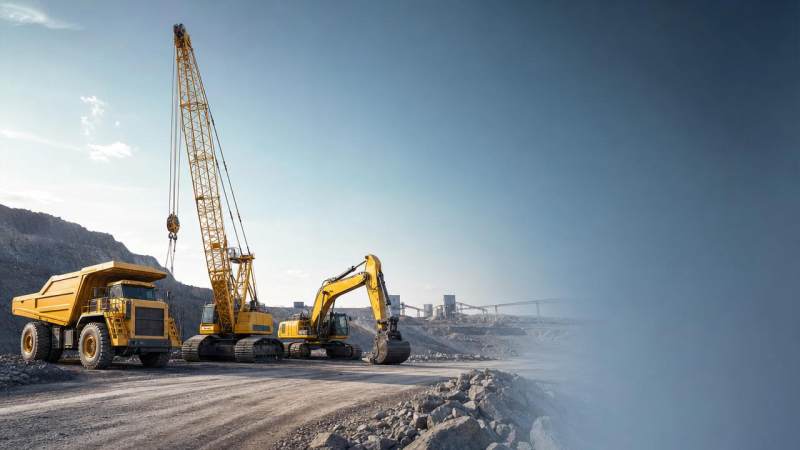
Selecting a heavy equipment supplier is no longer a price exercise. For fleets working in mining, tunneling, lifting, and road construction, uptime, parts access, and service response shape the real cost of ownership.
That is why supplier evaluation has become a strategic task. A machine may look competitive on paper, yet weak after-sales support can turn planned production into delays, claims, and budget overruns.
In heavy industry, where TBMs, crawler cranes, ultra-large excavators, road machinery, and mining dump trucks operate under punishing conditions, reliability depends as much on supplier capability as on equipment specification.
Viewed through the intelligence lens of TF-Strategy, the better question is not only who can deliver the machine, but who can sustain performance across the project lifecycle.
What a reliable heavy equipment supplier actually provides
A capable heavy equipment supplier offers more than assets. It provides operational continuity, technical problem-solving, and a support system that matches the complexity of the application.
This matters even more in sectors where machine stoppage affects a larger chain. A delayed TBM launch, a grounded crawler crane, or an idle mining truck can disrupt subcontractors, schedules, and financing milestones.
So evaluation should cover three layers at once: equipment reliability, service depth, and long-term commercial stability. If one layer is weak, the whole sourcing decision becomes fragile.
Start with fleet reliability, not brochure performance
Many suppliers present peak output figures. Those numbers matter, but procurement decisions should focus on sustained field performance under local operating conditions.
Ask how the machine performs in dust, heat, altitude, wet ground, abrasive rock, or continuous haul cycles. The right heavy equipment supplier should provide evidence, not general claims.
Useful reliability indicators include:
- Mean time between failures in similar duty cycles
- Component life for engines, hydraulics, undercarriage, and structural parts
- Failure patterns during the first 1,000 to 3,000 operating hours
- Availability rate achieved on comparable projects
- Documented retrofit history and design improvements
A strong supplier should also explain how reliability changes by application. What works for a quarry may not hold up in a deep open-pit mine or urban tunnel project.
Look for application-specific references
References should match the intended use case. A supplier experienced in standard earthmoving is not automatically qualified for shield tunneling, heavy lifts, or high-cycle mine haulage.
This is where sector intelligence becomes valuable. TF-Strategy’s focus on machine parameters, construction methods, and project context reflects how real evaluation should be done.
After-sales support is where supplier quality becomes visible
The real test of a heavy equipment supplier begins after commissioning. When faults appear, production pressure rises, and weather or geology shifts, support quality becomes measurable very quickly.
After-sales capability should be examined in practical terms. Response promises are less important than staffing, inventory, escalation paths, and regional service coverage.
If a heavy equipment supplier cannot show these support mechanisms clearly, the risk should be priced into the decision.
Parts availability often decides fleet uptime
Many sourcing teams underestimate the commercial impact of parts logistics. In remote mines, mountain tunneling sites, and offshore-linked lifting projects, one delayed part can idle an entire workfront.
A serious heavy equipment supplier should identify fast-moving parts, long-lead components, rebuild kits, and mission-critical assemblies before contract signature.
Pay attention to the supplier’s approach to:
- Regional warehousing and bonded inventory
- Consignment stock for high-value projects
- Interchangeability of wear parts and consumables
- Rebuild versus replace economics
- Supply resilience during shipping disruption or policy shifts
This is especially relevant today. Global infrastructure demand, green energy construction, and material supply volatility have made spare parts planning a board-level issue, not a workshop detail.
Technical depth matters more in complex equipment categories
Not all heavy equipment categories demand the same supplier capability. Standard machines can be supported by a broad dealer base. Specialized assets require deeper engineering support.
For example, a TBM program may need cutterhead material guidance, geology adaptation, and continuous monitoring. Mining trucks may require payload optimization and thermal management support. Crawler cranes need lift planning integration and safety-critical inspections.
A heavy equipment supplier serving these sectors should demonstrate:
- Application engineering linked to site conditions
- Experience with regulatory and safety compliance
- Capacity for commissioning, calibration, and upgrades
- Data-backed recommendations for maintenance intervals
This aligns with wider industry trends tracked by TF-Strategy, including remote-controlled excavation, electrification, and performance analytics. The supplier must be ready for the next operating model, not only the current one.
Commercial evaluation should go beyond purchase price
A low upfront quotation can hide high lifecycle costs. The better benchmark is total cost of ownership, especially for multi-year infrastructure and resource projects.
When comparing a heavy equipment supplier, examine the full commercial structure:
- Warranty scope and exclusions
- Planned maintenance cost over equipment life
- Expected fuel, energy, and consumable usage
- Rebuild schedules and major component replacement cost
- Residual value and secondary market strength
- Penalty exposure from downtime or underperformance
A supplier with a slightly higher purchase price may deliver a better financial outcome if its support model keeps utilization stable and repair events predictable.
Watch contract language carefully
Service-level commitments should be measurable. Avoid vague phrases such as “best effort support” when uptime is commercially critical.
Clear definitions for response time, technician arrival, parts dispatch, and machine availability reduce disputes later.
How to compare suppliers across different project scenarios
Evaluation criteria should reflect operating context. The best heavy equipment supplier for a metropolitan tunnel is not always the best fit for a remote mine or a wind power installation corridor.
This scenario-based view helps separate a general seller from a genuine heavy equipment supplier with operational alignment.
Practical signals that deserve closer attention
Several warning signs tend to appear before support failures become obvious.
- Reference projects are old, limited, or unrelated to the intended duty cycle
- Parts lead times are discussed vaguely or only after negotiations advance
- Local service depends heavily on subcontractors without factory backing
- Telematics exists, but reporting access is restricted or difficult to use
- Warranty terms exclude common failure modes
By contrast, a credible heavy equipment supplier is usually transparent about weak points, maintenance assumptions, and support limits. That openness often indicates stronger long-term partnership value.
Build a decision framework before the final sourcing round
The most reliable evaluations use a weighted scorecard. Technical fit, lifecycle economics, service reach, and supply resilience should all have defined scoring criteria.
It also helps to request evidence in a consistent format. Ask each heavy equipment supplier for the same reference data, uptime records, parts policy, and escalation structure.
That makes comparisons cleaner and exposes gaps faster. In complex equipment markets, good sourcing decisions come from disciplined verification, not from the strongest sales presentation.
A practical next step is to map project risk first, then test each supplier against those risks. For teams tracking global project trends, technical change, and TCO drivers, intelligence-led evaluation usually produces better outcomes than price-led selection.
Related News
 Oct 19, 2026Sizing Industrial Hydraulic Power Packs: Pressure, Flow, and Duty CycleSize industrial hydraulic power packs with confidence. Learn how pressure, flow, and duty cycle affect performance, energy costs, and heat control—and avoid costly sizing mistakes.
 Oct 18, 2026How Equipment Specifications Affect Purchase, Installation, and Operating CostsExplore equipment specification planning cost factors that shape purchase, installation, and operating budgets. Compare lifecycle costs, avoid oversizing, and buy with confidence.
 Oct 17, 2026Tunnel Boring Machine Supplier List: Compare TBM Types and Service CoverageExplore our tunnel boring machinery supplier list to compare EPB, slurry and hard rock TBMs, assess service coverage and lifecycle costs, and build a smarter procurement shortlist.
 Oct 16, 2026Heavy-Duty Petrochemical Lifting: Selecting Cranes by Load, Radius, and Site AccessExplore heavy-duty petrochemical lifting solutions. Compare cranes by load, radius, site access, and ground support to reduce project risk and optimize lifting costs.
Ms. Elena Rodriguez
Weekly Insights
Stay ahead with our curated technology reports delivered every Monday.