
Underground Excavation Technology Explained: Methods, Ground Conditions, and Limits
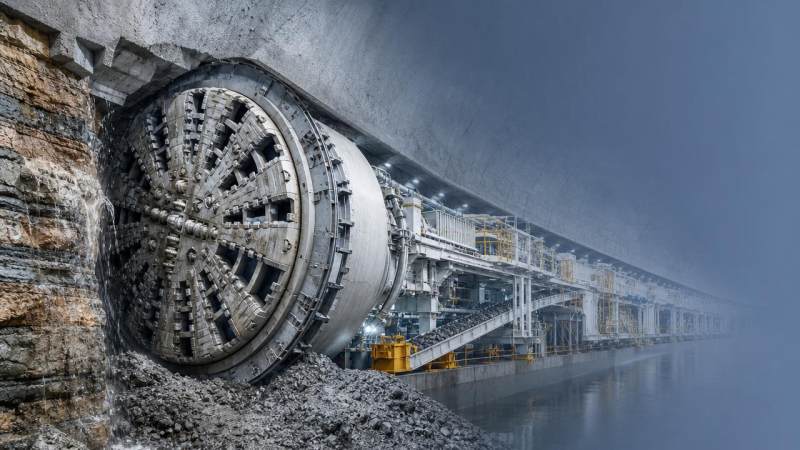
Why does underground excavation technology matter far beyond digging speed?
Underground excavation technology sits at the center of tunnels, mines, utility corridors, and transport links.
Yet performance is rarely decided by machine power alone.
Ground behavior, water pressure, face stability, ventilation, and logistics usually shape outcomes more than headline cutting capacity.
That is why serious project reviews compare methods, geology, and operating limits together.
In practical terms, underground excavation technology is the decision framework linking equipment capability with the actual conditions below ground.
For heavy-industry intelligence platforms such as TF-Strategy, that link matters because tunnel boring machines, lifting systems, haulage, and material supply never operate in isolation.
A tunnel drive may look like a single excavation task.
In reality, it depends on cutter wear, muck removal, segment handling, ground support timing, and risk control.
So when people search for underground excavation technology, they are usually asking a broader question.
Which method fits the ground, the depth, the schedule, and the risk profile without creating hidden cost later?
Which underground excavation methods are most common, and when do they make sense?
The answer depends on geometry, geology, surrounding structures, and project purpose.
Still, most underground excavation technology decisions fall into a few recognizable categories.
- TBM excavation works best for long, repetitive alignments where stable advance and controlled profile matter.
- Drill and blast remains flexible in variable rock, irregular tunnel shapes, and mountain projects.
- Roadheaders suit medium-strength ground where selective cutting and shape adaptability are important.
- Cut-and-cover applies to shallow urban sections where surface access is possible.
- Shaft sinking methods are used when vertical access, ventilation, or hoisting systems are required.
A common mistake is treating these methods as simple equipment choices.
They are really construction systems with different support demands, spoil handling patterns, and safety implications.
For example, TBM selection is not only about diameter or thrust.
It also involves cutterhead design, segment logistics, slurry or EPB balance, and downtime tolerance.
Drill and blast may appear slower on paper.
But in fractured or changing rock, its flexibility can reduce redesign pressure and support surprises.
A quick comparison before method selection
This comparison helps frame underground excavation technology as a ground-matched strategy, not a catalog decision.
How much do ground conditions really change the excavation plan?
More than any brochure or nominal production rate suggests.
Ground conditions often decide whether a method stays efficient, becomes slow, or turns unsafe.
Competent rock usually allows cleaner excavation control.
Weak ground demands immediate support and stricter deformation monitoring.
Mixed-face conditions are especially difficult because one part of the face may cut cleanly while another flows or collapses.
Water is another decisive factor.
Groundwater inflow changes pressure balance, tool wear patterns, sealing demands, and emergency planning.
In urban tunneling, even modest settlement can trigger major consequences above ground.
That is why underground excavation technology must be read together with geotechnical investigation quality.
A stronger machine cannot fully compensate for poor subsurface data.
In actual project analysis, the more useful questions are often these:
- Is the formation uniform or highly variable along the alignment?
- Does the face contain swelling clay, boulders, faults, or abrasive minerals?
- What support must be installed immediately after excavation?
- How sensitive are nearby assets to vibration, drawdown, or settlement?
TF-Strategy often frames these issues through intelligence stitching.
That means connecting geological data, machine parameters, material behavior, and downstream site logistics into one operating picture.
Where are the real limits of underground excavation technology?
Depth is only one limit, and not always the first one reached.
The more common constraints are stress, heat, water pressure, ventilation demand, equipment access, and support timing.
As tunnels go deeper, rock stress can trigger spalling, squeezing, or burst-prone behavior.
In soft formations, the limit may appear sooner through face instability or excessive deformation.
Long drives also introduce a logistics ceiling.
Muck removal, segment supply, spare parts, and workforce access can erode productivity long before excavation power does.
There is also a maintenance limit.
Abrasive ground can shorten cutter life so sharply that planned advance rates become unrealistic.
In that sense, underground excavation technology is bounded by system endurance, not only engineering ambition.
More advanced operations now monitor torque, penetration, slurry density, vibration, and temperature in near real time.
Those signals help identify where the real limit is forming before a shutdown or instability occurs.
Practical warning signs worth tracking
- Advance rate falls while installed power remains unchanged.
- Cutter consumption rises faster than the geotechnical baseline predicted.
- Ground support demand increases section by section.
- Water inflow fluctuates suddenly after crossing faults or fractured zones.
- Spoil characteristics no longer match expected formation data.
What gets overlooked when comparing cost, schedule, and safety?
One common oversight is focusing on excavation speed while ignoring interruption risk.
A method with lower nominal output may deliver a steadier program if it tolerates variable ground better.
Another mistake is separating safety from production planning.
In underground excavation technology, poor ventilation, delayed support, and rushed maintenance quickly become schedule issues too.
Cost comparisons should also include more than capital equipment.
Consumables, standby time, dewatering, ground treatment, monitoring, and muck transport often shift the economics.
That is especially true in large infrastructure work linked to broader heavy-equipment chains.
A tunnel project may depend on cranes for segment yards, road machinery for access, and haulage systems for material flow.
Viewed this way, underground excavation technology belongs to a wider earth-engineering ecosystem.
A grounded decision checklist
How should underground excavation technology be evaluated before a project moves ahead?
A useful evaluation starts with compatibility, not preference.
The best underground excavation technology is the method that remains controllable as conditions change.
That means checking geology, support philosophy, machine configuration, logistics depth, and monitoring capability as one package.
It also helps to compare best-case and stressed-case scenarios.
If a plan only works under perfect assumptions, it is not yet robust enough.
In many cases, the smarter next step is not a larger machine.
It is better ground investigation, clearer intervention thresholds, and tighter integration between excavation, support, and haulage planning.
This is where strategic intelligence becomes practical.
By combining field parameters, equipment trends, and supply-chain signals, TF-Strategy’s perspective helps frame excavation decisions in a more complete way.
If the goal is to judge underground excavation technology well, start by mapping method options against ground uncertainty, operational limits, and total delivery risk.
Then compare the assumptions behind cost, schedule, and safety before locking the plan.
That approach usually leads to better decisions than chasing the highest production figure alone.
Related News
 Oct 21, 2026Choosing Tunneling Equipment for the Middle East: Rock, Soil, and GroundwaterCompare underground tunneling equipment Middle East projects need. Explore rock, soil, groundwater, and TBM options to reduce risk and make confident procurement decisions.
 Oct 20, 2026Which Heavy Machinery Maintenance Standards Apply to Your Construction Fleet?Discover which heavy machinery maintenance standards apply to your fleet. Clarify legal duties, OEM requirements, and inspection rules to reduce risk and keep equipment ready for work.
 Oct 19, 2026Sizing Industrial Hydraulic Power Packs: Pressure, Flow, and Duty CycleSize industrial hydraulic power packs with confidence. Learn how pressure, flow, and duty cycle affect performance, energy costs, and heat control—and avoid costly sizing mistakes.
 Oct 18, 2026How Equipment Specifications Affect Purchase, Installation, and Operating CostsExplore equipment specification planning cost factors that shape purchase, installation, and operating budgets. Compare lifecycle costs, avoid oversizing, and buy with confidence.
Ms. Elena Rodriguez
Weekly Insights
Stay ahead with our curated technology reports delivered every Monday.