
How to Evaluate a Heavy Equipment Supplier for Parts Support, Lead Times, and Service
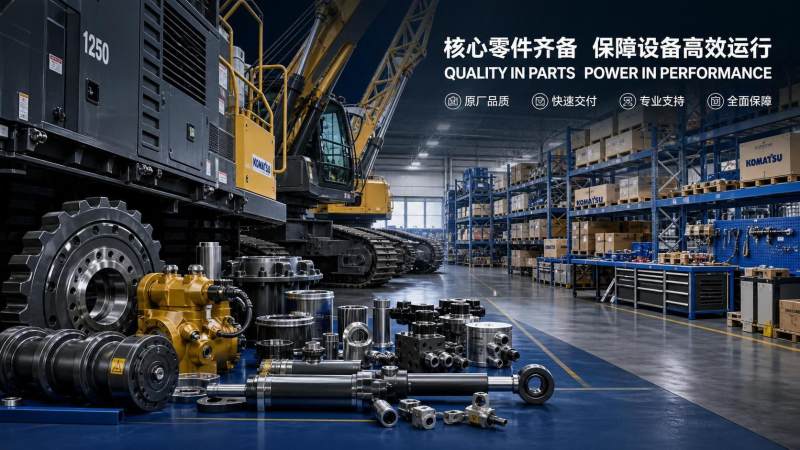
How to Evaluate a Heavy Equipment Supplier for Parts Support, Lead Times, and Service
Choosing the right heavy equipment supplier can directly affect uptime, operating costs, and project delivery.
For procurement decisions, parts availability, lead times, and after-sales service are not side issues.
They shape fleet reliability, maintenance planning, and total project risk.
A strong heavy equipment supplier does more than quote a machine.
It supports the full operating cycle with predictable supply, technical depth, and responsive field service.
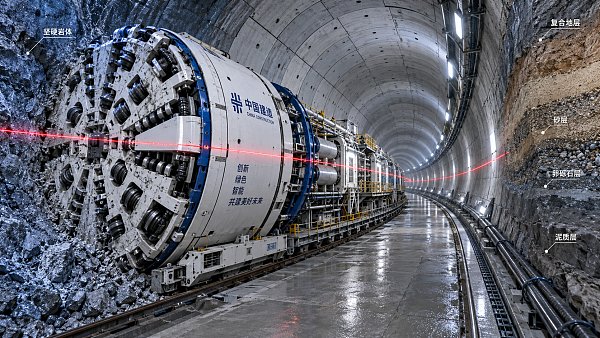
This is especially important in sectors tracked by TF-Strategy, from TBM projects to mining fleets and crawler crane operations.
Why Supplier Evaluation Matters Beyond Purchase Price
The cheapest offer can become the most expensive option after delivery.
Delayed filters, hydraulic components, or wear parts can stop production faster than any financing issue.
That is why every heavy equipment supplier should be assessed as an operational partner.
In practical terms, buyers should ask one question first.
Can this supplier keep equipment running under real project conditions, not just in a sales presentation?
The Hidden Cost of Weak Support
Poor support usually appears in small signals first.
Quotes arrive slowly.
Parts lists are incomplete.
Service contacts change often.
Technical answers feel generic.
Later, those small gaps become downtime, emergency freight, and rushed substitutions.
- Higher inventory carrying costs from overstocking critical spares
- Lower utilization due to repair waiting time
- Increased project penalties from missed schedules
- More maintenance uncertainty across multiple sites
How to Assess Parts Support from a Heavy Equipment Supplier
Parts support is the first hard test of any heavy equipment supplier.
A supplier may have a strong brand, but weak spare parts execution will still hurt operations.
Check Stock Depth, Not Just Catalog Size
Many suppliers present long parts catalogs.
That does not mean local or regional stock is available.
Ask for stocking data on fast-moving, critical, and long-lead items.
For example, wear parts, seals, pumps, undercarriage items, cutting tools, and electronic modules should be reviewed separately.
- Which parts are stocked locally
- Which parts come from a regional hub
- Which parts are factory-order only
- What fill rate is achieved for urgent requests
Review Parts Planning Capability
A capable heavy equipment supplier helps forecast demand before failures happen.
This matters even more for mines, tunneling jobs, and remote infrastructure sites.
Ask whether the supplier supports preventive kits, component life tracking, and recommended stocking plans.
If the answer is vague, future support may also be vague.
How to Evaluate Lead Times Realistically
Lead time is often underestimated during supplier selection.
Quoted lead time and actual lead time are often very different numbers.
A reliable heavy equipment supplier can explain both clearly.
Separate Standard, Rush, and Crisis Scenarios
Do not ask for one average lead time.
Ask for different lead times by scenario and part category.
Ask for Performance History
Recent delivery performance tells a better story than promises.
Request on-time delivery rates, expediting success, and average delay reasons from the last 6 to 12 months.
A serious heavy equipment supplier should already track these metrics.
How to Judge Service Quality Before Problems Happen
Service quality usually becomes visible only after a breakdown.
That is too late for procurement teams.
The better approach is to test service readiness during supplier evaluation.
Review Service Coverage and Escalation Paths
Ask how many field technicians support your region.
Check travel radius, shift coverage, and response time commitments.
Then ask how technical escalation works when the first repair attempt fails.
- Who owns the case from start to finish
- How quickly engineering support joins
- Whether remote diagnostics are available
- How warranty disputes are handled
Test Technical Confidence
A reliable heavy equipment supplier answers operational questions with detail, not sales language.
Use scenario-based questions during evaluation.
For example, ask how the supplier would support a hydraulic failure at a remote site during a peak production window.
The quality of the answer often reveals the quality of future service.
A Practical Supplier Scorecard for Procurement Decisions
A structured scorecard helps compare suppliers on more than price.
It also keeps internal discussions focused on measurable risk.
- Assign weight to parts support, lead times, service capability, and commercial terms.
- Define critical parts lists by machine model and application.
- Score each heavy equipment supplier with evidence, not assumptions.
- Validate supplier claims through references, site visits, or service records.
- Review total cost of ownership, not just acquisition price.
Suggested Decision Criteria
Questions That Help Expose Supplier Risk Early
The right questions often reveal more than polished brochures.
- What are your top ten stocked parts for this machine family?
- What percentage of urgent orders shipped on time last quarter?
- What was your longest delay for a critical component, and why?
- How do you support remote jobsites with limited workshop access?
- Which service tasks can be handled remotely, and which need field dispatch?
- Can you provide references from similar applications or site conditions?
A credible heavy equipment supplier will answer directly and with data.
If answers stay broad, the operational risk is probably broad too.
Final Takeaway
Selecting a heavy equipment supplier is really a decision about uptime protection.
Price matters, but support performance matters longer.
The best supplier is the one that can prove parts readiness, realistic lead times, and dependable service under pressure.
In real procurement work, that evidence creates better decisions and fewer surprises.
For teams evaluating equipment used in tunneling, mining, lifting, and road construction, the same rule applies.
Choose the heavy equipment supplier that strengthens long-term operating confidence, not just the initial transaction.
Related News
 Sep 21, 2026Industrial Supplier Evaluation: A Risk-Based Scorecard for Quality, Capacity, and DeliveryIndustrial supplier evaluation made practical: use a risk-based scorecard to assess quality, capacity, and delivery reliability, reduce project risk, and select suppliers with confidence.
 Sep 20, 2026Comparing Heavy Equipment Warranty Suppliers: Coverage, Claims, and Downtime RiskSupplier comparison for heavy equipment warranty: evaluate coverage, claims speed, service networks, and downtime risk to protect uptime and project costs.
 Sep 19, 2026Mining Truck Technology Trends: What Fleet Managers Should Prioritize for 2026Mining truck technology trends for 2026: prioritize electrification, autonomy, predictive maintenance, and road intelligence to improve fleet uptime, safety, and cost control.
 Sep 17, 2026How TBM Guidance Technology Maintains Alignment Through Curves and Variable GroundTunnel boring machine guidance technology helps teams maintain precise alignment through curves and variable ground, reducing risk, improving lining accuracy, and protecting schedules.
Ms. Elena Rodriguez
Weekly Insights
Stay ahead with our curated technology reports delivered every Monday.