
How to Improve Construction Equipment Efficiency on Earthmoving and Roadwork Sites
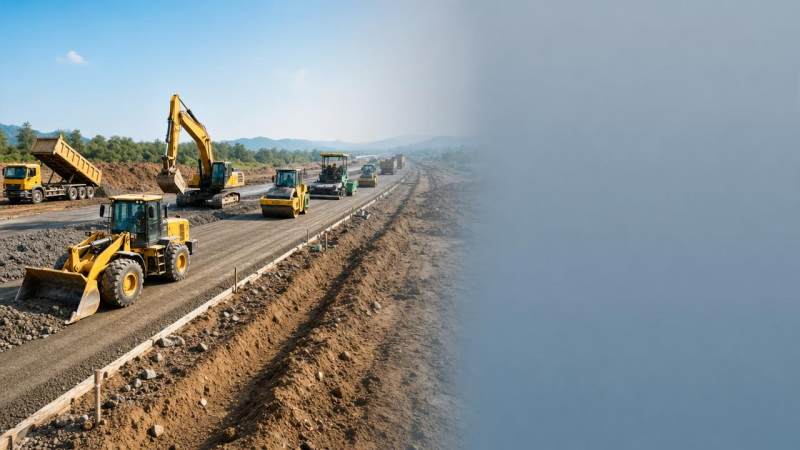
On earthmoving and roadwork sites, improving construction equipment efficiency is no longer just about faster cycles—it is about lowering fuel use, reducing downtime, and keeping projects on schedule under growing cost pressure. For project managers and engineering leaders, the right mix of machine utilization, operator coordination, maintenance planning, and site workflow can unlock measurable gains in productivity and delivery quality.
In practical terms, construction equipment efficiency affects hourly output, rework risk, crew idle time, spare parts consumption, and total cost of ownership. On large grading, hauling, compaction, and paving operations, even a 5% to 10% improvement in machine availability can materially change project margins.
For project leaders managing mixed fleets of excavators, wheel loaders, dozers, motor graders, rollers, asphalt pavers, and dump trucks, efficiency is not controlled by one machine alone. It is shaped by planning discipline, operator behavior, maintenance response time, haul-road quality, and the ability to match machine size to actual site demand.
This is also where intelligence-led decision support matters. Platforms such as TF-Strategy, with deep visibility into heavy equipment applications, road machinery trends, and earth engineering workflows, help contractors compare options more rigorously and act earlier on utilization, safety, and lifecycle cost signals.
Why Construction Equipment Efficiency Has Become a Project-Level Priority
On modern earthmoving and roadwork sites, fuel, labor, and equipment ownership can account for 50% to 70% of direct execution cost. When cycle times drift, trucks queue, or compactors wait for material, daily output drops while fixed overhead keeps running.
Construction equipment efficiency matters because schedule compression is now common. Many road packages work within 8-hour to 12-hour daily windows, traffic access constraints, and weather-sensitive paving sequences. A single breakdown during a paving train can affect hundreds of meters of output in one shift.
Common sources of lost efficiency
- Oversized or undersized machines relative to material volume and haul distance
- Idle time above 20% due to poor dispatching or loading imbalance
- Preventive maintenance intervals being skipped by 50 to 100 operating hours
- Inconsistent operator technique causing higher fuel burn and uneven cycle quality
- Site layout issues such as soft haul roads, tight turning radii, and crossing conflicts
Where project managers feel the impact first
The first warning signs usually appear in daily production reports: fewer truckloads per hour, rising liters per operating hour, more unscheduled maintenance calls, and lower compaction or paving consistency. These indicators often emerge 2 to 3 weeks before a major schedule slip becomes visible at contract level.
For roadwork sites, efficiency losses also affect finish quality. If graders cannot maintain proper level control or rollers do not follow the right pass sequence, surface tolerances can drift beyond acceptable ranges, increasing rework and delaying handover.
A practical benchmark mindset
Most contractors benefit from tracking 4 core indicators every shift: availability, utilization, fuel per unit output, and unscheduled downtime. Availability above 85%, utilization between 70% and 85%, and breakdown response within 2 hours are common operational targets on disciplined sites, though actual thresholds vary by fleet age and project complexity.
How to Measure Efficiency Before Trying to Improve It
Many companies try to improve construction equipment efficiency by buying newer machines first. In reality, measurement should come before procurement. Without a baseline, managers cannot tell whether the bottleneck is mechanical, operational, or organizational.
A useful starting point is to separate efficiency into three layers: machine availability, productive utilization, and output quality. An excavator that runs 10 hours is not efficient if only 6 hours are productive. A paver that lays fast is not efficient if mat consistency triggers corrective work the next day.
Key metrics to capture on earthmoving and roadwork sites
The table below shows a practical measurement framework that project teams can implement within 7 to 14 days using telematics, operator logs, and supervisor checks.
The most useful insight is often not the absolute number but the variation. If one truck route averages 9 minutes per cycle and another swings between 8 and 14 minutes, the second route usually hides avoidable delay in traffic flow, road condition, or loading coordination.
Build a 3-step site review process
- Collect 7 days of baseline data for fleet hours, idle time, fuel use, and breakdown events.
- Review one full production chain, from cut or borrow area to haul, spread, grade, compact, and finish.
- Identify the top 3 bottlenecks that affect output more than 10% across a shift.
This review should be done at section level, not only at whole-project level. A road package with 3 work fronts may show strong overall machine hours while one front is underperforming due to local haul constraints or undertrained operators.
Fleet Matching and Workflow Design: The Fastest Route to Better Output
One of the most effective ways to improve construction equipment efficiency is to match machines to the production chain instead of evaluating each asset separately. A high-capacity excavator adds little value if truck payload, road access, or dump area turnover cannot absorb its loading rate.
This is especially true on roadwork and bulk earthmoving operations where the output of one machine directly depends on the pace of 3 to 5 other units. The right fleet structure reduces idle overlap and smooths hourly production.
Typical matching logic for mixed fleets
The following table outlines a practical decision view for project managers selecting or adjusting fleet combinations on site.
The key conclusion is simple: equipment efficiency rises when managers optimize the chain, not the individual machine. A 15% gain in haul-road smoothness can outperform a costly fleet addition if it removes queuing and shortens cycle time across the whole section.
Site layout changes with high return
- Separate loaded and empty truck lanes where haul volume exceeds 20 units per hour.
- Keep turning points wide enough to avoid repeated reverse maneuvers.
- Position fueling and service areas to cut travel loss by 10 to 20 minutes per machine per day.
- Stabilize temporary haul roads before the rainy season rather than reacting after rutting begins.
Do not ignore road machinery sequence
On roadwork sites, large road machinery efficiency depends heavily on sequence integrity. If material supply interrupts paver feed for more than a few minutes, temperature loss and mat irregularity can reduce final quality. In many cases, improving truck dispatch and roller timing delivers more value than increasing paving speed alone.
Operator Performance, Maintenance Discipline, and Digital Controls
Machines with similar rated power can produce very different field results. Operator technique, service discipline, and digital monitoring often explain the gap. For project managers, this means construction equipment efficiency should be managed as both a human and technical system.
Operator practices that influence output
Small habits have large cost effects. Excessive idling, abrupt throttle behavior, poor bucket positioning, and inconsistent compaction passes can raise fuel consumption by 8% to 15% and increase wear on undercarriage, tires, hydraulics, and cutting edges.
A focused operator improvement program usually works best when limited to 3 to 4 skills per machine class. For excavators, these may include swing efficiency, bucket fill consistency, and truck spotting. For rollers, pass count discipline and overlap accuracy are often more valuable than pure travel speed.
Maintenance cadence that supports production
Preventive maintenance should be tied to operating hours and site severity, not paperwork routines alone. On dusty or high-load jobs, inspection intervals may need to tighten from every 250 hours to every 125 to 150 hours for filters, wear points, and hydraulic hose checks.
Breakdown response also matters. If a critical loader, grader, or paver remains down for 4 to 6 hours because parts are not staged on site, the productivity loss can exceed the direct repair cost several times over. Fast-moving spare kits and service escalation rules reduce this risk.
Digital tools that improve control without overcomplicating operations
Telematics, payload monitoring, grade control, and remote diagnostics are now practical tools for mid-size and large contractors. The goal is not data volume but action speed. A dashboard that flags idle time above 25%, overheating events, or abnormal fuel burn can help supervisors intervene within the same shift.
For managers reviewing investments, digital systems should be assessed against 4 criteria: installation complexity, operator adoption, data accuracy, and time to visible savings. On a disciplined site, even basic telematics can reveal underused assets within 30 days.
Procurement and Planning Decisions That Support Long-Term Efficiency
Improving construction equipment efficiency is not only a field execution issue. Procurement choices influence maintenance burden, fuel profile, attachment compatibility, training demand, and residual value over a project life that may span 12 to 48 months.
Project leaders should therefore evaluate equipment through a total-use lens rather than purchase price alone. A lower-cost unit that consumes more fuel, has longer parts lead times, or lacks local support may weaken actual productivity.
Five procurement questions worth asking
- What is the expected duty cycle: light, medium, or high-load operation across each 8-hour to 12-hour shift?
- How quickly can wear parts, filters, hoses, and tires be delivered: within 24 hours, 72 hours, or longer?
- Does the machine integrate with existing telematics or grade-control systems?
- Is local technician support available for peak periods and emergency callouts?
- Can attachments or roadwork tools be changed without causing long setup delays?
A simple comparison model for decision makers
The table below can be used during bid planning or fleet renewal reviews to compare equipment options more objectively.
This approach helps teams avoid a common mistake: selecting equipment based on peak specification rather than average site reality. For many projects, stable utilization and fast support are more valuable than headline capacity that cannot be used consistently.
Use industry intelligence to shorten decision cycles
For contractors involved in large infrastructure, mining-related earthworks, tunneling support zones, or major road packages, access to structured market intelligence can improve planning quality. TF-Strategy’s focus on heavy equipment, road machinery, open-pit operations, and engineering methodology is relevant here because project leaders increasingly need more than catalog data.
They need visibility into equipment evolution, supply risk, digitalization trends, and the commercial logic behind fleet choices. That perspective supports better timing for capital deployment, more realistic TCO evaluation, and stronger alignment between machine capability and project method.
Turning Efficiency Improvements Into a Repeatable Site Standard
The strongest results come when construction equipment efficiency is treated as a repeatable management system rather than a one-time fix. A 30-day action plan can already produce visible gains if it combines measurement, workflow adjustment, operator coaching, and maintenance discipline.
Project managers should set weekly review points, assign ownership for each bottleneck, and compare actual gains against baseline hours, output, and downtime. In many cases, the first 3 improvements are operational, not capital-intensive: better dispatching, more consistent preventive service, and tighter machine matching across the production chain.
A practical 30-day improvement agenda
- Week 1: establish baseline KPIs and inspect all critical machines.
- Week 2: rebalance fleet assignment and correct site layout conflicts.
- Week 3: coach operators on top fuel and cycle-time loss behaviors.
- Week 4: review downtime causes, parts response, and next-round procurement needs.
When supported by reliable heavy-equipment intelligence and disciplined site execution, these steps help contractors reduce avoidable cost while improving delivery certainty. For project managers, that is the real value of construction equipment efficiency: not just faster work, but more predictable, profitable, and controllable work.
If you are evaluating fleet strategy, road machinery utilization, or maintenance planning for demanding infrastructure projects, now is the right time to turn data into action. Contact us to explore tailored insights, discuss equipment efficiency priorities, and learn more solutions from TF-Strategy.
Related News
 Oct 19, 2026Sizing Industrial Hydraulic Power Packs: Pressure, Flow, and Duty CycleSize industrial hydraulic power packs with confidence. Learn how pressure, flow, and duty cycle affect performance, energy costs, and heat control—and avoid costly sizing mistakes.
 Oct 18, 2026How Equipment Specifications Affect Purchase, Installation, and Operating CostsExplore equipment specification planning cost factors that shape purchase, installation, and operating budgets. Compare lifecycle costs, avoid oversizing, and buy with confidence.
 Oct 17, 2026Tunnel Boring Machine Supplier List: Compare TBM Types and Service CoverageExplore our tunnel boring machinery supplier list to compare EPB, slurry and hard rock TBMs, assess service coverage and lifecycle costs, and build a smarter procurement shortlist.
 Oct 16, 2026Heavy-Duty Petrochemical Lifting: Selecting Cranes by Load, Radius, and Site AccessExplore heavy-duty petrochemical lifting solutions. Compare cranes by load, radius, site access, and ground support to reduce project risk and optimize lifting costs.


Ms. Elena Rodriguez
Weekly Insights
Stay ahead with our curated technology reports delivered every Monday.