
How to assess mining equipment brands recognized for durability
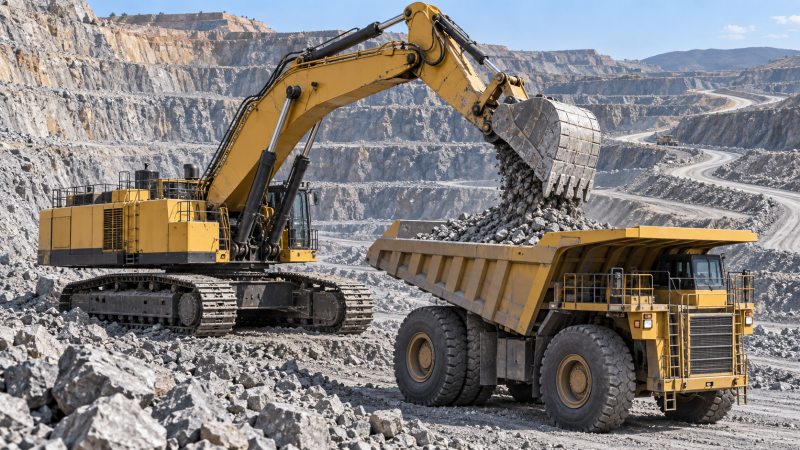
For technical evaluators, answering the question “which mining equipment brands are recognized for their durability?” requires more than comparing nameplate specifications or relying on a dealer’s reputation. Durability is not a badge attached to a logo. It is the demonstrated ability of a machine to preserve structural integrity, maintain productive availability, and remain serviceable after thousands of hours in abrasive, high-load, high-temperature, high-altitude, or poorly maintained conditions.
In mining, an excavator that survives only under ideal maintenance schedules is not necessarily durable. A haul truck with excellent payload capability but difficult access to critical components may create unacceptable downtime. Likewise, a brand with a strong global reputation may not be the best choice when local parts coverage, mine geology, operator practices, and fleet support do not match the equipment’s design assumptions.
A more useful assessment combines brand history with machine-family evidence: frame and boom performance, drivetrain life, hydraulic cleanliness, component rebuildability, service access, field uptime, and the availability of technical support where the mine actually operates. This is the point where durability becomes a measurable procurement issue rather than a vague preference.
Durability starts with the duty cycle, not the brand list
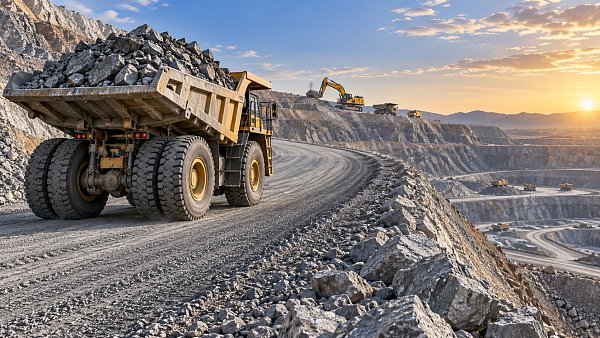
Open-pit mining equipment faces a different failure environment from underground loaders, drill rigs, and crushing systems. A 300-tonne class hydraulic excavator loading hard rock continuously experiences boom-cylinder loads, swing-system stress, bucket linkage wear, and undercarriage abrasion that do not resemble ordinary construction work. Mining dump trucks must manage frame fatigue, braking heat, tire loading, retarder performance, and powertrain reliability over repeated haul cycles. Underground equipment, meanwhile, must withstand constrained access, poor ventilation conditions, moisture, dust, and rapid maintenance turnaround requirements.
Before reviewing manufacturers, evaluators should define the operating reality in writing:
- Material hardness, abrasiveness, moisture content, and particle size;
- Average payload, haul gradient, haul-road quality, and cycle time;
- Altitude, ambient temperature range, dust concentration, and rainfall exposure;
- Expected annual operating hours and production continuity requirements;
- Maintenance crew skill level, workshop tooling, and component-rebuild capability;
- Distance to parts depots, dealer workshops, ports, and fuel or power infrastructure.
This operating profile changes the meaning of “durable.” In a remote copper mine, parts availability and modular component replacement may matter as much as original component strength. In a high-production iron ore operation, fatigue life and planned rebuild intervals may dominate. For a contractor moving between smaller sites, transportability and ease of field repair may carry more weight than maximum machine mass.
Brands commonly associated with durable mining equipment
Several manufacturers have built long-standing reputations in demanding mining applications. That reputation should be treated as a starting point for investigation, not a substitute for machine-specific due diligence.
Caterpillar: fleet-wide support and proven heavy-duty platforms
Caterpillar is frequently included when procurement teams ask which mining equipment brands are recognized for their durability. Its large mining truck, dozer, wheel loader, motor grader, and hydraulic mining shovel ranges are widely used in open-pit operations worldwide. The brand’s durability reputation is closely tied to heavy-section structures, established drivetrain designs, extensive component-remanufacturing practices, and a broad dealer support model.
For evaluators, the practical question is not simply whether a Cat machine is robust, but whether the local support organization can sustain it. Review planned component-change procedures, engine and transmission rebuild options, site inventory commitments, condition-monitoring capabilities, and the response time for critical failures. A globally common platform can be an advantage where an operation depends on rapid access to major components and trained technicians.
Komatsu: engineered integration for continuous production environments
Komatsu has a strong position in large mining trucks, hydraulic excavators, electric-drive equipment, dozers, and autonomous haulage-related systems. Its equipment is often considered for operations seeking durable machines designed around long production campaigns, particularly where fleet management and machine data are integrated into the maintenance strategy.
Technical teams should examine structural fatigue history, engine and electric-drive configuration, cooling performance under site temperatures, and the support depth for the exact model under consideration. Komatsu’s mining equipment may be especially relevant where the mine expects to use equipment health data, production monitoring, or automation technology as part of its uptime plan. Yet digital capability does not remove the need to inspect physical serviceability: filter locations, access platforms, hose routing, and the time required to complete common repairs still matter.
Liebherr: large-scale excavation and haulage engineering
Liebherr is widely evaluated in high-capacity mining fleets, particularly for hydraulic excavators and large haul trucks. Its durable-equipment reputation is connected to heavy-duty machine construction, large excavator expertise, and a focus on mining-specific engineering rather than general-purpose equipment adaptation.
Where loading tools are expected to work against dense rock faces for long shifts, evaluators should look closely at boom and stick configuration, attachment compatibility, hydraulic circuit protection, slew bearing maintenance requirements, and undercarriage wear management. For trucks, assess the frame, drive system, braking arrangement, and the site’s ability to support specialized diagnostics and components. Liebherr can be a compelling candidate in mines that value high-capacity loading systems, but the decision should include a realistic review of regional service infrastructure.
Hitachi: hydraulic excavator durability in tough loading applications
Hitachi mining excavators are respected in many regions for their hydraulic excavation heritage and for machines built for sustained digging and loading work. Evaluators often associate the brand with robust hydraulic systems, strong front-end structures, and mining-class excavator configurations.
The most meaningful checks are hydraulic oil-control practices, pump and valve reliability records, cylinder repair procedures, boom cracking history under comparable material conditions, and availability of genuine or approved wear parts. In hard-rock mining, a well-supported excavator with disciplined contamination control can retain productive life far better than a theoretically stronger machine operating with inconsistent maintenance.
Sandvik and Epiroc: durability below ground and at the face
For underground mining, drilling, rock reinforcement, and related applications, Sandvik and Epiroc are regularly considered among the durable specialist brands. Their equipment is designed around the realities of underground production: compact dimensions, exposure to rock dust and water, demanding drill cycles, restricted access, and the need for fast recovery after a failure.
Durability evaluations for these brands should focus on boom and feed reliability, drilling component wear, cable and hose protection, powertrain layout, operator visibility, automation compatibility, and access to field technicians. The availability of consumables—including rock tools, drilling components, filters, and hydraulic parts—can have a disproportionate effect on uptime. A drill rig is only as durable in practice as the support system around its consumable-intensive work.
Other brands require the same evidence-based review
Depending on geography, fleet size, and equipment category, technical teams may also review equipment from XCMG, SANY, BEML, Bell, Volvo Construction Equipment, and other regional or specialized suppliers. These brands should not be dismissed simply because they are less dominant in a particular market, nor should they be approved solely on acquisition cost. Their suitability depends on model maturity, local service strength, component traceability, engineering support, and evidence from comparable mining duty cycles.
A lower-cost machine can produce a sound lifecycle result when it has reliable local parts access, manageable maintenance procedures, and a dealer willing to commit to uptime support. Conversely, any brand becomes a high-risk selection when key assemblies must travel long distances, diagnostic capability is limited, or the machine has little operating history in the intended environment.
What durable machines reveal during a technical assessment
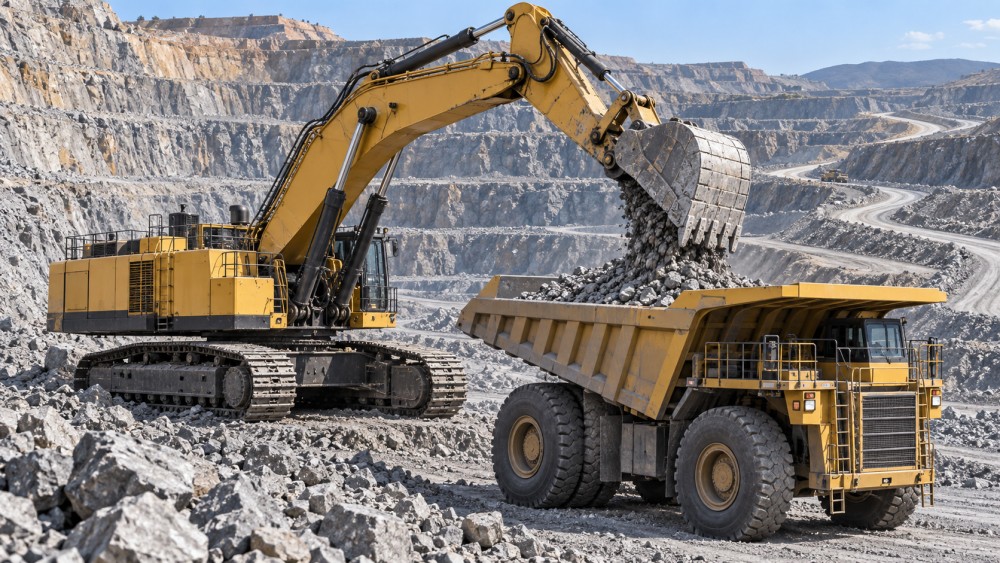
Marketing literature often describes “reinforced structures” or “mining-ready designs.” Technical evaluators should go further and ask where the reinforcement is located, how loads travel through the structure, and what repair history exists for the specific machine family. A credible durability review looks for evidence in the following areas.
1. Structural design and fatigue management
Inspect main frames, articulated joints, truck bodies, booms, sticks, carbody sections, slew rings, and mounting points. Ask for recommended inspection intervals and known wear or cracking zones. On used-equipment inspections, pay close attention to weld repairs, corrosion around structural interfaces, pin-bore ovality, and evidence of recurring stress concentrations.
A durable design is not necessarily one that never needs repair. It is one that has predictable inspection points, repairable structures, and a documented response to known fatigue risks. Equipment suppliers that can discuss these issues openly often provide more confidence than those offering only broad claims about machine toughness.
2. Drivetrain and powertrain resilience
For haul trucks, loaders, and dozers, engine performance alone is an incomplete indicator. Review transmission or electric-drive behavior, axle and final-drive service intervals, cooling-system capacity, braking and retarding systems, and contamination sensitivity. A mine with long downhill hauls will place very different demands on braking systems than a flat operation with short cycles.
Request failure-mode information from comparable applications. Which components typically limit availability? Are failures detected through oil analysis, temperature trends, vibration, or visual inspection? Can major assemblies be exchanged on site, and what lifting equipment is needed? These questions connect component durability to recovery time.
3. Hydraulic protection and contamination control
Hydraulic systems live or fail by cleanliness, cooling, hose routing, and maintenance discipline. Durable mining equipment should provide practical access for sampling, filtration, filter replacement, and leak inspection. Assess how vulnerable hoses and connectors are to rock impact, whether cylinders are protected against side loading, and whether heat rejection remains adequate at the mine’s maximum ambient temperature.
In many fleets, premature hydraulic failures are caused less by inherent design weakness than by contaminated oil, delayed filter changes, incorrect repair procedures, or unsuitable replacement parts. The best brand decision therefore includes a maintenance-process decision.
4. Wear-package strategy
Ground-engaging tools, buckets, dump bodies, liners, undercarriage components, drill consumables, and tire systems are not peripheral expenses. They influence availability, fuel use, cycle time, and structural loading. Compare original wear-package options, local supply lead times, approved aftermarket choices, and compatibility with the mine’s material characteristics.
For example, a bucket that is too lightly protected may suffer rapid wear in abrasive ore, while an excessively heavy wear package can reduce payload efficiency and alter digging performance. The durable choice is usually the configuration matched to the rock, not the most heavily armored option on a brochure.
Move from reputation to a weighted selection scorecard
A practical way to compare mining equipment brands is to assign weighted scores based on the project’s actual risk profile. A remote, high-altitude gold mine may place 25% of the score on parts and service support, while a mature mine with a large workshop may give more weight to rebuild economics and machine productivity. There is no universal weighting.
Scorecards are most reliable when the evidence behind each score is recorded. “Good dealer support” should be translated into named locations, stocked part numbers, technician qualifications, service hours, and contractual commitments. “Proven model” should mean comparable machines, comparable material, and a meaningful operating record—not simply a large installed base elsewhere.
Common mistakes when judging mining equipment durability
One frequent error is using purchase price as a proxy for value. The least expensive machine may become the most expensive choice if it creates production interruptions, requires excessive emergency parts shipments, or cannot be rebuilt economically. Another is relying on a single fleet reference. A machine operating in soft overburden cannot validate durability in high-silica hard rock or steep-haul conditions.
Technical teams also sometimes separate equipment selection from mine planning. That is risky. Road design, blasting fragmentation, loading match, operator training, lubrication practices, and workshop layout all influence equipment life. A durable truck cannot compensate for overloaded bodies, poor haul roads, or neglected tire management. A durable excavator will still suffer when it is continuously forced to break oversized material outside its intended digging cycle.
Finally, do not confuse a long warranty with long-term durability. Warranty terms can be useful, but they should be read alongside exclusions, maintenance obligations, component coverage, and the supplier’s ability to act when production is at stake.
A defensible answer for procurement and engineering teams
Caterpillar, Komatsu, Liebherr, Hitachi, Sandvik, and Epiroc are among the brands most often recognized for durable mining equipment within their respective categories. That recognition comes from long exposure to severe applications, established engineering practices, and substantial service ecosystems. Other manufacturers may also be appropriate when their specific models and support networks meet the mine’s requirements.
The strongest selection decision is not “choose the toughest brand.” It is “choose the machine, configuration, and support model with the lowest operational risk over its working life.” For technical evaluators, that means connecting durability claims to inspection data, service access, component strategy, and real duty-cycle evidence.
For teams monitoring the changing heavy-equipment landscape, TF-Strategy’s intelligence perspective is especially relevant: mining durability is increasingly shaped by material evolution, remote diagnostics, electrified drivetrains, and the commercial discipline of total cost of ownership. The physical machine remains central, but its long-term value is now determined by the entire system that keeps it moving.
Related News
 Oct 01, 2026How to Use Technical References to Benchmark Industrial Equipment PricesIndustrial equipment technical reference pricing: learn how to normalize specifications, scope, service life, and operating costs to benchmark quotes accurately and choose the best-value equipment.
 Sep 30, 2026What Does an Ultra-Large Excavator Really Cost Over Its Service Life?Ultra-large excavators cost far more than purchase price. Explore lifecycle expenses, uptime risks, energy use, maintenance, and cost-per-tonne insights.
 Sep 29, 2026Infrastructure Construction Standards: A Project Manager’s Guide to ComplianceInfrastructure construction standards guide for project managers: turn requirements into field controls, hold points, traceability, and compliant delivery.
 Sep 28, 2026How to Specify Custom Mining Equipment for Abrasive Ground and High-Load HaulageCustom mining equipment for abrasive ground and high-load haulage: learn how to optimize payload, wear protection, powertrains, uptime, and lifecycle cost for safer, reliable production.
Ms. Elena Rodriguez
Weekly Insights
Stay ahead with our curated technology reports delivered every Monday.