
How to read global project tenders without missing key details
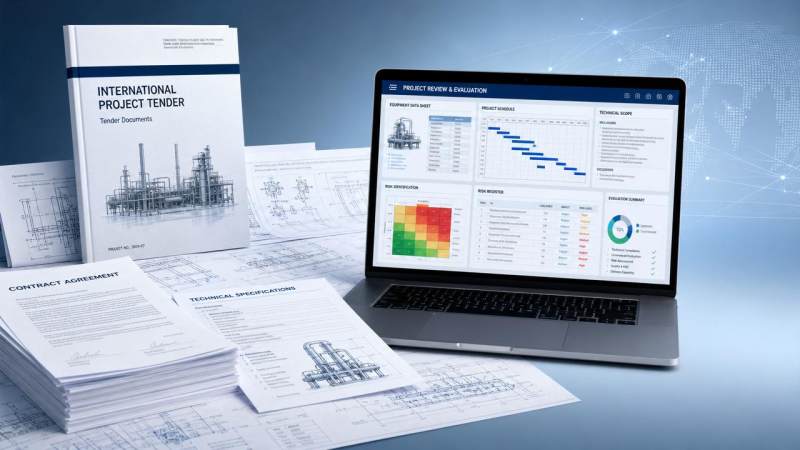
Reading global project tenders is not just about spotting deadlines or bid values—it is about uncovering technical scope, risk signals, procurement intent, and strategic fit. For business evaluation professionals, missing a single clause can mean lost opportunities or costly misjudgments. This guide shows how to review tender documents systematically, identify key details faster, and make more confident decisions in complex international infrastructure and heavy industry projects.
For most readers searching how to read global project tenders, the real intent is practical rather than academic. They want a reliable way to screen opportunities fast, avoid hidden risks, and decide whether a tender deserves serious internal resources.
Business evaluation teams are usually less worried about theory and more concerned with bid fit, compliance burden, technical feasibility, margin protection, payment security, and the buyer’s real purchasing intention. Those are the details that shape a go or no-go decision.
The most useful approach is a structured review framework. Instead of reading tenders line by line without hierarchy, evaluators should identify commercial signals, technical thresholds, legal traps, and delivery constraints in a repeatable order.
That is especially important in sectors tied to infrastructure and heavy equipment, where tender language may hide major requirements around local content, performance guarantees, spare parts support, installation responsibility, and lifecycle service obligations.
What business evaluators are actually looking for in global project tenders
At the start, the key question is simple: is this opportunity strategically worth pursuing? A tender may look attractive on contract value alone, but still be a poor fit because of unrealistic schedules, financing risks, or impossible qualification criteria.
When reading global project tenders, business evaluators are typically trying to answer five decision questions. Can we qualify? Can we deliver? Can we make money? Can we manage the risk? Does the project support our market strategy?
If a tender cannot answer those questions clearly, the review process should focus on finding the missing signals quickly. Ambiguity itself is often a risk indicator, especially in cross-border procurement involving unfamiliar regulatory or contractual environments.
In international heavy industry, this matters even more. Procurement documents may combine civil works, equipment supply, commissioning, training, and long-term maintenance into one package, creating obligations that are easy to underestimate during early screening.
Start with the executive scan before the deep review
A full tender package can run hundreds of pages. Reading it from page one to the last annex is inefficient. Start with a 20-minute executive scan designed to capture the project’s decision-critical information before assigning detailed review tasks.
Begin with the tender notice, instructions to bidders, scope summary, qualification requirements, pricing format, draft contract, technical specifications, and schedule milestones. These sections usually reveal most of the factors that determine pursuit suitability.
During this first pass, create a one-page opportunity snapshot. Include country, buyer type, contract model, estimated value, submission deadline, bid security, performance security, technical category, local partner requirements, and major exclusions or assumptions.
This quick summary allows managers to compare opportunities consistently. It also reduces the common problem where teams become emotionally committed to a tender before understanding whether it fits actual business capacity or strategic priorities.
For organizations tracking global infrastructure and machinery demand through specialist intelligence channels such as 无, the executive scan becomes more powerful when compared with regional procurement patterns and buyer behavior.
How to identify the true scope without missing hidden obligations
One of the biggest mistakes in global project tenders is confusing the visible scope with the real scope. The visible scope is stated in the title and summary. The real scope is spread across technical annexes, contract clauses, and response templates.
To define the true scope, evaluators should map every required deliverable into categories: core equipment, engineering, civil interface, transport, customs support, installation, testing, training, documentation, after-sales service, and warranty responsibilities.
This mapping process often exposes hidden workload. A tender for tunnel equipment may also require operator training, remote diagnostics capability, on-site commissioning engineers, spare parts inventory, and performance support for a specific operating period.
Likewise, a mining machinery tender may appear to be a straightforward equipment supply package, but appendices may shift assembly responsibility, fuel efficiency guarantees, emissions compliance, or production throughput obligations to the supplier.
Whenever the scope uses vague phrases such as “including but not limited to,” “complete system responsibility,” or “all works necessary for operational acceptance,” flag them immediately. These phrases often transfer unpriced obligations to the contractor.
Another useful technique is to compare the scope section against the pricing schedule. If the buyer expects a complete solution but the price form omits major components, there may be a commercial mismatch that will affect claims and margin later.
Qualification criteria often decide the bid before pricing does
Many companies spend too much time discussing price strategy before confirming whether they can legally and technically qualify. In reality, disqualification risk often comes from administrative or experience-related requirements, not commercial competitiveness.
Review qualification criteria in four layers. First, corporate eligibility: registration, tax status, sanctions, beneficial ownership, and conflict disclosures. Second, financial capacity: turnover, liquidity, credit lines, and audited statements.
Third, technical experience: similar project references, equipment performance records, industry certifications, and key staff qualifications. Fourth, local compliance: language rules, partner obligations, licensing, domestic value-add thresholds, and mandatory approvals.
These items deserve a red-amber-green assessment. A tender may be commercially attractive yet fail because your strongest reference project is in a different geology, lifting class, haulage environment, or operating standard than the buyer requires.
For business evaluation teams, the lesson is clear: qualification fit should be tested early and brutally. If compliance depends on uncertain third-party documents or a local partner not yet secured, the project’s bid viability drops sharply.
Read the technical specifications like a risk document, not just an engineering document
Technical specifications are not only for engineers. They are one of the richest sources of commercial risk. They reveal how demanding the buyer is, whether the project is standardized or customized, and how easily delivery costs can escalate.
Look for performance parameters that materially affect design, manufacturing, logistics, or operating support. In heavy sectors, that includes penetration rate targets, rock conditions, lifting radius, axle loads, ambient temperature, altitude, duty cycles, and energy systems.
Also examine testing and acceptance terms. A machine that meets catalog specifications may still fail if the tender requires site-specific output, noise, vibration, energy consumption, or availability levels under conditions outside normal operating assumptions.
This is where evaluators should involve technical teams, but with targeted questions. Do not ask whether the product is generally suitable. Ask whether the exact specification introduces custom engineering, warranty exposure, interface complexity, or schedule risk.
Projects in TBM, mining, road machinery, and crawler crane applications frequently require adaptation to geology, terrain, transport restrictions, and local safety standards. These details can completely reshape cost, delivery time, and supplier obligations.
When intelligence from market observers indicates trends such as remote-controlled excavation, electrified haulage, or material upgrades for cutter heads, evaluators can better judge whether a specification reflects future demand or a difficult one-off requirement.
Contract terms reveal procurement intent and hidden commercial pressure
Many tender reviews fail because teams treat the draft contract as a legal appendix instead of a strategic document. In fact, contract terms often reveal how the buyer allocates risk, how mature the procurement process is, and where margin will be lost.
Pay close attention to payment terms, milestone triggers, delay damages, performance liquidated damages, warranty duration, acceptance criteria, retention, currency mechanism, tax treatment, and dispute resolution. These shape the project’s financial reality more than headline value.
A high-value tender with weak payment security can be less attractive than a smaller project with cleaner milestone structure. Similarly, broad indemnities, uncapped liability, or one-sided variation clauses can destroy profitability even if the price looks strong.
Business evaluators should also compare the draft contract with the instructions to bidders and the technical schedule. If the three documents define scope, schedule, or acceptance differently, assume that post-award interpretation disputes are likely.
Another strong signal is amendment flexibility. If the tender allows almost no clarification, qualification, or deviation, the buyer may be prioritizing procurement control over practical delivery. That raises execution risk for specialized or complex equipment packages.
Use a structured go or no-go matrix to avoid subjective decisions
After reviewing the main documents, convert findings into a decision matrix. This prevents internal debate from drifting toward optimism, politics, or headline revenue. A strong matrix should score the opportunity across strategic, technical, financial, legal, and operational dimensions.
Typical categories include market relevance, buyer credibility, qualification certainty, technical fit, schedule realism, supply chain confidence, commercial attractiveness, payment protection, contract risk, local partner dependence, and probability of winning.
Each category should have weighted scoring and a mandatory comment field. Numerical scoring alone is not enough. Decision-makers need to understand why a tender ranks high or low, and which assumptions could change the recommendation.
For example, a project may receive a moderate overall score but still become attractive if a local partner is secured, if a warranty clause is negotiated, or if a scope clarification reduces customization. Conditional pursuit decisions are often smarter than simple yes or no answers.
Over time, this matrix creates institutional memory. Teams learn which tender patterns produced profitable projects and which signals led to expensive failures. That feedback loop is essential when reviewing large volumes of global project tenders.
Common details evaluators miss in international tenders
Even experienced teams miss recurring details. One common oversight is language hierarchy. If multiple language versions exist, one may legally prevail. A subtle difference in wording between versions can materially change technical responsibility or contractual exposure.
Another issue is calendar logic. Submission deadlines, clarification cutoffs, bid validity periods, manufacturing lead times, shipping windows, and site readiness dates may not align. If the timeline is internally inconsistent, execution risk is already present.
Incoterms and logistics assumptions are also frequently underestimated. Cross-border heavy equipment projects may involve port restrictions, convoy permits, abnormal load escorts, customs delays, inland lifting constraints, and temporary storage responsibilities.
Evaluation teams should also check whether spare parts, digital monitoring systems, software licenses, cybersecurity compliance, training materials, and operator manuals are included explicitly. If not, they may still be expected under completion obligations.
In some cases, market intelligence sources such as 无 can help teams benchmark whether these tender requirements match typical buyer practice or signal unusual procurement complexity in a specific region or sector.
How to speed up tender reading without lowering judgment quality
Speed matters because international opportunities often arrive in clusters, and evaluation capacity is limited. The solution is not to read less carefully. It is to create a repeatable review workflow that separates screening, expert input, and decision ownership.
Use a standard checklist with fixed sections: opportunity summary, must-win reasons, disqualifiers, scope map, qualification gaps, technical deviations, commercial risks, contract red flags, localization needs, and recommended next actions.
Assign responsibilities by expertise, not by document order. Commercial teams should not spend hours decoding engineering annexes alone, and technical experts should not be the only reviewers of acceptance clauses with major payment implications.
It also helps to maintain a clause library of previously identified risks. If your team has already seen problematic wording around availability guarantees, geological assumptions, or performance securities, you can detect similar issues much faster in future tenders.
The goal is decision quality at speed. Fast evaluation does not mean rushing to bid. It means rapidly reaching a justified conclusion on whether the opportunity aligns with your capabilities, risk appetite, and strategic direction.
Conclusion: the best tender readers are strategic reviewers, not document collectors
To read global project tenders well, business evaluation professionals must go beyond administrative completeness. The real task is to decode scope, qualification barriers, technical demands, commercial pressure, and buyer intent before the organization commits serious bid resources.
The strongest reviewers use a clear sequence: executive scan, true scope mapping, qualification testing, technical risk reading, contract analysis, and structured go or no-go scoring. This approach reduces blind spots and improves confidence in cross-border decision-making.
In sectors shaped by complex infrastructure, heavy machinery, and evolving procurement models, that discipline is not optional. It is the difference between chasing volume and choosing winnable, profitable, strategically relevant opportunities.
If your team can consistently identify what the tender really asks for, what risks it silently transfers, and whether the opportunity fits your delivery model, you will not just read tenders faster—you will make better business decisions.
Related News
 Oct 06, 2026Selecting Petrochemical Overhead Cranes for Hazardous Areas and Heavy Process LoadsPetrochemical overhead cranes for hazardous areas: learn how to match capacity, duty, controls, corrosion protection, and maintenance access for safer, reliable lifts.
 Oct 05, 2026Tunneling Equipment Specification Planning: Key Criteria for Ground and Project RisksEquipment specification planning tunneling: learn how to match TBM systems to ground risks, geometry, safety, logistics, and lifecycle cost for more reliable project delivery.
 Oct 04, 2026Nuclear Lifting Equipment Cost: Budgeting for Compliance, Testing, and Lifecycle RiskNuclear lifting equipment cost explained: budget for compliance, proof-load testing, installation, documentation, and lifecycle risk to make confident procurement decisions.
 Oct 03, 2026How to Assess TBM Manufacturers for Hard-Rock Tunneling Projects?Choose the right tunnel boring machine manufacturer for hard-rock projects. Explore key criteria for design, lifecycle cost, factory quality, and service support.




Ms. Elena Rodriguez
Weekly Insights
Stay ahead with our curated technology reports delivered every Monday.