
Infrastructure development strategies that hold up under budget pressure
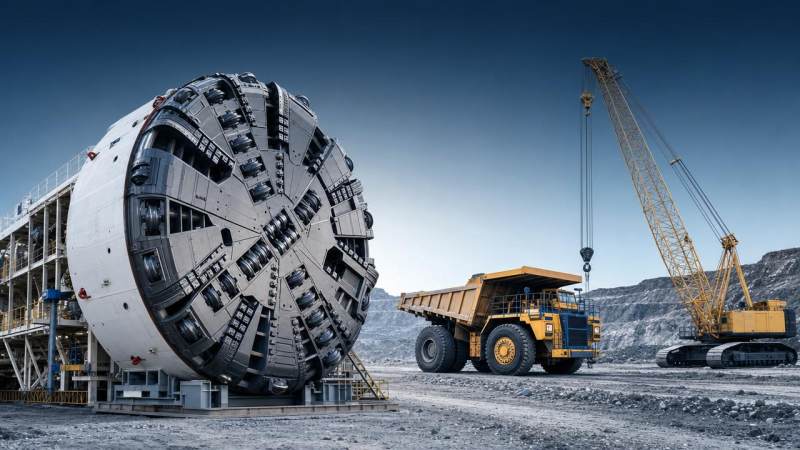
When capital is tight, the most effective infrastructure development strategies balance cost control with durable performance. The goal is not blind reduction. It is disciplined selection, smarter sequencing, and lower lifecycle exposure.
Across transport, mining, utilities, and energy projects, budget pressure is reshaping planning assumptions. Assets must justify every dollar through resilience, uptime, safety, and measurable delivery value over time.
For TF-Strategy, this shift is especially visible in TBM deployment, open-pit machinery, crawler cranes, road equipment, and mining haulage. Heavy industry now rewards infrastructure development strategies that combine engineering precision with strategic intelligence.
Budget pressure is changing how infrastructure development strategies are judged
The old model favored scale first and efficiency later. That logic is weakening. Today, projects are screened by total cost of ownership, schedule certainty, supply risk, and operational flexibility.
This creates a new standard for infrastructure development strategies. A plan must survive cost escalation, labor volatility, commodity swings, and stricter environmental expectations without losing performance.
In tunnels, for example, cutter head material choices affect replacement cycles. In mining, truck energy systems influence haulage economics. In lifting, crane configuration shapes installation speed and risk.
As a result, capital discipline is moving upstream. Better decisions now happen before procurement, through scenario analysis, equipment matching, and delivery model comparison.
Clear market signals show why leaner infrastructure development strategies are accelerating
Several trend signals explain why leaner infrastructure development strategies are gaining traction across the comprehensive industry landscape.
- Higher financing costs are making long payback periods harder to defend.
- Raw material volatility is increasing uncertainty in civil works and equipment packages.
- Labor scarcity is rewarding mechanization, automation, and remote operation.
- Decarbonization targets are influencing fleet selection and power system design.
- Public scrutiny is pushing owners toward visible reliability and value-for-money outcomes.
These forces do not stop investment. They refine it. Projects still move forward, but capital now favors practical designs, modular delivery, and assets with stronger utilization profiles.
The main drivers behind stronger infrastructure development strategies can be mapped clearly
The following table highlights the drivers shaping more resilient infrastructure development strategies and the decisions they influence.
The message is simple. Infrastructure development strategies must protect project optionality while reducing exposure to avoidable failure points.
Heavy equipment decisions now have a bigger influence on infrastructure development strategies
Under budget pressure, equipment is no longer a downstream purchase item. It is a strategic variable that can improve or undermine project economics.
TBM planning is shifting toward predictability
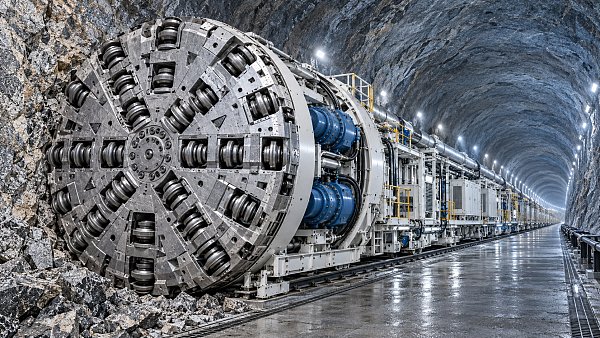
For tunnel projects, infrastructure development strategies should focus on geology-fit machine design, cutter head durability, and intervention reduction. Fewer stoppages often create greater savings than lower initial machine cost.
Open-pit mining fleets are judged by energy and uptime
Ultra-large excavators and mining dump trucks must be evaluated against fuel burn, altitude performance, haul cycle efficiency, and maintenance access. A cheaper fleet can become expensive if downtime is persistent.
Crawler cranes and road machinery shape schedule confidence
In wind, petrochemical, road, and bridge works, machine selection affects installation windows, paving accuracy, and rework rates. Better fit often protects margins more effectively than aggressive procurement discounts.
This is why TF-Strategy tracks the connection between physical equipment parameters and delivery outcomes. Strong infrastructure development strategies depend on that connection being measured, not assumed.
The impact reaches planning, procurement, construction, and asset operations
Budget pressure changes every business link in the infrastructure chain. It does not only affect approvals. It also changes design choices, contract structures, machine utilization, and long-term maintenance planning.
- Planning becomes more evidence-driven, with tighter scenario testing.
- Procurement shifts toward lifecycle value, not lowest bid alone.
- Construction teams favor methods that cut variability and rework.
- Operations teams demand assets that remain efficient under stress conditions.
This wider impact explains why infrastructure development strategies should be aligned early across engineering, equipment intelligence, and commercial decision frameworks.
What deserves closer attention when infrastructure development strategies are being refined
Not every cost deserves to be cut. The most durable infrastructure development strategies protect the variables that defend productivity, safety, and future adaptability.
- Separate essential performance specifications from negotiable features.
- Benchmark equipment choices against operating environment, not brochure ratings.
- Model maintenance intervals and spare part availability early.
- Assess remote control, digital monitoring, and automation by labor impact.
- Use phased investment where demand visibility is still evolving.
- Track carbon, energy, and compliance costs as financial variables.
- Prioritize methods that reduce stoppages in geologically or logistically difficult sites.
These priorities help distinguish real savings from deferred problems. Effective infrastructure development strategies lower total exposure, not just headline spend.
A practical response framework can strengthen infrastructure development strategies quickly
A simple response framework can help decision-makers test whether current infrastructure development strategies are strong enough for constrained capital conditions.
This approach supports better timing, cleaner prioritization, and stronger confidence under scrutiny. It also creates a more defensible investment narrative for large infrastructure programs.
The next move is to build intelligence-led infrastructure development strategies
The strongest response to budget pressure is not retreat. It is sharper judgment. Infrastructure development strategies should be rebuilt around verified field conditions, equipment economics, and lifecycle performance.
That is where strategic intelligence matters. Insights on TBM material evolution, remote-controlled excavation, electric haulage logic, and heavy lifting demand can reveal where capital still works hardest.
Use the next review cycle to stress-test assumptions, compare delivery paths, and identify the assets that protect output under pressure. Better infrastructure development strategies begin with better information, applied before costs harden.
Related News
 Oct 06, 2026Selecting Petrochemical Overhead Cranes for Hazardous Areas and Heavy Process LoadsPetrochemical overhead cranes for hazardous areas: learn how to match capacity, duty, controls, corrosion protection, and maintenance access for safer, reliable lifts.
 Oct 05, 2026Tunneling Equipment Specification Planning: Key Criteria for Ground and Project RisksEquipment specification planning tunneling: learn how to match TBM systems to ground risks, geometry, safety, logistics, and lifecycle cost for more reliable project delivery.
 Oct 04, 2026Nuclear Lifting Equipment Cost: Budgeting for Compliance, Testing, and Lifecycle RiskNuclear lifting equipment cost explained: budget for compliance, proof-load testing, installation, documentation, and lifecycle risk to make confident procurement decisions.
 Oct 03, 2026How to Assess TBM Manufacturers for Hard-Rock Tunneling Projects?Choose the right tunnel boring machine manufacturer for hard-rock projects. Explore key criteria for design, lifecycle cost, factory quality, and service support.
Ms. Elena Rodriguez
Weekly Insights
Stay ahead with our curated technology reports delivered every Monday.