
Commercial Insights
Key Structural and Safety Compliance Factors When Procuring Specialized Trailers for Ready-Mix Concrete Transport in 2026
Discover dump special trailers engineered for 2026 structural integrity & safety compliance—ISO, SAE, EN-certified for ready-mix concrete transport.
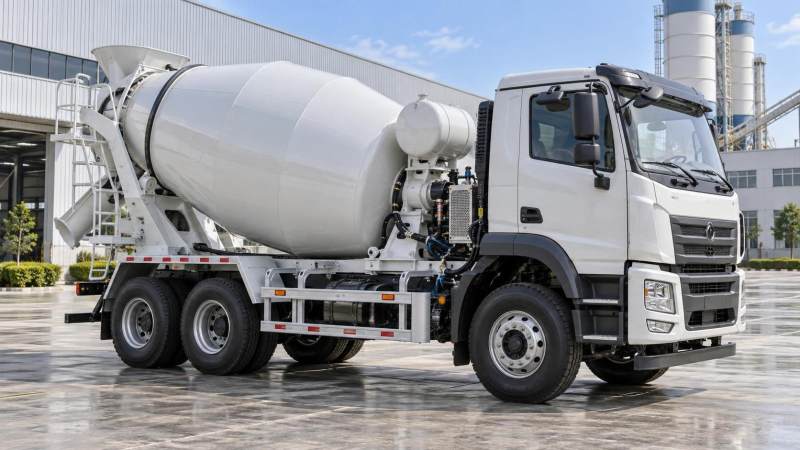
Structural Integrity and Regulatory Alignment in Ready-Mix Trailer Procurement
Ready-mix concrete transport trailers operate under extreme mechanical and environmental stress: constant vibration, high torsional loads during transit, aggressive chemical exposure from wet concrete, and frequent unloading cycles that accelerate fatigue in critical welds and chassis components. In 2026, procurement decisions for these specialized trailers no longer hinge solely on payload capacity or price — they pivot on verifiable structural compliance and documented safety alignment with evolving regional standards. A trailer that meets nominal weight ratings but lacks certified fatigue life data for its axle mounting brackets or fails to demonstrate corrosion resistance testing per ISO 12944–5 may pass initial inspection yet incur costly downtime, premature replacement, or liability exposure within 18 months of service.
Procurement teams must treat structural specifications not as static line items but as interdependent performance thresholds. For example, the minimum yield strength of frame rail material (typically ASTM A572 Grade 50 or equivalent) directly affects permissible overhang length and rear-axle load distribution. A 3-axle trailer with identical gross vehicle weight rating (GVWR) may exhibit divergent service life depending on whether its crossmember spacing complies with SAE J2807’s dynamic load transfer requirements — a standard increasingly referenced in tender documents across GCC and Southeast Asian infrastructure projects.
Key Safety Compliance Requirements Beyond Basic Certification
Compliance extends far beyond issuing a CE mark or DOT registration number. In 2026, auditable evidence is expected for three interlocking domains:
First, **dynamic stability validation**. Trailers transporting ready-mix must demonstrate roll stability under full-load, off-center loading conditions — particularly relevant when concrete agitators rotate at low speeds during transit. EN 15233:2021 mandates test protocols for lateral acceleration response, requiring manufacturers to provide third-party test reports showing center-of-gravity height verification and anti-roll bar effectiveness. These reports are not optional appendices; they appear in pre-award technical evaluations.
Second, **hydraulic system integrity**. The drum drive and tilt mechanisms rely on hydraulic circuits operating at pressures exceeding 250 bar. ISO 4413:2010 governs design, component selection, and leak-rate thresholds — yet many suppliers omit burst pressure ratings for hoses or fail to document hose routing clearances against sharp frame edges. Procurement checklists now require stamped hydraulic schematics annotated with pressure-rated components and maintenance access points.
Third, **electrical safety for control systems**. Modern mixers integrate CAN-bus controllers, proximity sensors, and remote diagnostics. IEC 60204–1 applies to all control panels, demanding IP67-rated enclosures, segregated grounding paths, and documented electromagnetic compatibility (EMC) testing. A trailer failing EMC testing may intermittently disable drum rotation commands — a functional failure not captured by basic electrical certification.
Material Selection and Fabrication Verification Points
Aluminum vs. steel frame choices involve trade-offs beyond weight savings. While aluminum reduces tare weight, its fatigue resistance under repeated bending loads depends heavily on alloy grade (e.g., 6061-T6 vs. 5083-H32), heat-affected zone management during welding, and anodizing quality. ASTM B557M requires tensile testing of welded joints — a requirement often waived unless explicitly specified in procurement terms.
Welding procedure specifications (WPS) and welder qualification records (WQR) must accompany delivery documentation. ASME Section IX compliance is non-negotiable for structural welds. In practice, procurement teams verify WPS by requesting traceable weld maps showing joint type, filler metal, preheat temperature, and post-weld heat treatment status — not just generic “AWS D1.1 compliant” statements.
Corrosion protection demands more than paint thickness measurement. Salt-spray testing per ASTM B117 (minimum 1,000 hours for critical zones) and adhesion testing per ASTM D3359 are required for primer-and-topcoat systems applied to chassis and drum supports. Zinc-rich primers alone do not satisfy specification — their dry-film thickness must be measured at 10 distinct locations per major assembly.
Procurement Documentation That Mitigates Operational Risk
A robust procurement checklist moves beyond certificates to actionable verification:
- Drum gearmotor service life data: Not just rated torque, but documented mean time between failures (MTBF) based on field data — not lab simulations — for units operating at 4–6 rpm continuous duty.
- Brake system fade testing: Reports showing brake torque retention after 15 consecutive stops from 60 km/h at GVWR on 6% grade, per UNECE R13-H.
- Drum liner wear validation: Third-party abrasion testing (ASTM D4060) comparing liner material against ASTM C138 aggregate gradation profiles used locally.
- Service interval justification: Maintenance schedules backed by lubricant analysis logs and bearing fatigue modeling — not manufacturer-recommended intervals alone.
These documents expose gaps between marketing claims and field durability. One Middle East contractor reported replacing drum bearings every 4,200 operating hours on a trailer rated for 8,000 — traced to insufficient grease retention geometry in the bearing housing, undocumented in the original specification.
Application-Specific Structural Considerations
Urban delivery routes demand different structural priorities than long-haul highway transport. Frequent stop-start cycles increase driveline shock loading, making driveshaft U-joint fatigue a leading failure mode. Trailers intended for congested cities require reinforced driveshaft yoke mounts and vibration-dampening couplings — features rarely included in base models.
In high-temperature regions (e.g., Gulf Cooperation Council states), thermal expansion mismatches between steel frames and aluminum drum supports can induce cyclic stress at attachment points. Procurement specifications should require finite element analysis (FEA) reports demonstrating stress distribution at 60°C ambient — not room-temperature simulations only.
For sites with steep unloading grades, drum support structure must withstand combined gravitational and rotational torque loads exceeding static GVWR calculations. SAE J2807 Appendix D provides methodology for calculating dynamic support reactions — a calculation most standard spec sheets omit.
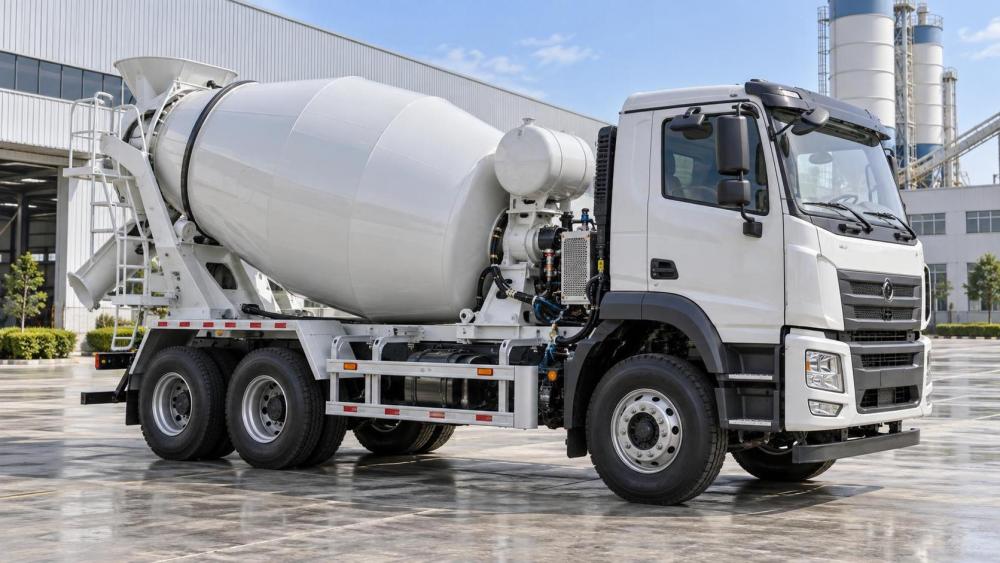
Selecting Trailers Where Structural and Safety Specifications Align
When evaluating options, procurement teams benefit from side-by-side comparison of how structural and safety requirements map to actual product configurations. For instance, a 3-axle concrete mixer trailer designed for consistent 12 m³ batch volumes must balance drum diameter, support geometry, and chassis torsional rigidity to prevent drum wobble-induced bearing wear. The structural design directly determines achievable drum rotation consistency — which in turn affects concrete homogeneity and slump retention.
Trailer variants built on standardized chassis platforms often sacrifice application-specific optimization. Purpose-built designs integrate drum mounting, axle placement, and suspension tuning as a single engineering package — not as bolt-on modifications. This integration enables verified compliance with both structural fatigue life targets and safety-critical hydraulic and electrical subsystem requirements.
One practical evaluation step involves requesting dimensional drawings annotated with load-path diagrams — showing how torsional and vertical loads travel from drum mount through crossmembers to axles. Such documentation reveals whether load paths avoid stress concentrations at cutouts or weld intersections, a common root cause of frame cracking observed in field audits.
For procurement professionals verifying structural and safety readiness, reviewing detailed technical documentation — rather than relying on catalog summaries — remains the most effective risk mitigation step. Trailers meeting all applicable structural and safety benchmarks reduce unplanned maintenance, extend service life, and support consistent concrete quality delivery.dump special trailers
Related News
 Sep 21, 2026Industrial Supplier Evaluation: A Risk-Based Scorecard for Quality, Capacity, and DeliveryIndustrial supplier evaluation made practical: use a risk-based scorecard to assess quality, capacity, and delivery reliability, reduce project risk, and select suppliers with confidence.
 Sep 20, 2026Comparing Heavy Equipment Warranty Suppliers: Coverage, Claims, and Downtime RiskSupplier comparison for heavy equipment warranty: evaluate coverage, claims speed, service networks, and downtime risk to protect uptime and project costs.
 Sep 19, 2026Mining Truck Technology Trends: What Fleet Managers Should Prioritize for 2026Mining truck technology trends for 2026: prioritize electrification, autonomy, predictive maintenance, and road intelligence to improve fleet uptime, safety, and cost control.
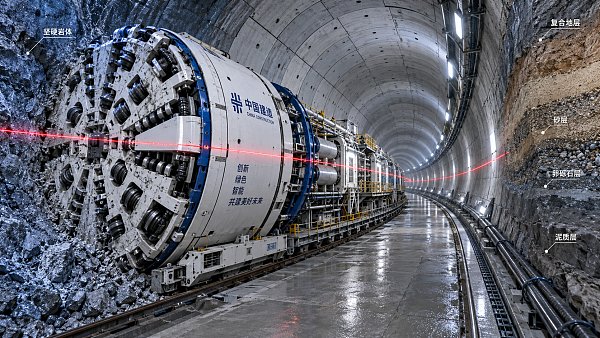
 Sep 17, 2026How TBM Guidance Technology Maintains Alignment Through Curves and Variable GroundTunnel boring machine guidance technology helps teams maintain precise alignment through curves and variable ground, reducing risk, improving lining accuracy, and protecting schedules.

Ms. Elena Rodriguez
Weekly Insights
Stay ahead with our curated technology reports delivered every Monday.